Artwork
Allegorische weibliche Figur
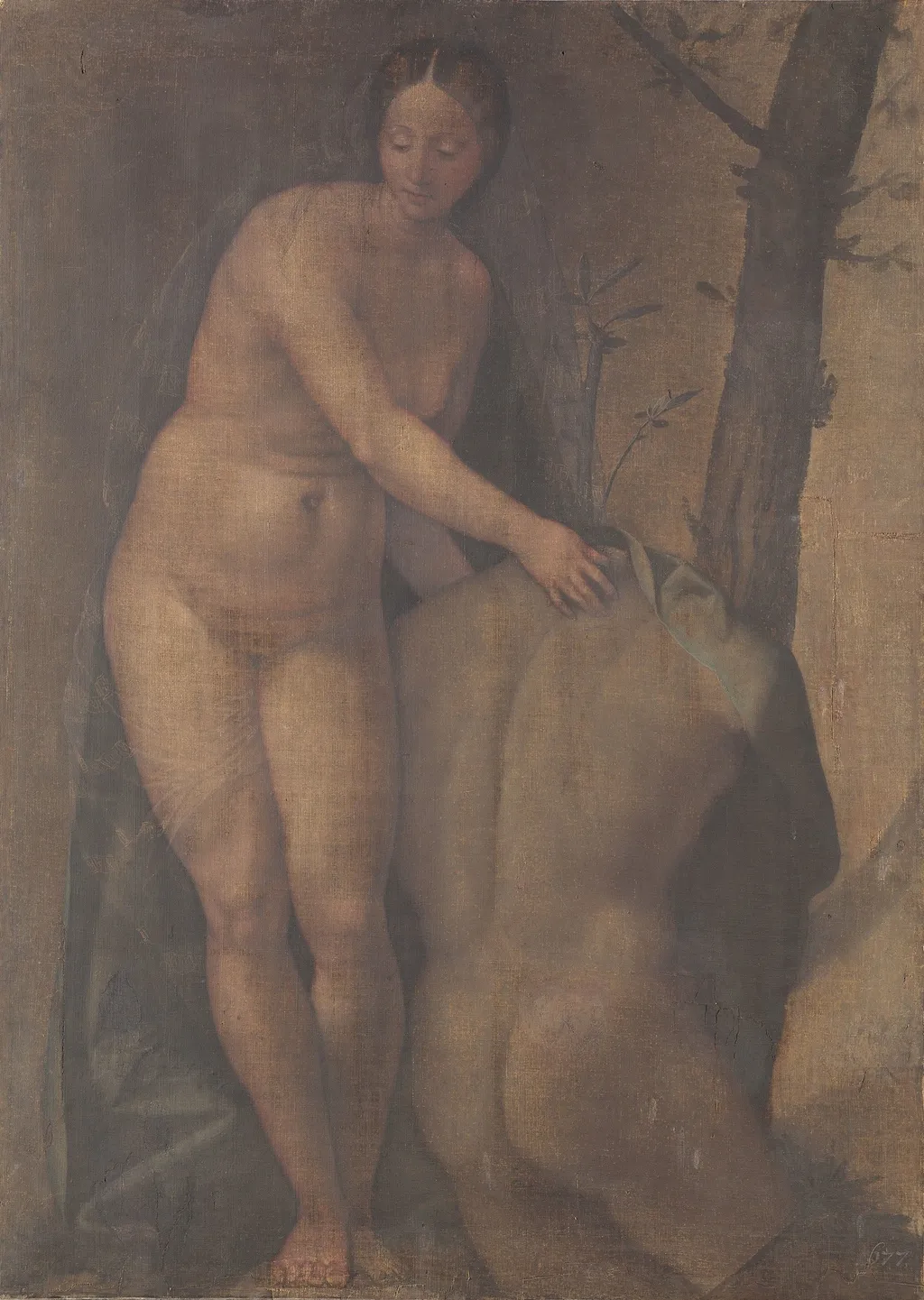
Allegorische weibliche Figur is an unspecified painting by the Mannerist artist Girolamo da Treviso the Younger. It dates from 1525 and is held in the collection of the Kunsthistorisches Museum.
About this work
Overview
Girolamo da Treviso the Younger, an Italian artist active in the early sixteenth century, painted the work titled *Allegorische weibliche Figur* in 1525.
Girolamo da Treviso the Younger, an Italian artist active in the early sixteenth century, painted the work titled *Allegorische weibliche Figur* in 1525. Executed during the Mannerist phase of the Renaissance, the canvas is part of the collection of the Kunsthistorisches Museum in Vienna. The painting presents a solitary nude figure set against a subdued landscape, inviting contemplation of its symbolic content.
Subject & Meaning
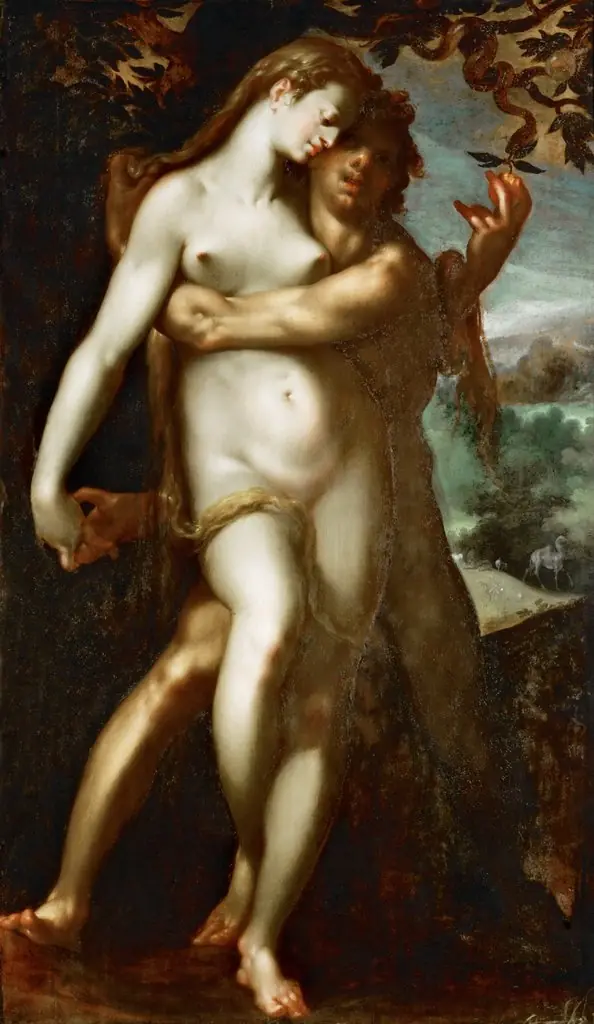
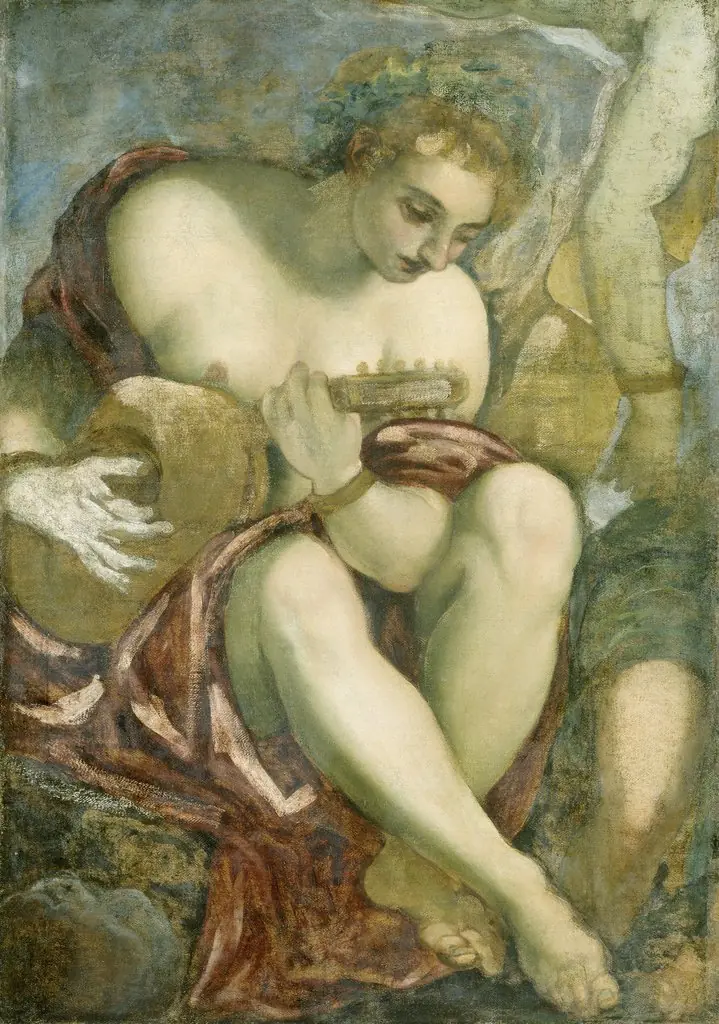
The central figure is a nude woman positioned in a natural environment, her left hand resting on an object draped with cloth. She turns slightly toward her right, eyes lowered, and wears her dark hair pulled back. The quiet, introspective pose, combined with the modest setting, suggests an allegorical representation—perhaps embodying an abstract virtue or philosophical idea—though the precise identification remains open to interpretation.
Technique & Style
Girolamo employs the Mannerist aesthetic of elongated elegance and intricate composition, evident in the refined modeling of the figure’s flesh. Subtle chiaroscuro creates a gentle modeling of light and shadow, giving volume to the body and texture to surrounding elements. The background—muted tree and wall—uses restrained coloration that recedes, allowing the central figure to dominate the visual field.
History & Provenance
Created while Girolamo was employed at the court of Henry VIII, the painting later entered the holdings of the Kunsthistorisches Museum, where it remains on display. Documentation traces its movement from private collections in the seventeenth century to the imperial museum’s acquisition in the nineteenth century, reflecting the work’s continued scholarly interest.
Context
The piece belongs to a period when Italian artists were experimenting with heightened elegance beyond High Renaissance balance. Mannerism favored artificiality, complex poses, and intellectual allegory, aligning with the courtly taste for sophisticated visual riddles. Girolamo’s dual practice as painter and sculptor informs the three‑dimensional treatment of the figure, bridging painting and sculptural sensibility.
Own this work as a print
Artist & collection
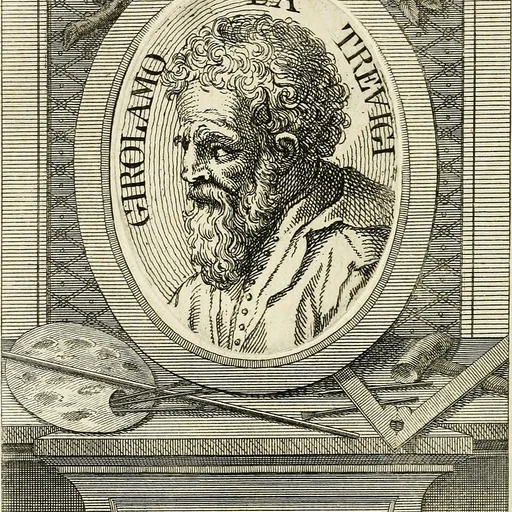
Artist
Girolamo da Treviso the Younger
Girolamo da Treviso (Treviso, 1498 – Boulogne-sur-Mer, September 10, 1544), also known as Girolamo di Tommaso da Treviso the Younger and Girolamo Trevigi, was an Italian Renaissance sculptor and painter in Henry VIII's court in England.