Artwork
Portrait of a Man
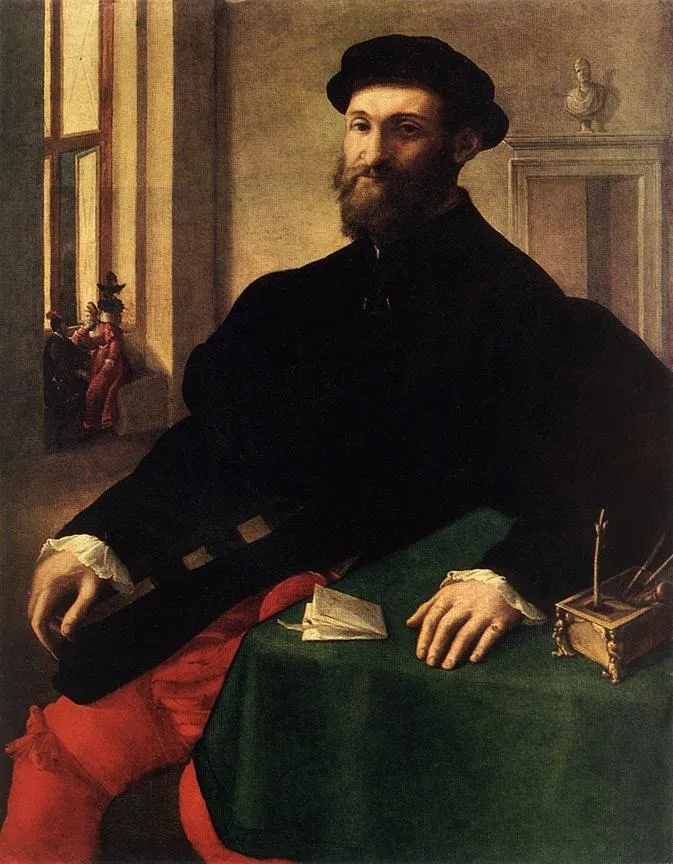
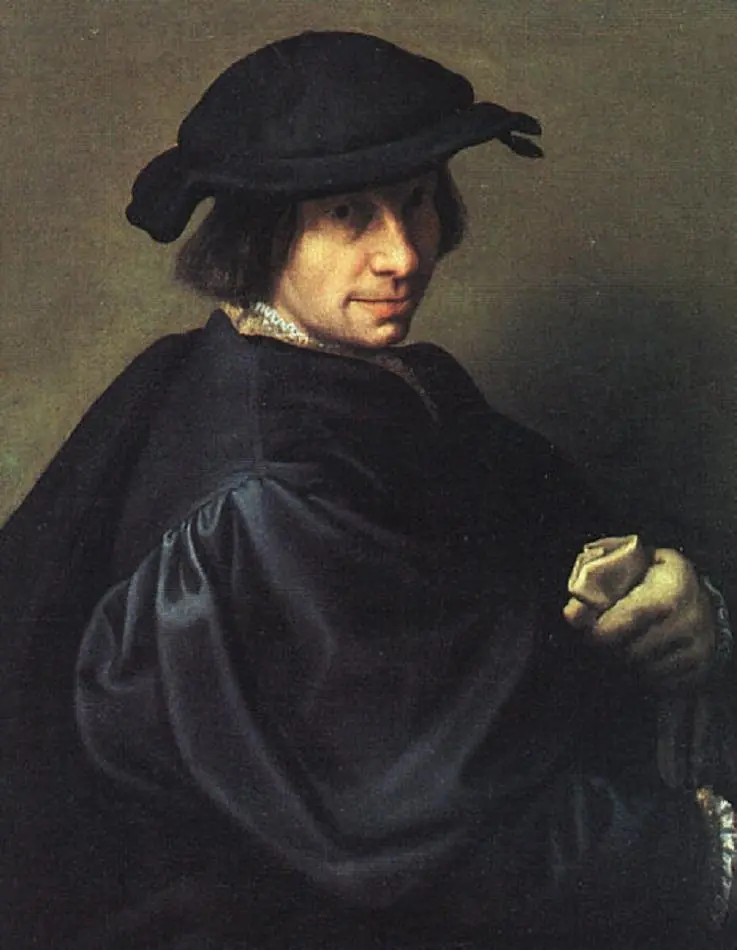
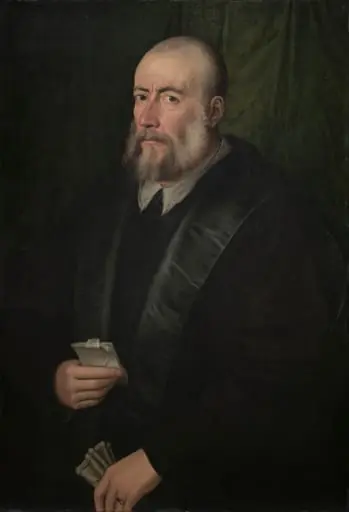
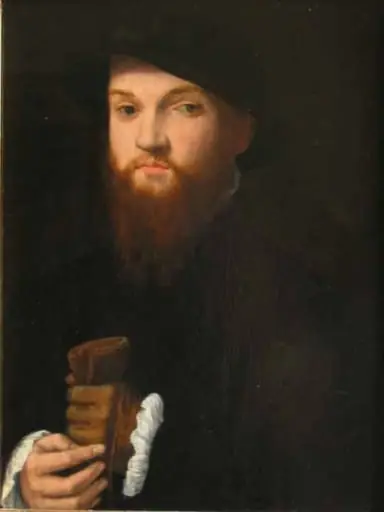
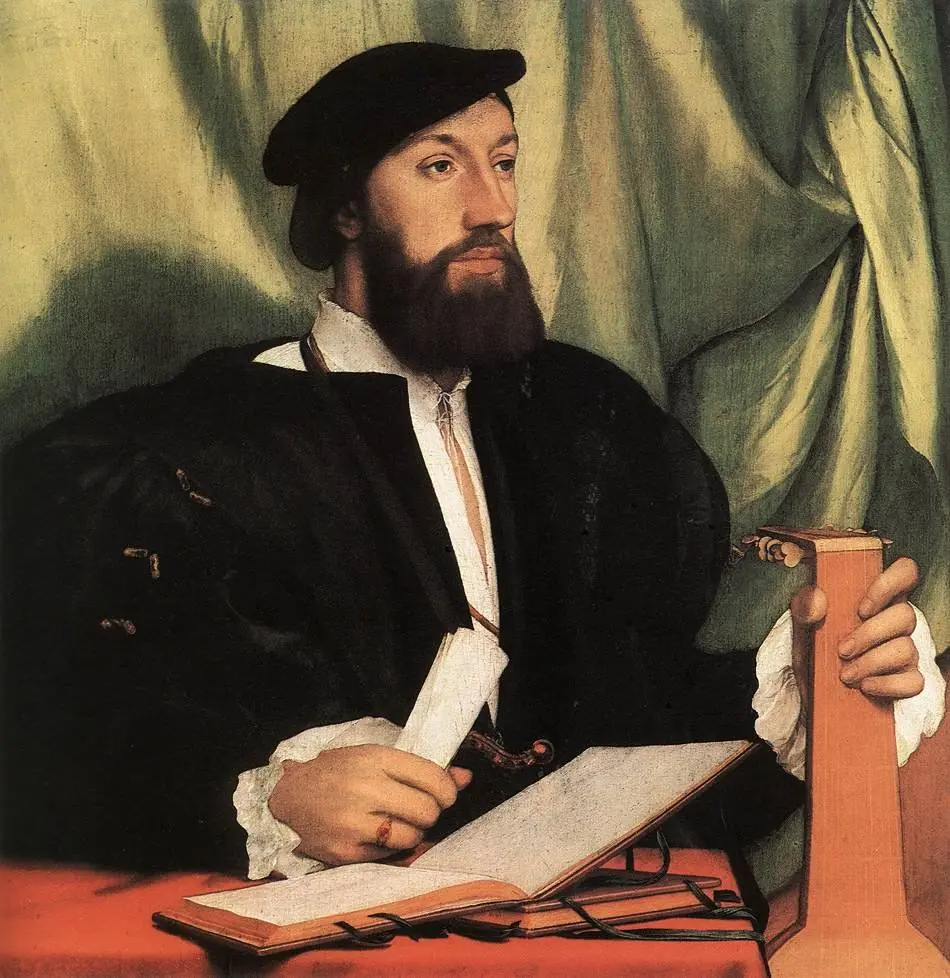
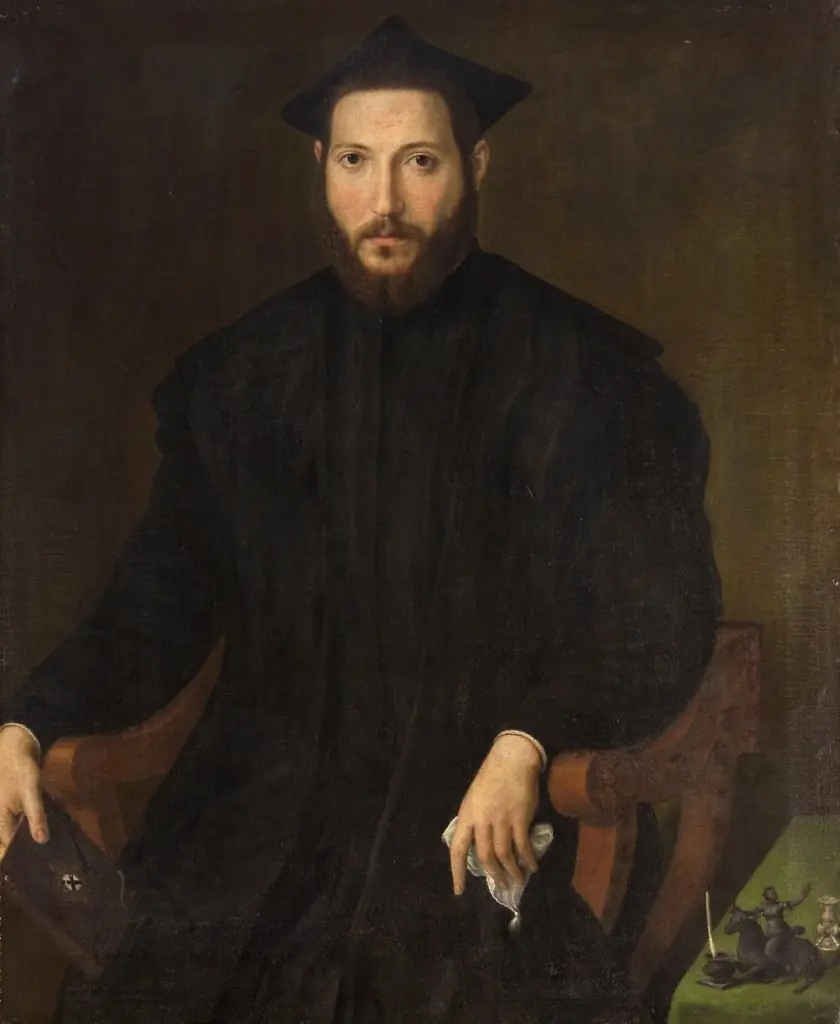
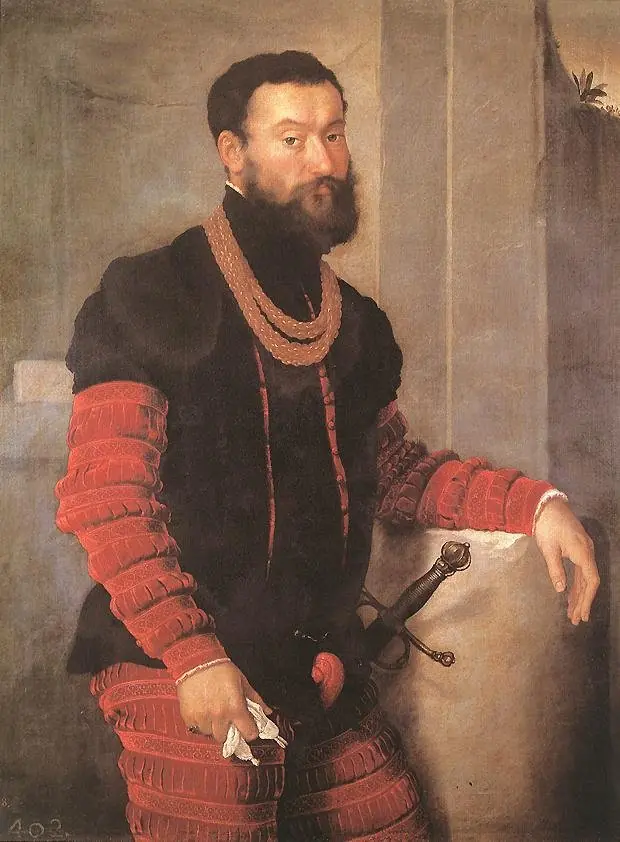
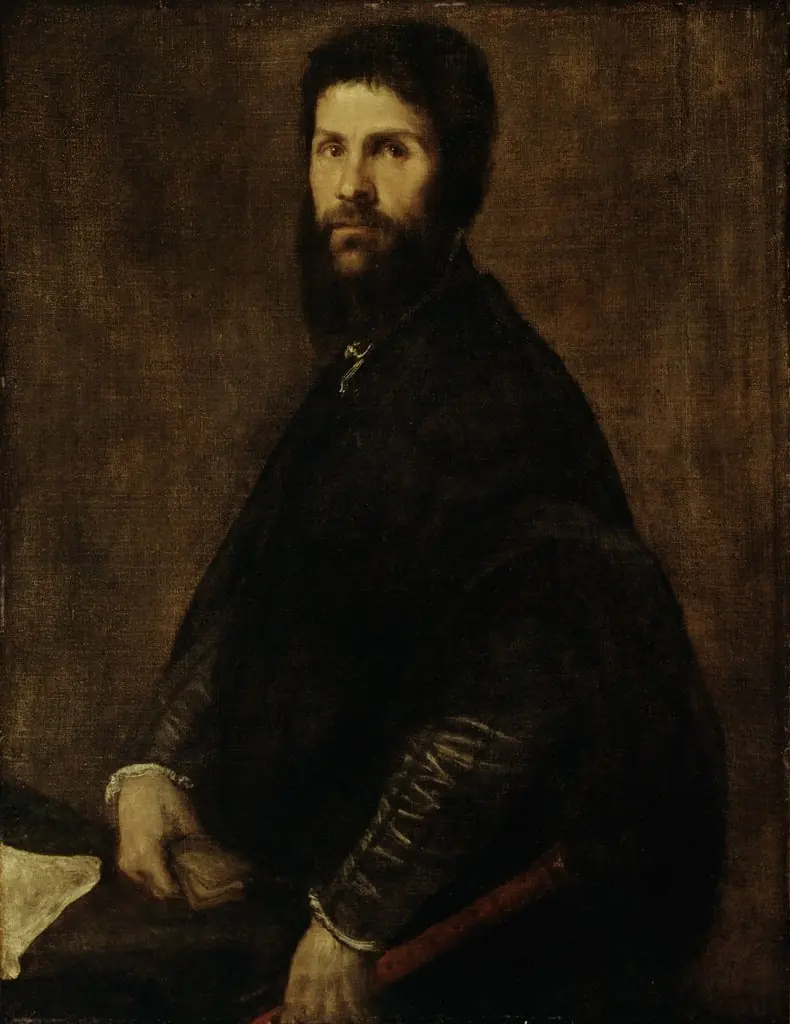
Portrait of a Man is an oil painting by the Mannerist artist Giulio Campi. It dates from 1550 and is held in the collection of the Hermitage Museum.
About this work
Overview
Created circa 1550, this oil painting by Giulio Campi portrays a solitary male figure seated in a dimly lit interior. The work exemplifies the Mannerist aesthetic that prevailed in mid‑sixteenth‑century Italy, and it is presently part of the State Hermitage Museum’s collection.
Subject & Meaning
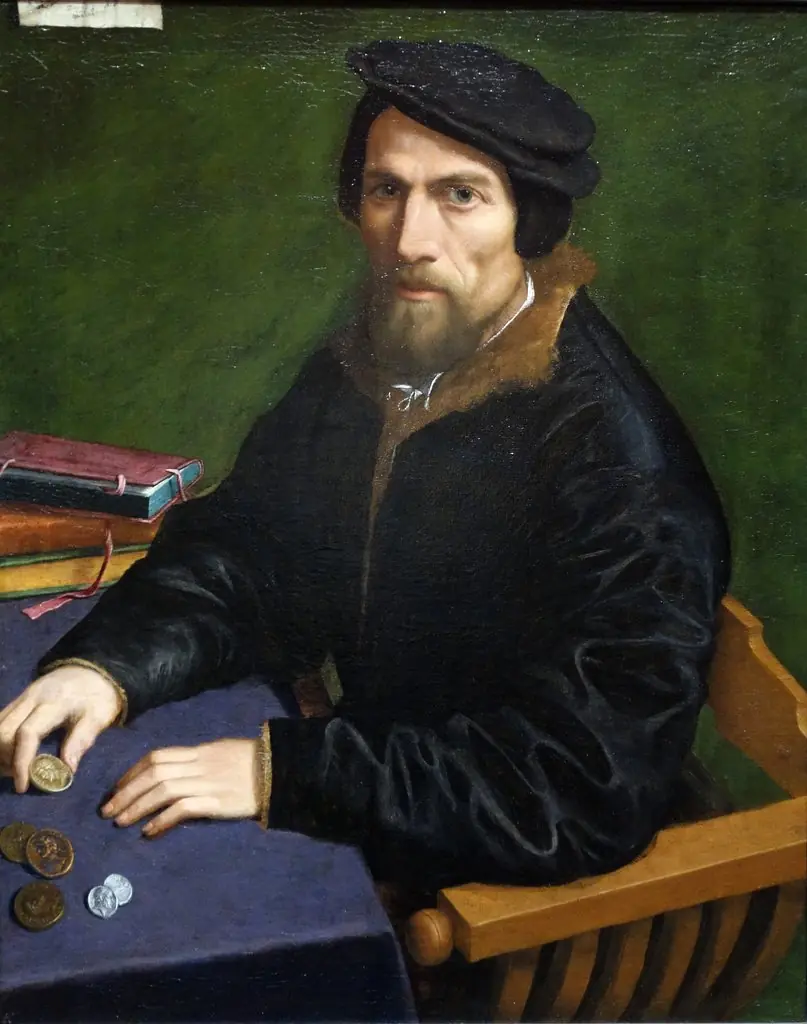
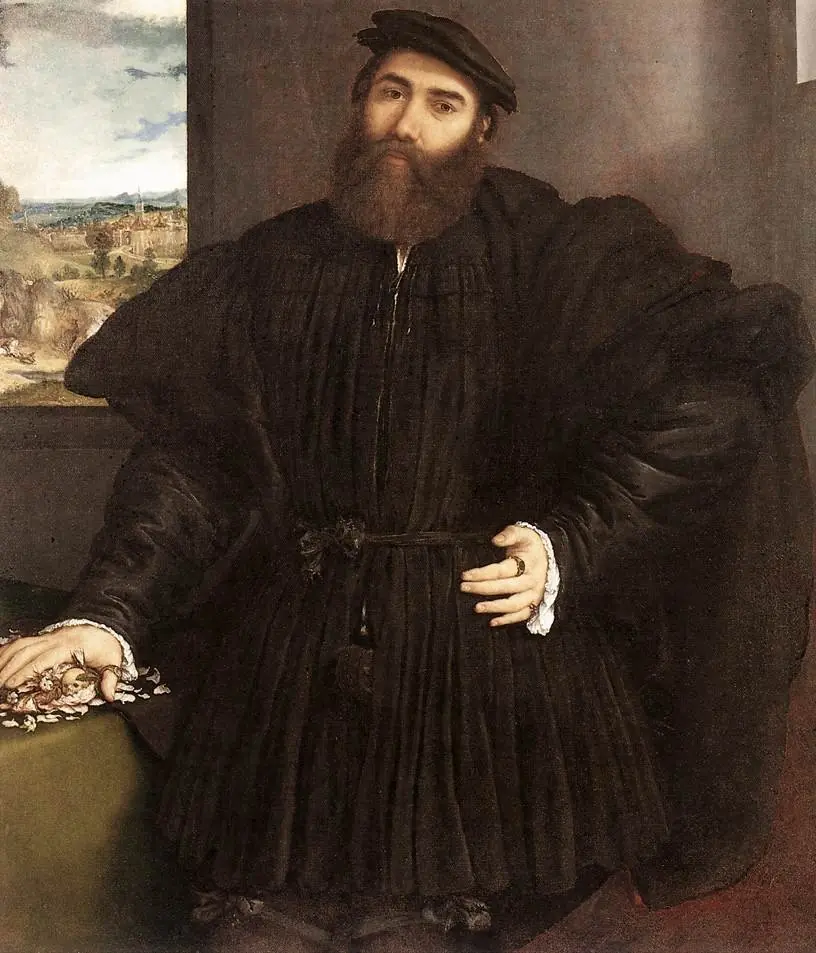
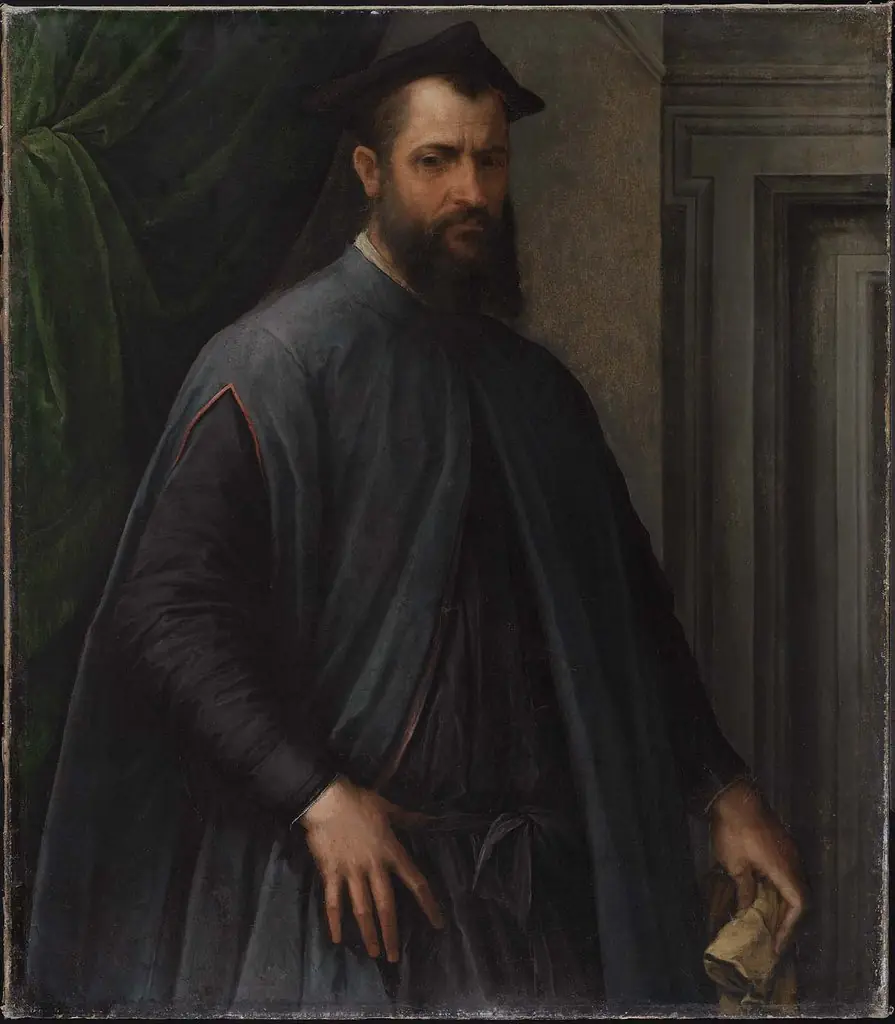
The sitter is dressed in dark attire—a black doublet with a wide collar, a matching hat, and a thick beard—suggesting a status of modest authority. He rests one hand on a green cushion and holds a small paper in the other, while a red cloth is partially visible beneath his arm, hinting at personal or professional attributes that remain unidentified.
Technique & Style
Campi employs a pronounced chiaroscuro, allowing a focused beam of light to illuminate the face and upper torso while the surrounding space recedes into shadow. This contrast sharpens the facial features and creates a three‑dimensional presence, a hallmark of Mannerist manipulation of light and form.
History & Provenance
The painting has been retained within the State Hermitage Museum’s holdings, where it entered the collection through acquisitions made in the 20th century. Its provenance prior to museum ownership is not extensively documented, but it reflects the broader circulation of Italian Mannerist works across European collections.
Context
Giulio Campi worked alongside his brothers, Vincenzo and Antonio, who were also active painters, contributing to a familial workshop in Cremona. The portrait aligns with contemporary trends of individualized representation, where artists emphasized psychological depth through controlled lighting and refined detail.
Artist & collection
Artist
Giulio Campi (1502 – 5 March 1572) was an Italian painter and architect. His brothers Vincenzo Campi and Antonio Campi were also renowned painters.