Artwork
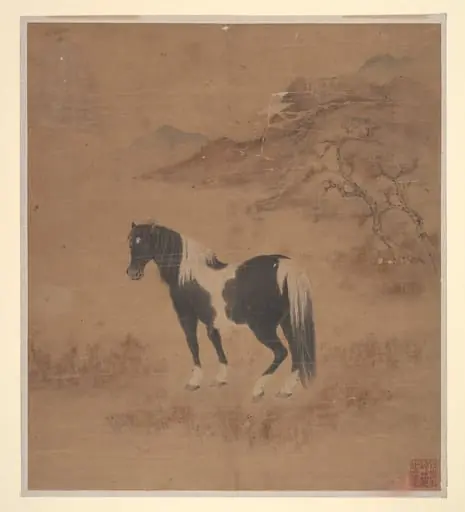
Four Afghan Steeds
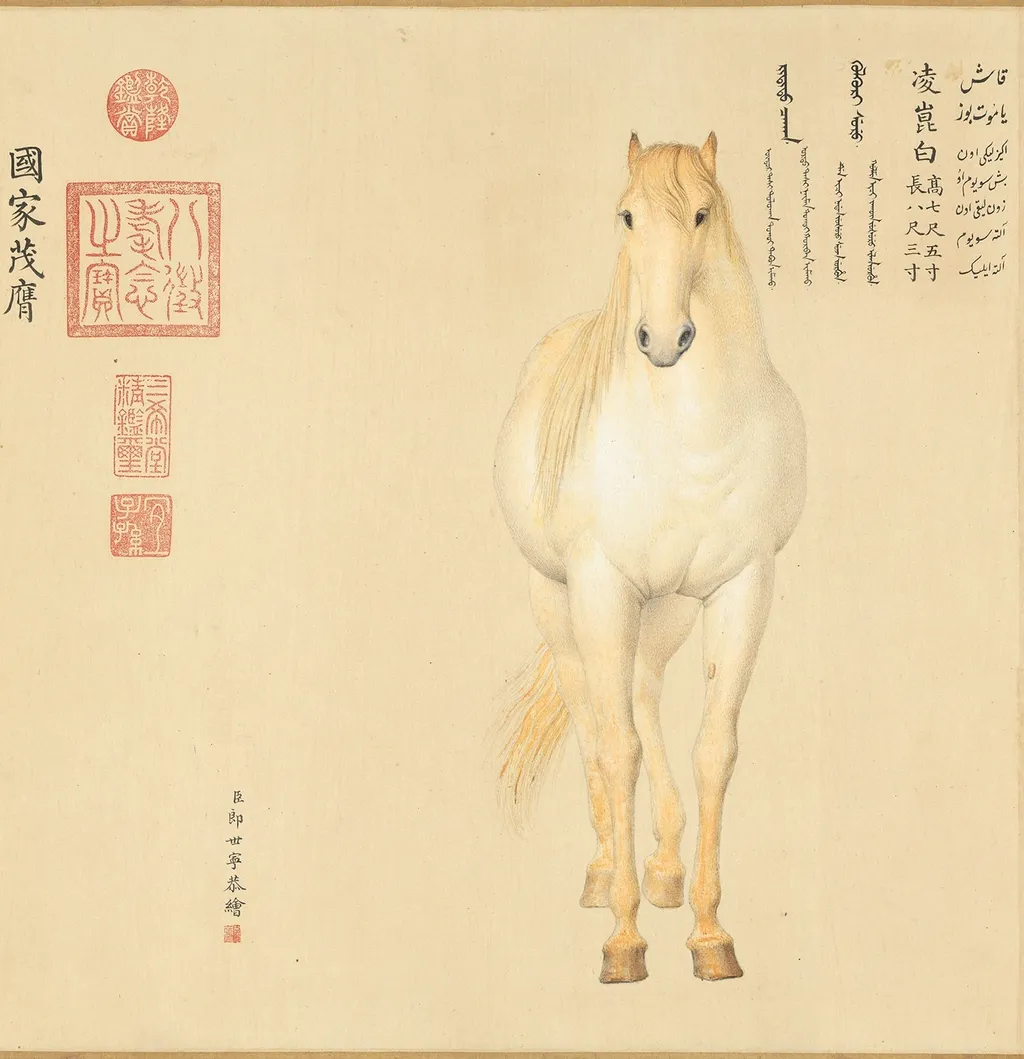
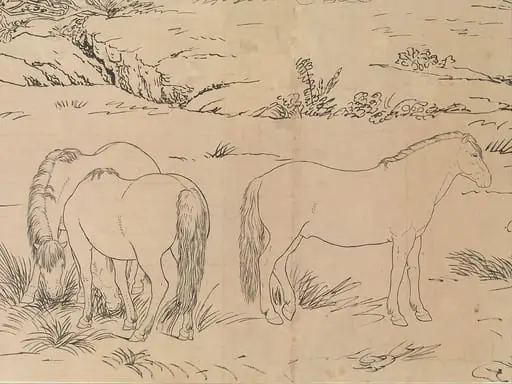
Four Afghan Steeds is an unspecified painting by Giuseppe Castiglione. It dates from 1737 and is held in the collection of the National Palace Museum.
About this work
Overview
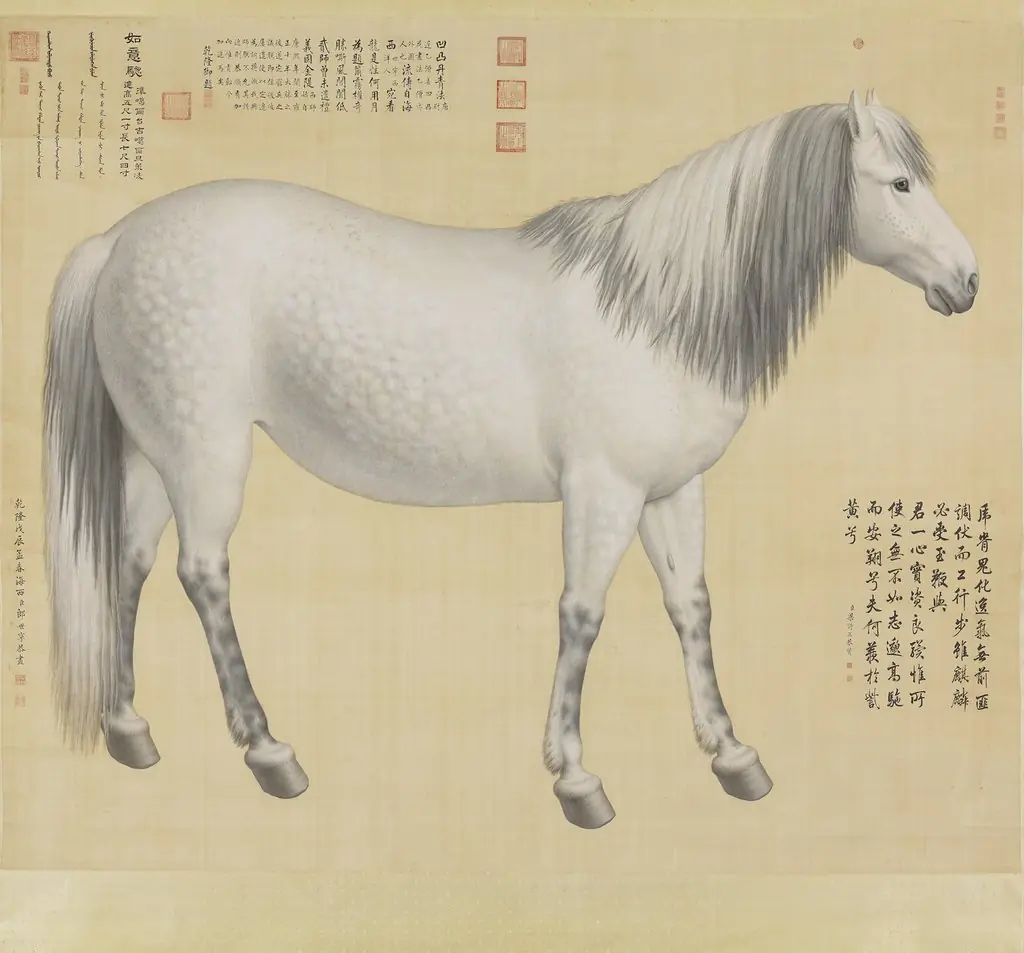
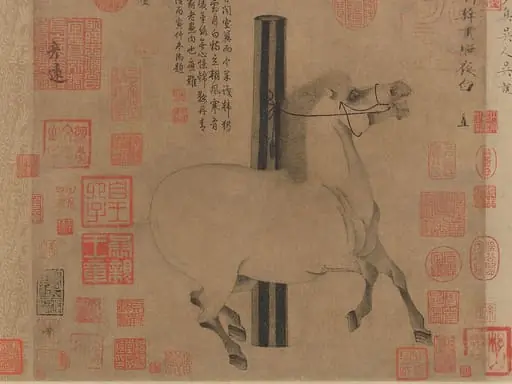
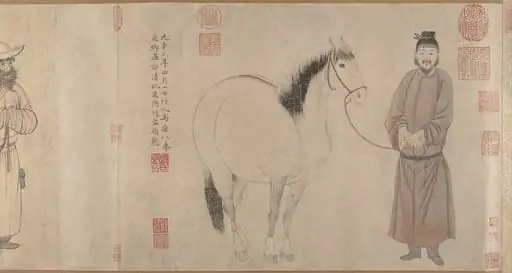
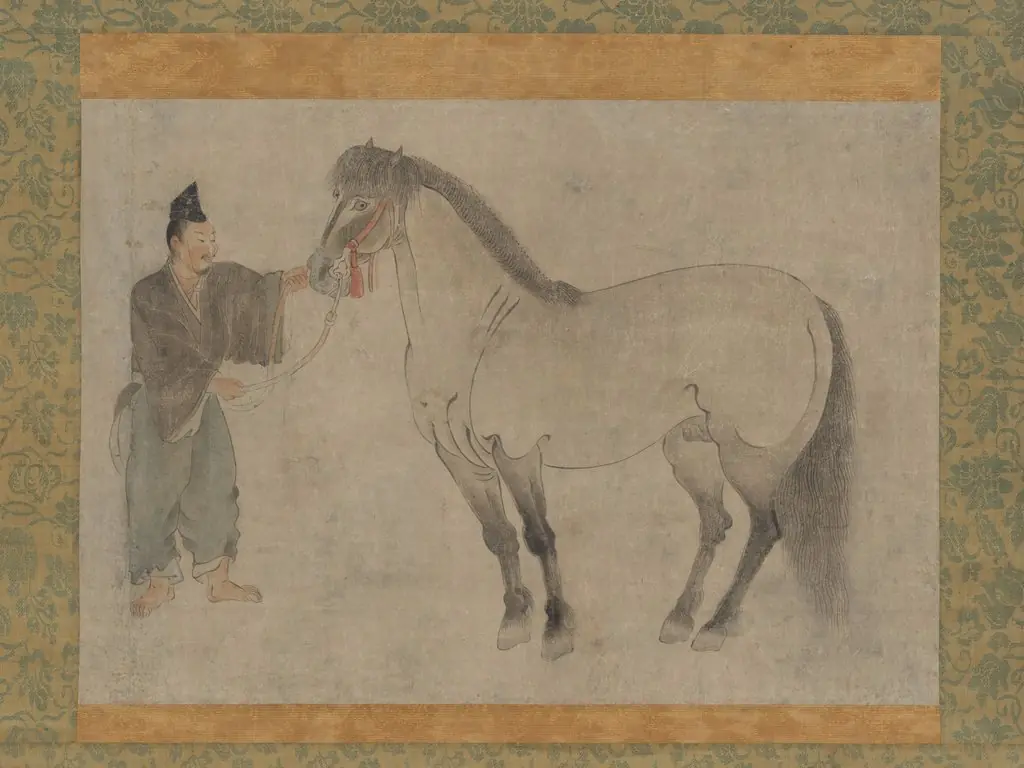
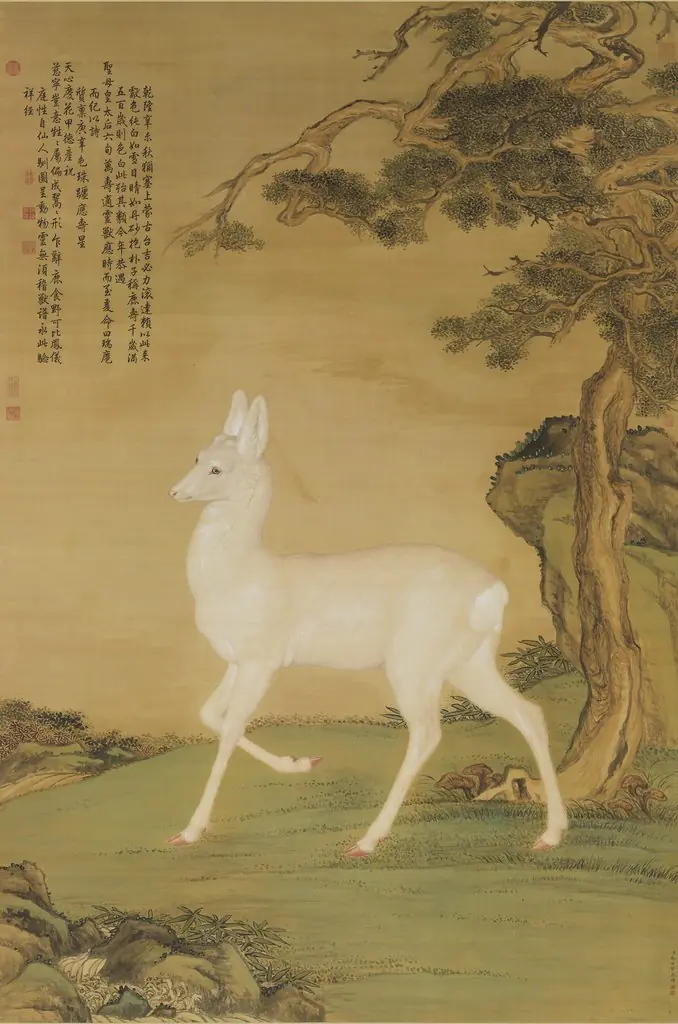
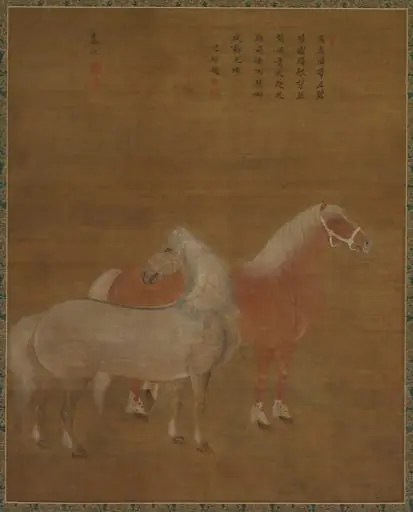
Giuseppe Castiglione’s painting titled Four Afghan Steeds, dated around 1737, depicts a single white horse rendered with a golden mane and tail. The animal faces the viewer directly, its ears alert and legs positioned straight, set against a light beige backdrop that includes red and black Chinese characters flanking the composition.
Subject & Meaning
The work focuses on the elegance and vigor of an Afghan horse, a breed prized for its strength and beauty. By presenting the animal in a poised stance, Castiglione emphasizes both its physical power and its refined temperament, qualities that were admired in the courtly circles for which he painted.
Technique & Style
Executed in a realistic manner, the painting showcases meticulous attention to muscular definition and facial expression. The artist employs a restrained palette, allowing the horse’s white coat to dominate the scene while the muted background recedes, creating a subtle contrast that highlights the animal’s form without ornamental distraction.
History & Provenance
Created in the early eighteenth century, Four Afghan Steeds has been part of the collection of the National Palace Museum in Taipei. The museum acquired the piece as part of its holdings of works by Castiglione, who served as a court painter bridging European and Chinese artistic traditions.
Context
Castiglione, an Italian Jesuit missionary, spent much of his career at the Chinese imperial court, where he blended Western perspective techniques with Chinese brushwork. This painting reflects that synthesis, combining precise anatomical rendering with the decorative calligraphic elements typical of Chinese court art of the period.
Artist & collection