Artwork
Auspicious Roe Deer
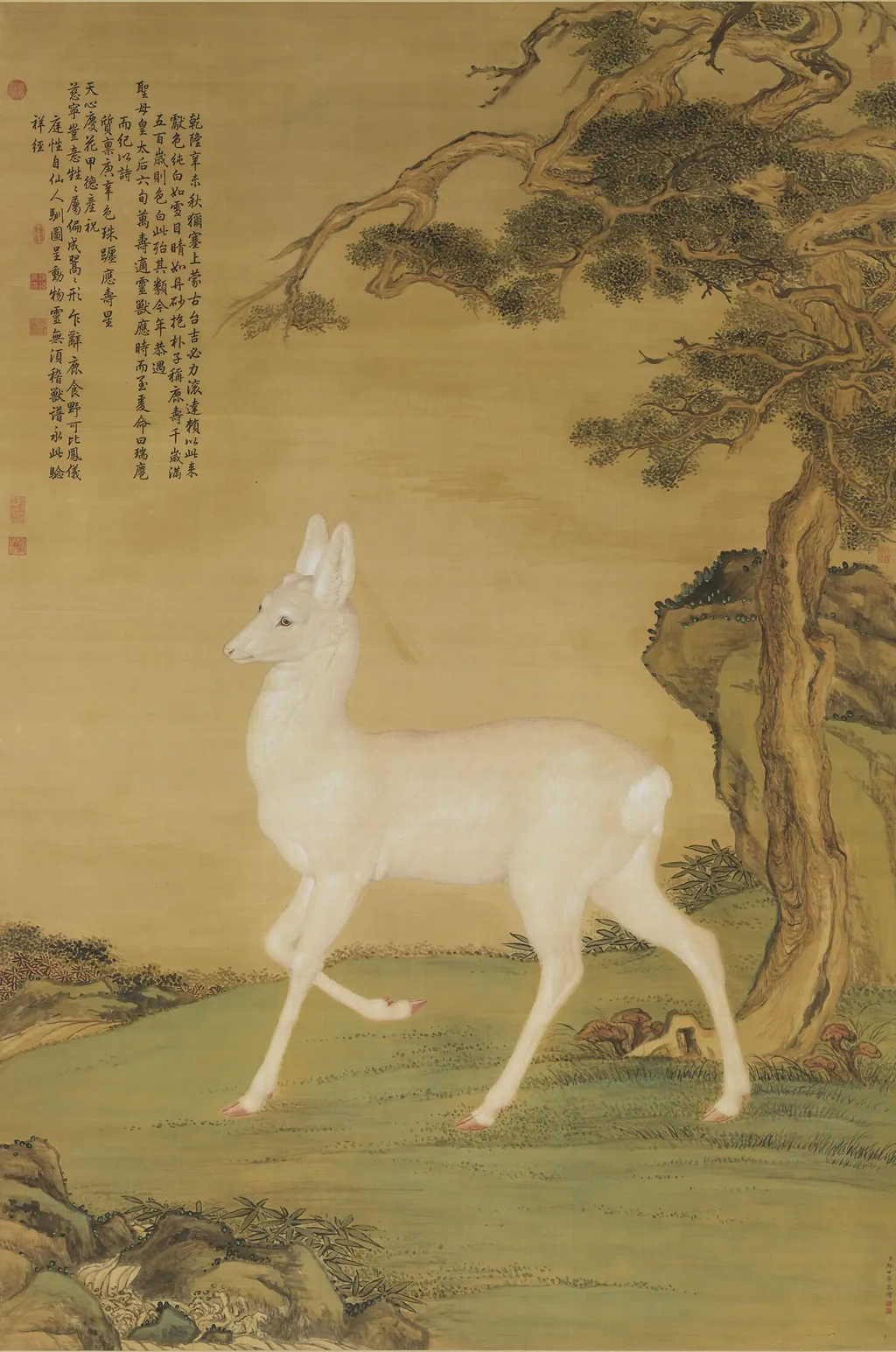
Auspicious Roe Deer is an unspecified painting by the Rococo painting artist Giuseppe Castiglione. It dates from 1751 and is held in the collection of the National Palace Museum.
About this work
The painting is called Auspicious Roe Deer.
It was made by Giuseppe Castiglione in 1751.
You can find it at the National Palace Museum, which suggests it's a significant work.
The artist used silk as the medium, which is an interesting choice.
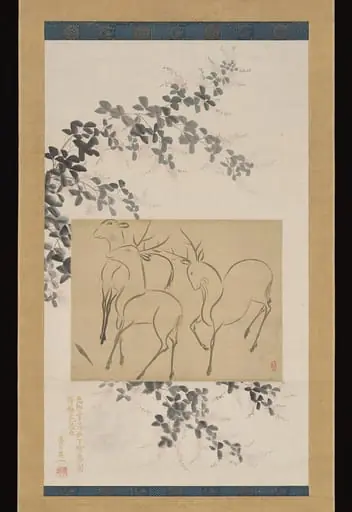
The painting depicts deer, a common subject in animal art.
To learn more about this style, look up the subject: deer.
Overview
Created in 1751, *Auspicious Roe Deer* is a silk painting by the Italian Jesuit artist Giuseppe Castiglione, who worked at the Qing court. The work is part of the collection of Taiwan’s National Palace Museum, where it is displayed among other examples of Sino‑European court art.
Subject & Meaning
The composition centers on a pair of roe deer, an animal traditionally associated with longevity and good fortune in Chinese symbolism. By presenting the creatures in a naturalistic pose, the painting conveys both the aesthetic appreciation of wildlife and the auspicious connotations that the deer carries in imperial iconography.
Technique & Style
Castiglione employed the delicate silk support typical of Chinese court paintings, applying fine brushwork that blends Western perspective with Chinese decorative conventions. The pigment layers are restrained, allowing the subtle gradations of the deer's coat and the surrounding foliage to emerge with a quiet elegance characteristic of mid‑18th‑century court art.
History & Provenance
After its execution for the Qianlong Emperor’s atelier, the painting entered the imperial collection and survived the tumultuous transfers of the palace holdings to Taiwan in the mid‑20th century. It entered the National Palace Museum’s holdings as part of the larger assemblage of artworks that accompanied the relocation of the Chinese imperial treasures.
Artist & collection



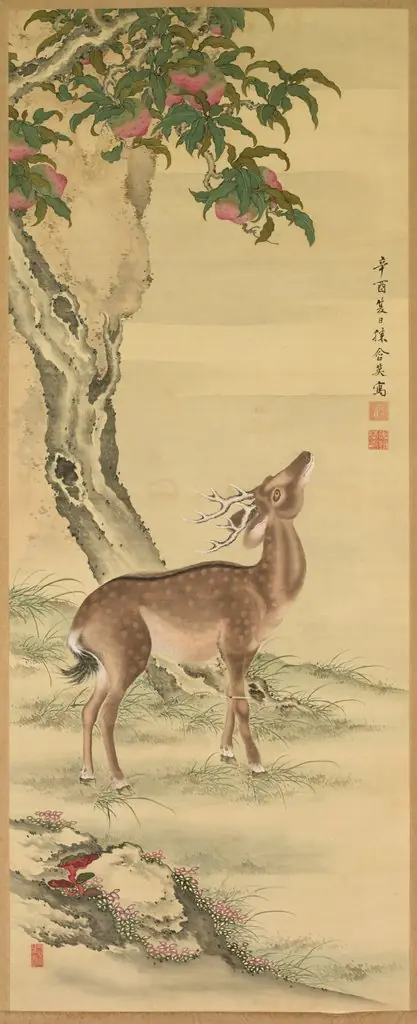 Symbols of Longevity: Deer under Peach and Pine
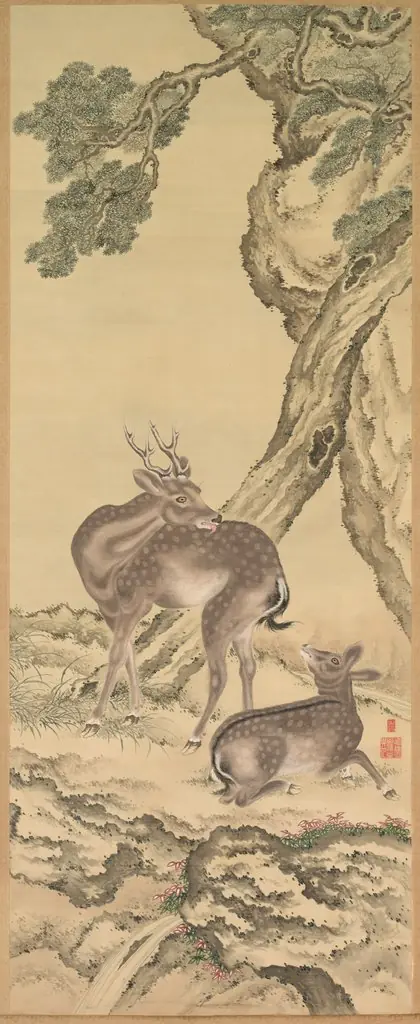
 Symbols of Longevity: Deer under Peach and Pine (Pine) (right)
 Symbols of Longevity: Deer under Peach and Pine (Pine) (right)
 Symbols of Longevity: Deer under Peach and Pine (Peach) (left)
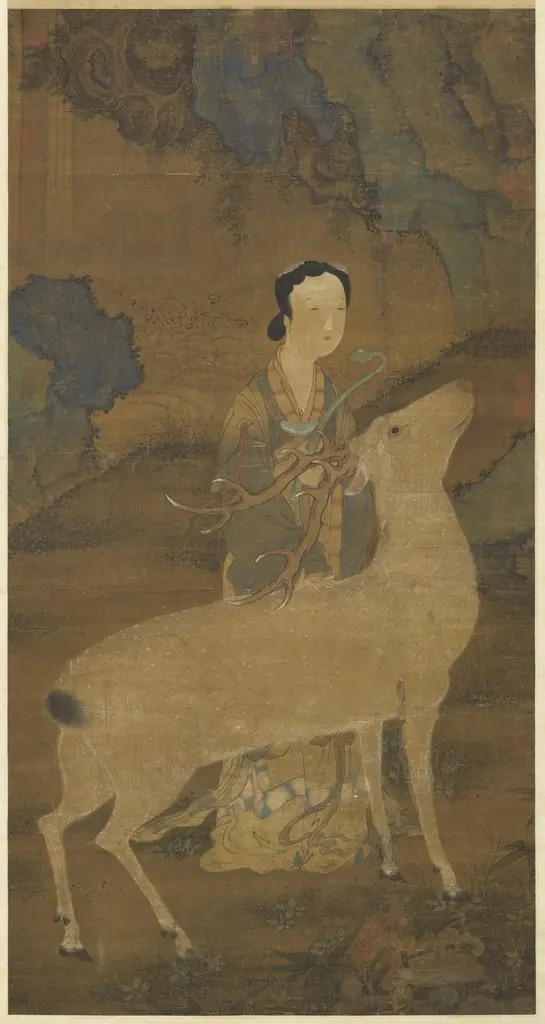 宋人畫仙巖壽鹿 軸
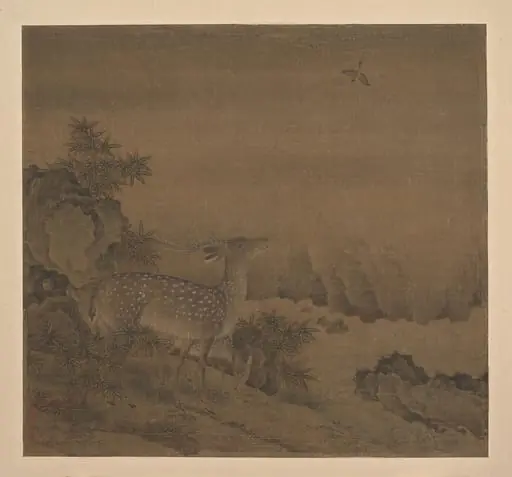 明 佚名 溪鹿圖 冊頁|Deer by a Pine Stream
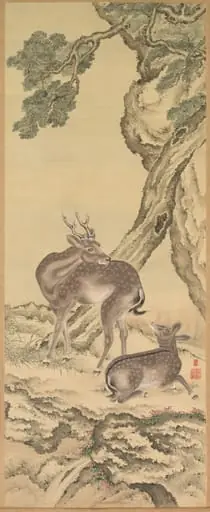 Symbols of Longevity: Deer under Peach and Pine (Peach) (left)
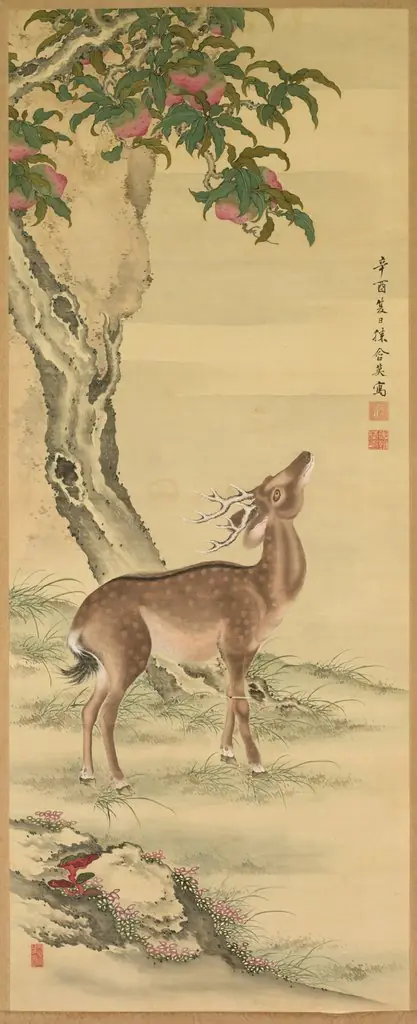
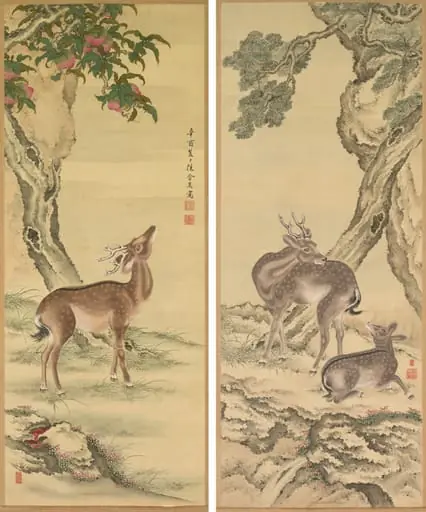 Symbols of Longevity: Deer under Peach and Pine
 Untitled