Artwork
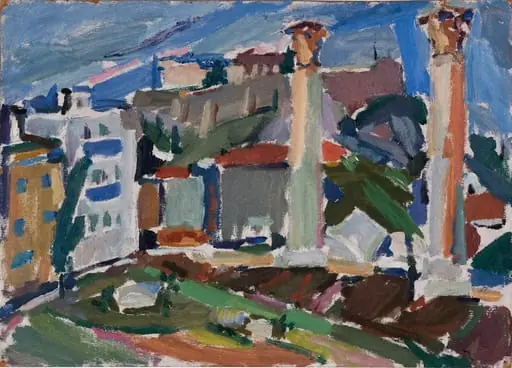
Landscape: Columns of Olympian Zeus
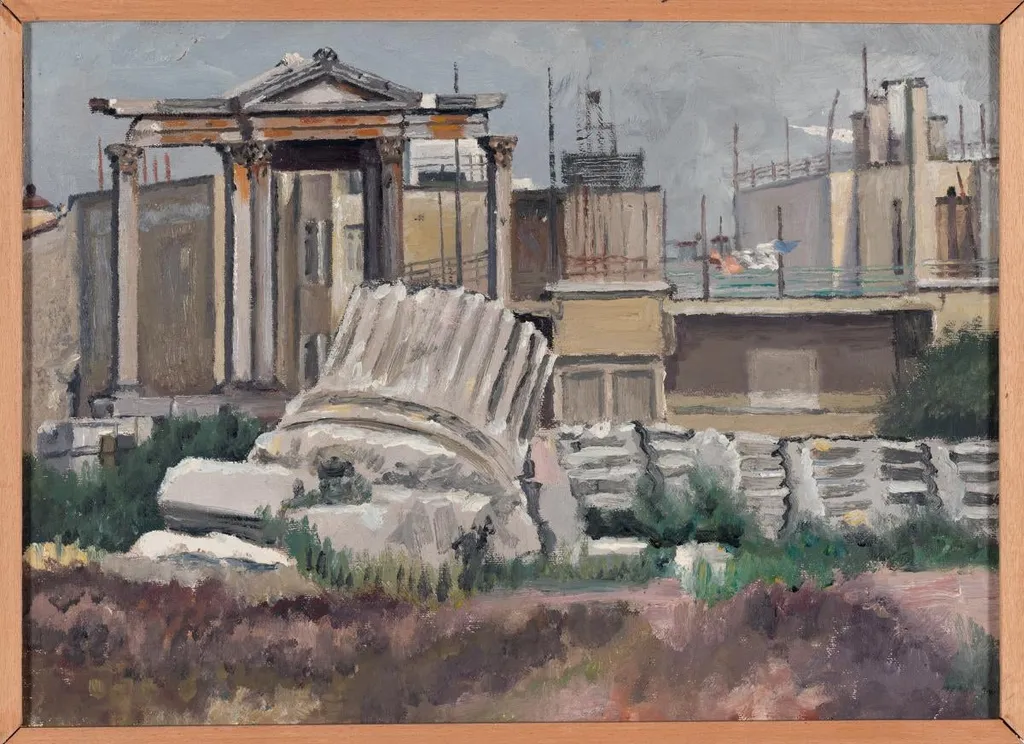
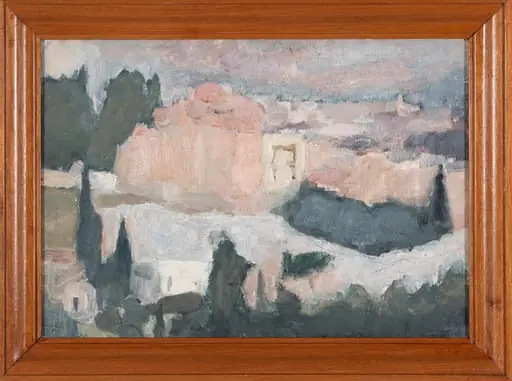
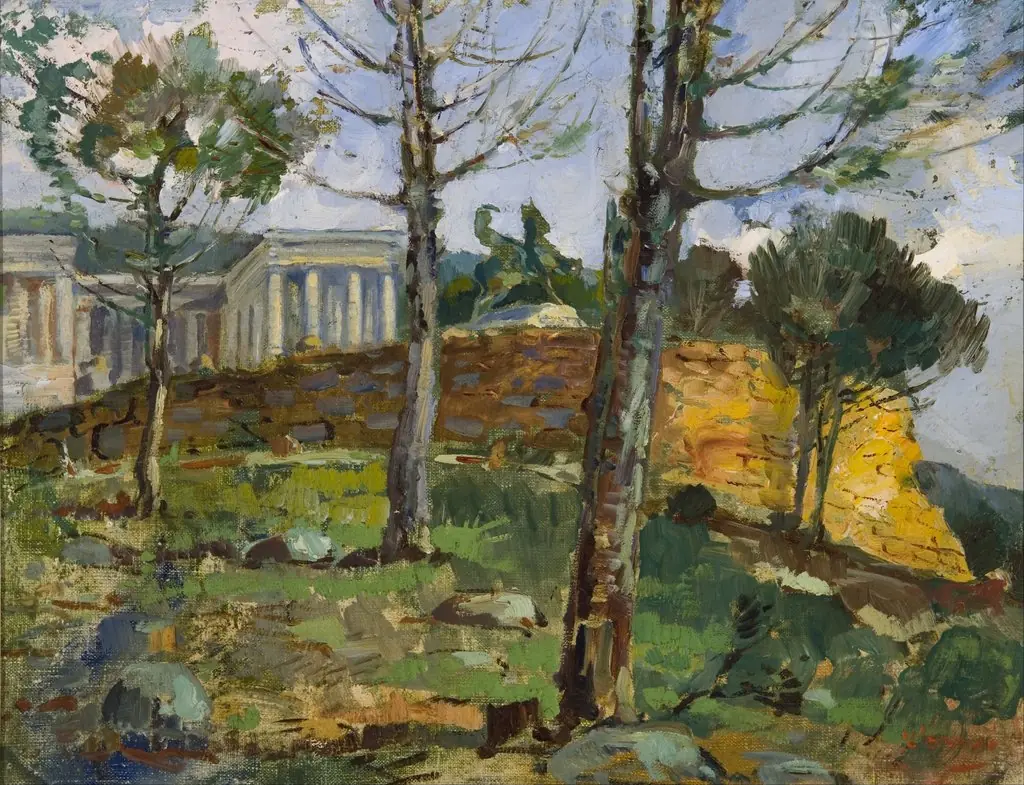
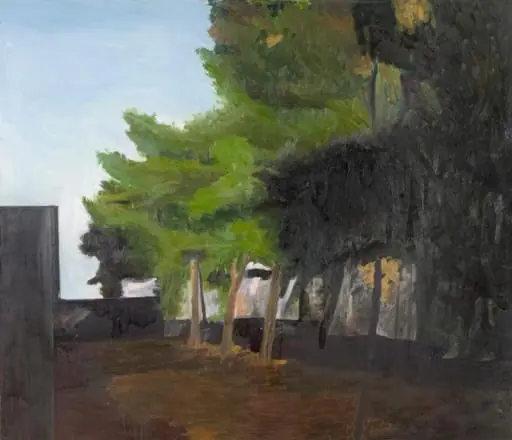
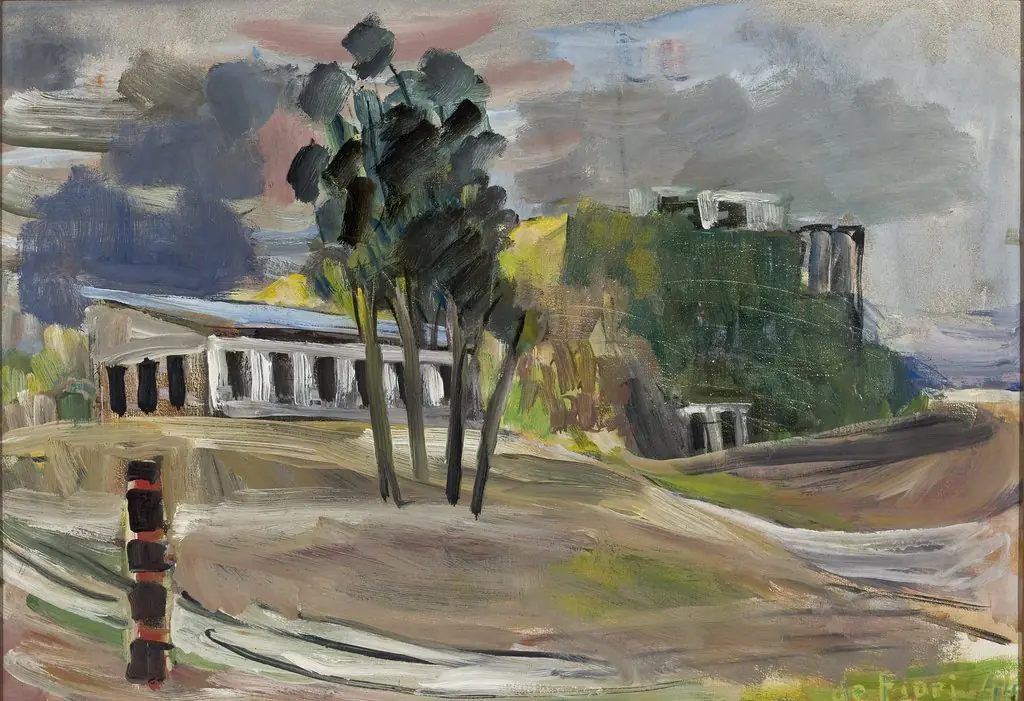
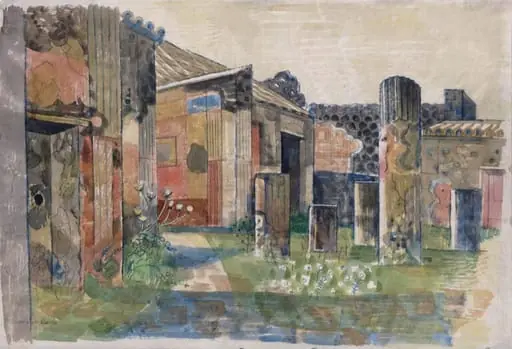
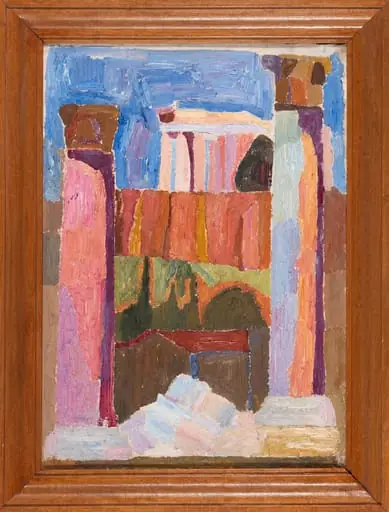
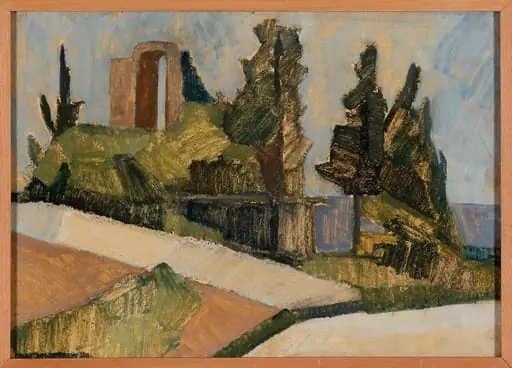
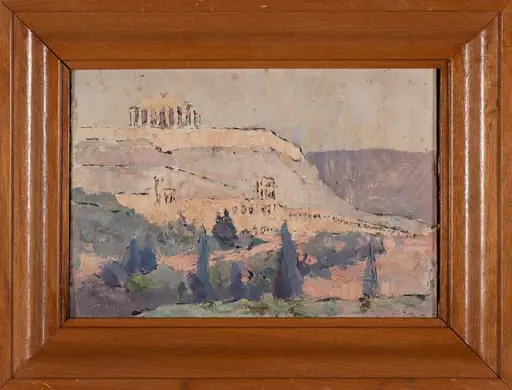
Landscape: Columns of Olympian Zeus is an unspecified painting by Glinos Antonis. It dates from 1958 and is held in the collection of the Athens School of Fine Arts. Painted in 1958 by Antonis Glinos, this landscape depicts a fragment of ancient architecture amid modern industrial development.
About this work
Overview
Painted in 1958 by Antonis Glinos, this landscape depicts a fragment of ancient architecture amid modern industrial development. The work is part of the Museum of Ethnography’s collection and reflects a postwar Greek context where historical remnants coexisted with rapid urbanization. Its muted palette and textured brushwork emphasize the tension between decay and progress.
Subject & Meaning
The painting juxtaposes the weathered stone columns of a classical site with the looming forms of a shipyard and other industrial structures. The half-collapsed arch suggests erosion over time, while the mechanical elements imply human intervention. This visual dialogue questions the continuity of cultural identity amid modernization, without overt judgment.
Technique & Style
Glinos employs thick, tactile brushstrokes to render the stone surfaces, using impasto to convey the weight and texture of ancient masonry. The background is rendered more loosely, with thin washes of gray, brown, and faint blue-green to suggest distance and atmosphere. The absence of bright color reinforces a somber, contemplative tone.
History & Provenance
Created in 1958, the painting entered the Museum of Ethnography’s holdings shortly after its completion. It was not widely exhibited during Glinos’s lifetime but gained attention in later decades as scholars reevaluated postwar Greek art. Its preservation in a museum focused on cultural heritage underscores its thematic relevance.
Context
In late 1950s Greece, industrial expansion transformed coastal regions, often encroaching on archaeological sites. Glinos’s work responds to this shift, capturing the physical and symbolic overlap of antiquity and modernity. The painting reflects a broader cultural unease about the cost of progress, common among artists of the period.
Legacy
Though not widely known outside Greece, the painting is cited in studies of postwar Greek landscape painting for its quiet critique of modernization. It remains a reference point for artists and historians examining how visual art documents societal change, particularly in regions with layered historical layers.
Artist & collection
Artist
This Greek artist made two striking works in 1958: a painting called *Landscape: Columns of Olympian Zeus* and a metal sculpture titled *Daughter’s head*.