Artwork
Study for "The Parthenon"
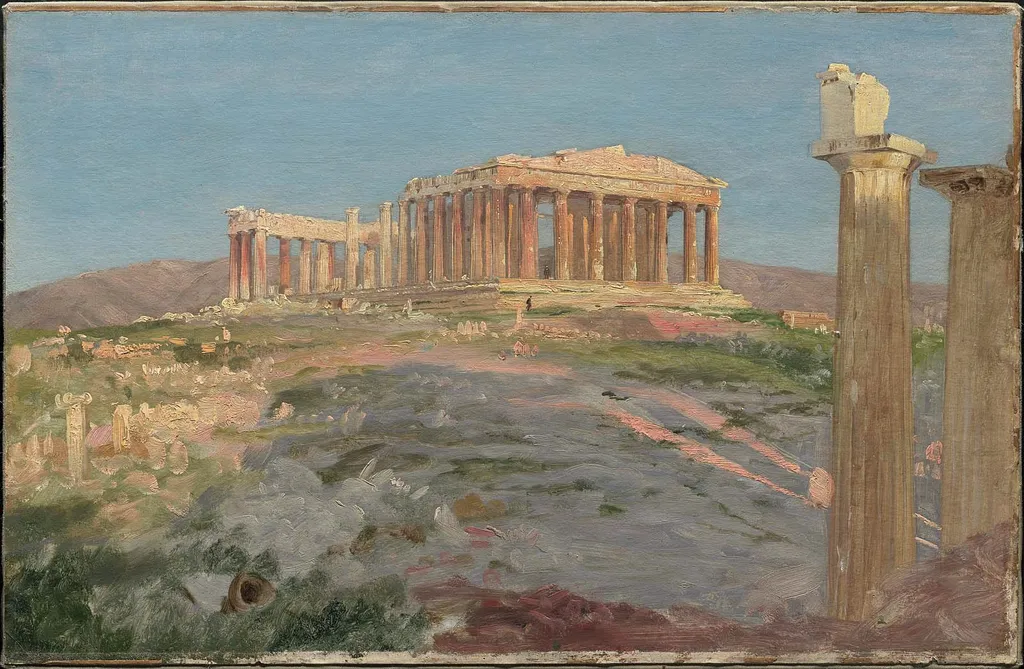
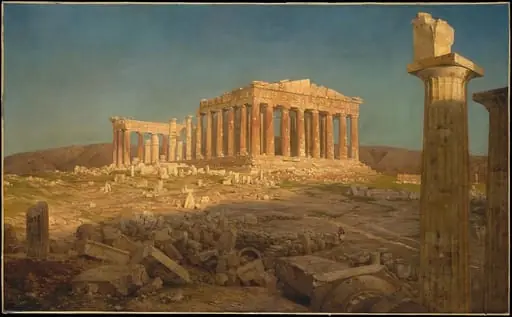
Study for "The Parthenon" is an unspecified painting by Frederic Edwin Church. It dates from 1873 and is held in the collection of the Museum of Fine Arts Boston.
About this work
Overview
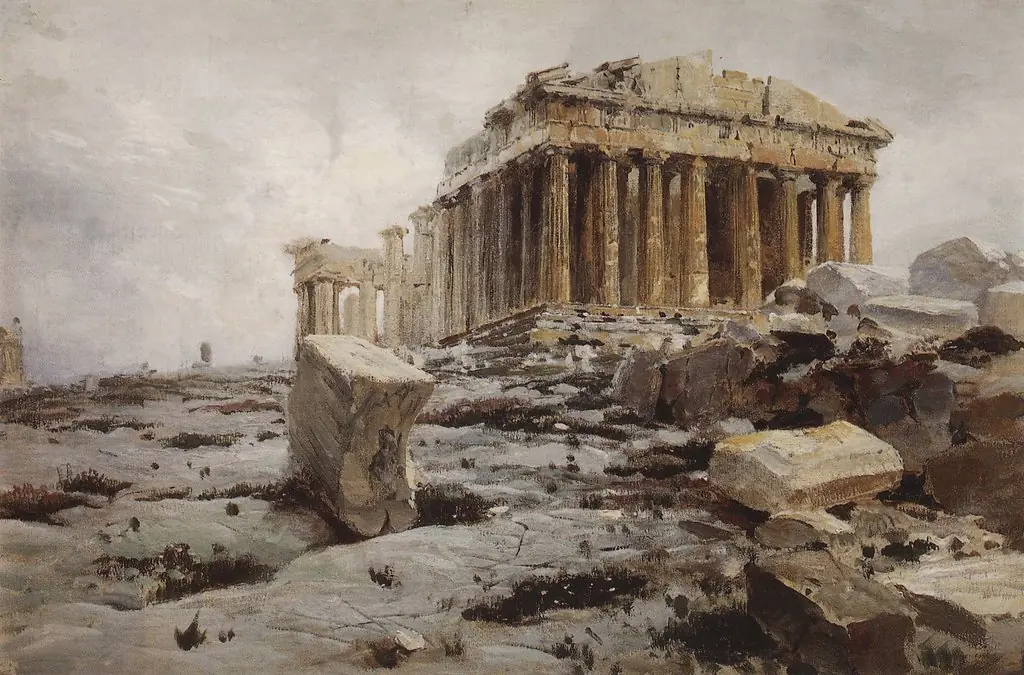
Created around 1873, this oil painting by Frederic Edwin Church serves as a preparatory study for a larger work depicting the Parthenon. Executed with careful observation, it captures the ancient temple nestled within a quiet, overgrown landscape. The piece reflects Church’s interest in architectural ruins as subjects of contemplative naturalism, rather than grand historical spectacle.
Subject & Meaning
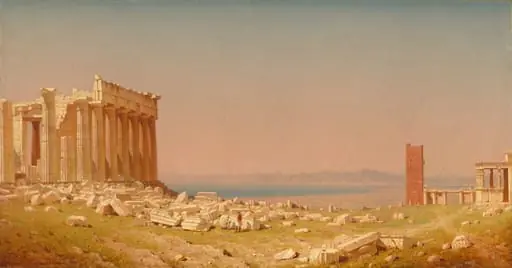
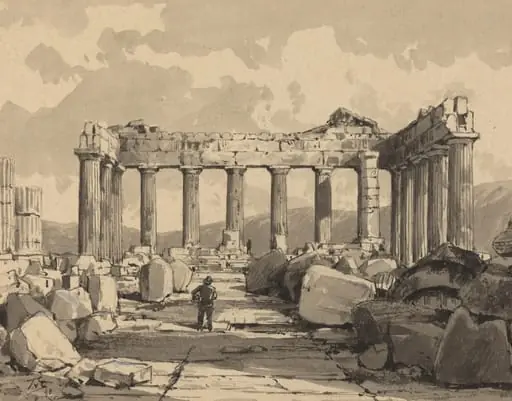
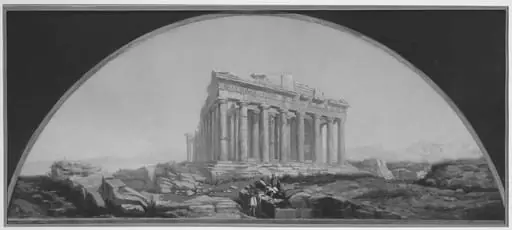
The Parthenon appears in the middle distance, partially obscured by vegetation and crumbling stonework. Rather than emphasizing its classical grandeur, Church presents it as a relic absorbed by time and nature. The foreground’s wild foliage and fragmented masonry suggest decay and quiet endurance, inviting reflection on the passage of civilizations rather than their triumphs.
Technique & Style
Church employed a detailed, observational approach, rendering architectural elements with precision while allowing natural forms to soften the composition. The palette is restrained—earthy browns, olive greens, and muted grays dominate—creating a somber, atmospheric tone. Brushwork is controlled yet fluid, balancing topographical accuracy with a sense of quiet stillness.
History & Provenance
The painting was produced during Church’s later period, following his travels in Europe and the Middle East. It remained in his possession until his death, after which it entered the collection of the Museum of Fine Arts, Boston, where it has been held since the early 20th century. Its status as a study suggests it was part of a broader project, though the final work was never completed.
Context
In the 1870s, American artists increasingly turned to European antiquities as subjects for meditative landscape painting. Church’s focus on the Parthenon aligns with broader 19th-century interests in classical heritage, but his treatment diverges from romanticized depictions, instead emphasizing erosion, silence, and the quiet reclamation of ruins by the natural world.
Legacy
This study exemplifies Church’s shift from monumental landscapes to more introspective, ruin-focused compositions. While less celebrated than his earlier works, it reveals his evolving engagement with time, memory, and the impermanence of human achievement. It remains a quiet testament to his commitment to observing nature’s reclamation of cultural monuments.
Artist & collection

Artist
Frederic Edwin Church was an American landscape painter born in Hartford, Connecticut.