Artwork
The Dance of the Sugar-Plum Fairy
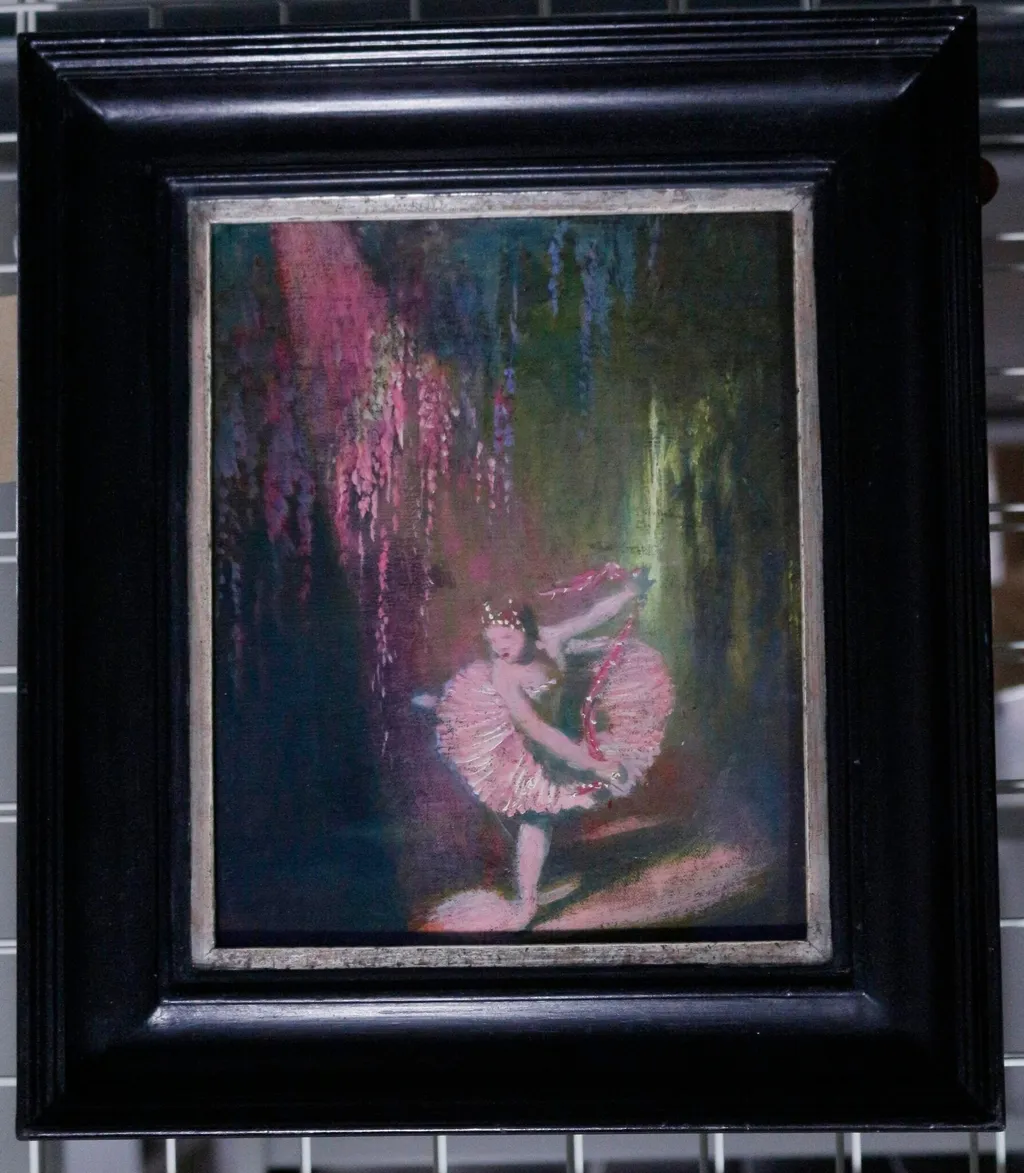
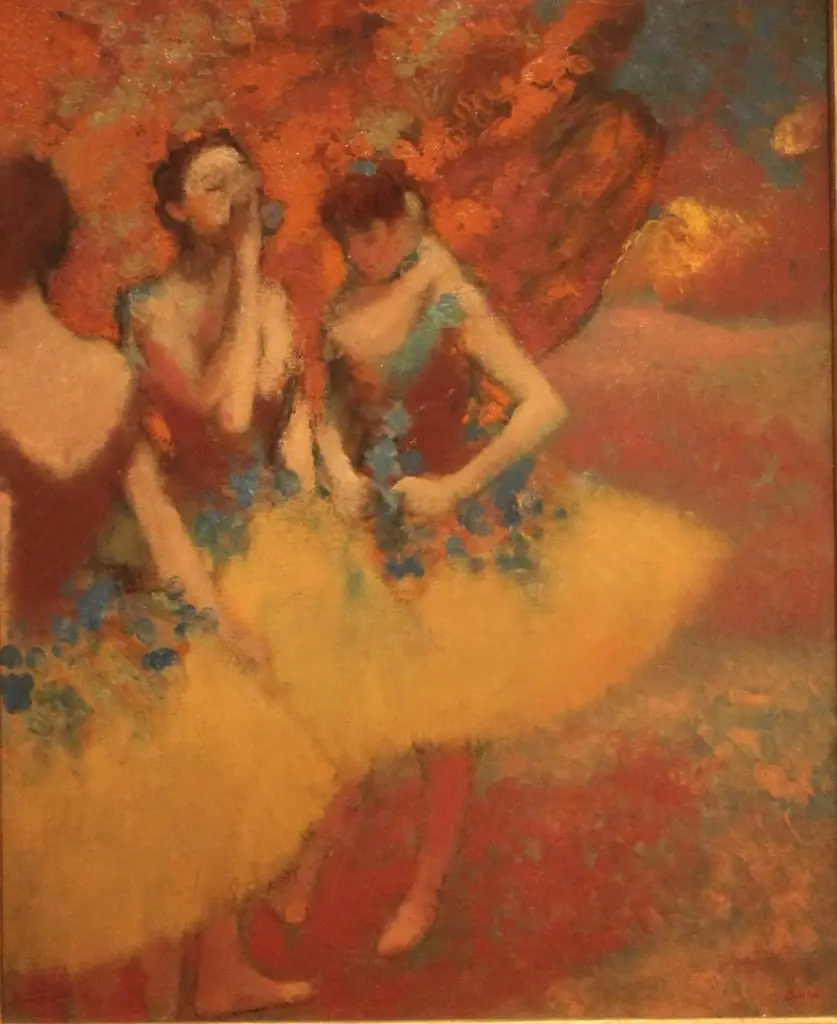
The Dance of the Sugar-Plum Fairy is an oil painting by the Post-Impressionist artist Glyn Warren Philpot. It dates from 1908 and is held in the collection of the Victoria and Albert Museum. This oil on canvas painting depicts a solitary dancer in a pink costume, positioned prominently in the lower right.
About this work
Overview
This oil on canvas painting depicts a solitary dancer in a pink costume, positioned prominently in the lower right.
This oil on canvas painting depicts a solitary dancer in a pink costume, positioned prominently in the lower right. The composition is quiet and intimate, with no overt narrative or dramatic action. A faint sketch on the reverse, rendered in thin brown wash, suggests the artist used the reverse side for preliminary study, revealing a working process that valued experimentation over polished finish.
Subject & Meaning
The subject is a dancer, likely representing the Sugar-Plum Fairy from Tchaikovsky’s The Nutcracker, though no explicit reference is made in the imagery. Her stillness and soft focus suggest contemplation rather than performance. The absence of context or supporting figures isolates her, transforming the scene into a meditation on grace and quiet presence rather than theatrical spectacle.
Technique & Style
The dancer’s dress is rendered with layered, translucent glazes that capture subtle shifts in light, while the background remains muted and indistinct, drawing attention to form over setting. The brushwork is delicate, avoiding sharp definition. The reverse sketch, executed with minimal pigment, indicates the artist explored composition and gesture separately, treating the canvas as a site of iterative inquiry.
History & Provenance
The painting’s early ownership is undocumented, but its material and method align with early 20th-century British studio practices. The presence of a preparatory sketch on the reverse suggests it was not commissioned, but rather a personal study. No exhibition history or collector records are known prior to its inclusion in institutional collections in the late 20th century.
Context
Created during a period when British artists were increasingly turning to dance and theatrical subjects as vehicles for formal experimentation, this work reflects broader interests in movement, light, and the body. Unlike grand stage depictions, it favors intimacy and restraint, aligning with quieter modernist tendencies that valued internal mood over external spectacle.
Legacy
Though not widely exhibited, the painting offers insight into the private practice of artists who engaged with ballet as a subject without seeking public acclaim. Its dual-sided surface—finished front and unfinished back—preserves a moment of artistic process, making it a quiet testament to the unseen labor behind representational art.
Artist & collection

Artist
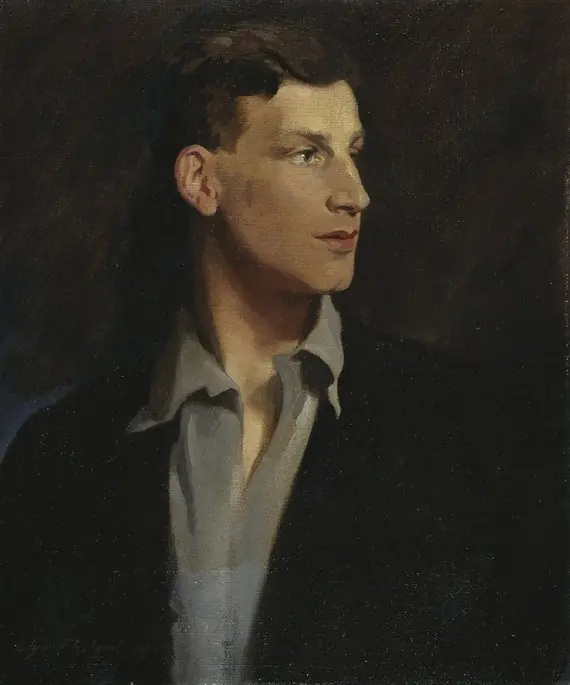
Glyn Warren Philpot was a British painter and sculptor, best known for his portraits of contemporary figures such as Siegfried Sassoon and Vladimir Rosing.