Artwork
Carlotta Grisi,
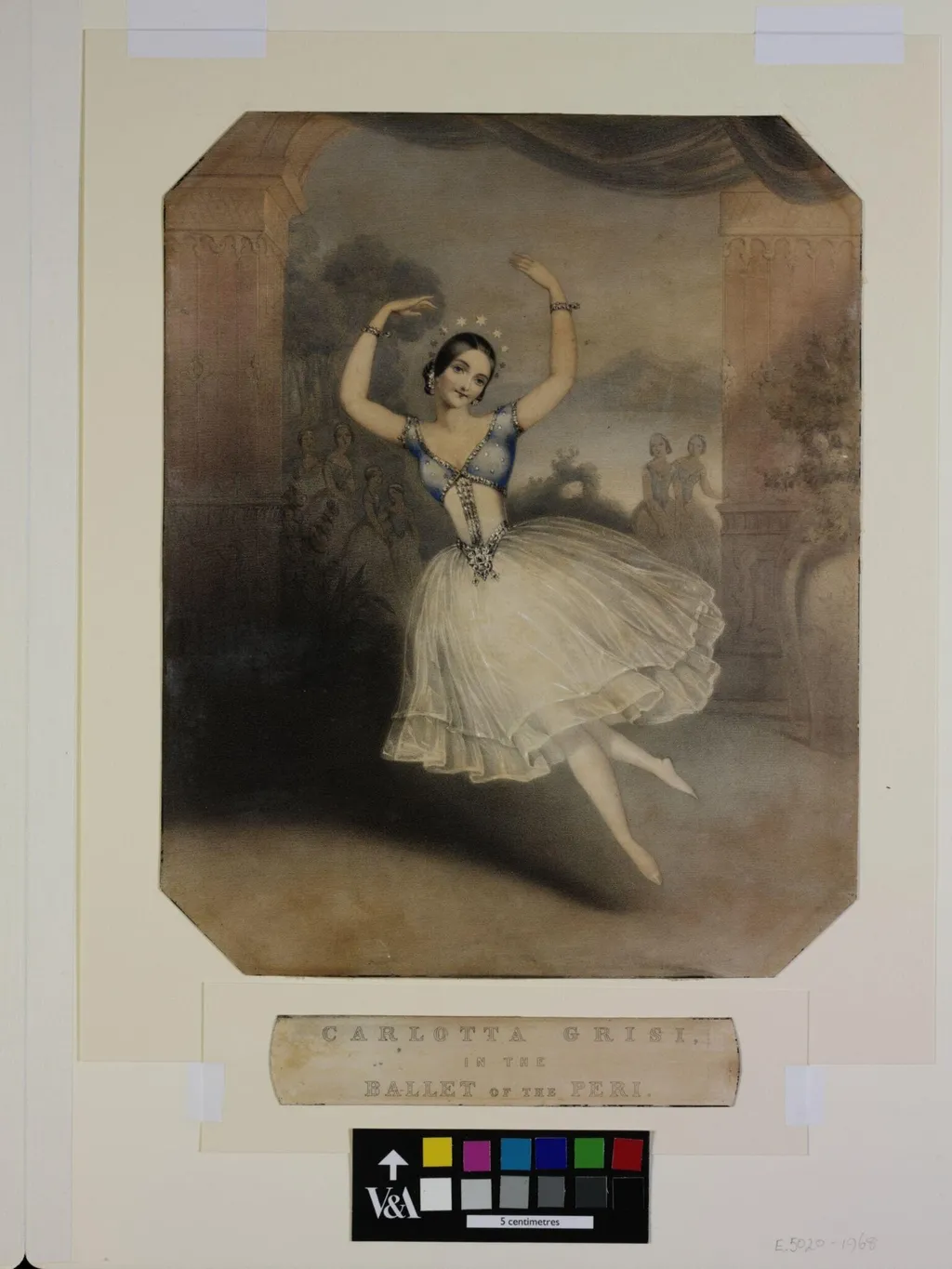
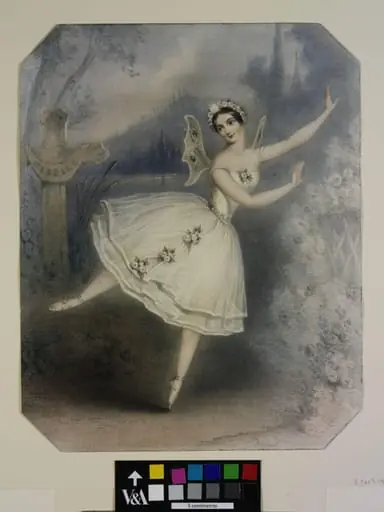
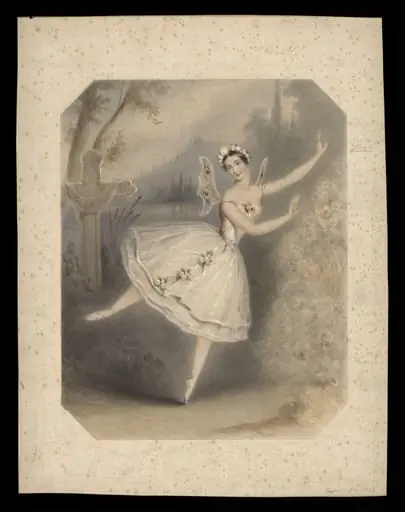
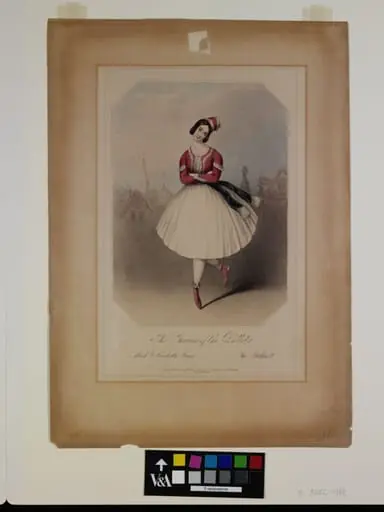
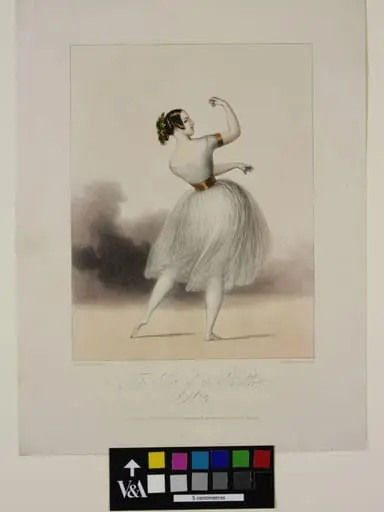
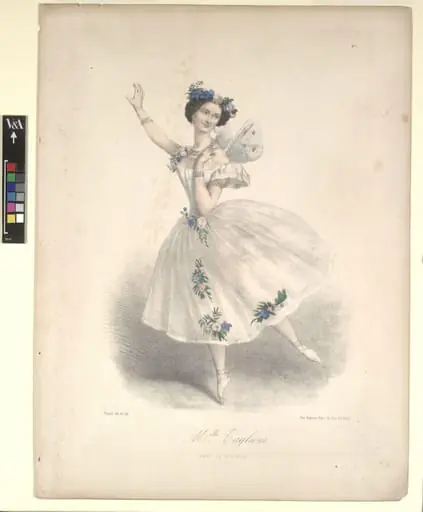
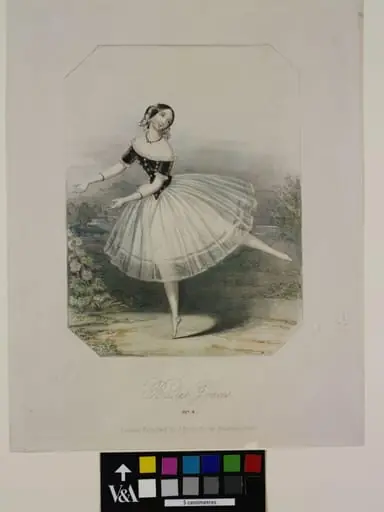
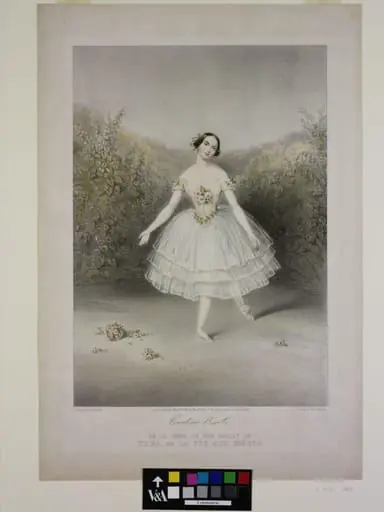
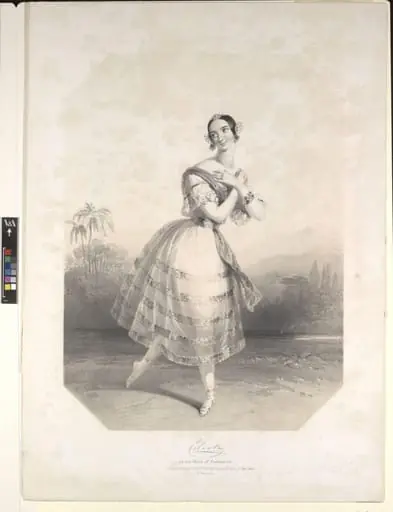
Carlotta Grisi, is a print by the Romanticist artist J Brandard. It dates from 1844 and is held in the collection of the Victoria and Albert Museum. This 1844 print depicts the celebrated ballerina Carlotna Grisi in the role of a Péri, a mythic fairy drawn from Persian legend.
About this work
She dances as a fairy called a Péri, a figure from Persian tales who appears to test a man who dreams of her.
This print shows Carlotta Grisi in a ballet role from 1844. She dances as a fairy called a Péri, a figure from Persian tales who appears to test a man who dreams of her. The print fits the Romantic style, where artists liked exotic, dreamy subjects.
The costume mixes ballet with Indian touches. It’s not meant to be accurate—just fancy and far-away-feeling. That was the point in the 1840s: escape the everyday.
Look next at the museum: Victoria and Albert Museum.
Overview
This 1844 print depicts the celebrated ballerina Carlotna Grisi in the role of a Péri, a mythic fairy drawn from Persian legend. The image captures her youthful presence and the ethereal quality prized by audiences across Europe, from London to St. Petersburg, during the height of Romantic ballet.
Subject & Meaning
In the narrative, the Péri appears in a dream to test a lover, embodying the Romantic fascination with unattainable spirits. The figure represents a bridge between the human realm and a realm of graceful, otherworldly beings, reflecting the era’s idealization of feminine mystique.
Technique & Style
The print renders Grisi’s costume with short sleeves, jeweled chains and belts that echo Indian theatrical dress rather than authentic Persian attire. This stylized exoticism was intentional, aiming to evoke a distant, fanciful locale rather than a historically accurate representation.
History & Provenance
The ballet’s libretto was penned in 1843 by Théophile Gautier, who also authored the celebrated role of Giselle for Grisi. The Péri role, like Giselle, juxtaposed a mortal girl with a supernatural spirit, a popular motif in Romantic choreography. The print likely originated from a contemporary publisher and now resides in the Victoria and Albert Museum.
Context
During the 1840s, Romantic ballet frequently featured sylphs, nymphs, and other ethereal figures, reflecting a cultural desire to escape the prosaic. The Péri, as a superhuman being endowed with grace and beauty, fit neatly into this aesthetic, reinforcing the period’s fascination with the exotic and the unattainable.
Artist & collection
Artist
If you’ve seen old ballet posters with swirling tutus and sharp lettering, you’ve seen John Brandard’s work.