Artwork
The Seine at Quilleboeuf (La Seine a Quilleboeuf)
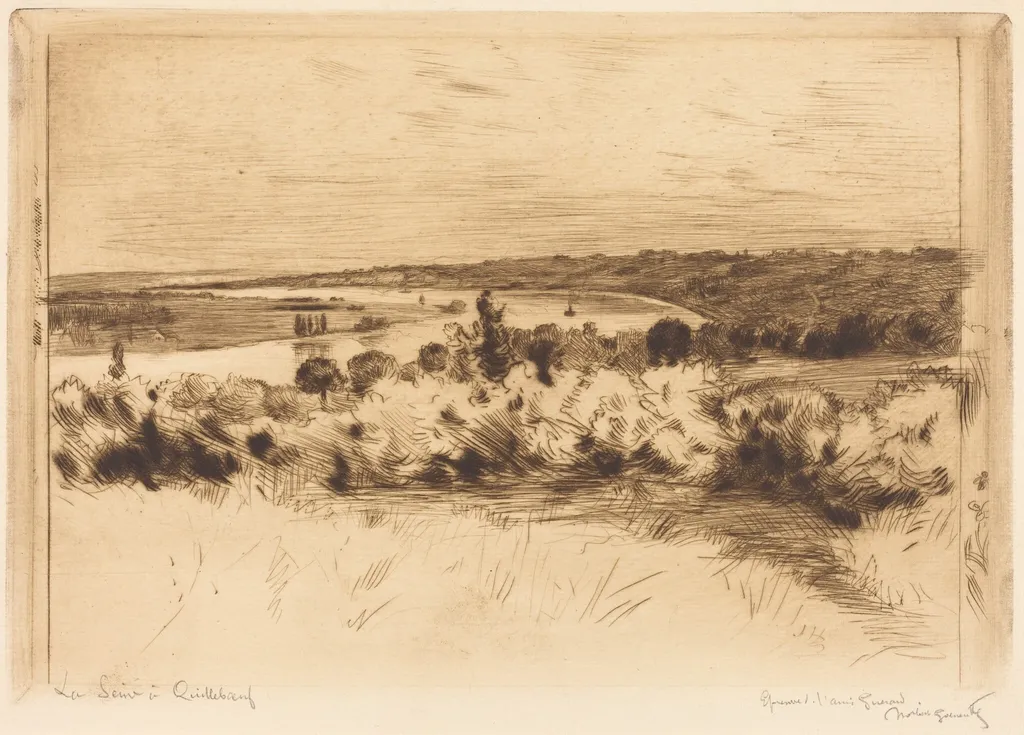
The Seine at Quilleboeuf (La Seine a Quilleboeuf) is an ink print by the Impressionist artist Norbert Goeneutte. It dates from 1890 and is held in the collection of the National Gallery of Art. Created in 1890, *The Seine at Quilleboeuf* is a drypoint print executed in brown ink by French artist Norbert Goënette.
About this work
Overview
The work portrays a tranquil stretch of the Seine River near the village of Quilleboeuf, emphasizing the calm water, reeds, and distant boats.
Created in 1890, *The Seine at Quilleboeuf* is a drypoint print executed in brown ink by French artist Norbert Goënette. The work portrays a tranquil stretch of the Seine River near the village of Quilleboeuf, emphasizing the calm water, reeds, and distant boats. As a print rather than a painted canvas, it reflects Goënette’s interest in graphic media alongside his painting and illustration practice.
Subject & Meaning
The image captures a quiet riverside landscape, foregrounded by tall grasses and reeds that frame the smooth surface of the river. Small vessels are suggested in the distance, hinting at everyday river traffic. By focusing on the natural environment and the subtle play of light on water, the composition conveys a moment of stillness and observation of the French countryside.
Technique & Style
Goënette employed drypoint, a intaglio method in which a sharp needle incises lines directly into a copper plate. The resulting burr creates soft, velvety strokes that give the scene a textured, sketch‑like quality. Executed in a single brown tone, the print relies on line density and variation to model forms, echoing the spontaneous, light‑focused approach associated with late 19th‑century French printmaking.
History & Provenance
Norbert Goënette, known for his illustrations for Émile Zola’s *La Terre*, produced this print during a period when he explored both painting and graphic arts. While specific exhibition records for the work are scarce, it forms part of Goënette’s broader output of river and landscape subjects that were circulated among collectors of French prints in the 1890s.
Context
The Seine has long served as a favored subject for French artists, offering a natural laboratory for studying light, atmosphere, and movement. Goënette’s choice of drypoint aligns with a broader trend among his contemporaries to experiment with print techniques that could capture fleeting impressions of the environment, complementing the parallel developments in Impressionist painting.
Artist & collection
Artist
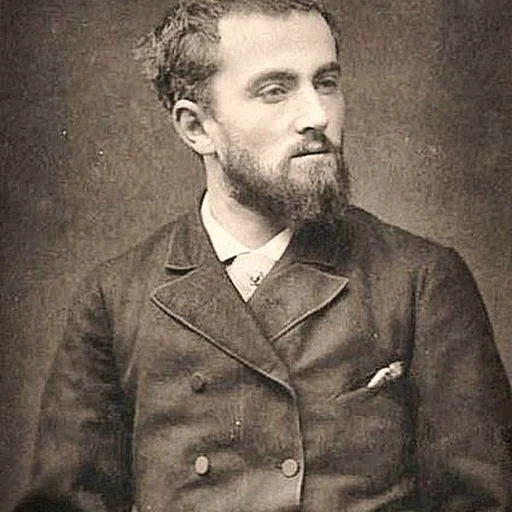
Norbert Goeneutte (23 July 1854 – 9 October 1894) was a French painter, etcher and illustrator; notably for the novel La Terre by Émile Zola.

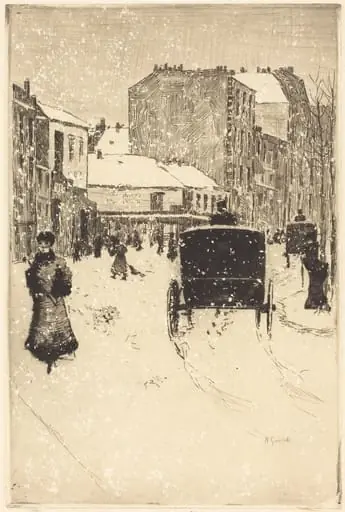 Boulevard Clichy in the Snow (Le boulevard Clichy par un temps de neige)
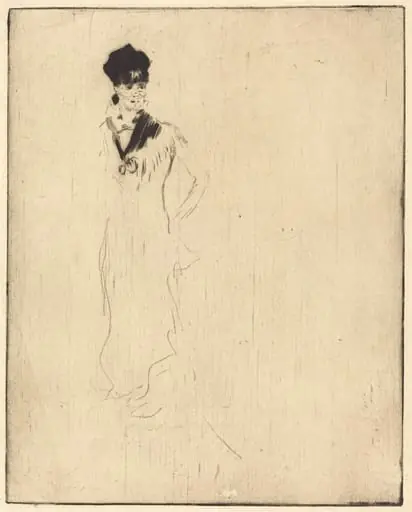 Sketch of a Young Lady in Violet (Esquisse de jeune femme a la violette)
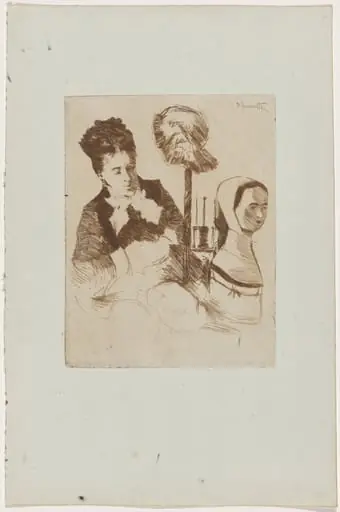 La modiste
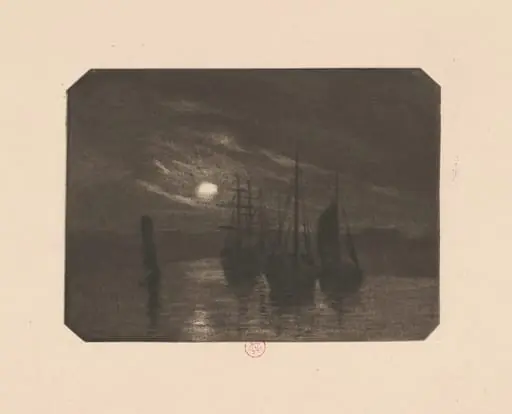 A Moonlit Harbor
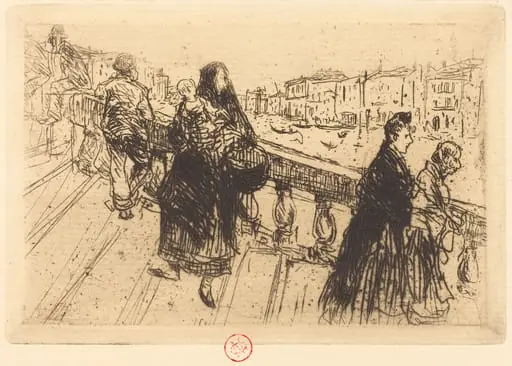 Rialto
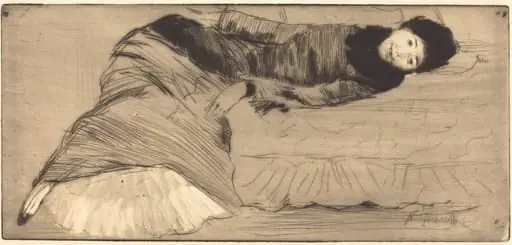 Smiling Woman Reclining on a Sofa (Femme souriant etendue sur un canape)
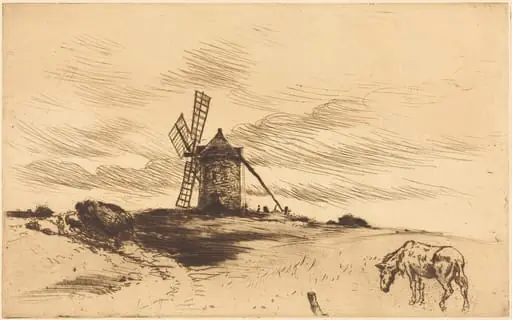 The Mill at Saint Jacut (Le moulin de Saint Jacut)
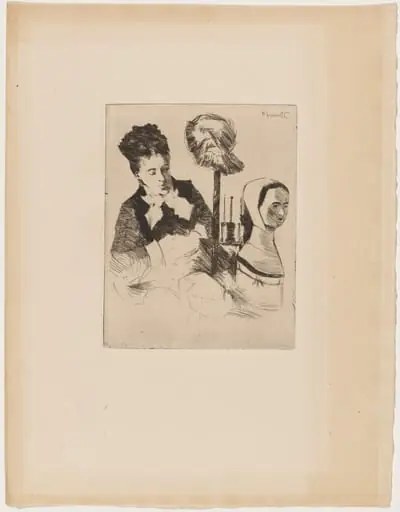 La modiste
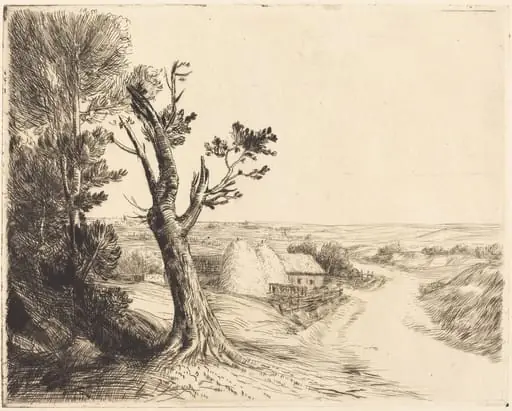 Landscape with Haystacks (Le paysage aux meules)
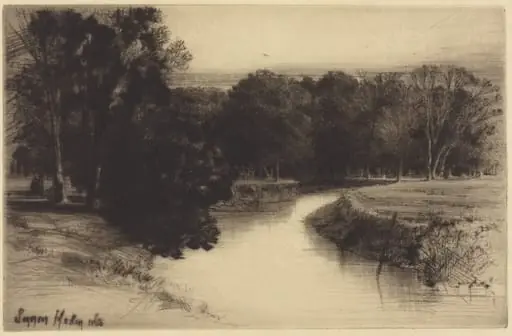 A Sunset in Ireland
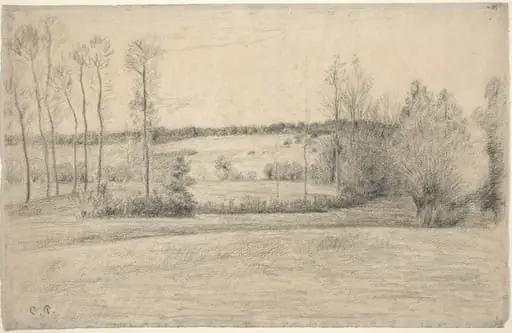 Trees and Meadows at Eragny
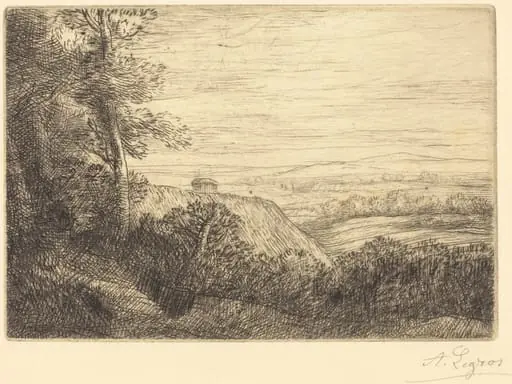 Last Rays (Les derniers rayons)
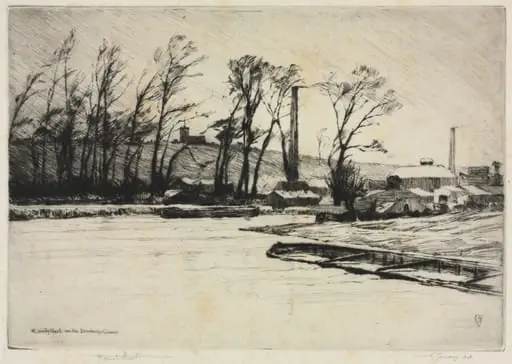 A Wintry Blast on the Stourbridge Canal
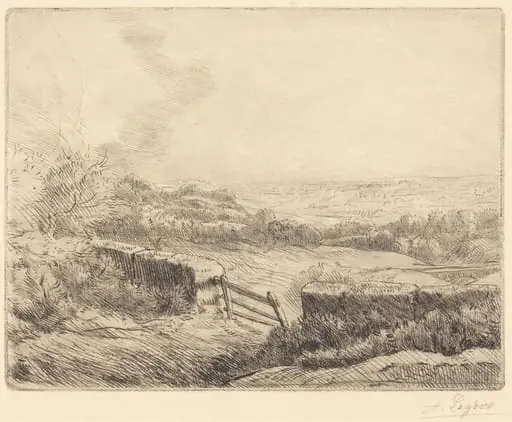 The Gate (L'entree du champ)
 The Land of Nod
 Landscape with Peat-bog; In the Marsh (Paysage des tourbieres; Dans les marais)
 Landscape with Horses
 On the Test
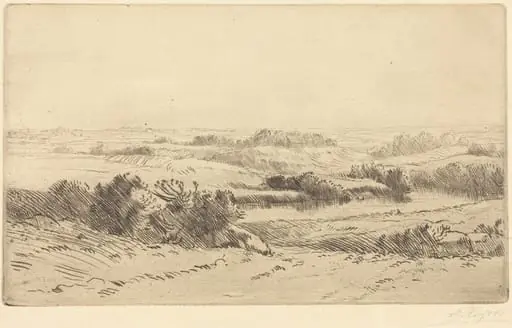 Banks of the Yanne (Les bords de la Yanne)
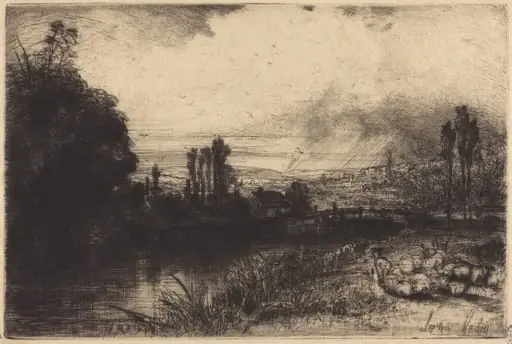 On the Test