Artwork
Johannes Zurenus (Jan van Zuren)
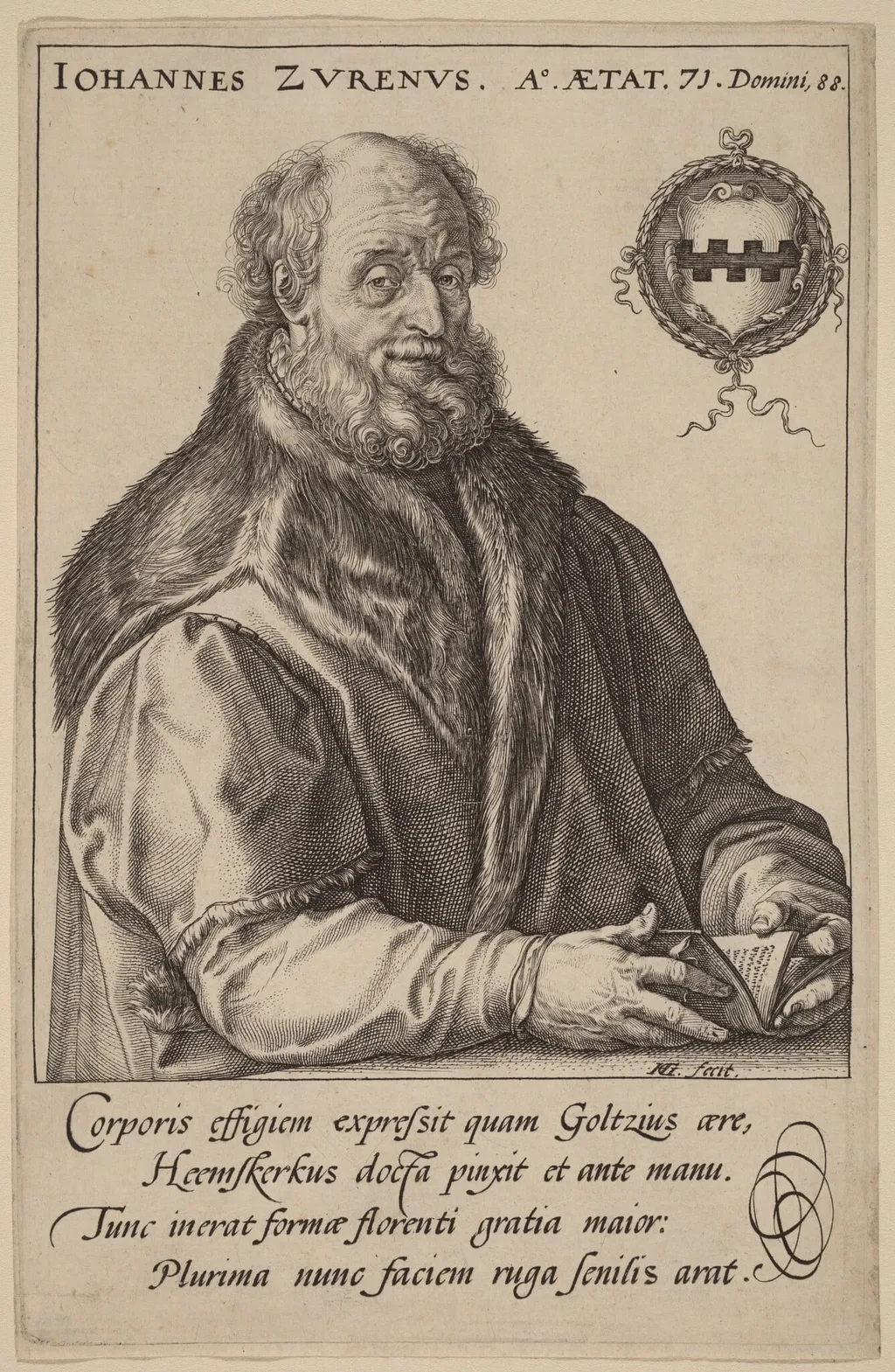
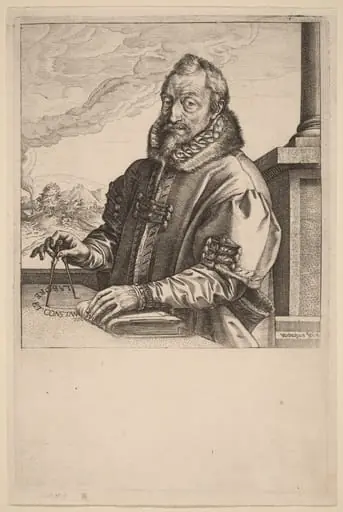
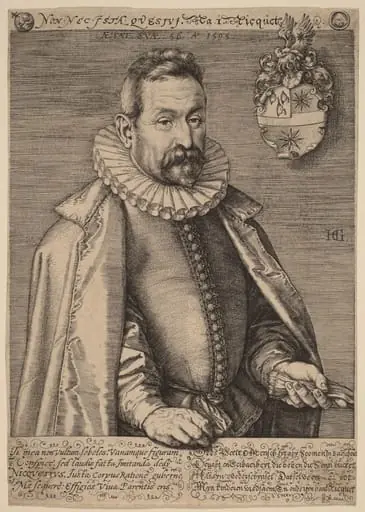
Johannes Zurenus (Jan van Zuren) is an ink print by the Renaissance artist Hendrik Goltzius. It dates from 1590 and is held in the collection of the National Gallery of Art.
About this work
Overview
Goltzius, a leading figure in early Baroque printmaking, employed fine, controlled lines to render both likeness and material detail with exceptional clarity.
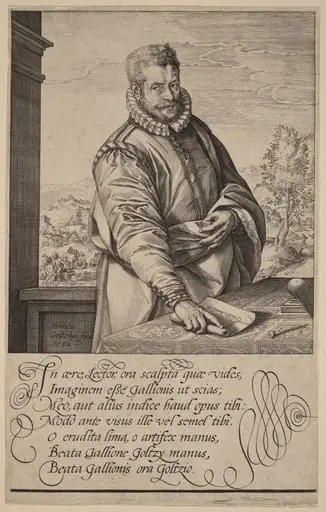
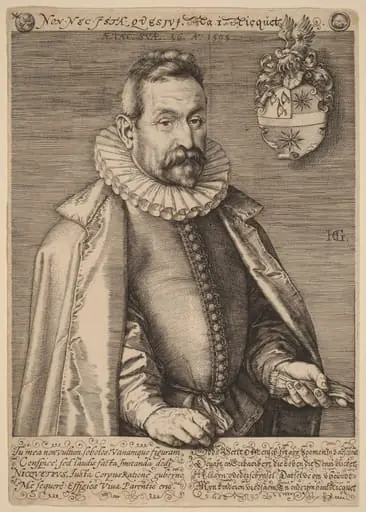
Created in 1590, this black-and-white engraving by Hendrick Goltzius depicts Johannes Zurenus, also known as Jan van Zuren, at age seventy-one. Executed with precision on metal, the print belongs to a tradition of scholarly portraiture in the Northern Netherlands. Goltzius, a leading figure in early Baroque printmaking, employed fine, controlled lines to render both likeness and material detail with exceptional clarity.
Subject & Meaning
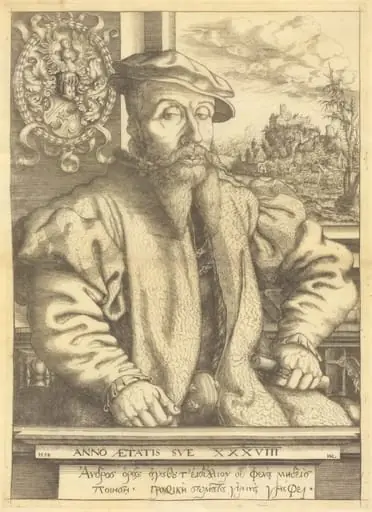
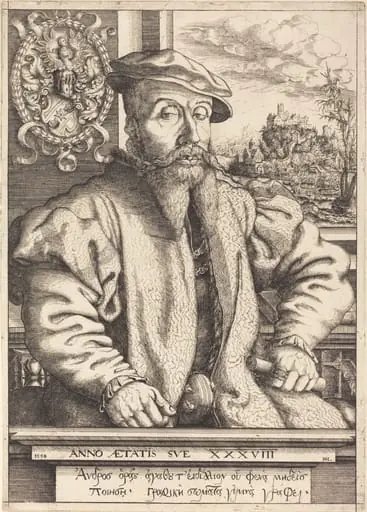
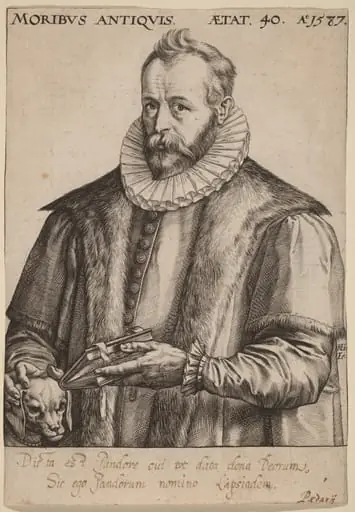
The subject, Johannes Zurenus, is portrayed as an elderly scholar, his identity confirmed by inscribed text and the heraldic emblem above. The fur-lined robe and spectacles suggest academic or clerical status, while the small object in his hand—possibly a book or tool—implies intellectual engagement. The coat of arms, featuring a castle and wreath, signals lineage or institutional affiliation, reinforcing his social standing.
Technique & Style
Goltzius used a burin to carve intricate lines into a copper plate, achieving subtle gradations of tone and texture. The beard, fur collar, and facial wrinkles are rendered with dense, deliberate strokes that mimic natural variation. The background remains sparse, focusing attention on the figure’s face and attire. This method exemplifies Northern Mannerist precision, prioritizing tactile realism over decorative flourish.
History & Provenance
The engraving was produced during Goltzius’s mature period in Haarlem, when he was renowned for his technical innovation in printmaking. While specific early ownership records are sparse, such portraits were often commissioned by families or institutions to commemorate learned individuals. The work survives in multiple museum collections, attesting to its enduring value as a study in engraving craft.
Context
In late 16th-century the Netherlands, engraved portraits served as both personal memorials and markers of intellectual prestige. Goltzius’s work aligned with humanist ideals, where visual representation conveyed character and status. His ability to translate complex textures into line made his prints widely circulated among scholars and collectors across Europe, bridging art and erudition.
Legacy
This engraving remains a reference point for understanding the capabilities of intaglio printmaking in the early Baroque era. Goltzius’s handling of fine detail influenced generations of printmakers, particularly in the depiction of aging and material surfaces. Though not widely reproduced today, it endures in academic circles as a testament to the medium’s capacity for nuanced portraiture.
Artist & collection
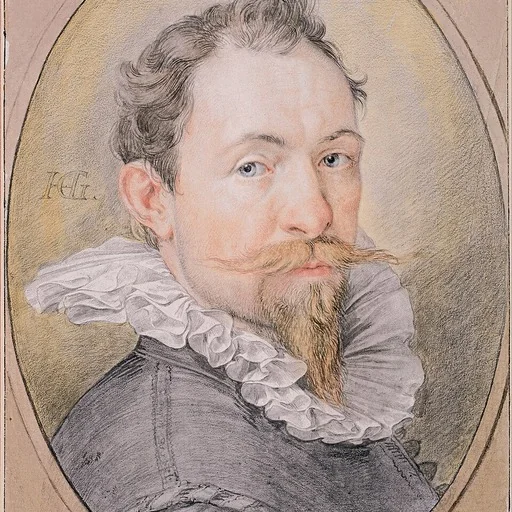
Artist
Hendrick Goltzius (German: , Dutch: ; né Goltz; January or February 1558 – 1 January 1617) was a German-born Dutch printmaker, draftsman, and painter.