Artwork
The Prophets Hosea and Jonah
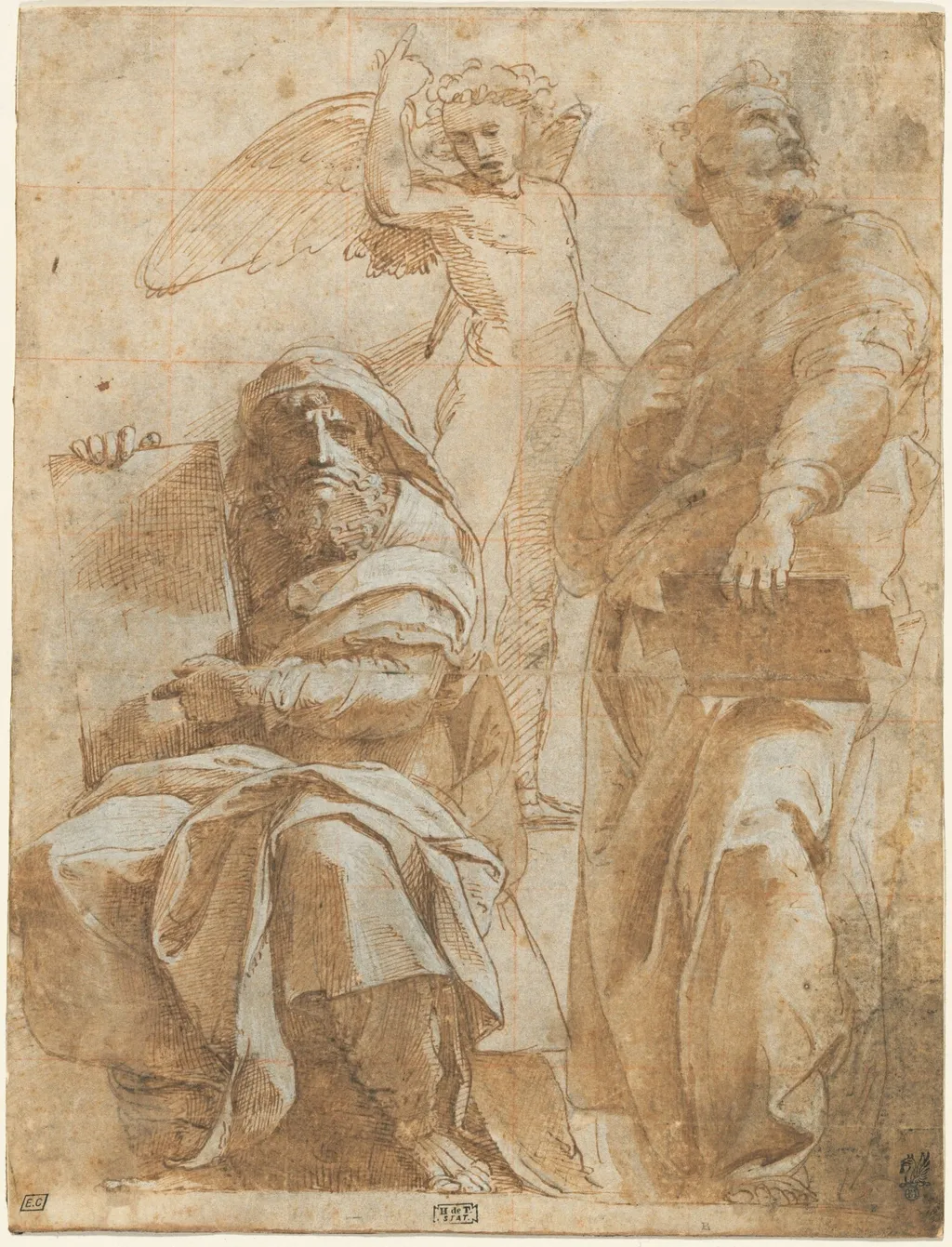
The Prophets Hosea and Jonah is an ink drawing by the High Renaissance artist Raphael. It dates from 1510 and is held in the collection of the National Gallery of Art.
About this work
Overview
This work exemplifies Raphael's mature draftsmanship during his Roman period, where he synthesized classical ideals with naturalistic observation.
Created in 1510, The Prophets Hosea and Jonah is a preparatory drawing by Raphael, executed in pen and brown ink with brown wash over charcoal and blind stylus, heightened with white gouache. The sheet is squared for transfer using red chalk, indicating its function as a study for a larger project, likely the frescoes in the Chigi Chapel of Santa Maria del Popolo in Rome. The composition features two biblical figures: Hosea, seated on the left with his head bowed in deep contemplation, and Jonah, standing on the right and gazing upward with an expression of prophetic insight. Raphael employs a dynamic interplay of light and shadow to model the figures' drapery and anatomy, characteristic of his High Renaissance style. The use of white gouache adds luminosity to the highlights, enhancing the three-dimensionality of the forms against the neutral ground. This work exemplifies Raphael's mature draftsmanship during his Roman period, where he synthesized classical ideals with naturalistic observation. The drawing serves as a critical link between his conceptual sketches and the final painted execution, demonstrating his methodical approach to composition and figure placement. It remains a significant example of his preparatory process for major religious commissions.
Subject & Meaning
The composition presents the biblical figures Hosea and Jonah in a reflective pose. Hosea is seated on the left, his head inclined downward, while Jonah stands on the right, gazing upward. A winged presence, likely an angel, hovers above them, suggesting a divine or prophetic context.
Technique & Style
The artist employs bold, confident lines to define the figures, while expressive shading built up with charcoal and brown wash generates a sense of volume. White gouache is applied sparingly to illuminate facial features and garment folds, creating contrast within the predominantly earth‑toned palette.
History & Provenance
Created around 1510, the drawing is attributed to Raphael. Its medium and preparatory methods reflect the artist’s practice of combining drawing and painting techniques during the High Renaissance, though the work remains a study rather than a finished painting.
Context
The piece belongs to a period when Raphael explored biblical subjects through preparatory sketches, often integrating multiple drawing media. The inclusion of an angelic figure aligns with contemporary iconographic conventions that linked prophets to divine revelation.
Artist & collection
Artist
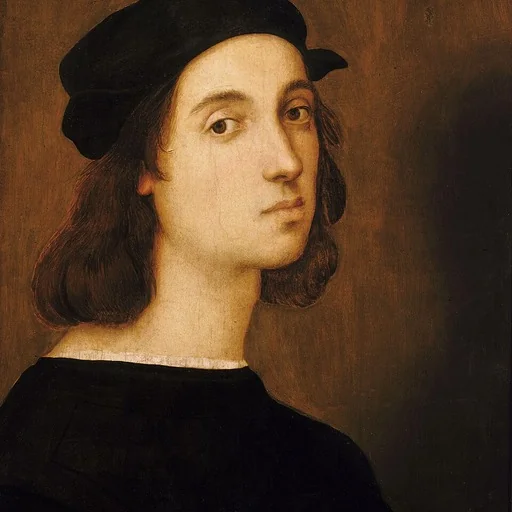
Raphael was born Raffaello Sanzio in Urbino on April 6, 1483, the son of Giovanni Santi, a painter and poet attached to the ducal court.

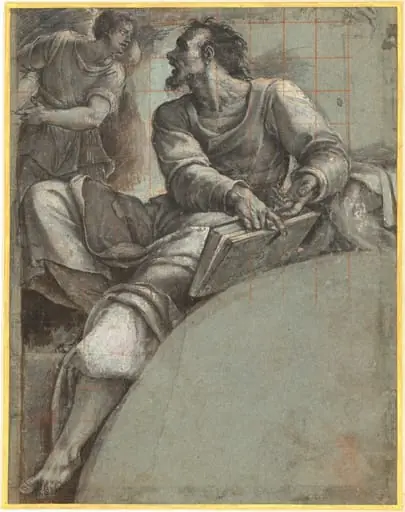 A Prophet Addressed by an Angel
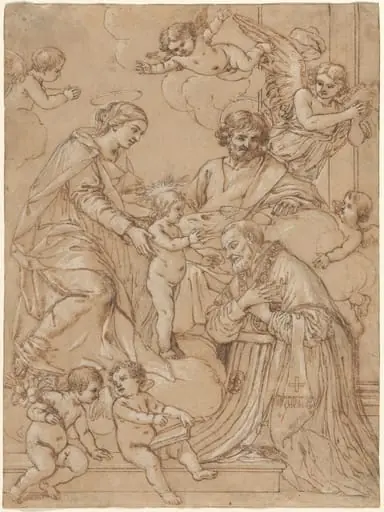 The Holy Family with Saint Philip Neri in Adoration, an Angel, and Putti
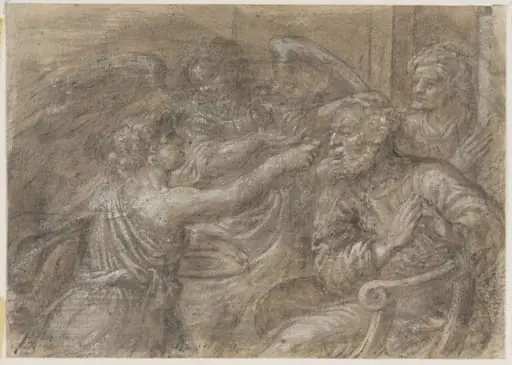 Untitled
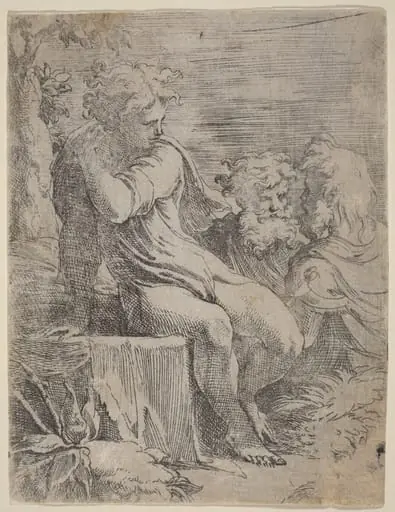 The Boy and Two Old Men
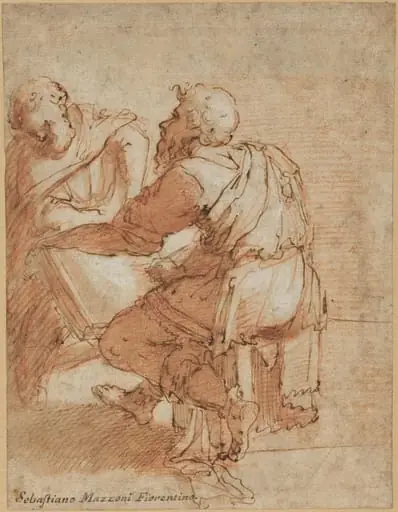 Study for "The Four Doctors of the Church"
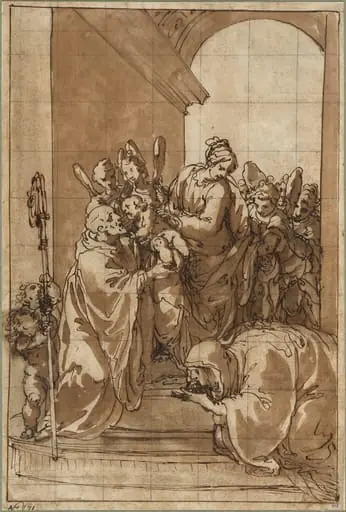 Madonna and Child with Angels, Saint Benedict, and Saint Scholastica
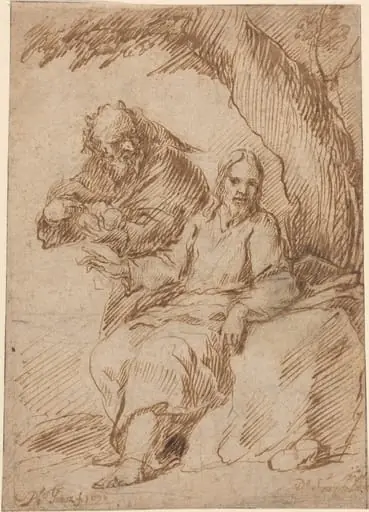 The Temptation of Christ in the Desert
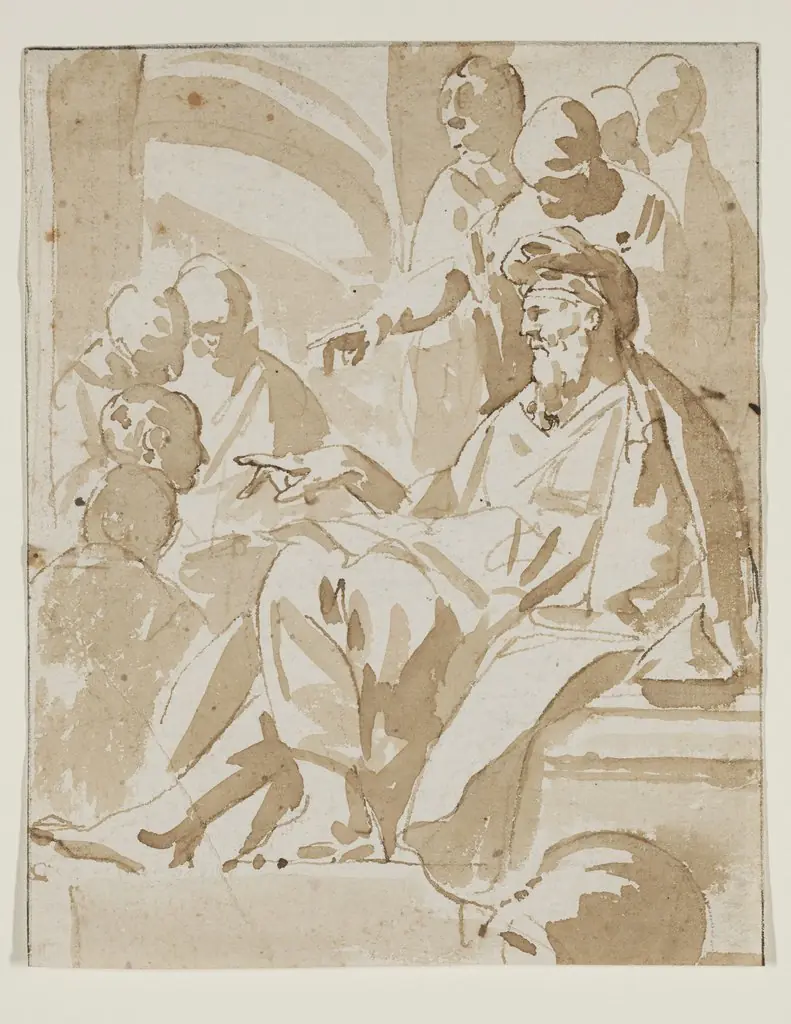 A Seated Old Man, Pointing with his Right Hand and Other Figures
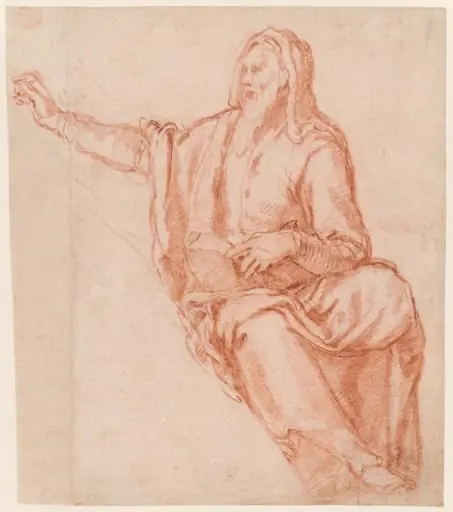 Jeremiah (Design for a Lunette)
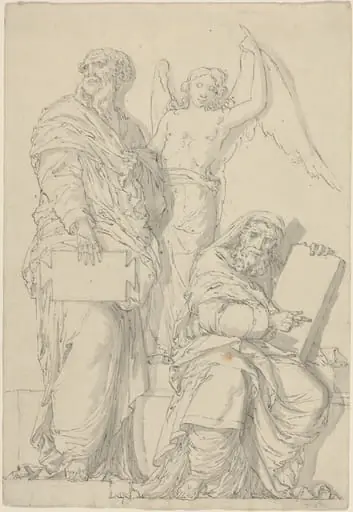 The Prophets Hosea and Jonah