Artwork
Study for "The Four Doctors of the Church"
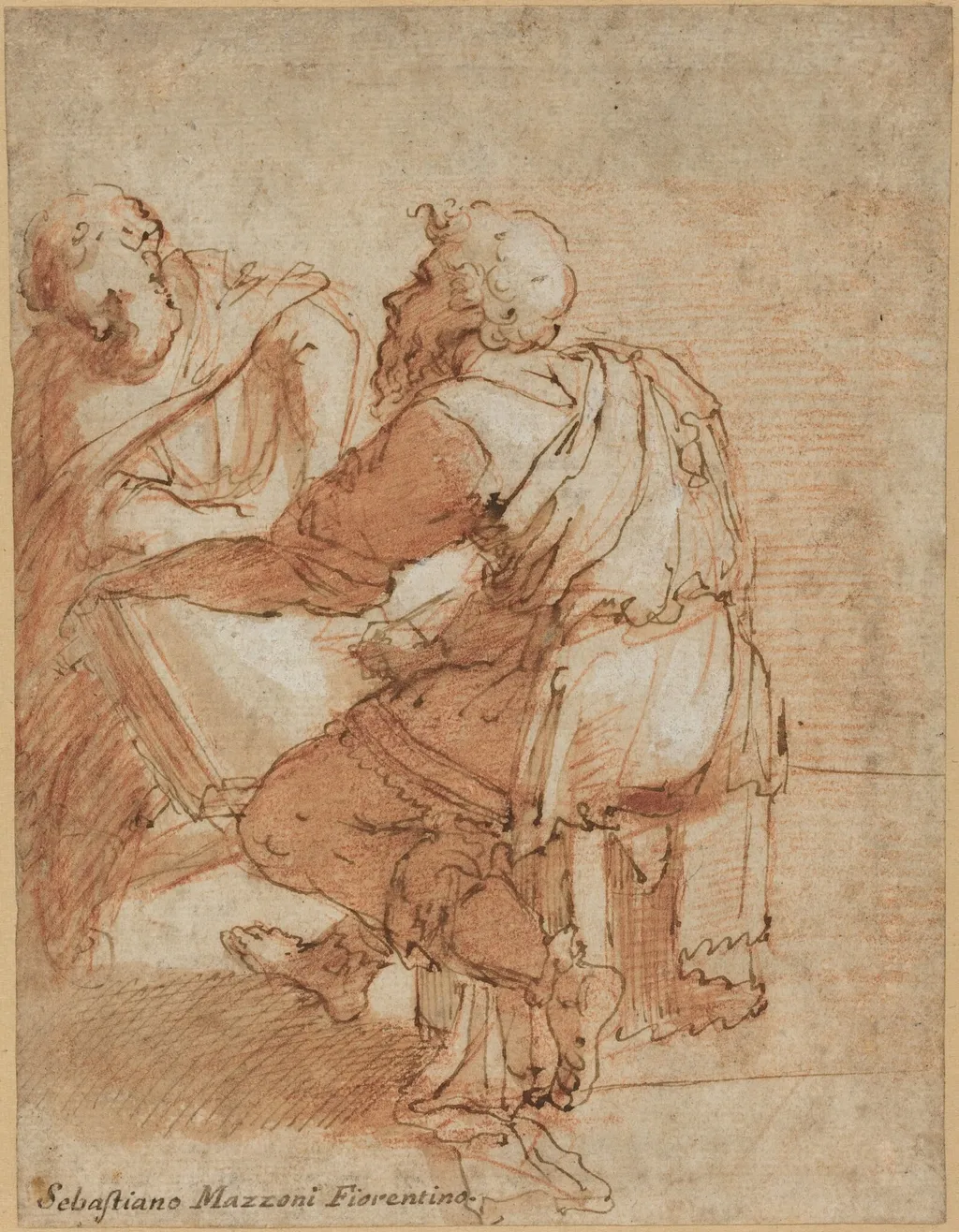
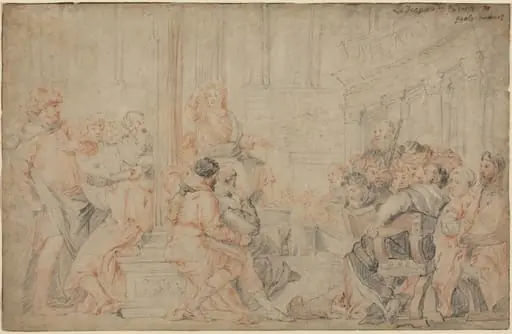
Study for "The Four Doctors of the Church" is an ink drawing by the Renaissance artist Domenico Beccafumi. It dates from 1518 and is held in the collection of the National Gallery of Art.
About this work
Overview
The work exemplifies the artist’s methodical approach to composition and figure arrangement.
Domenico di Pace Beccafumi created this preparatory drawing in 1518 as part of the planning process for a larger altarpiece depicting the Four Doctors of the Church. Executed in pen and brown ink with brown wash and red chalk, heightened with white, it was made on laid paper—a common support for detailed studies in early 16th-century Siena. The work exemplifies the artist’s methodical approach to composition and figure arrangement.
Subject & Meaning
The drawing anticipates a depiction of the four Doctors of the Church—Saints Ambrose, Jerome, Augustine, and Gregory the Great—figures revered in Christian tradition for their theological writings. Beccafumi’s study focuses on their postures and spatial relationships, emphasizing their authority and intellectual presence. Though not fully rendered, the figures are arranged to convey a sense of solemn hierarchy, typical of devotional imagery in Sienese ecclesiastical contexts.
Technique & Style
Beccafumi employed a layered technique: pen lines define structure, brown wash adds tonal depth, and red chalk suggests volume and texture. White heightening highlights drapery and facial features, enhancing contrast against the paper. The handling reflects a Sienese sensitivity to line and surface, distinct from Florentine modeling. His use of mixed media reveals a deliberate exploration of form before final execution.
History & Provenance
The drawing survives as one of the few documented preparatory studies from Beccafumi’s mature period. It likely remained in his studio or passed to a patron or apprentice after the commission’s completion. Its preservation suggests its value as a working document rather than a finished piece, offering insight into the transition from sketch to painted altarpiece in early Renaissance workshops.
Context
Created during a period when Siena’s artistic identity was shifting under Florentine and Roman influences, Beccafumi’s work retained local traditions of expressive line and emotional intensity. This study reflects a broader trend in Italian Renaissance practice: the use of detailed drawings to resolve complex compositions before painting. It stands as a bridge between late Gothic conventions and emerging Mannerist tendencies.
Legacy
The drawing remains a key example of how Sienese artists approached large-scale religious commissions through iterative design. It illustrates Beccafumi’s role in sustaining regional styles amid broader stylistic changes. While the final altarpiece is now lost, this study endures as a testament to the intellectual labor behind Renaissance sacred imagery.
Artist & collection

Artist
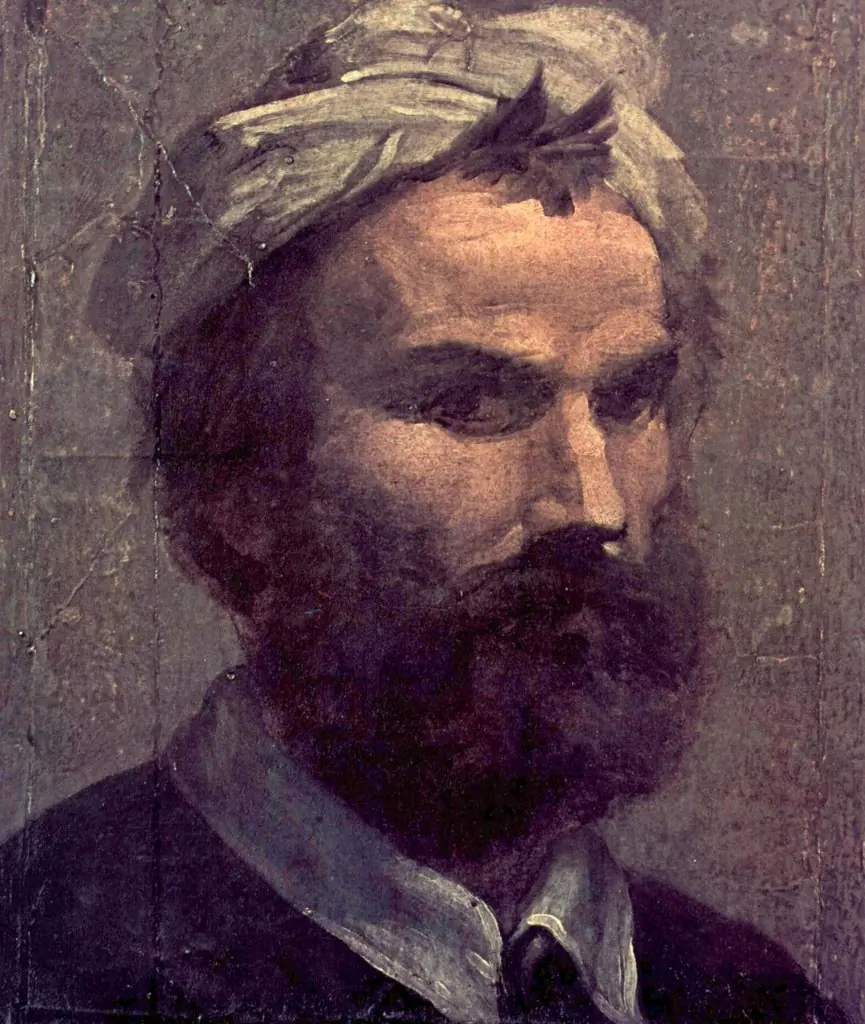
Domenico di Pace Beccafumi (1486 – May 18, 1551) was an Italian Renaissance-Mannerist painter active predominantly in Siena. He is considered one of the last undiluted representatives of the Sienese school of painting.

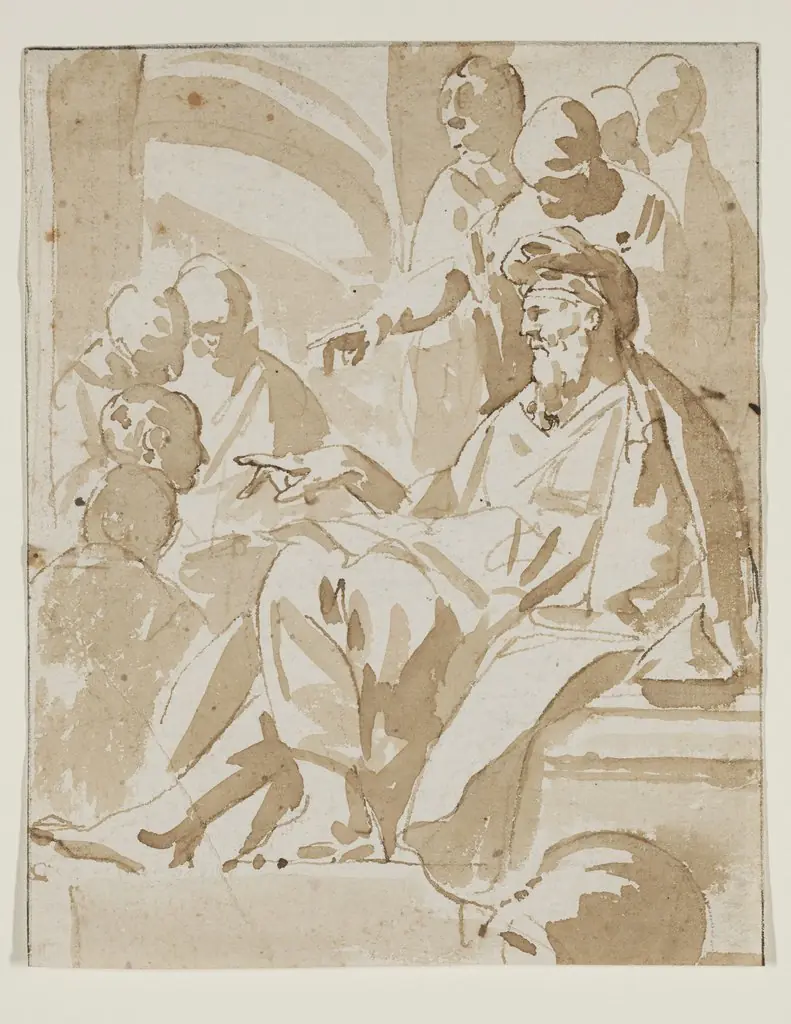 A Seated Old Man, Pointing with his Right Hand and Other Figures
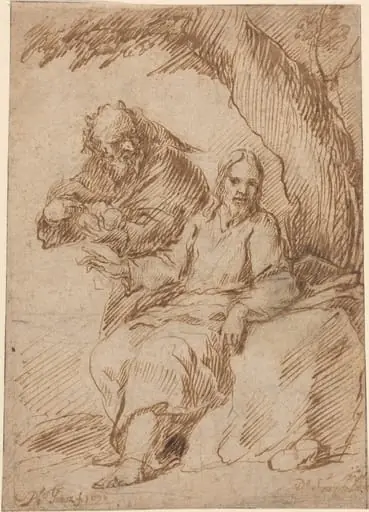 The Temptation of Christ in the Desert
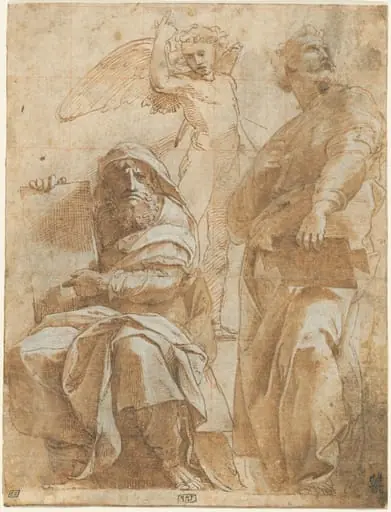 The Prophets Hosea and Jonah
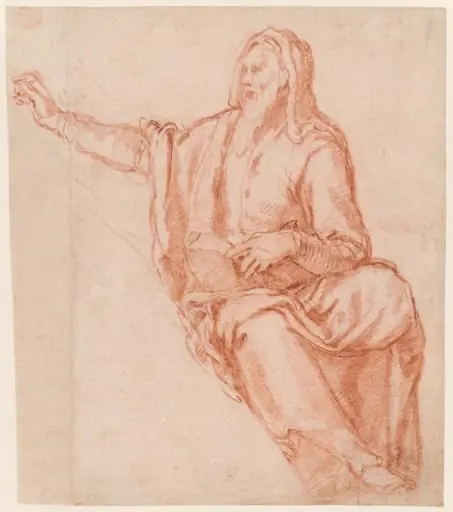 Jeremiah (Design for a Lunette)
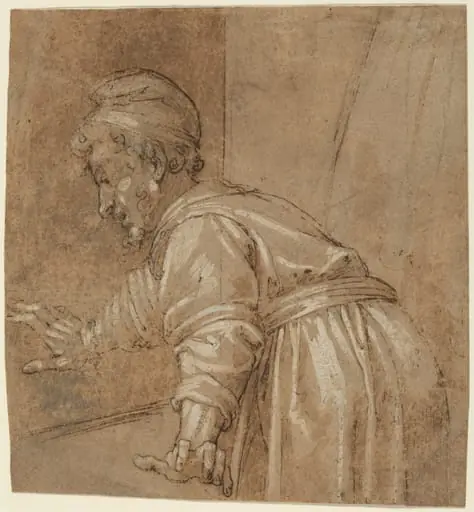 A Man Looking Out a Window
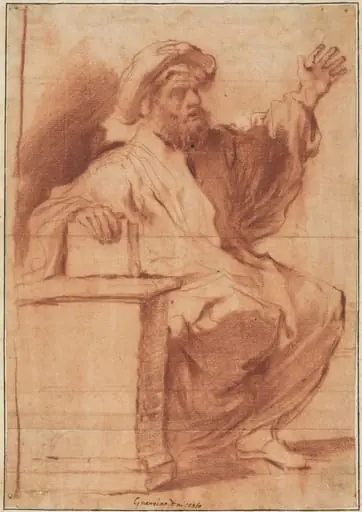 Seated Prophet
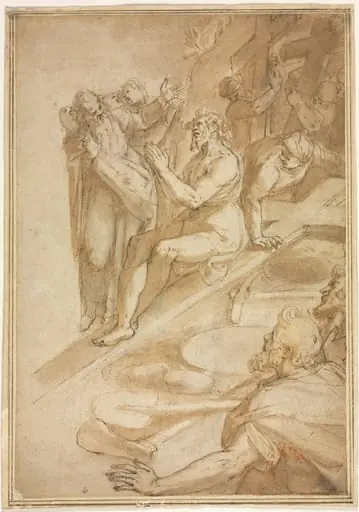 The Verification of the True Cross
 The Supper at Emmaus
 Holy Family
 Standing Bearded Man Pointing Toward the Left
 An Elderly Man in Classical Drapery
 Christ among the Doctors