Artwork
Mask of the Abbé Raynal
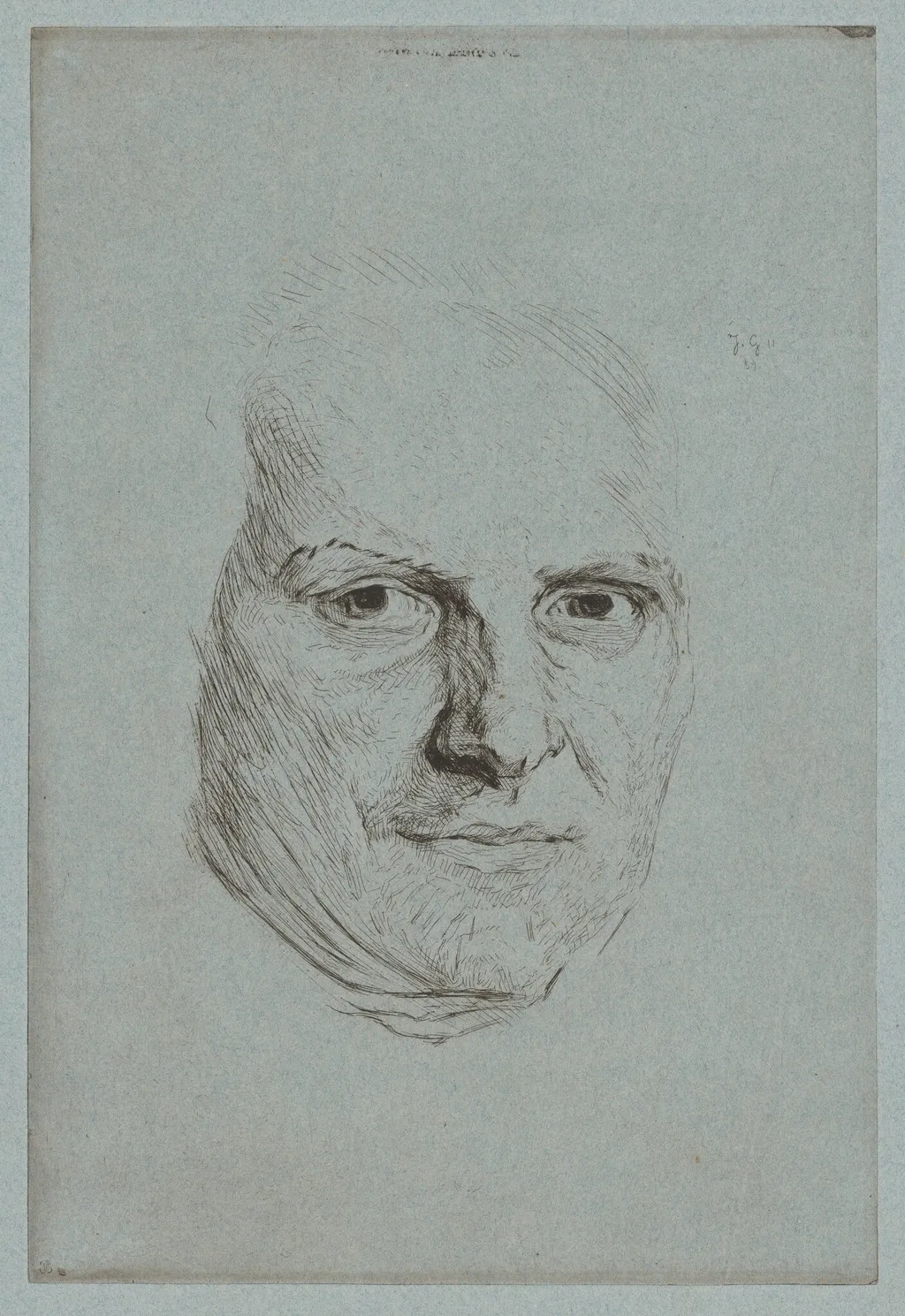
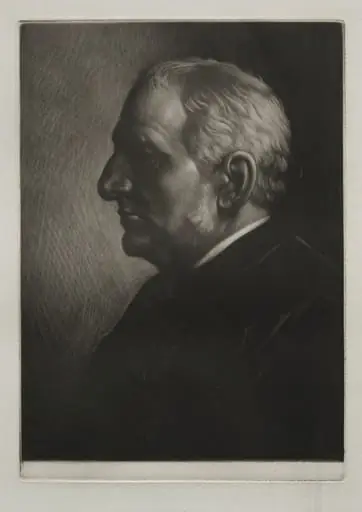
Mask of the Abbé Raynal is an ink print by the Impressionist artist Jules de Goncourt. It dates from 1859 and is held in the collection of the National Gallery of Art.
About this work
Overview
Created in 1859, the Mask of the Abbé Raynal is a print by Jules de Goncourt, executed in etching and drypoint on blue wove paper.
Created in 1859, the Mask of the Abbé Raynal is a print by Jules de Goncourt, executed in etching and drypoint on blue wove paper. It presents a close-up portrait of the French writer and intellectual Abbé Raynal, rendered with precision and restraint. The work belongs to the tradition of 19th-century graphic portraiture, emphasizing psychological presence over narrative context. Its muted tones and fine linear detail reflect the artist’s interest in capturing subtle human expression through printmaking.
Subject & Meaning
The portrait depicts Abbé Raynal, a prominent Enlightenment-era cleric and author known for his critical writings on colonialism and religion. His downcast gaze and faint, ambiguous smile suggest introspection rather than assertion. De Goncourt avoids idealization, presenting Raynal as a contemplative figure, perhaps weighed by the moral complexities he addressed in his work. The mask-like quality of the title implies a layering of public persona and private thought, inviting reflection on identity and intellectual legacy.
Technique & Style
De Goncourt employed etching and drypoint to achieve fine gradations of tone and texture. The drypoint’s burr creates soft, velvety shadows around the eyes and jaw, while etched lines define the contours of the face with precision. The blue paper grounds the image in a cool neutrality, enhancing the grayscale modulation. The absence of color focuses attention on the interplay of light, shadow, and surface, reinforcing the portrait’s quiet intensity and tactile realism.
History & Provenance
The print was made during a period when Jules de Goncourt was deeply engaged in portraiture, often depicting literary and cultural figures of his circle. It was likely produced as part of a series of intellectual portraits, intended for private circulation or limited publication. The work remained within French artistic circles and entered institutional collections in the 20th century, where it is now preserved as an example of mid-century graphic portraiture.
Context
In the mid-19th century, French artists increasingly turned to printmaking as a medium for intimate portraiture, distinct from grand academic painting. De Goncourt’s work aligns with this trend, reflecting a broader cultural fascination with the inner life of thinkers. The choice of Raynal—a controversial figure whose writings challenged religious and colonial authority—suggests a deliberate engagement with intellectual dissent and the role of the artist as witness.
Legacy
The Mask of the Abbé Raynal stands as a refined example of de Goncourt’s contribution to graphic art, demonstrating how etching could convey psychological depth without theatricality. Though not widely reproduced, it influenced later artists interested in the expressive potential of printmaking. Its restrained aesthetic and focus on intellectual subjectivity continue to resonate within studies of 19th-century French portraiture and the intersection of art and ideas.
Artist & collection