Artwork
Kaappi Ruiskumestarin talon keittiön nurkassa.
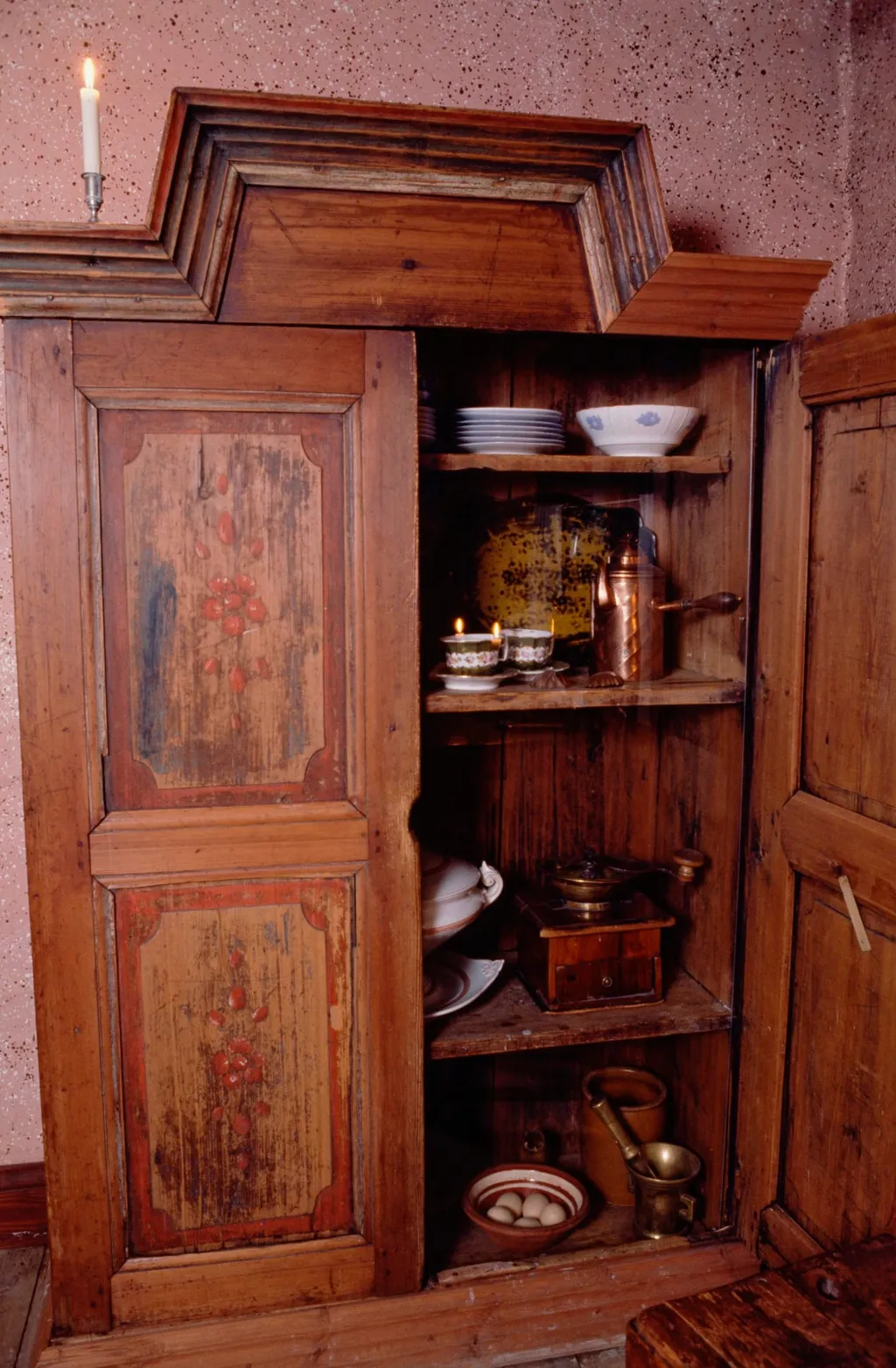
Kaappi Ruiskumestarin talon keittiön nurkassa. is a drawing by Jorge Gonzalez. It is held in the collection of the Helsinki City Museum. A wooden cabinet stands in a dimly lit kitchen corner, its doors ajar to reveal carefully arranged household items.
About this work
Overview
A single candle on top casts a gentle light, illuminating stacked plates, a brass teapot, a coffee grinder, and eggs in a bowl.
A wooden cabinet stands in a dimly lit kitchen corner, its doors ajar to reveal carefully arranged household items. Faded red paint on the left door hints at a once-vivid floral pattern, now worn by time. A single candle on top casts a gentle light, illuminating stacked plates, a brass teapot, a coffee grinder, and eggs in a bowl. The scene captures an unremarkable domestic moment, preserved in quiet stillness.
Subject & Meaning
The cabinet and its contents reflect ordinary domestic life in a Finnish household, likely from the late 19th or early 20th century. The presence of everyday objects—eggs, a coffee grinder, a teapot—suggests routine rituals of food preparation and consumption. The worn paint and dim lighting imply longevity and familiarity, emphasizing the cabinet as a vessel of daily memory rather than display.
Technique & Style
The cabinet is crafted from wood, with hand-painted decoration now partially eroded by use and age. The paint’s fading reveals layers of history, while the arrangement of objects on its shelves is orderly yet unpretentious. The lighting is naturalistic, with the candle’s glow creating soft contrasts that draw attention to texture and wear, reinforcing the scene’s authenticity.
History & Provenance
The cabinet originates from the home of Kaappi Ruiskumestari, a Finnish household whose domestic space was documented for preservation. It was likely collected by the Museum of Ethnography as part of efforts to record vernacular interior design and material culture. Its survival reflects a broader initiative to safeguard everyday objects from disappearing with modernization.
Context
In rural and small-town Finland during the late 1800s and early 1900s, kitchen cabinets like this one served both practical and symbolic roles. They stored essentials while also bearing personal decoration, often painted by family members. The persistence of such items into museum collections signals a cultural shift toward valuing the ordinary as part of national heritage.
Legacy
This cabinet remains a quiet testament to the material lives of ordinary Finns. Its preservation allows contemporary viewers to encounter the textures of domestic history—worn paint, stacked dishes, the glow of candlelight—without romanticism. It contributes to an understanding of how everyday objects carried meaning beyond utility, anchoring identity in routine.
Artist & collection
Artist
Jorge Gonzalez kept a small sketchbook in his back pocket for decades, pulling it out to draw whatever caught his eye—a crack in a wall, a shadow on a floor, a corner of a kitchen.

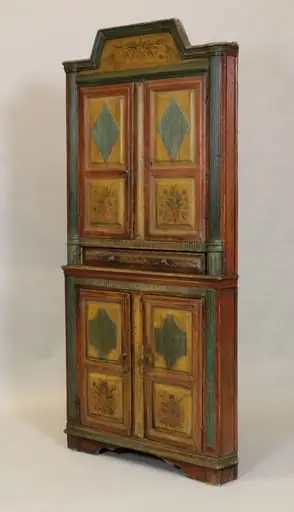 kaappi
 Compmeseaica
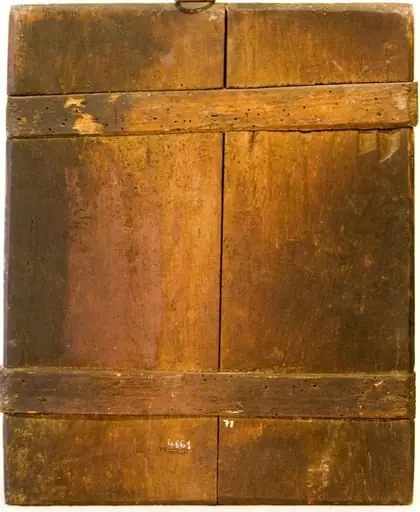 Icoana îl reprezintă pe Isus în picioare, într-o mandrolă de lumină, cu raze, asemănător iconografiei "Învierii". Cu dreapta binecuvintează, în stânga ține Cartea Sfântă deschisă. Chipul este mai plin, sobru, părul lung îi cade pe umeri. Tunica este de culoare roșie, mantia verde, se observă existența "klavului", simbolul "Celui trimis". În jumătatea de jos a icoanei apar două personaje, în stânga fiind sigur Maica Domnului. Conform reprezentărilor canonice, cel din dreapta ar putea fi Sf Ioan Botezătorul sau apostolul Ioan. Veșmintele sunt de culori închise, aureolele întrunecate. Liniile nu sunt fine, ceea ce nu împiedică o anume expresivitate a chipurilor. După modul de realizare a faldurilor i se poate atribui meșterului o oarecare experiență și, de ce nu, școală.
 Sfânta Mare Cuvioasă Parascheva de la Iași are crucea în mâna dreaptă, stă așezată pe un tron împărătesc, și cu mâna stângă deschisă înspre noi dăruiește pace și liniște, asemenea unei binecuvântări. Este îmbrăcată în veșmânt roșu vermillon, cu interiorul căptușit cu albastru, galben-chihlimbar și dungi albe, cu manșete pictate cu albastru și galben. Faldurile veșmântului și drapajele, cât și bogăția dungulițelor albe ornamentale împodobesc frumos întreaga tematică iconografică. Peste maforionul roșu închis la gât cu o fibulă rotundă, sfânta cuvioasă are coroniță și aureolă. Fondul icoanei este împărțit în registrul superior cer albastru bleu-ciel foarte deschis și senin și câmp galben, luminos, de grâu vara. În registrul superior, icoana este încadrată de un chenar floral, format dintr-o ghirlandă de trandafiri sălbatici, ruje roșii și lalele închise. În registrul superior, colțul din dreapta și stânga Sfintei PreaCuvioase, este câte un Înger Arhanghel, Mihail și Gavriil, îndreptându-și privirea și ocrotirea înspre Sfânta Parascheva. Trupurile Arhanghelilor se confundă, la un moment dat, cu ornamentele geometrizante ale tronului împărătesc, așadar trupurile Arhanghelilor reprezintă tronul sfintei. Cerul albastru este înstelat cu elemente florale roșii și albe, stelele având forma florilor, iar floarea din partea dreaptă a Sfintei PreaCuvioase se subînțelege ca fiind un heruvim. Ghirlanda de deasupra este paralelă și simetrică cu ruloul de pernă de pe tron. Icoana este foarte frumos realizată artistic și estetic, finețea nuanțelor cromatice și expresivitatea sfintei cuvioase remarcându-se într-un mod deosebit. Cromatica este senină și vie: roșu vermillon, bleu ciel, galben chihlimbar, verde kaki, gri, alb, brun, negru. Icoana este de Țara Oltului. Inscripția din româno-chirilică se traduce Sfânta Paraschiva.
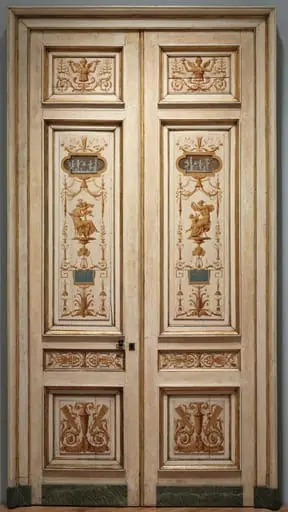 Double-Leaf Doors
 Suprescu
 "Înceaga
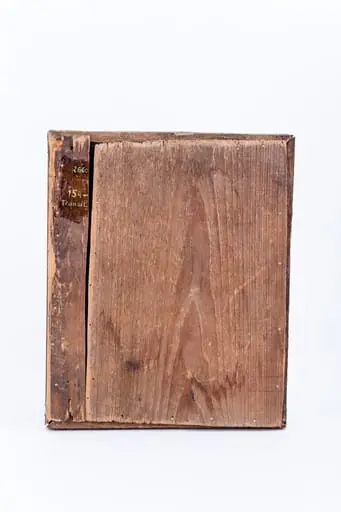 Sfântul Mare Ierarh Grigorie Cuvântătorul de Dumnezeu, sau Sfântul Grigorie Teologul sau de Nazianz. Este unul din cei Trei Sfinți Ierarhi, alături de Sfântul Vasile cel Mare și Sfântul Ioan Gură-de-Aur. Sfântul Grigorie are Sfânta Liturghie a Darurilor înainte Sfințite, care se săvârșește în timpul Postului Mare. Este îmbrăcat în veșminte liturgice arhierești, sacos roșu vermillon, epitrahil verde, nuanță de spanac-avocado, cu patru cruci. Poartă mithră și aureolă. Ține în mâna stângă Sfânta Evanghelie deschisă și binecuvintează cu mâna dreaptă. Fondul este albastru ceruleum cu stele albe. Icoana este de Țara Oltului. Cromatica este armonioasă: roșu vermillon, verde spanac-avocado, albastru ceruleum, nergu, alb. Inscripția din româno-chirilică se traduce Sf Grigorie.
 Icoasemn
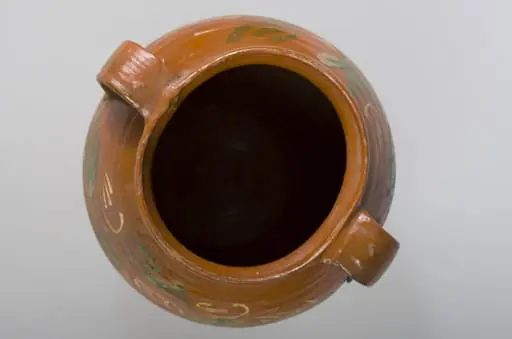 Vas de formă bitronconică, cu gât scurt cu buză rotunjită și evazată. Oala este smălțuită interior și pe 2/3 din exterior. Prezintă două toarte late ce unesc buza vasului de zona diametrului maxim. Decorații în registru floral-vegetal, dispuse concentric, în partea superioară a vasului, compuse din linii ondulate și palmate. Cromatică: fond: cărămiziu; motive: alb, verde.