Artwork
Vas de formă bitronconică, cu gât scurt cu buză rotunjită și evazată. Oala este smălțuită interior și pe 2/3 din exterior. Prezintă două toarte late ce unesc buza vasului de zona diametrului maxim. Decorații în registru floral-vegetal, dispuse concentric, în partea superioară a vasului, compuse din linii ondulate și palmate. Cromatică: fond: cărămiziu; motive: alb, verde.
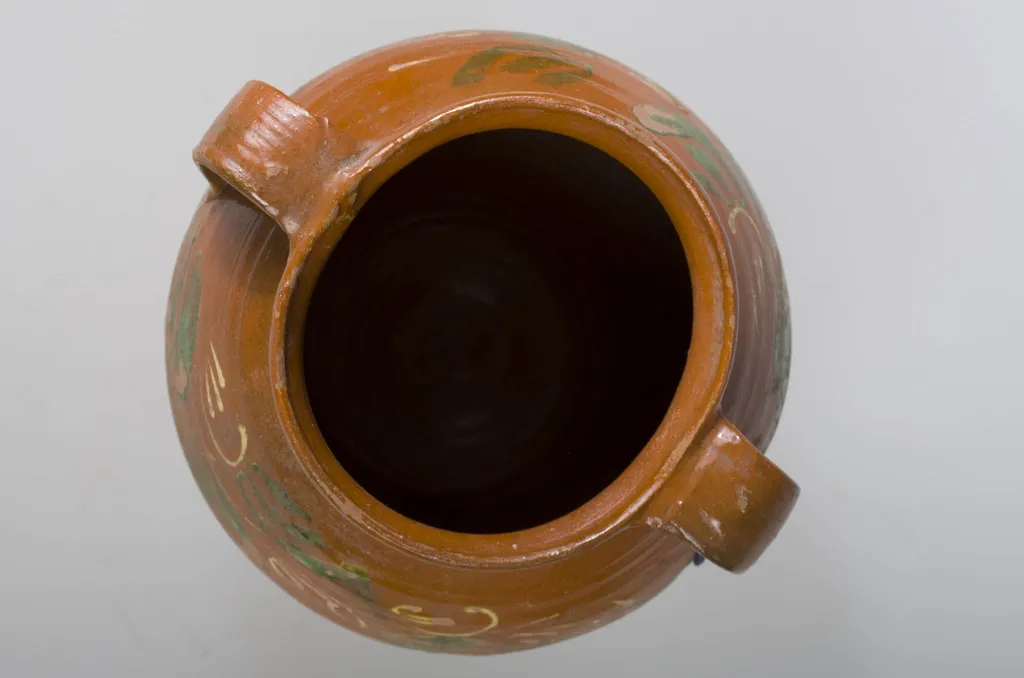
Vas de formă bitronconică, cu gât scurt cu buză rotunjită și evazată. Oala este smălțuită interior și pe 2/3 din exterior. Prezintă două toarte late ce unesc buza vasului de zona diametrului maxim. Decorații în registru floral-vegetal, dispuse concentric, în partea superioară a vasului, compuse din linii ondulate și palmate. Cromatică: fond: cărămiziu; motive: alb, verde. is a photography by Unknown. It dates from 1850 and is held in the collection of the ASTRA National Museum Complex.
About this work
Overview
A bitronconical ceramic vessel with a short neck and flared, rounded lip, this object features two broad handles connecting the rim to its widest point.
A bitronconical ceramic vessel with a short neck and flared, rounded lip, this object features two broad handles connecting the rim to its widest point. The interior and two-thirds of the exterior are glazed, creating a smooth, protective surface. Its form suggests functional use, likely for storage or ritual purposes, while its decorative program distinguishes it as a crafted object of cultural significance.
Subject & Meaning
The decoration consists of concentric floral and vegetal motifs rendered in wavy and palmate lines, arranged in a single register near the vessel’s upper body. These patterns, though abstracted, evoke natural forms—leaves, fronds, or tendrils—possibly symbolizing growth, fertility, or seasonal cycles. The choice of motifs reflects a symbolic language tied to local cosmology or daily life, rather than literal representation.
Technique & Style
The vessel is glazed in a brick-red ground, with designs painted in white and green pigments. The application of color is deliberate and restrained, emphasizing clarity over complexity. The handles are structurally integrated, not merely ornamental, suggesting a balance between utility and aesthetic refinement. The concentric layout of the motifs aligns with the vessel’s form, enhancing visual harmony.
History & Provenance
This artifact originates from a region with a long tradition of ceramic production, likely collected during the late 19th or early 20th century. It is held in the Museum of Ethnography, where it was cataloged as part of a broader effort to document regional material culture. Its specific place of origin and maker remain undocumented, but its style aligns with folk traditions of the Carpathian Basin.
Context
Similar vessels appear in archaeological and ethnographic records from Eastern Europe, often associated with domestic or ceremonial use. The combination of bitronconical form, limited glazing, and vegetal decoration reflects a localized aesthetic that persisted through generations. This piece stands as an example of pre-industrial craftsmanship, where form and ornament were shaped by both practical needs and inherited visual codes.
Legacy
Though not widely published or exhibited, the vase contributes to the understanding of regional ceramic practices in Eastern Europe. Its preservation in the Museum of Ethnography ensures its role as a reference for studying material continuity, decorative conventions, and the transmission of craft knowledge in rural communities before widespread industrialization.
Artist & collection

 Domestic Scene
 Giacomo and Cardinal Marco, investing Andrea, Abbot of San Zeno, with his Benefice
 The Nymph of Fontainebleau
 Portrait of a Woman
 Madonna and Child with Saints in the Enclosed Garden
 Venus and Minerva
 Family Group of Four on Sofa
 Wall painting from Room H of the Villa of P. Fannius Synistor at Boscoreale
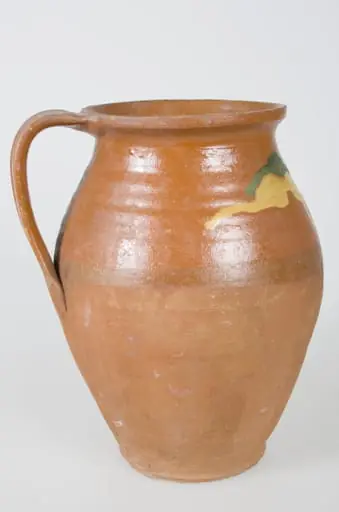 Vas bombat în partea mediană și cu buza evazată, smălțuit în jumătatea superioară. Prezintă o toartă ce leagă buza vasului de partea mediană. Decorații frontale realizate prin stropire, sub forma a două linii suprapuse și neregulate dispuse orizontal. Cromatică: fond cărămiziu; motive: verde; galben.
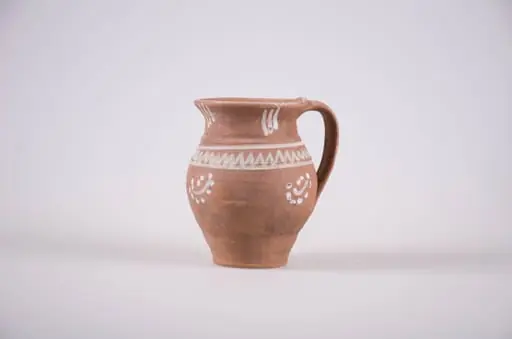 Recipient bitronconic cu gura largă. Prezintă toartă laterală care pleacă din buză până la diametrul maxim al vasului. Decor geometrizant pe partea superioară a vasului și pe toartă; linii paralele, cercuri, linie ondulată, puncte. Cromatică: fond: cărămiziu; motive trasate cu angobă albă. Vasul este nesmălțuit.
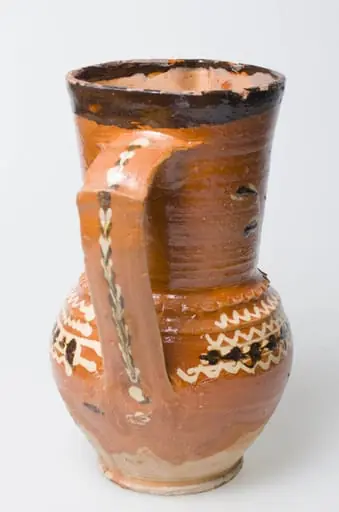 Vasul este confecționat din lut, având forma bitronconică, cu gura largă. Acesta este prevăzut cu o toartă pentru prindere fixată, în partea superioară de margine, iar în partea inferioară de zona bombată a vasului. Obiectul este decorat cu linii vălurite și motive florale. Cromatică: fond: maro; decor: alb; negru.
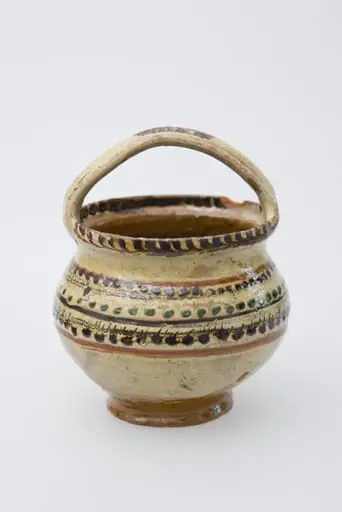 Vas ceramic de mici dimensiuni, pe bază inelară, pântecos, cu fundul și gura late. Deasupra gurii vasului a fost pusă o toartă de prindere. Buza vasului a fost pictată printr-un brâu de crenguțe. Pe pântecul vasului brâuri de puncte și două benzi subțiri jirăvite. Smălțuit în interior și exterior. Cromatică: fond: crem; motive: verde; maro; bej.
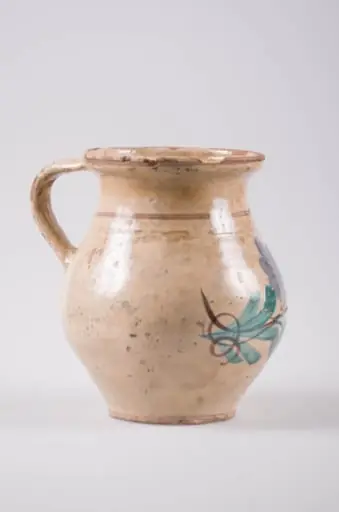 Oală de formă bitronconică de culoare bej. Decorul este reprezentat de motive florale: floarea este încadrată de linii albe realizate cu degetul; motive vegetale, motive geometrice: în partea superioară decorație circulară, linii. Prezintă toartă curbată. Smălțuită. Cromatică: fond: bej; motive: verde; albastru; maroniu.
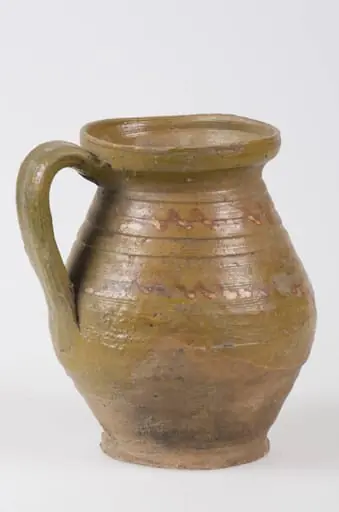 Vas bitronconic cu gât scurt și foarte profilat, cu gura înaltă și dreaptă. Prezintă o toartă care pleacă de sub buză și se unește cu corpul sub zona diametrului maxim. Este smălțuit în interior și la exterior (parțial nesmălțuit în partea de jos). În partea superioară prezintă un decor geometric realizat din cinci linii incizate și două linii în val pictate. Toarta este decorată cu puncte. Cromatică: fond: cărămiziu și pe alocuri verziu; motive: alb; maroniu. Prezintă uzură funcțională.
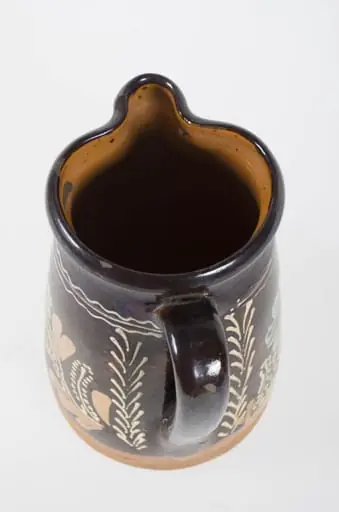 Vas de formă tronconică cu buza evazată și prevăzută cu cioc. Prezintă o toartă care pleacă de sub gât și se unește la partea inferioară. Vasul este smălțuită în interior și exterior (mai puțin ultimii 2 cm). Este decorat cu motive geometrice: două linii în val care încadrează o linie dreaptă dispuse pe corpul vasului la nivelul de la care pleacă toarta. Corpul vasului este decorat cu motive florale și vegetale: două flori care încadrează un pom al vieții stilizat. Toarta este mărginită de o parte și de alta de câte o crenguță de brad verticale. Cromatică: fond maro; motive: verde; alb; maro; crem.
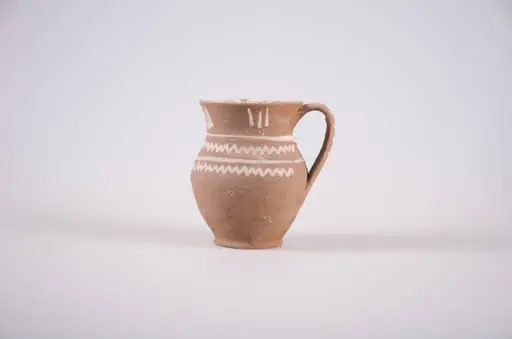 Recipient bitronconic cu gura largă. Are o toartă laterală care pleacă din buză până la diametrul maxim al vasului. Decor cu motive geometrice pe partea superioară a vasului și pe toartă: linii paralele, doua cercuri, linii ondulate. Cromatică: fond: cărămiziu; motive din angobă albă. Vasul este nesmălțuit.
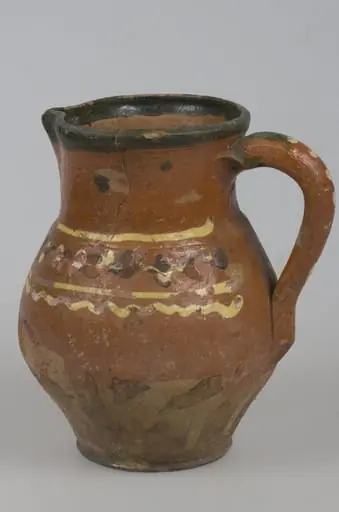 Vas de lut de mici dimensiuni, bombat, cu gât lung și puțin evazat, cu gură largă și cioc de scurgere. Toarta pornește de sub gură și coboară până în zona diametrului maxim al vasului. Este smălțuit în interior și exterior. Decorul dispus pe umărul vasului este format din: motive florale: o cunună din frunze încadrată de motive geometrice: o linie circulară în partea superioară și o linie circulară și una în val în partea inferioară. Buza vasului este vopsită în interior și exterior. Toarta este decorată cu puncte de culoare albă. Cromatică: fond: cărămiziu; motive: alb; verde; negru.