Artwork
Beheading of Saint John the Baptist
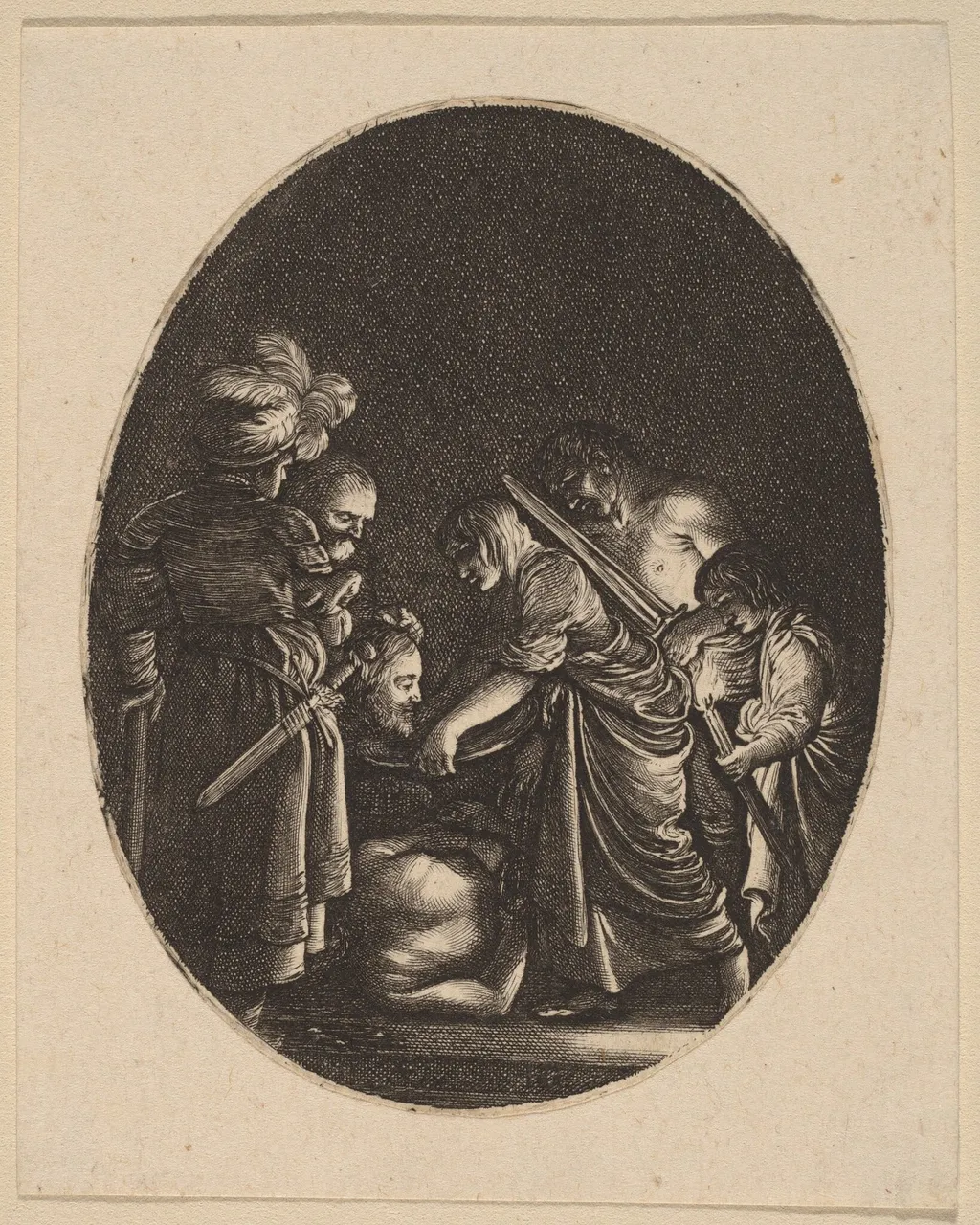
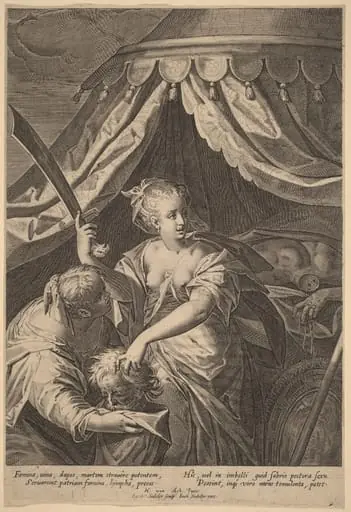
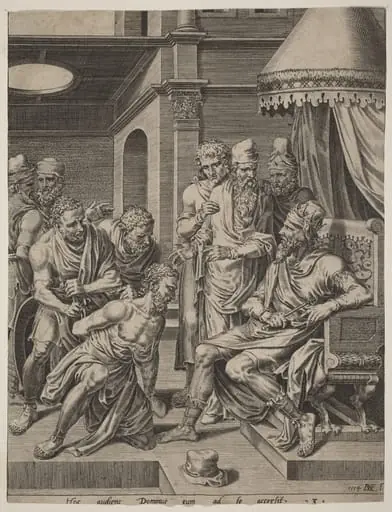
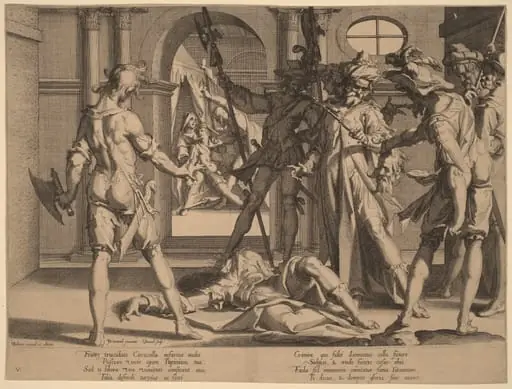
Beheading of Saint John the Baptist is an ink print by the Renaissance artist Hendrik Goudt. It dates from 1616 and is held in the collection of the National Gallery of Art.
About this work
Overview
Hendrik Goudt’s 1616 engraving presents the biblical episode of Saint John the Baptist’s execution. Rendered in black‑and‑white line work, the print captures the moment of the martyr’s beheading with a focus on narrative clarity and emotional intensity, characteristic of early‑17th‑century religious prints.
Subject & Meaning
The image illustrates the martyrdom of John the Baptist, a theme frequently revisited in post‑medieval art to underscore themes of sacrifice and prophetic witness. By emphasizing the expressions of the surrounding figures, the work invites contemplation of the moral and spiritual stakes inherent in the biblical story.
Technique & Style
Executed as an engraving, the piece relies on incised lines to build texture, depth, and chiaroscuro. Goudt’s handling of fine hatching creates a sense of three‑dimensional space, while the dense detailing of faces and garments heightens the dramatic tension typical of Renaissance‑influenced printmaking.
History & Provenance
Created in 1616, the print belongs to the period when Dutch artists increasingly engaged with religious subjects despite the Reformation’s iconoclastic pressures. Goudt, a pupil of the Dutch master Hendrick Goltzius, disseminated his works through prints that circulated widely among collectors and devotional audiences of the time.
Artist & collection


![The Death of Tancred [left], by Gabriel de Saint-Aubin](https://artifactworldgallery.com/img/gabriel-de-saint-aubin--the-death-of-tancred-left--c0a4b5e0d77d5ed0-w320.webp)
![The Challenge [right], by Gabriel de Saint-Aubin](https://artifactworldgallery.com/img/gabriel-de-saint-aubin--the-challenge-right--75162e00e6876b27-w320.webp)