Artwork
Bacchus
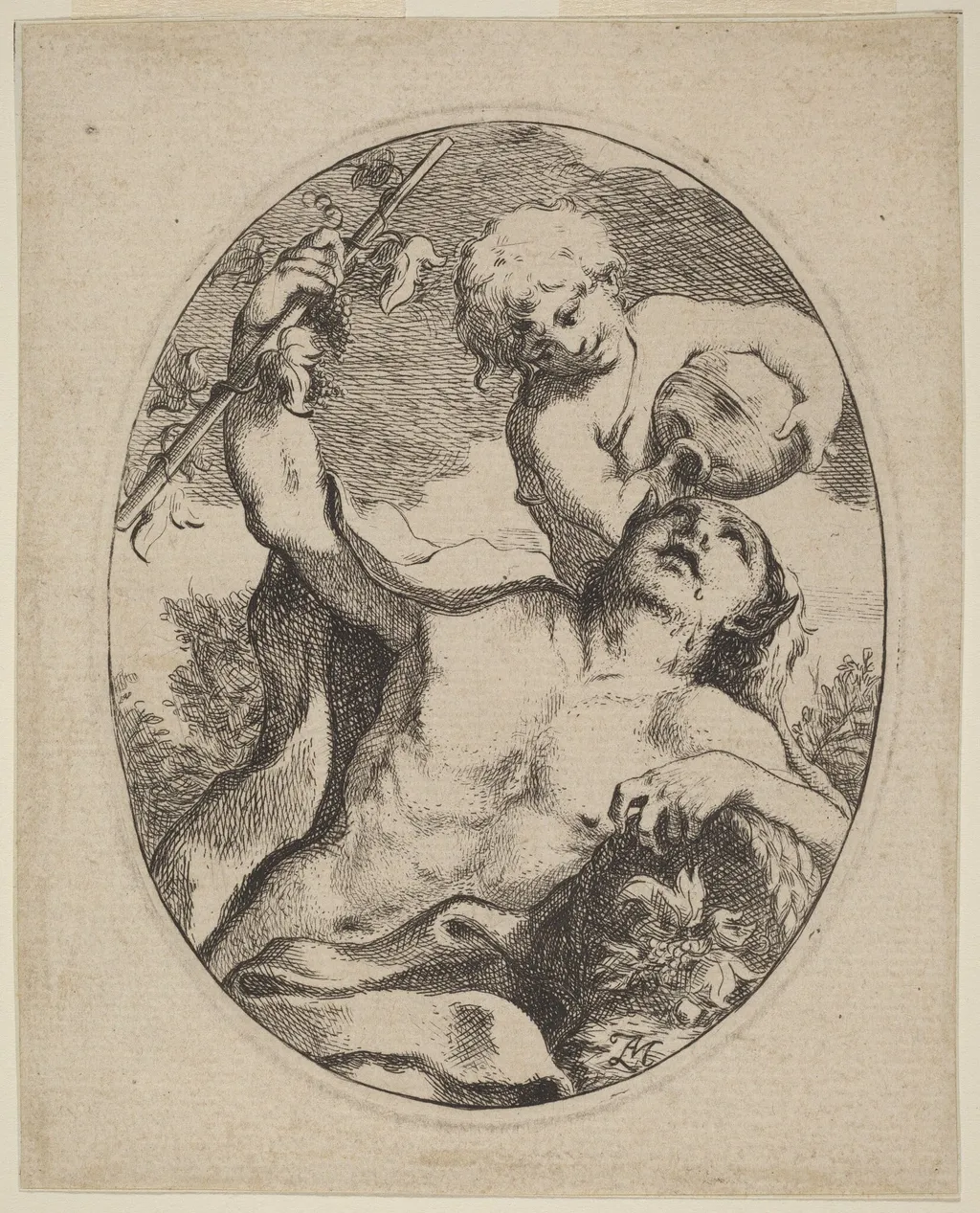
Bacchus is an ink print by the Baroque artist Anton Maria II Zanetti. It dates from 1744 and is held in the collection of the National Gallery of Art.
About this work
Overview
Bacchus is an etching and engraving on laid paper, produced around 1744 by Anton Maria Zanetti the Younger. The work depicts a mythological scene centered on the Roman god of wine, rendered in monochrome with fine linear detail. Unlike a painting, the image relies on incised lines and tonal contrasts to suggest form and atmosphere, characteristic of printmaking techniques of the mid-18th century.
Subject & Meaning
The scene portrays Bacchus reclining in a state of intoxication, surrounded by symbols of his domain—wine and vegetation.
The scene portrays Bacchus reclining in a state of intoxication, surrounded by symbols of his domain—wine and vegetation. A companion figure, possibly a satyr or attendant, stands over him, holding a jug and staff, suggesting ritual or care. The imagery evokes classical themes of revelry and divine indulgence, rooted in ancient mythology but filtered through 18th-century interpretations of antiquity.
Technique & Style
Zanetti employed etching and engraving to achieve fine gradations of tone and texture. Delicate cross-hatching and varied line weights model the figures’ forms, while the background foliage is suggested with loose, rhythmic strokes. The use of chiaroscuro enhances spatial depth, aligning the work with Baroque visual traditions, though executed with the precision and restraint typical of printmaking in Venice at the time.
History & Provenance
Created during Zanetti’s active years in Venice, the print likely circulated among collectors and artists interested in classical subjects. As a printmaker and dealer, Zanetti often reproduced or reinterpreted antiquities and mythological scenes for a cultured audience. The work’s survival in institutional collections suggests it was valued for its technical skill and thematic resonance within Enlightenment-era artistic circles.
Context
In mid-18th-century Venice, interest in classical antiquity remained strong among artists and patrons. Zanetti’s engagement with mythological themes reflects broader trends in Rococo and early Neoclassical art, where ancient narratives were revisited through refined, intimate compositions. His prints served both as artistic studies and as accessible objects for private collections, bridging scholarly and decorative tastes.
Legacy
Though not widely known today, Zanetti’s Bacchus exemplifies the role of printmaking in disseminating classical imagery during the Enlightenment. His technical mastery influenced contemporaries and contributed to the preservation of mythological motifs in graphic arts. The work remains a quiet testament to the enduring appeal of ancient themes in 18th-century European visual culture.
Artist & collection


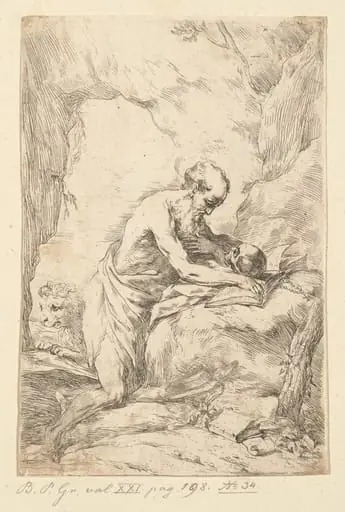 Saint Jerome
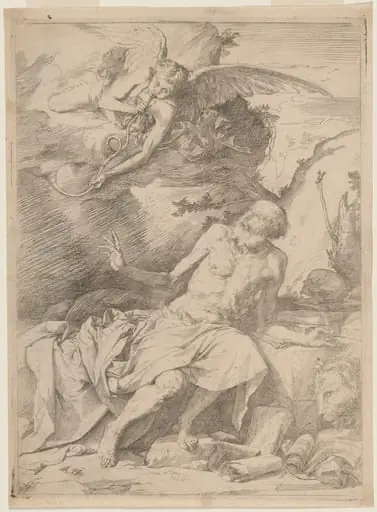 Saint Jerome Hearing the Trumpet of the Last Judgement
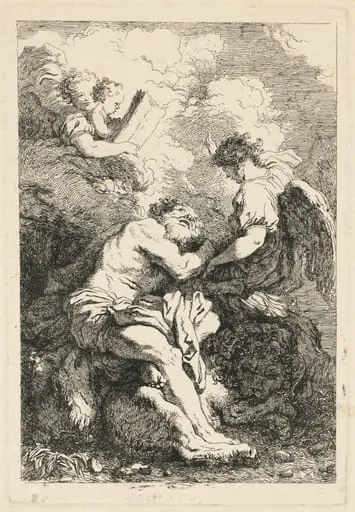 The Vision of Saint Jerome
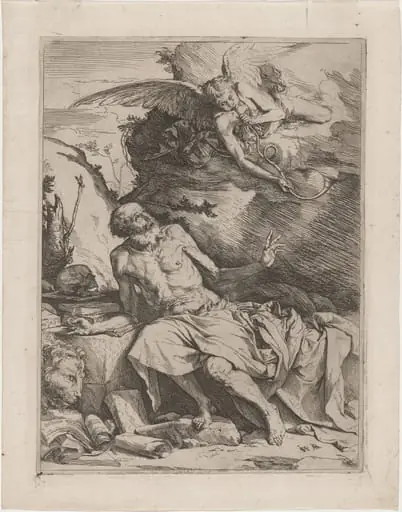 Saint Jerome Hearing the Trumpet of the Last Judgment
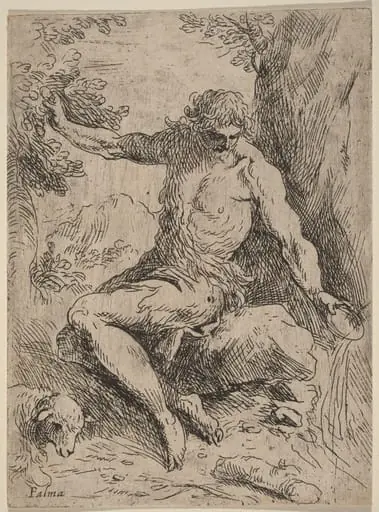 Saint John the Baptist
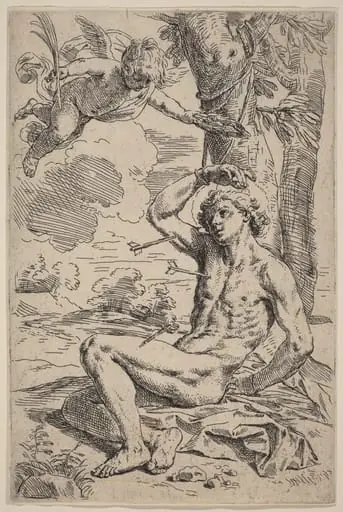 Saint Sebastian
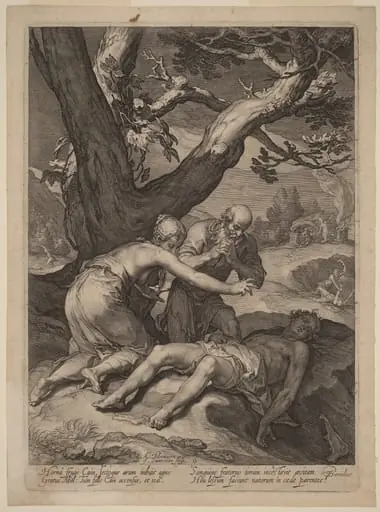 Adam and Eve Lamenting over the Corpse of Abel
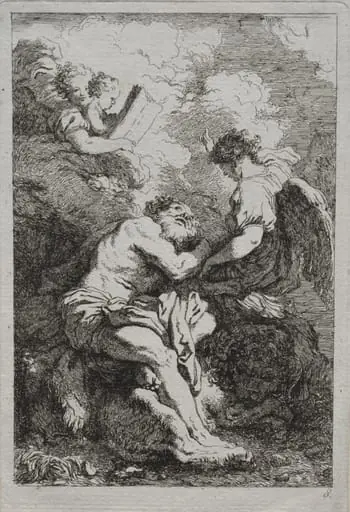 Saint Jerome
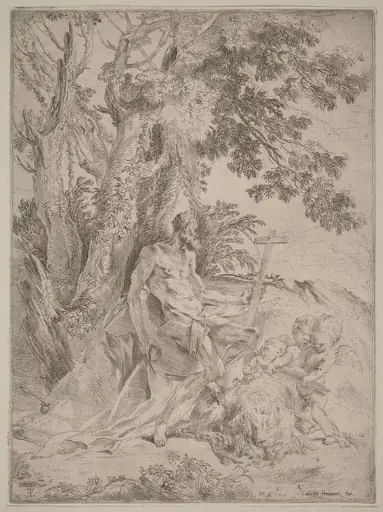 Saint Jerome
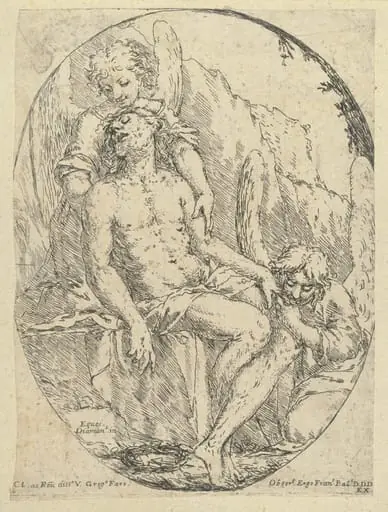 The Body of Christ
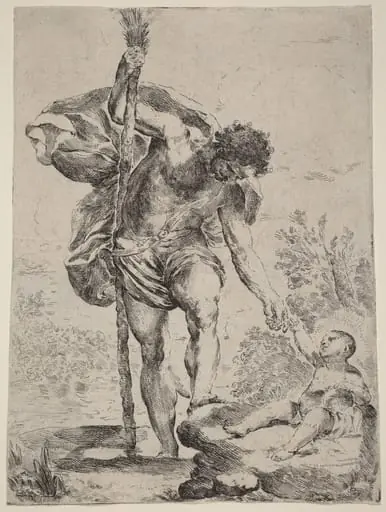 Saint Christopher Giving His Hand to the Infant Jesus
 The Rest on the Flight into Egypt