Artwork
Eucephala caerulea (Blue-chinned Sapphire)
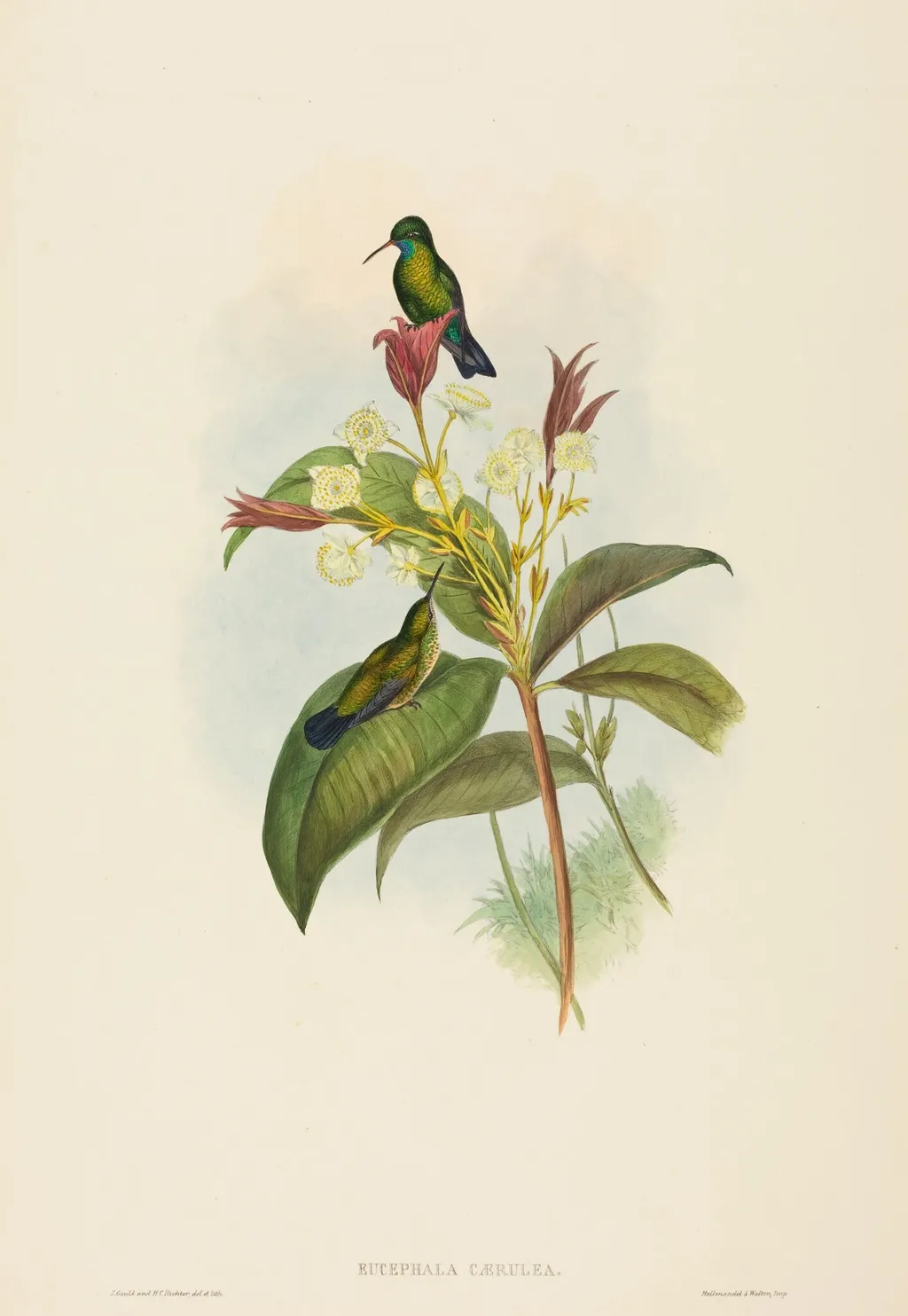
Eucephala caerulea (Blue-chinned Sapphire) is an ink print by the Romanticist artist John Gould. It dates from 1842 and is held in the collection of the National Gallery of Art.
About this work
Overview
Eucephala caerulea (Blue-chinned Sapphire) is a hand-colored lithograph print created in 1842 by John Gould, an English ornithologist known for his detailed studies of birds.
Subject & Meaning
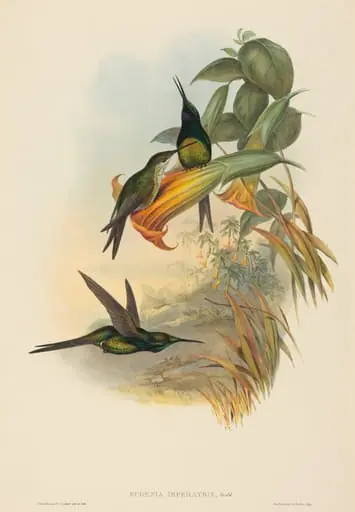
The print depicts two Blue-chinned Sapphire hummingbirds amidst flowers, showcasing their bright green plumage and the intricate details of their surroundings. The image is part of Gould's ornithological work, specifically his documentation of Australian bird species.
Technique & Style
The image was produced using lithography, a printmaking technique, and was then hand-colored to achieve vivid representations of the birds and plants. The level of detail in the illustration highlights the artist's skill and attention to naturalistic accuracy.
History & Provenance
The print is from Gould's extensive ornithological studies, which were often collaborative efforts with illustrators like his wife Elizabeth Gould and artists such as Edward Lear. His work, including the seven-volume 'The Birds of Australia', was influential in the field and later contributed to Charles Darwin's research.
Artist & collection
Artist
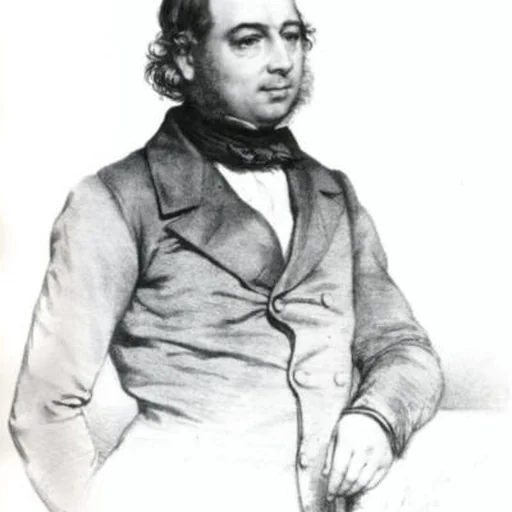
John Gould (; 14 September 1804 – 3 February 1881) was an English ornithologist who published monographs on birds, illustrated by plates produced by his wife, Elizabeth Gould, and several other artists, including Edward…

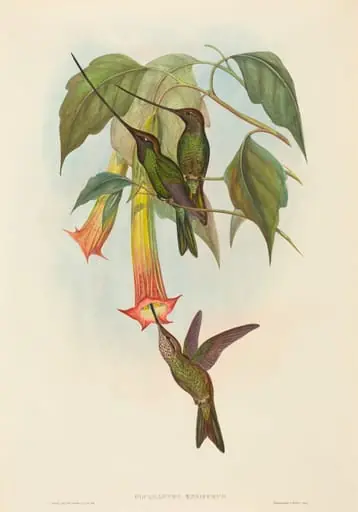 Docimastes ensiferus (Sword-billed Hummingbird)
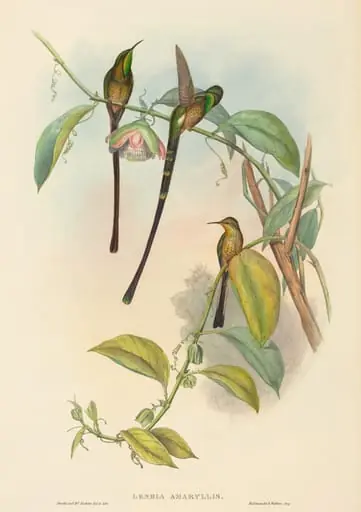 Lesbia Amaryllis
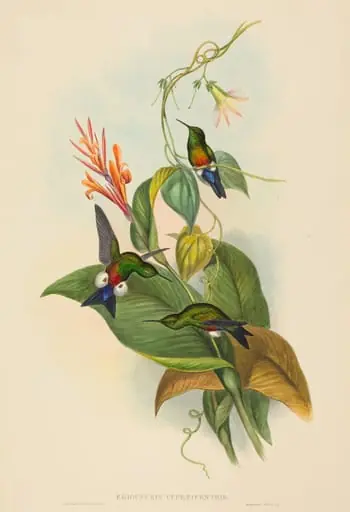 Eriocnemis cupreiventris (Coppery-vented Puff-Leg)
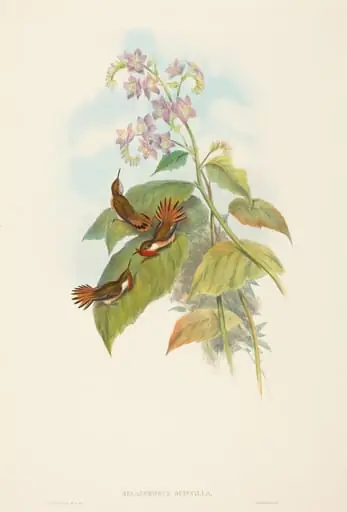 Selashorus scintilla (Scintillant Hummingbird)
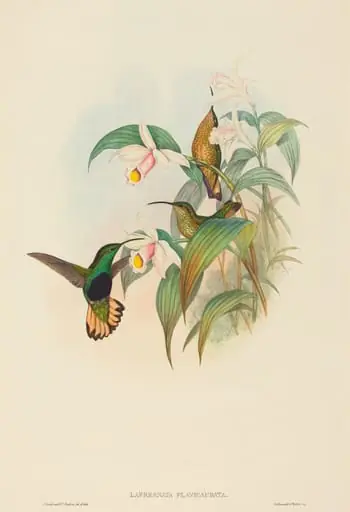 Lafresnaya flavicaudata (Buff-tailed Velvet-breast)
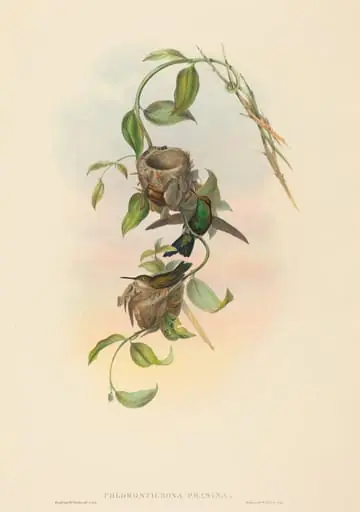 Chlorostilbona prasina (Puncheran's Emerald)
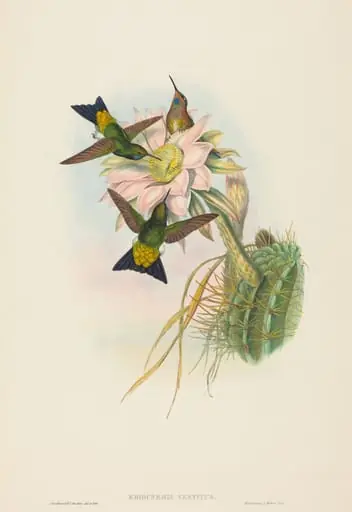 Eriocnemis vestitus (Glowing Puff-Leg)
 Eugenia imperatrix (Empress Hummingbird)