Artwork
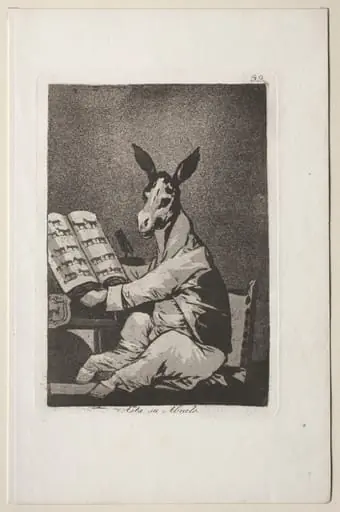
Asta su abuelo (And So Was His Grandfather)
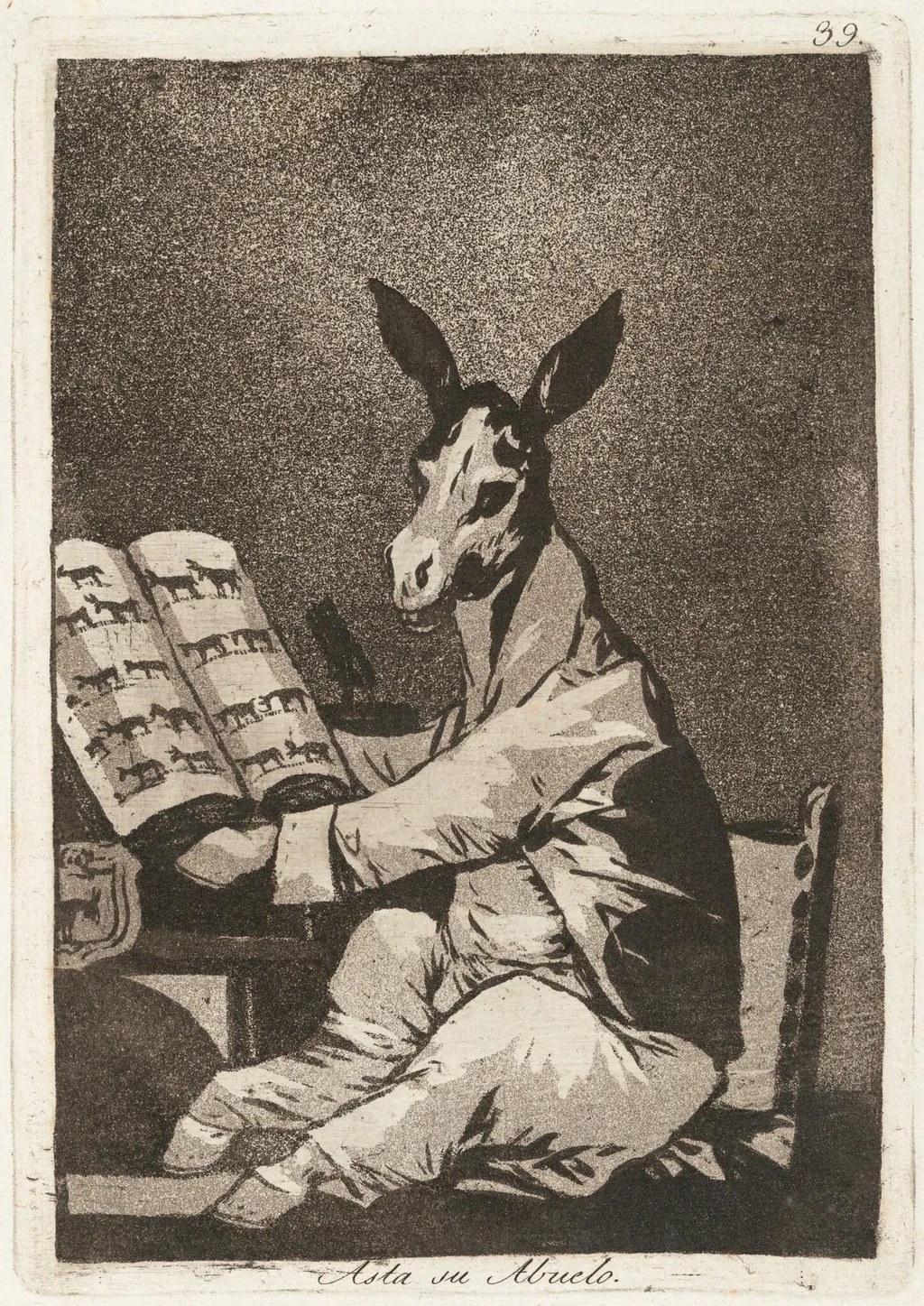
Asta su abuelo (And So Was His Grandfather) is an ink print by the Romanticist artist Francisco Goya. It dates from 1799 and is held in the collection of the National Gallery of Art.
About this work
Overview
Created in 1799, *Asta su abuelo* (And So Was His Grandfather) is a print by the Spanish artist Francisco Goya. Executed with lift‑ground aquatint and aquatint on laid paper, the work belongs to Goya’s early print output, produced amid the political turbulence of late‑eighteenth‑century Spain.
Subject & Meaning
The image depicts a donkey perched atop a stack of books, its muzzle reaching toward a hand that offers food. The donor’s legs and feet are visible, grasping the volumes. The title, a colloquial phrase, suggests a humorous commentary on the inheritance of undesirable habits—here, the donkey’s voracious appetite for literature as a metaphor for mindless consumption.
Technique & Style
Goya employed lift‑ground aquatint, a method that allows for broad tonal areas, combined with finer aquatint lines to render stark chiaroscuro. The contrast between deep shadows and illuminated surfaces gives the scene a gritty, almost theatrical quality, while the sharp outlines emphasize the animal’s alert ears and the texture of the paper support.
History & Provenance
The print was produced during Goya’s formative years, before his later series of darker works. It reflects his early interest in satirical subjects and social observation. Existing copies are held in several European collections, having passed through private hands before entering museum archives in the nineteenth century.
Artist & collection
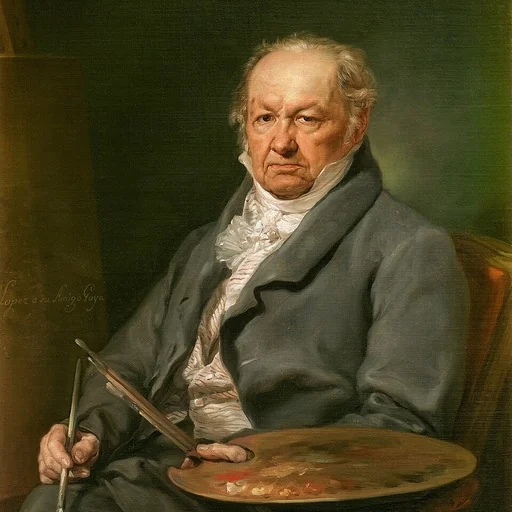
Artist
Francisco José de Goya y Lucientes (; Spanish: ; 30 March 1746 – 16 April 1828) was a Spanish romantic painter and printmaker.

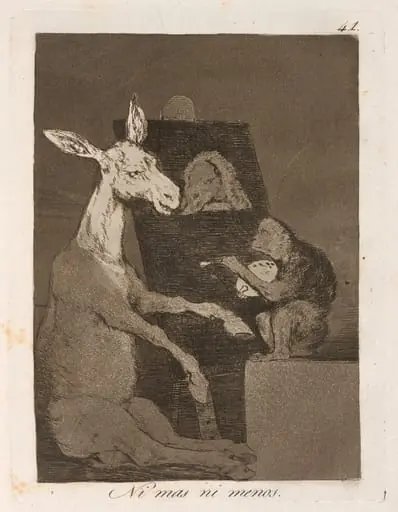 Ni mas ni menos (Neither More nor Less)
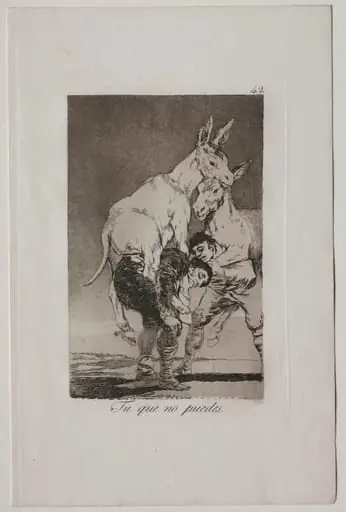 Thou Who Canst Not, Plate 42
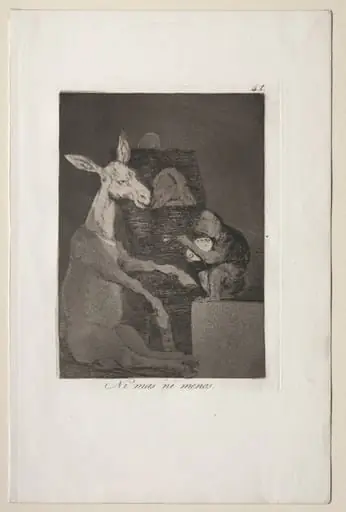 Neither More Nor Less, Plate 41
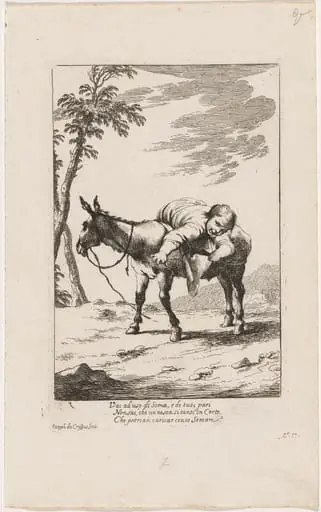 Bertoldino Lying on a Donkey
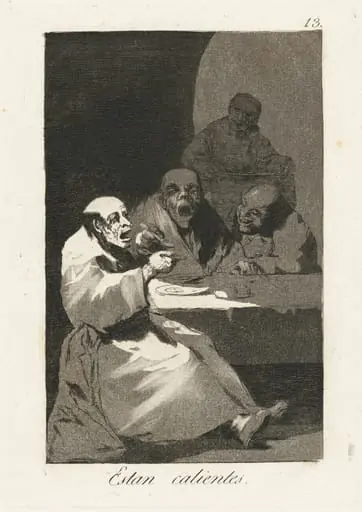 Estan Calientes (They Are Hot)
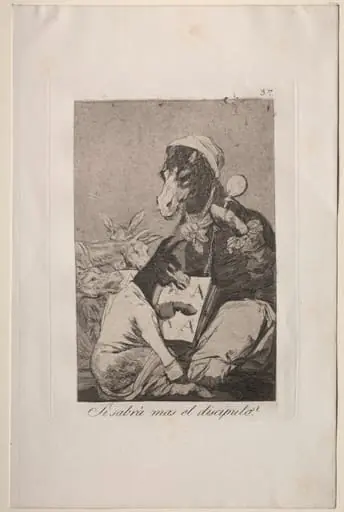 Might Not the Pupil Know More?, Plate 37
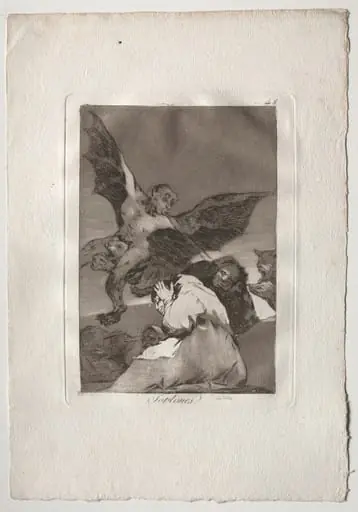 Tale-Bearers - Blasts of Wind, Plate 48
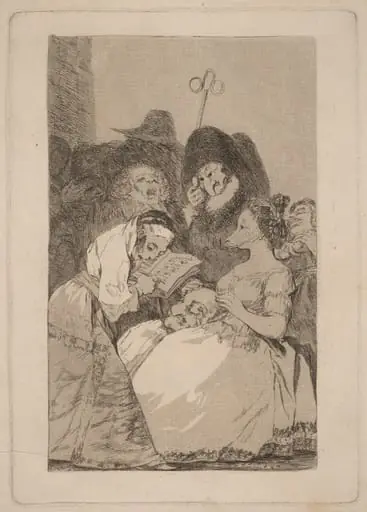 La filiacion (The Filiation)
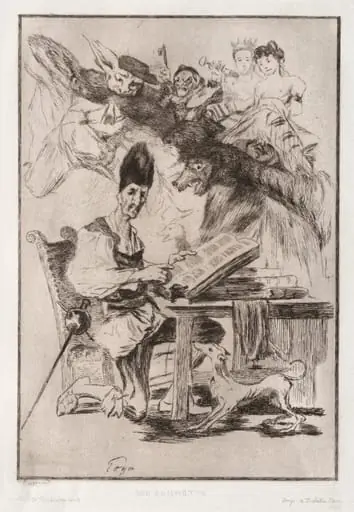 Don Quichote, after Goya
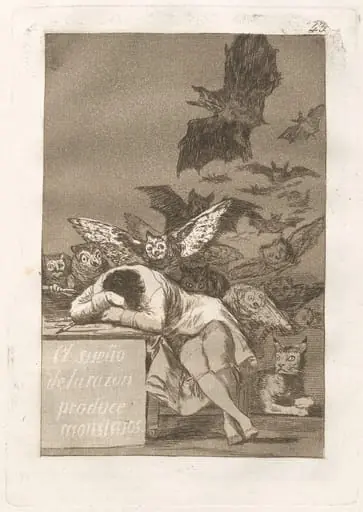 El sueño de la razon produce monstruos (The Sleep of Reason Produces Monsters)
 A Money Scrivener
 And So was His Grandfather, Plate 39