Artwork
Baltasar Carlos
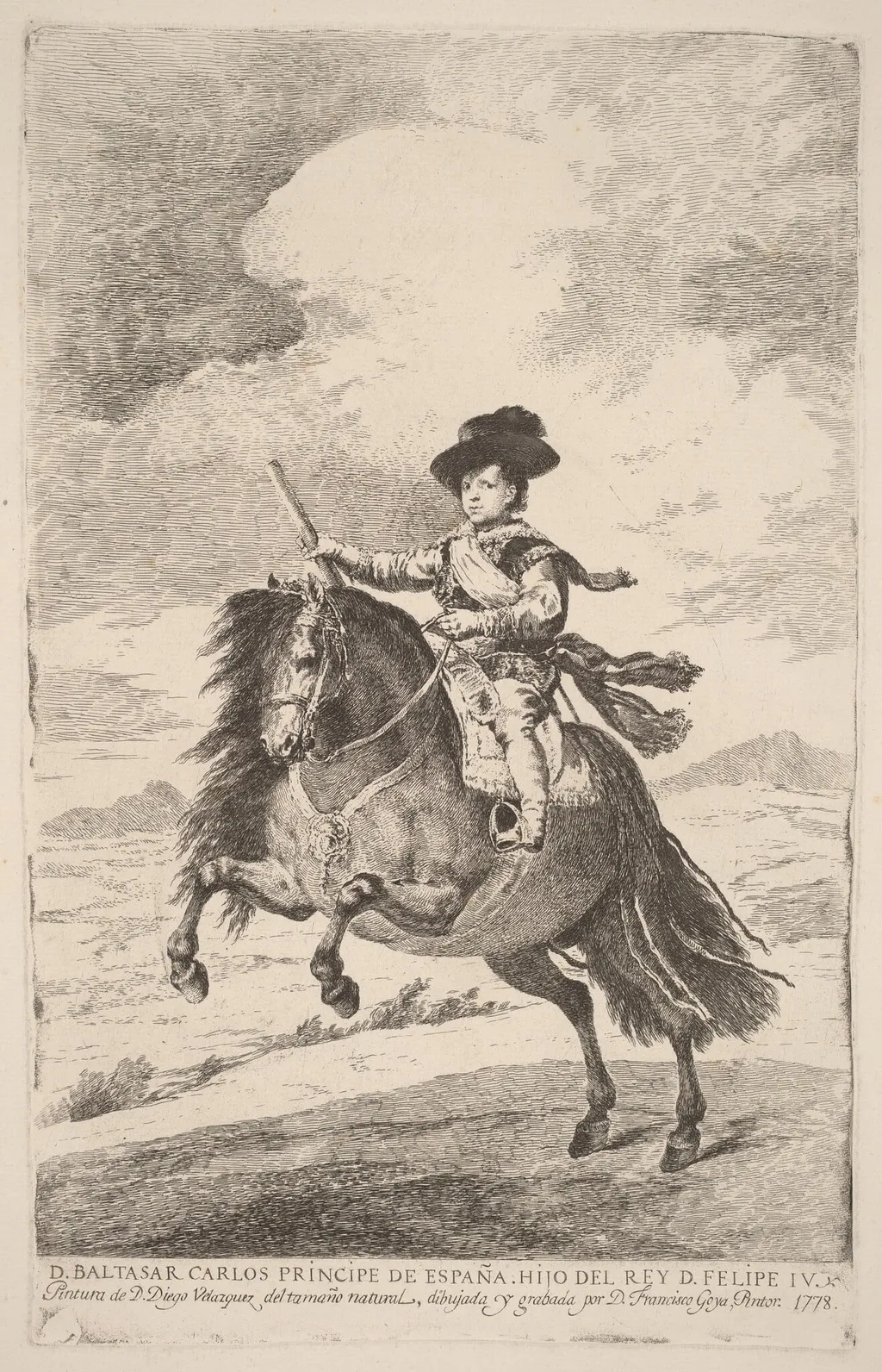
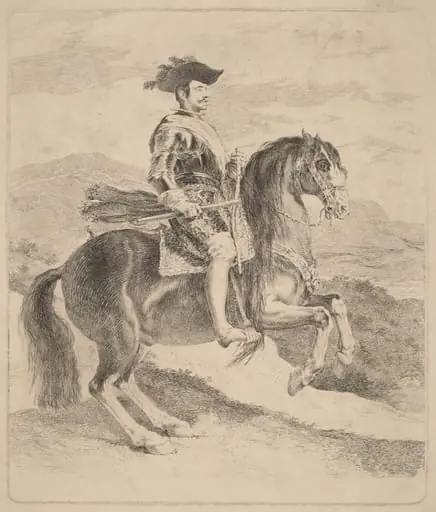
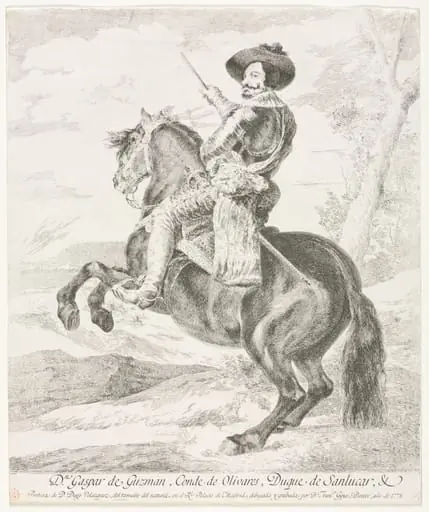
Baltasar Carlos is an ink print by the Romanticist artist Francisco Goya. It dates from 1778 and is held in the collection of the National Gallery of Art.
About this work
He’s dressed in fancy clothes—a wide-brimmed hat, a long coat, and boots—holding a stick like a rider would.
This etching shows a young man riding a rearing horse. He’s dressed in fancy clothes—a wide-brimmed hat, a long coat, and boots—holding a stick like a rider would. The horse’s mane and tail swirl dramatically, and its front legs are lifted high. The background is just a faint, blurry landscape.
The rider’s name is written below: *Baltasar Carlos Príncipe de España*. This print was made from a painting by Diego Velázquez, but Goya drew and etched it himself in 1778.
Next, look up etching, drypoint, aquatint to see how artists like Goya created these sharp, detailed prints.
Overview
Created in 1778–79 at the Calcografía Real in Madrid, this print by Francisco de Goya is a first-edition impression in etching and drypoint on heavy laid paper. It reproduces a portrait of Prince Baltasar Carlos, originally painted by Diego Velázquez, but reinterpreted through Goya’s hand. The work belongs to his early period as a printmaker, before his later, more critical series, and reflects his technical training and engagement with Spanish court imagery.
Subject & Meaning
The print depicts Baltasar Carlos, the young heir to the Spanish throne, mounted on a spirited horse, dressed in elaborate court attire including a broad-brimmed hat and long coat. He holds a riding stick, a symbol of noble training. The composition emphasizes his status and equestrian poise, aligning with dynastic portraiture traditions. The faint, indistinct background focuses attention on the figure, reinforcing the idealized image of royal youth rather than a personal portrait.
Technique & Style
Goya employed etching and drypoint to achieve fine lines and rich tonal contrasts. The horse’s mane and tail are rendered with vigorous, swirling drypoint strokes, while the rider’s garments and hat are defined by precise etched contours. The background is minimally suggested, leaving the figure isolated against a muted ground. This controlled yet expressive handling reveals Goya’s mastery of printmaking techniques and his ability to adapt classical compositions with personal vigor.
History & Provenance
The print was produced under royal patronage at the Calcografía Real, Spain’s official print workshop, during Goya’s early tenure as a court artist. It was part of a series reproducing Velázquez’s royal portraits, commissioned to disseminate the image of the monarchy. As a first-edition impression, this print was struck from the original plates before any wear or alteration, making it a direct record of Goya’s hand at the time.
Context
In the late 18th century, Spanish artists were encouraged to study and reproduce the works of Velázquez as a means of cultivating national artistic identity. Goya’s engagement with Velázquez’s portraits was both pedagogical and political, reinforcing royal authority through visual tradition. This print reflects the institutional role of printmaking in preserving and promoting courtly imagery, even as Goya’s own vision would later diverge sharply from such ideals.
Legacy
Though not among Goya’s most famous prints, this work demonstrates his foundational skill in reproductive printmaking and his early command of line and texture. It stands as a bridge between the Baroque courtly tradition and his later, more personal and critical works. The print remains a key example of how Spanish artists negotiated legacy, authority, and technique during a period of cultural transition.
Artist & collection
Artist
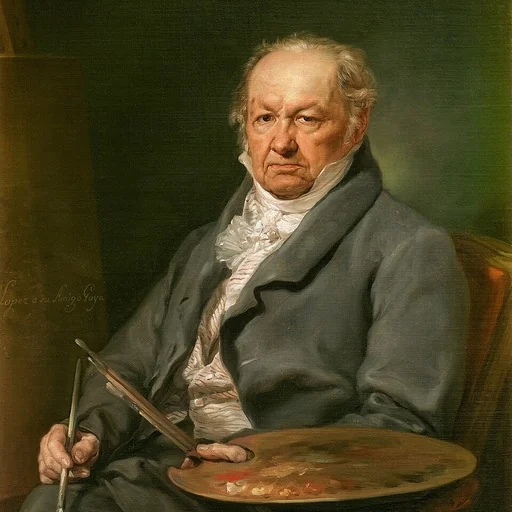
Francisco José de Goya y Lucientes (; Spanish: ; 30 March 1746 – 16 April 1828) was a Spanish romantic painter and printmaker.