Artwork
Louis XIII
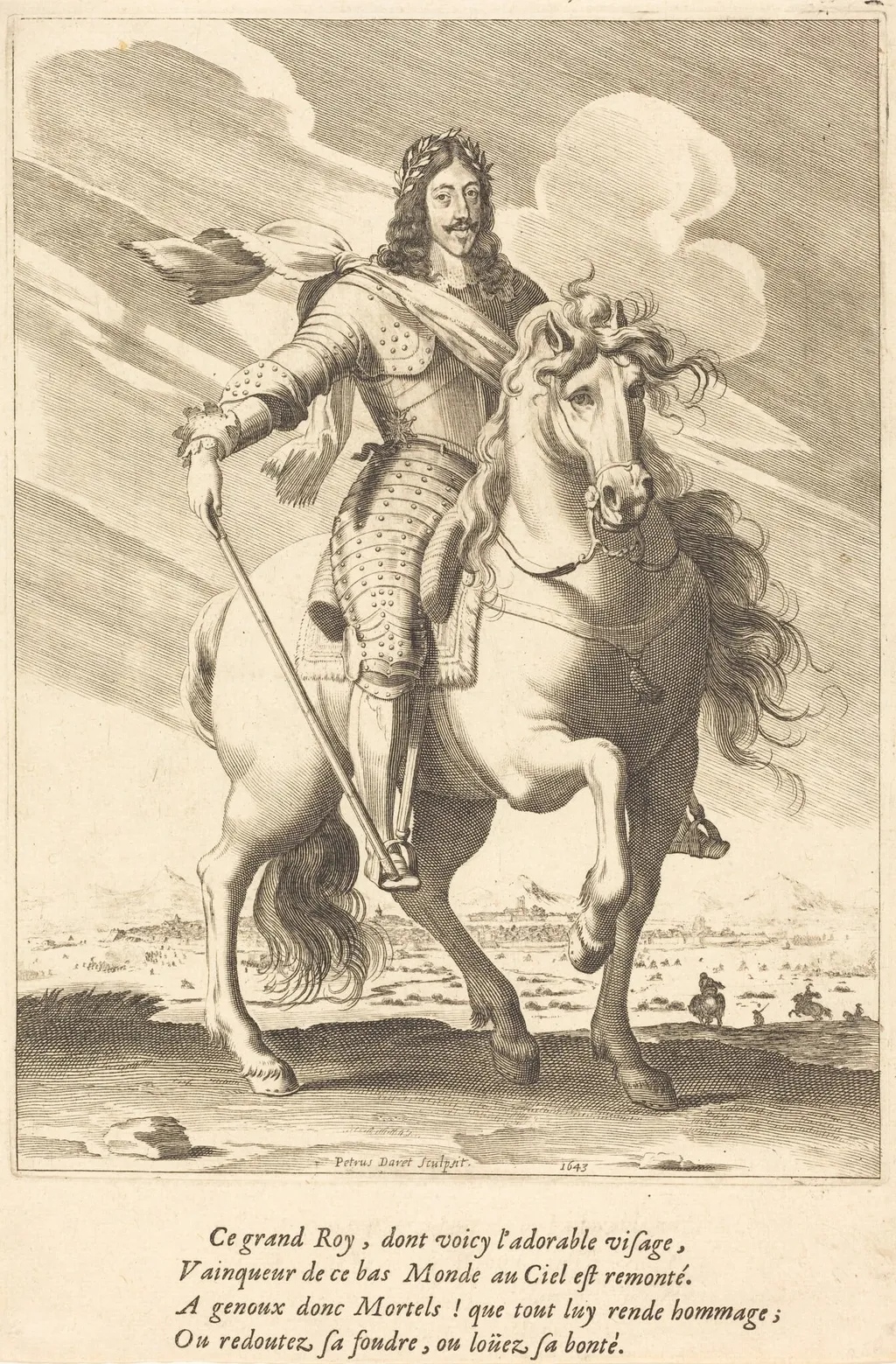
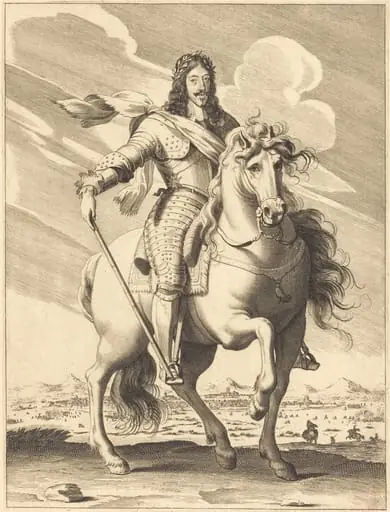
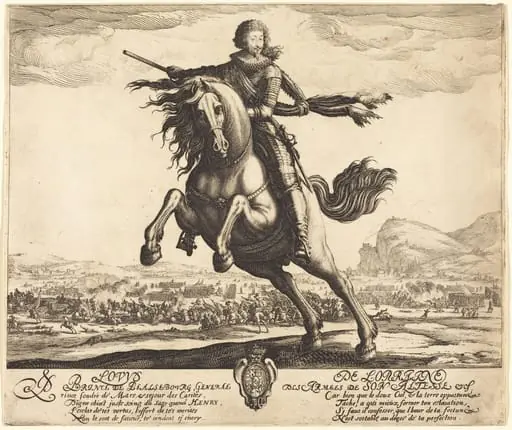
Louis XIII is an ink print by the Baroque artist Pierre Daret de Cazeneuve. It dates from 1643 and is held in the collection of the National Gallery of Art.
About this work
Overview
This print depicts Louis XIII of France, created in 1643 by Pierre Daret de Cazeneuve. Executed in etching and engraving on laid paper, it belongs to the second state of the composition. The work is a formal royal portrait, intended to convey authority through precise draftsmanship and controlled tonal gradations typical of mid-17th-century French printmaking.
Subject & Meaning
Louis XIII is portrayed in full regalia, his expression solemn and composed, reflecting the gravity of kingship. The portrait avoids idealization, instead emphasizing his physical presence and the weight of office. The inclusion of elaborate textiles and insignia underscores his status, aligning the image with the political messaging common in early Bourbon portraiture.
Technique & Style
Daret employed fine etched lines and engraved details to render the texture of lace, velvet, and metalwork with remarkable precision. The interplay of light and shadow on the king’s face and collar demonstrates mastery of chiaroscuro in print. The use of laid paper, with its visible chain lines, adds a tactile authenticity to the image, enhancing its documentary character.
History & Provenance
Created shortly after Louis XIII’s death in 1643, the print likely served to memorialize the monarch and circulate his image among courtiers and foreign dignitaries. As a second state, it reflects revisions made after the initial impression, possibly to refine details or correct errors. Its survival in multiple institutional collections suggests early and sustained interest in royal iconography.
Context
This print emerged during a period when French monarchy sought to consolidate visual authority through controlled imagery. Etching, though less common than painting for royal portraits, allowed for wider dissemination. Daret’s work aligns with a broader trend of using print to reinforce dynastic legitimacy, particularly as Cardinal Richelieu’s influence waned and Louis XIV’s reign approached.
Legacy
Daret’s portrait of Louis XIII stands as a representative example of French royal printmaking in the early Baroque era. While not widely reproduced in popular culture, it remains a key reference for scholars studying the transition from Renaissance to absolutist visual culture. Its technical precision influenced later court engravers who sought to balance realism with ceremonial dignity.
Artist & collection