Artwork
Esto es lo verdadero (This Is the Truth)
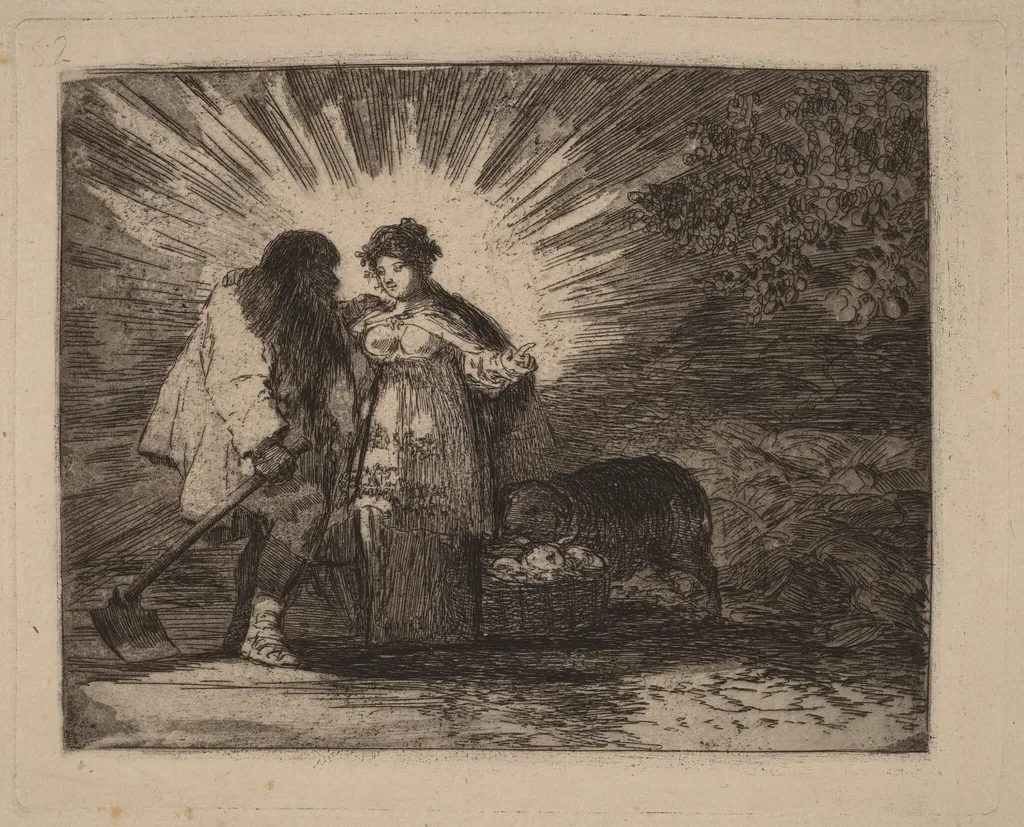
Esto es lo verdadero (This Is the Truth) is an ink print by the Romanticist artist Francisco Goya. It dates from 1815 and is held in the collection of the National Gallery of Art.
About this work
Overview
This print, titled *Esto es lo verdadero* (This Is the Truth), is an 1815 work by Francisco de Goya executed in etching, aquatint, dry‑point, burin and burnisher with umber ink on laid paper. The image survived only as a trial proof that was printed after Goya’s death, around 1870, by the workshop of Lefort or the state‑run Calcografía.
Subject & Meaning
The composition depicts a formally dressed woman holding a fan, standing beside a man whose head is covered with a shawl. At her feet rests a basket of fruit, while a dog lies on the ground. A storm‑filled sky with jagged clouds and a solitary tree frames the scene, suggesting a moral or allegorical reading that aligns with the title’s claim of truth.
Technique & Style
Goya combines several intaglio methods: the broad tonal washes of aquatint, the fine, velvety lines of dry‑point, and the crisp outlines achieved with a burin and burnisher. The use of umber ink on laid paper creates a muted palette, while the rough, textured strokes and stark chiaroscuro echo the artist’s late‑period graphic style.
History & Provenance
Although the design dates to 1815, the proof was not printed until the late nineteenth century, likely by the French printer Lefort or by the Spanish Calcografía, the official printmaking workshop. This posthumous impression reflects the continued interest in Goya’s unpublished plates during the period of his growing reputation.
Context
The image belongs to the final phase of Goya’s printmaking, a period marked by political unrest and social upheaval in Spain. His later works often merged Romantic expressiveness with biting commentary on contemporary events, using allegory and symbolic figures to critique the era’s contradictions.
Legacy
Goya’s experimental layering of intaglio techniques in works like this influenced subsequent European artists who explored the expressive possibilities of print media. The print’s stark visual language and moral undertones anticipate later Symbolist and modernist approaches to graphic art.
Artist & collection
Artist
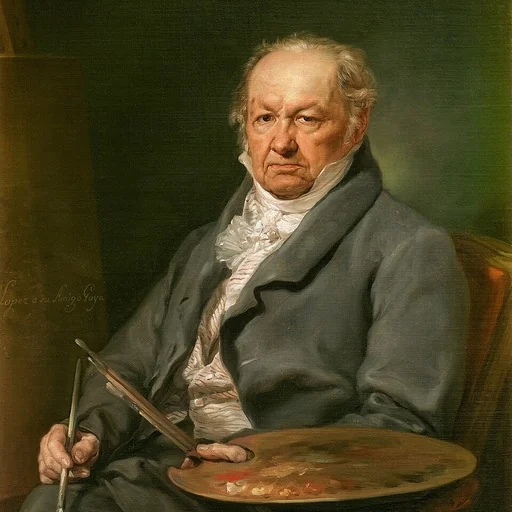
Francisco José de Goya y Lucientes (; Spanish: ; 30 March 1746 – 16 April 1828) was a Spanish romantic painter and printmaker.

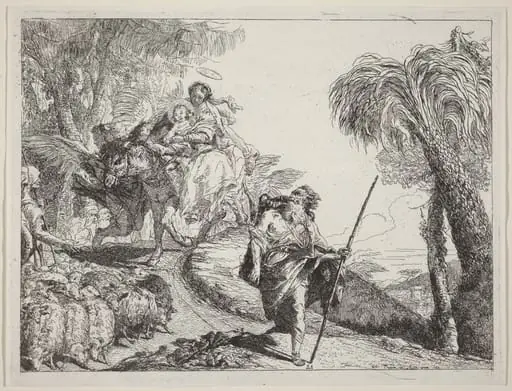 The Flight with Joseph in the Foreground
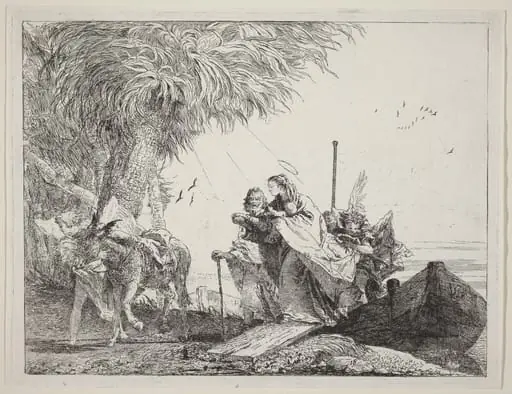 The Holy Family Disembarking
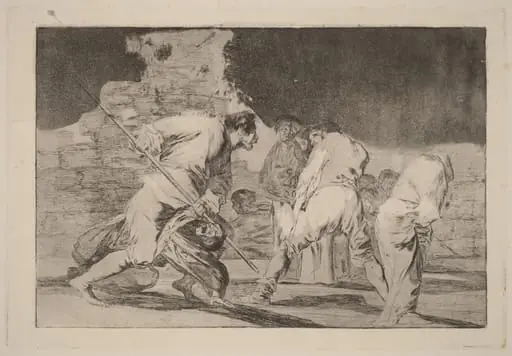 Disparate furioso (Furious Folly)
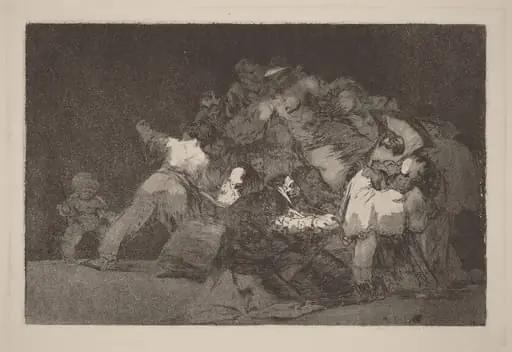 Disparate general (General Folly)
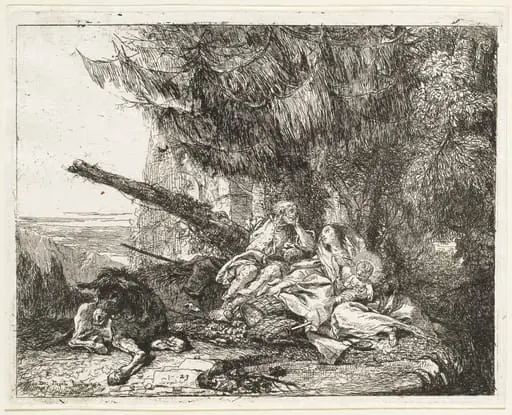 The Rest on the Flight, with Holy Family under a Tree
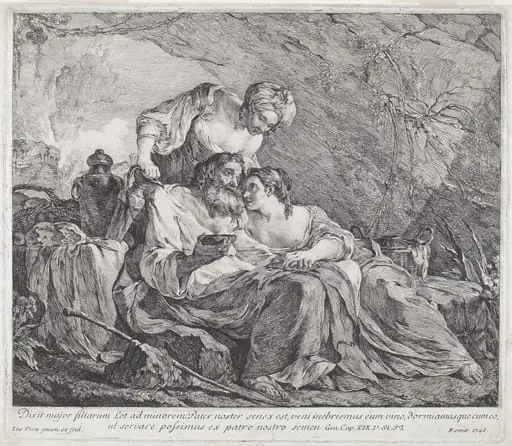 Lot and His Daughters
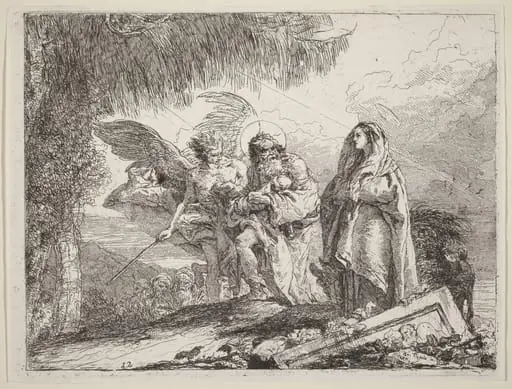 The Flight, Holy Family Walking with Angel
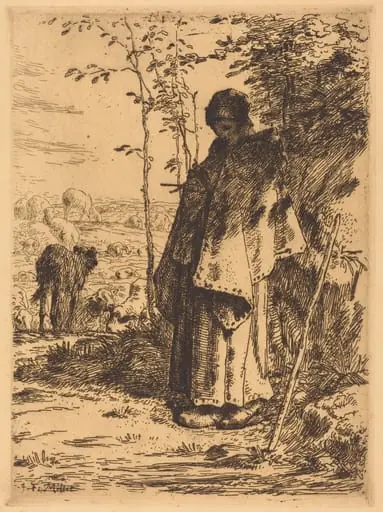 The Large Shepherdess (La grande bergere)
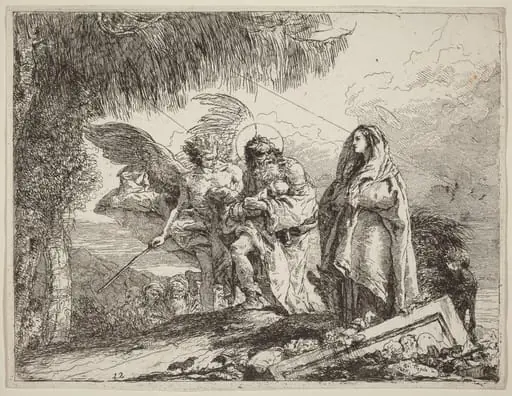 The Flight, Holy Family Walking with Angel
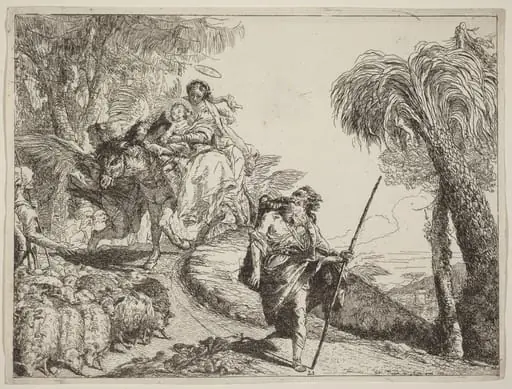 The Flight with Joseph in the Foreground