Artwork
Lot and His Daughters
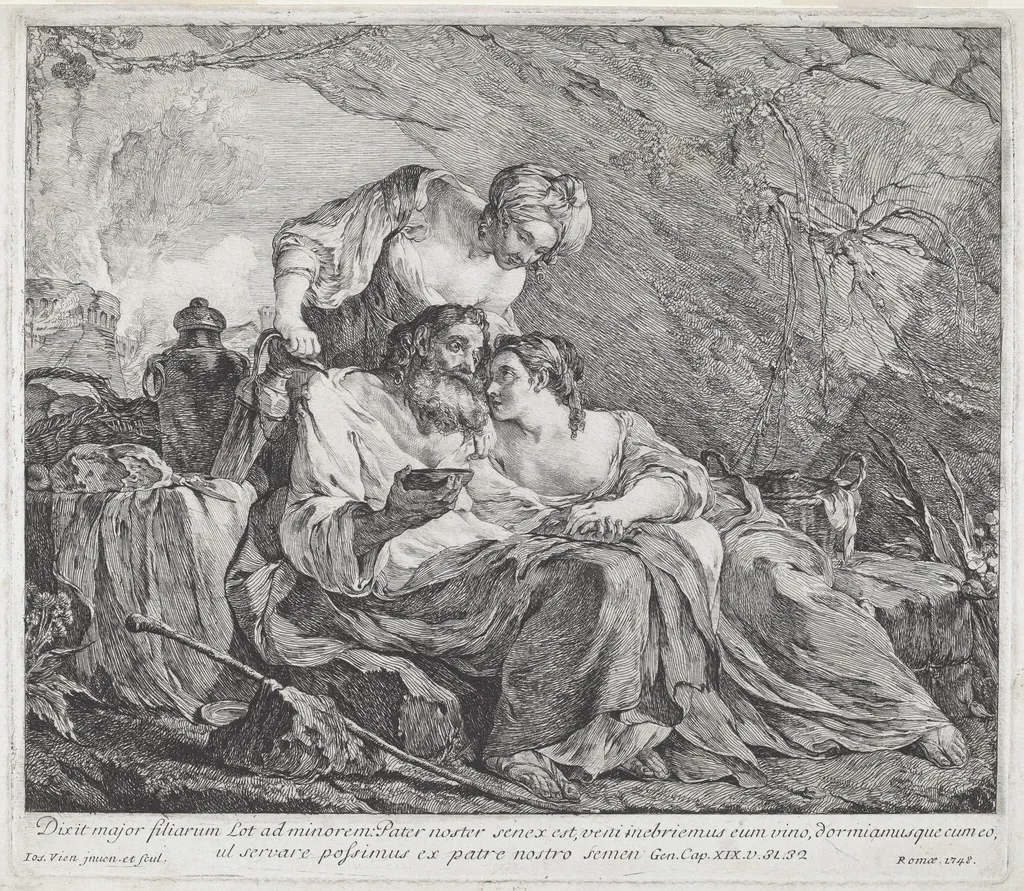
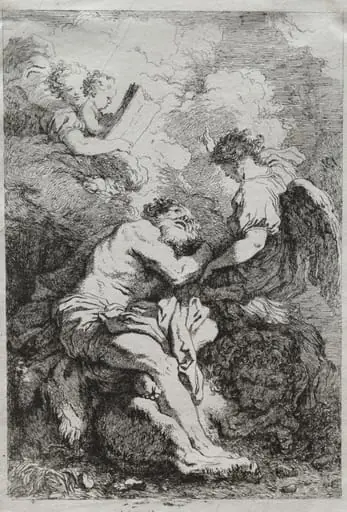
Lot and His Daughters is an ink print by the Baroque artist Joseph-Marie Vien. It dates from 1748 and is held in the collection of the National Gallery of Art.
About this work
Overview
Created in 1748, this black‑and‑white etching on laid paper portrays the biblical episode from Genesis in which Lot’s daughters, convinced they are the sole survivors, intoxicate their father and lie with him to continue his line. The composition captures a moment of tension amid a dark, wooded setting.
Subject & Meaning
The work illustrates the controversial narrative of Lot and his daughters, emphasizing themes of survival, desperation, and moral ambiguity. By focusing on the intimate, unsettling act, the image invites reflection on the complexities of familial duty and the lengths taken to preserve lineage.
Technique & Style
Executed through fine‑line etching, the artist renders sharp, detailed contours that convey movement and drama. The use of laid paper provides a textured surface that enhances the contrast between the figures and the tangled forest background, typical of mid‑18th‑century printmaking.
History & Provenance
The print was produced by French artist Joseph‑Marie Vien, who later served as Premier peintre du Roi from 1789 until the office was abolished during the Revolution. Its survival in museum collections reflects Vien’s broader reputation as a transitional figure between Rococo and Neoclassicism.
Context
Vien’s choice of a biblical subject aligns with the Enlightenment’s renewed interest in classical and scriptural narratives as moral exempla. The work predates his official court appointment, illustrating his early engagement with dramatic storytelling through print media.
Artist & collection
Artist
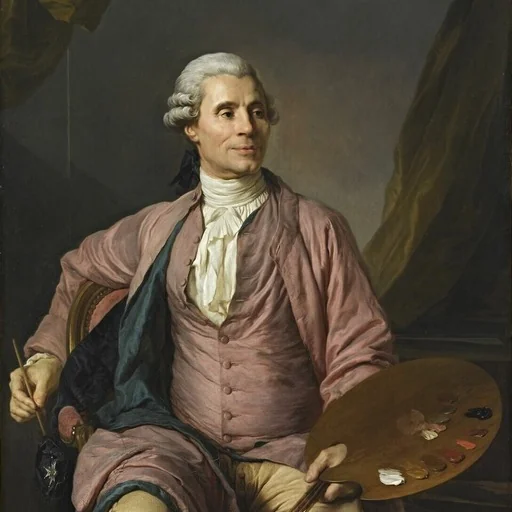
Joseph-Marie Vien (18 June 1716 – 27 March 1809) was a French painter. He was the last holder of the post of Premier peintre du Roi, serving from 1789 to 1791, before it was abolished during the French Revolution.