Artwork
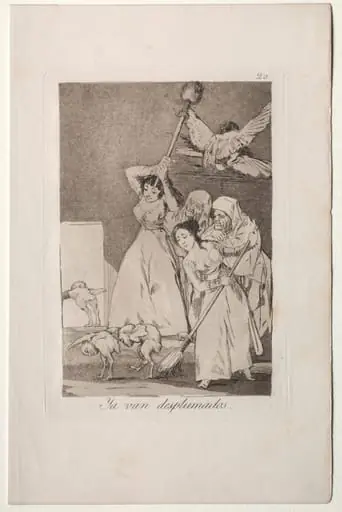
Ya van desplumados (There They Go Plucked)
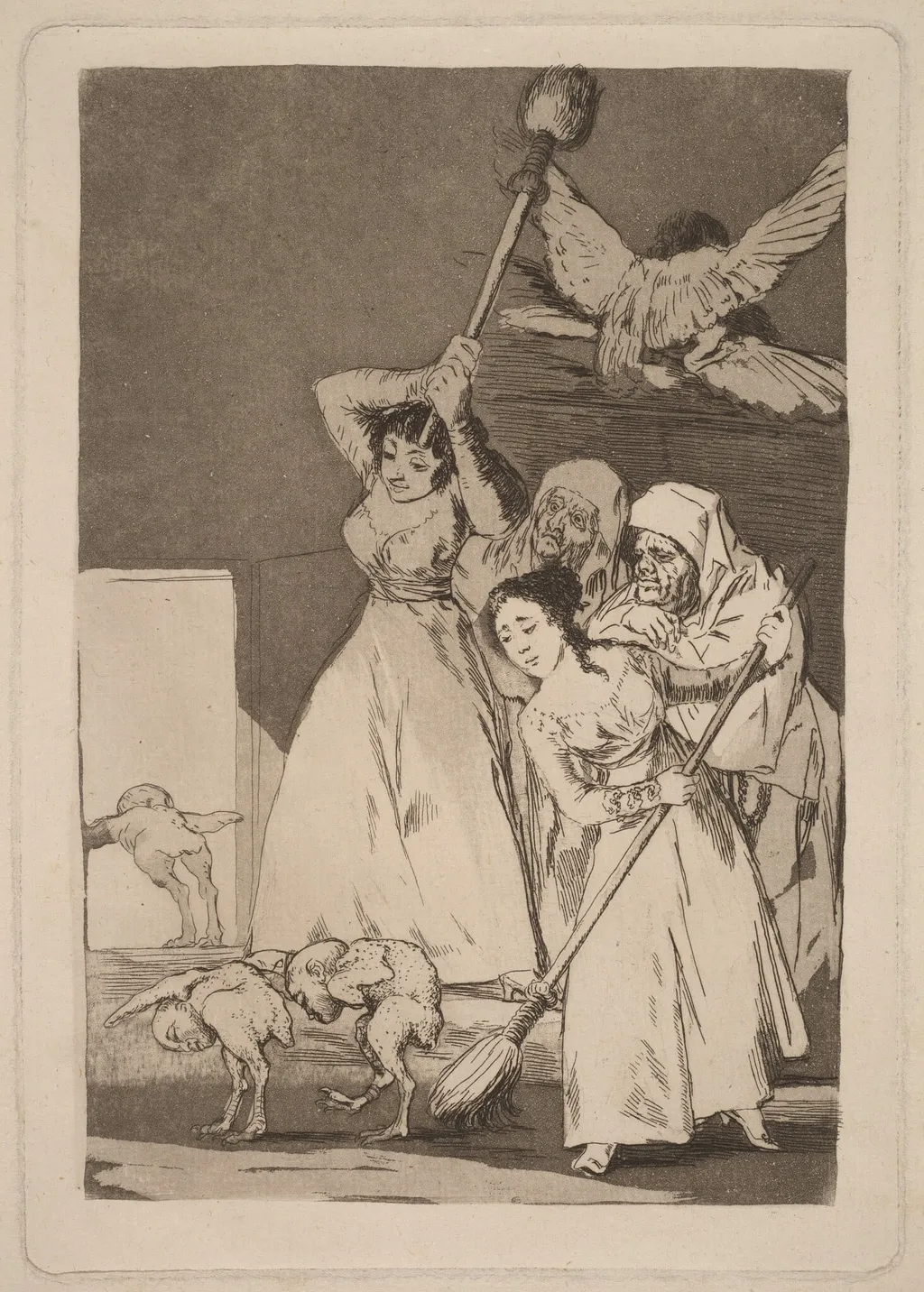
Ya van desplumados (There They Go Plucked) is an ink print by the Romanticist artist Francisco Goya. It dates from 1799 and is held in the collection of the National Gallery of Art.
About this work
Overview
Created in 1799, this print by Francisco Goya combines etching, burnished aquatint and dry‑point on laid paper. It exists as a proof taken before the addition of lettering, offering a clear view of Goya’s compositional planning. The work belongs to the period when Goya was establishing himself as a prominent visual commentator on the social and political climate of Spain.
Subject & Meaning
A dog sniffs the ground, a distant statue watches, and an eagle with spread wings hovers overhead, heightening the sense of unease.
The image depicts a disordered street tableau: a woman in an elaborate gown raises her arms in alarm, while a cloaked figure guides two children—one unclothed, the other partially dressed—toward her. A dog sniffs the ground, a distant statue watches, and an eagle with spread wings hovers overhead, heightening the sense of unease. The title, suggesting a grim joke about being "plucked," reinforces the unsettling, almost nightmarish atmosphere.
Technique & Style
Goya employed a layered approach, beginning with etched lines, then adding burnished aquatint to achieve rich tonal fields, and finishing with dry‑point for incisive, velvety strokes. This combination allows a dense contrast between shadowed areas and sharply defined figures, creating a dramatic depth that intensifies the chaotic narrative. The proof format reveals the underlying structure before textual elements were imposed.
History & Provenance
The print was produced as a preparatory proof, a step in Goya’s printmaking process prior to the final edition that would include explanatory letters. Such proofs were often retained by the artist or his workshop, serving both as a record of technique and as a reference for subsequent impressions. The work later entered collections that focus on Goya’s early graphic output.
Context
At the close of the eighteenth century, Goya’s graphic series increasingly addressed the absurdities and corruptions of everyday life. This piece reflects his critical eye toward societal folly, aligning with his broader engagement in satirical and moral commentary. The unsettling composition anticipates themes that would later resonate in modernist critiques of modernity.
Own this work as a print
Artist & collection
Artist
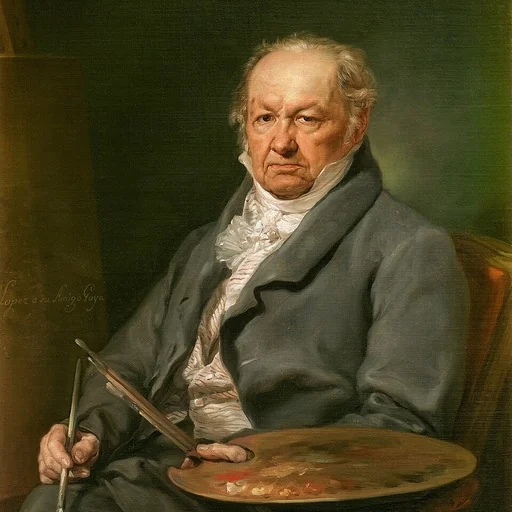
Francisco José de Goya y Lucientes (; Spanish: ; 30 March 1746 – 16 April 1828) was a Spanish romantic painter and printmaker.

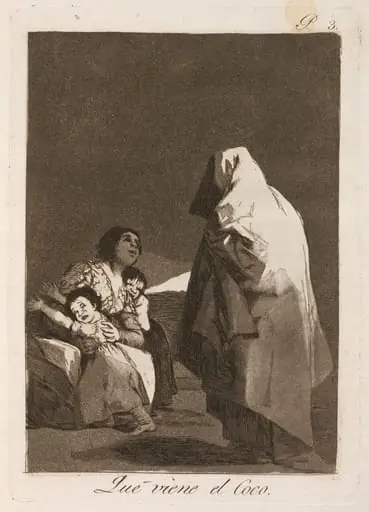 Que viene el coco (Here Comes the Bogey-Man)
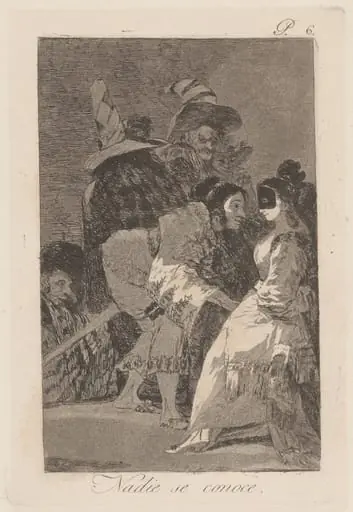 Nadie se conoce (Nobody Knows Himself)
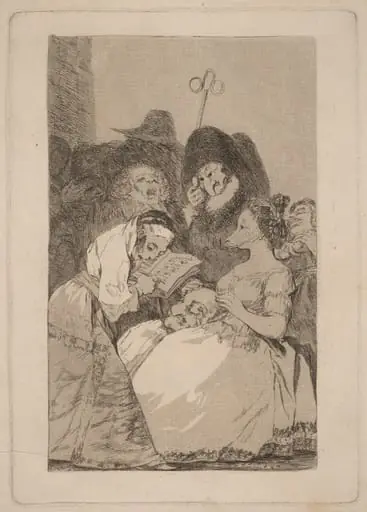 La filiacion (The Filiation)
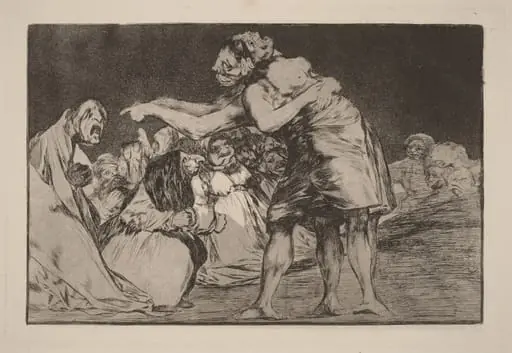 Disparate desordenado (Disorderly Folly)
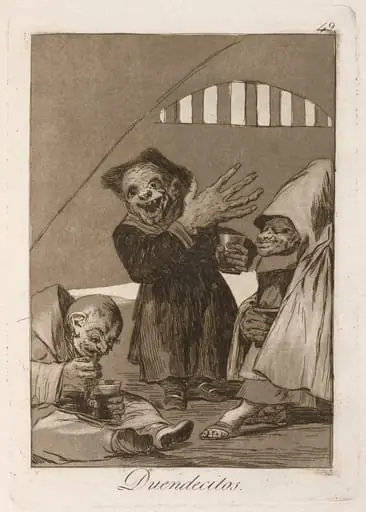 Duendecitos (Hobgoblins)
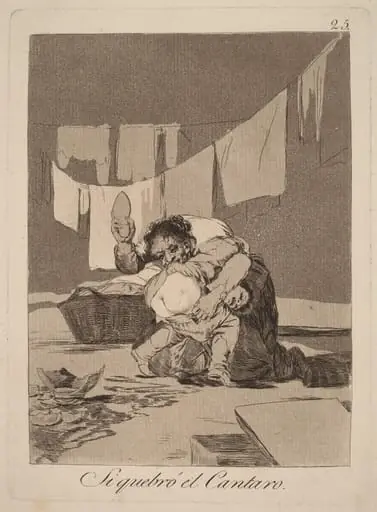 Si quebro el cantaro (Yes He Broke the Pot)
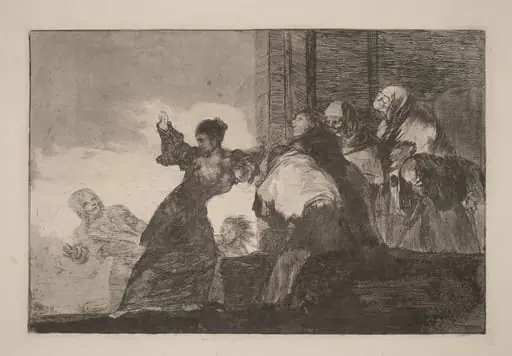 Disparate pobre (Poor Folly)
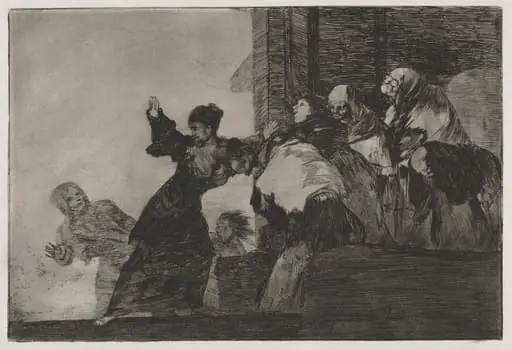 The Proverbs: Poor Folly
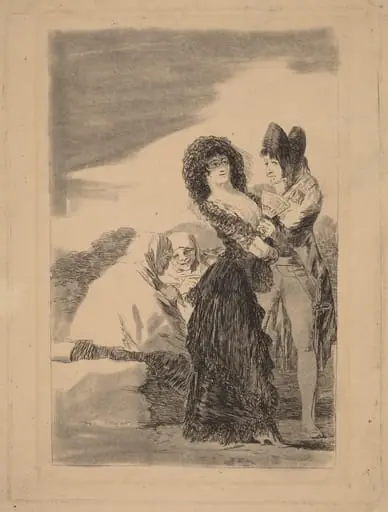 Tal para qual (Two of a Kind)
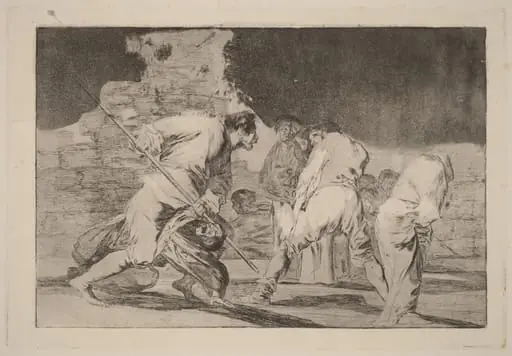 Disparate furioso (Furious Folly)
 There They Go Plucked, Plate 20
 Ni asi la distingue (Even Thus He Cannot Make Her Out)