Artwork
Duendecitos (Hobgoblins)
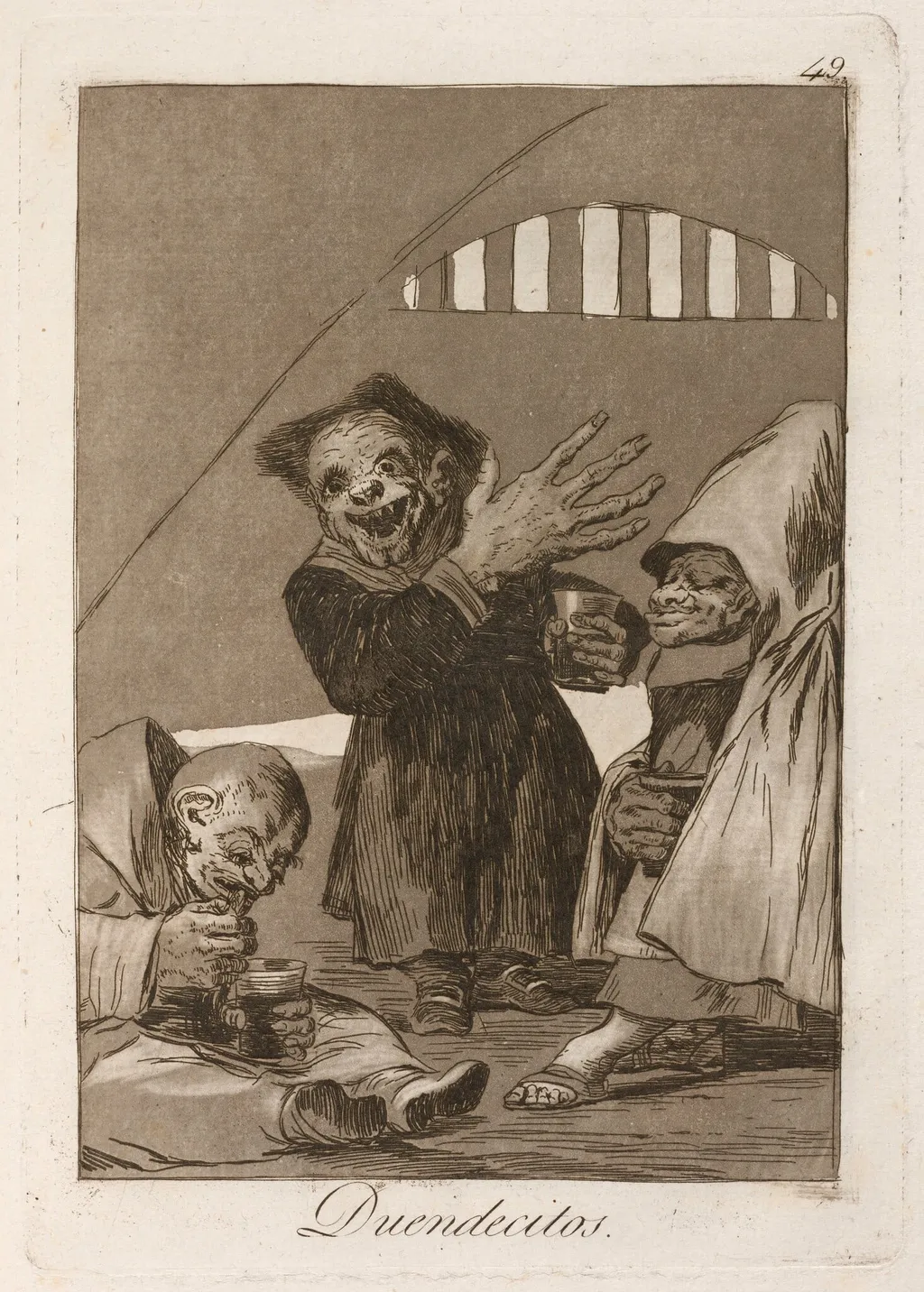
Duendecitos (Hobgoblins) is an ink print by the Romanticist artist Francisco Goya. It dates from 1799 and is held in the collection of the National Gallery of Art.
About this work
You see two small, hunched creatures with pointed ears and long claws, crouching in the dark like they’re whispering secrets.
You see two small, hunched creatures with pointed ears and long claws, crouching in the dark like they’re whispering secrets.
Goya made this etching in 1799 as part of a series called *Los Caprichos*—a set of prints that poked fun at Spanish society. The hobgoblins feel like a joke about human folly, but their shadowy shapes also make them unsettling. The technique, called aquatint, lets Goya create soft, smoky tones that make the scene feel eerie and dreamlike.
To see more of Goya’s strange, dark humor, look up *etching*.
Overview
Duendecitos (Hobgoblins) is a 1799 etching and burnished aquatint on laid paper by Francisco de Goya, a pivotal Spanish artist known for addressing social and political issues through his work.
Subject & Meaning
The print depicts two hunched, supernatural creatures with pointed ears and long claws, huddled in darkness, evoking both a commentary on human folly and an unsettling, irrational presence.
Technique & Style
Goya employed aquatint to achieve soft, smoky tones, imbuing the scene with an eerie, dreamlike quality that enhances the emotional impact of the subject.
History & Provenance
Duendecitos (Hobgoblins) is part of Goya's *Los Caprichos* series, a collection of prints satirizing aspects of Spanish society during the late 18th century.
Artist & collection
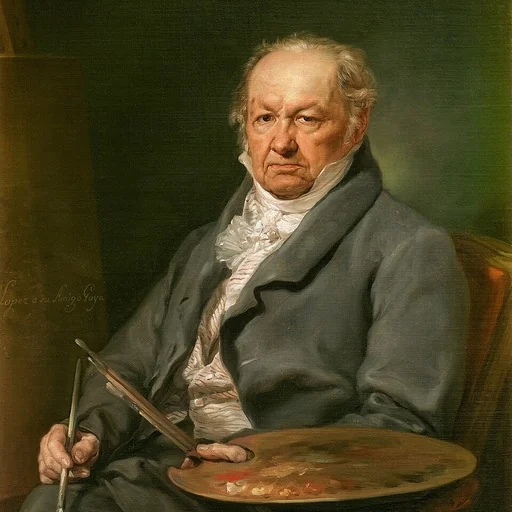
Artist
Francisco José de Goya y Lucientes (; Spanish: ; 30 March 1746 – 16 April 1828) was a Spanish romantic painter and printmaker.

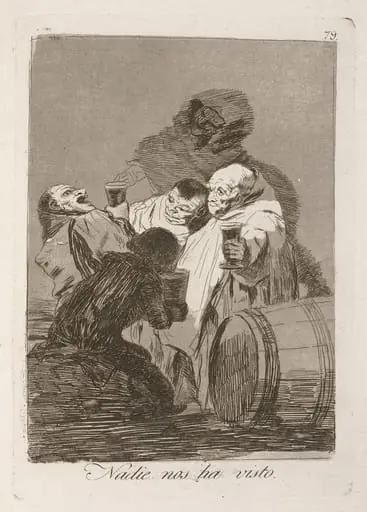 Nadie nos ha visto (No One Has Seen Us)
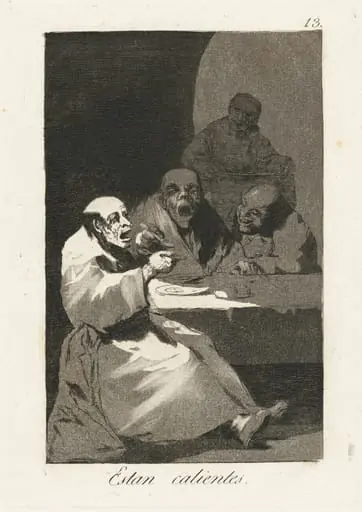 Estan Calientes (They Are Hot)
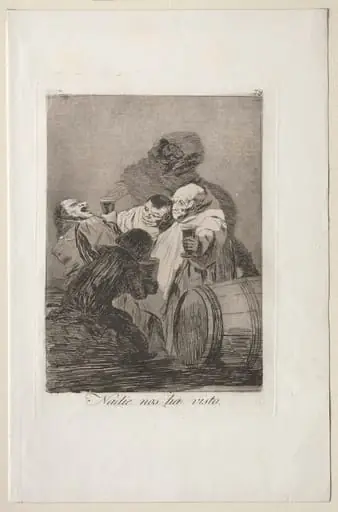 No One has Seen Us, Plate 79
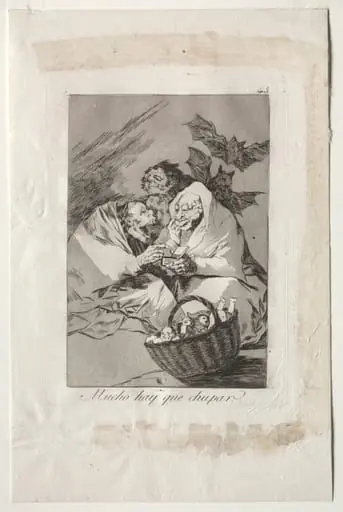 There is Plenty to Suck, Plate 45
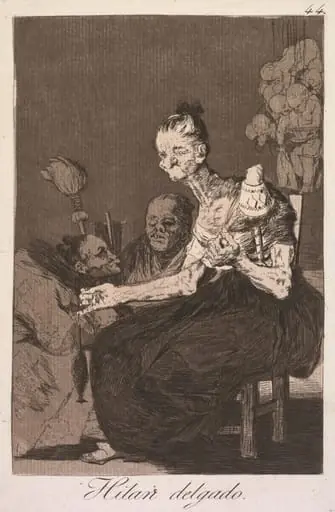 They Spin Finely, Plate 44
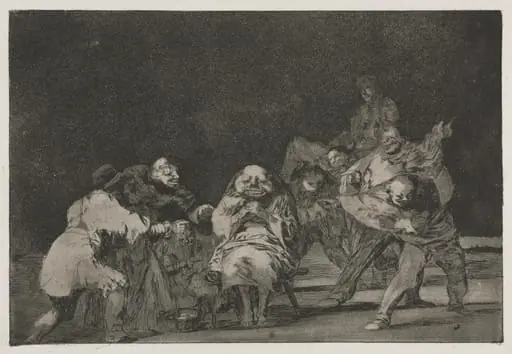 The Proverbs: Loyalty
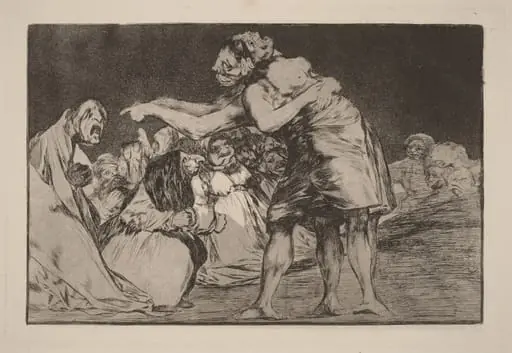 Disparate desordenado (Disorderly Folly)
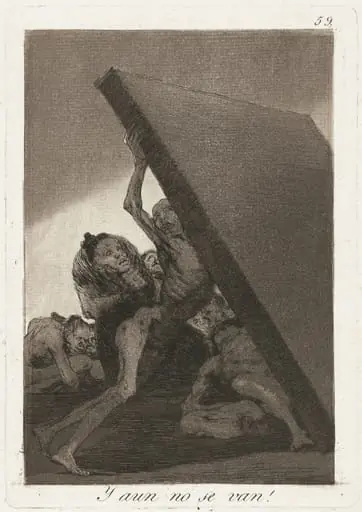 Y aun no se van! (And Still They Don't Go!)
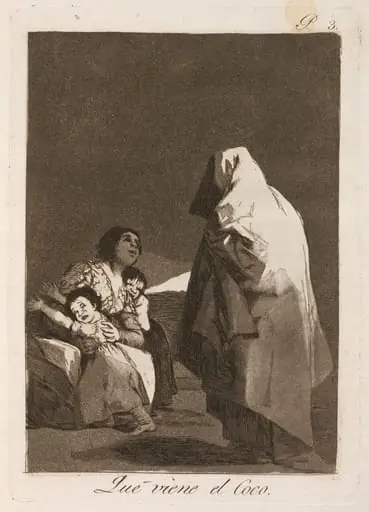 Que viene el coco (Here Comes the Bogey-Man)
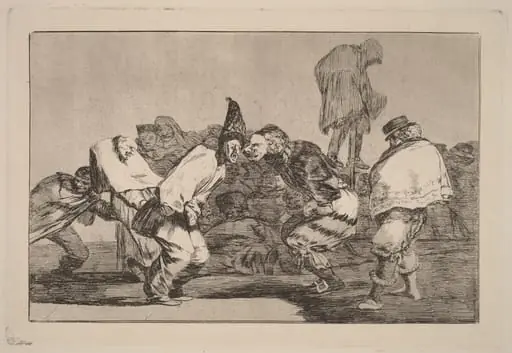 Disparate de Carnabal (Carnival Folly)
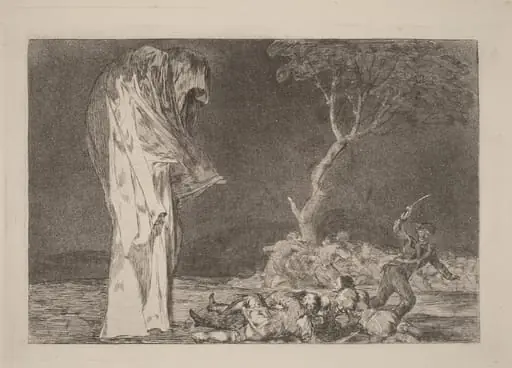 Disparate de miedo (Folly of Fear)
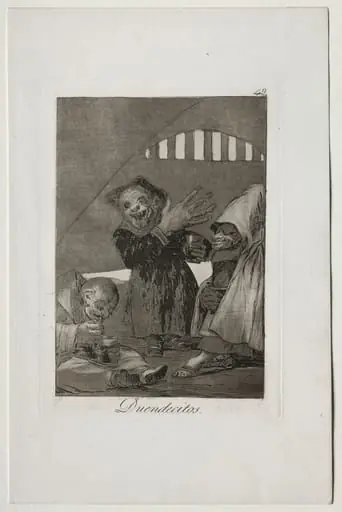 Hobgoblins, Plate 49