Artwork
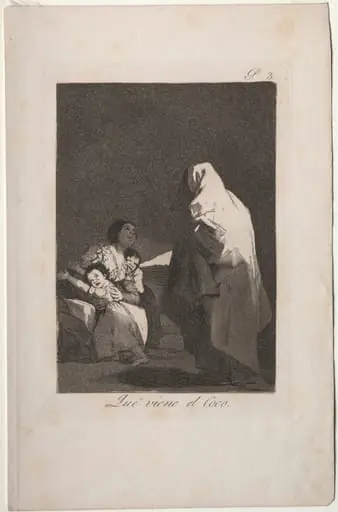
Que viene el coco (Here Comes the Bogey-Man)
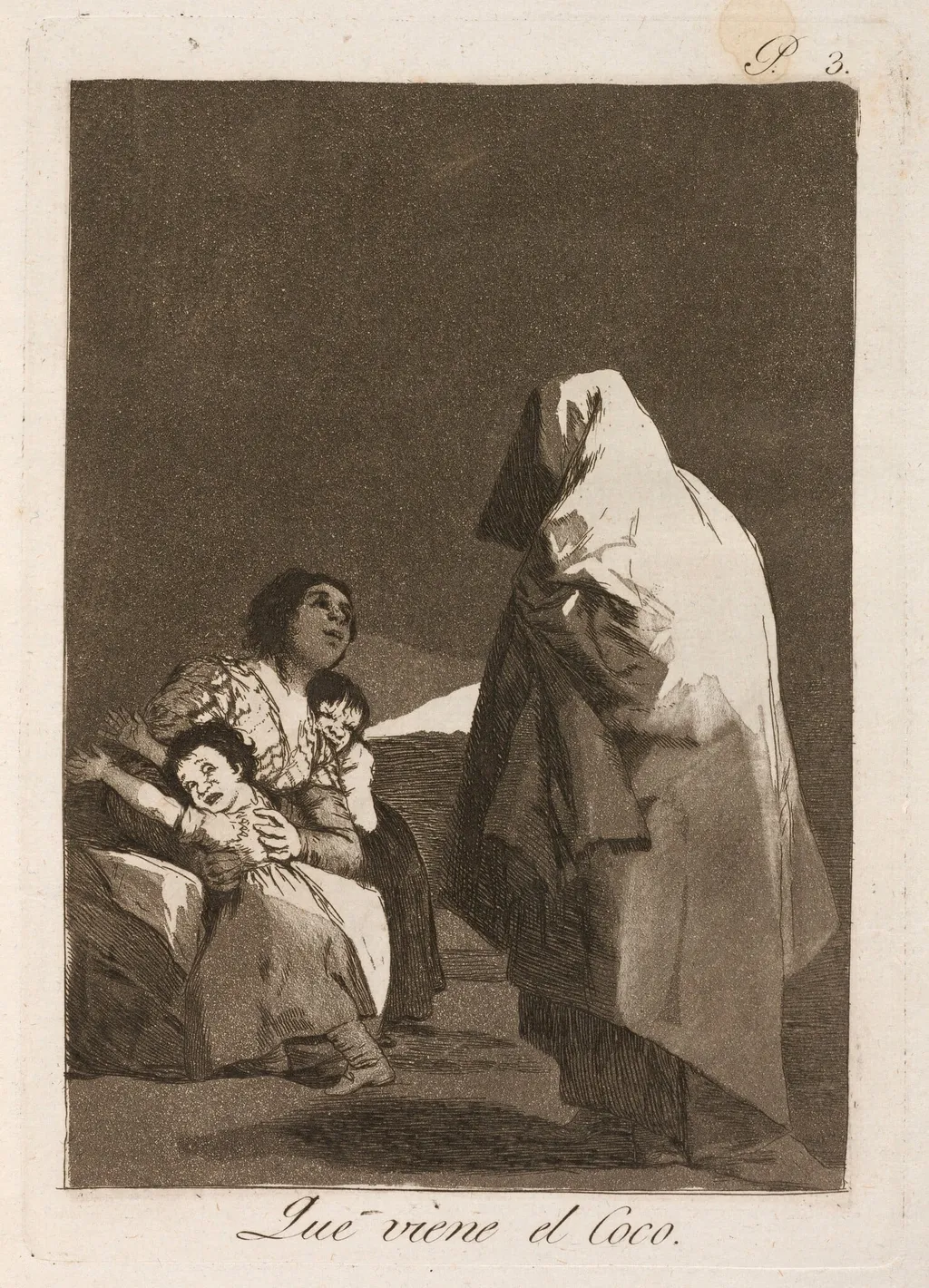
Que viene el coco (Here Comes the Bogey-Man) is an ink print by the Romanticist artist Francisco Goya. It dates from 1799 and is held in the collection of the National Gallery of Art.
About this work
Overview
Que viene el coco (Here Comes the Bogey-Man) is an etching and burnished aquatint print created by Francisco Goya in 1799. It belongs to a series exploring fear and superstition, characteristic of Goya's engagement with the darker aspects of human experience.
Subject & Meaning
The print depicts a hooded, monstrous figure looming over a frightened woman and child in a dimly lit room. This scene reflects Goya's exploration of psychological fear and folklore, highlighting the terror inspired by the unknown.
Technique & Style
Executed in etching and burnished aquatint on laid paper, the work utilizes strong contrasts of light and dark to amplify the sense of foreboding, aligning with the expressive and emotionally charged principles of Romanticism.
History & Provenance
Created in 1799, the print is part of Goya's output during a period of significant historical upheaval. As a leading Spanish artist of his time, Goya's works would later influence generations of artists.
Context
Que viene el coco is set within the broader context of late 18th-century Europe, where fears, superstitions, and the irrational were prevalent themes in art and literature, foreshadowing the Romantic movement's emphasis on emotion and imagination.
Legacy
This print contributes to Goya's legacy as a pioneer in exploring psychological depth and the subconscious through art, impacting the development of subsequent artistic movements beyond Romanticism.
Artist & collection
Artist
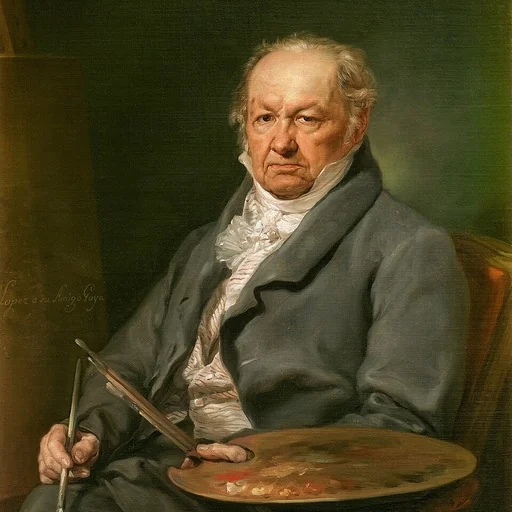
Francisco José de Goya y Lucientes (; Spanish: ; 30 March 1746 – 16 April 1828) was a Spanish romantic painter and printmaker.

 Here Comes the Bogeyman, Plate 3
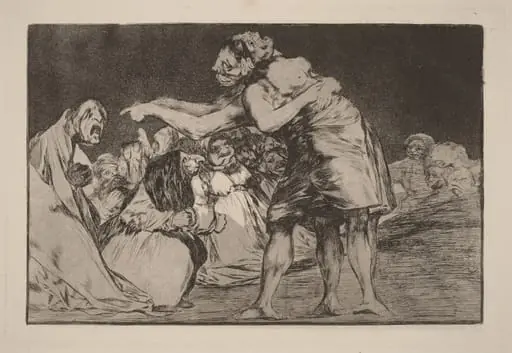 Disparate desordenado (Disorderly Folly)
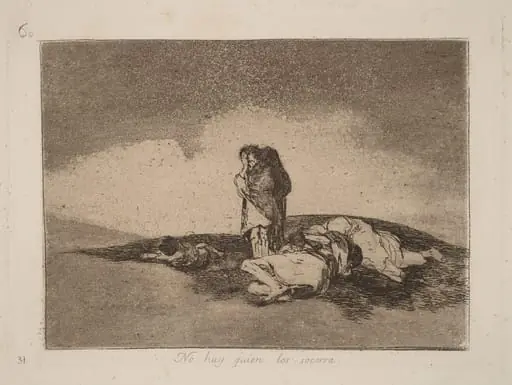 No Hay Quien Los Socorra (Nobody Can Help Them)
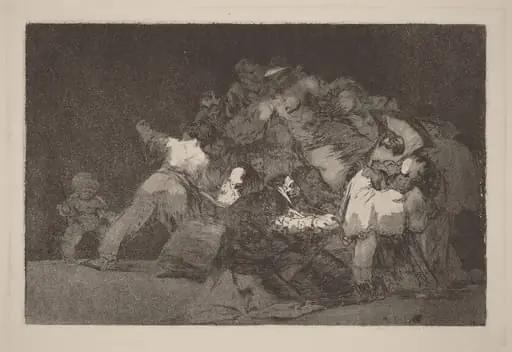 Disparate general (General Folly)
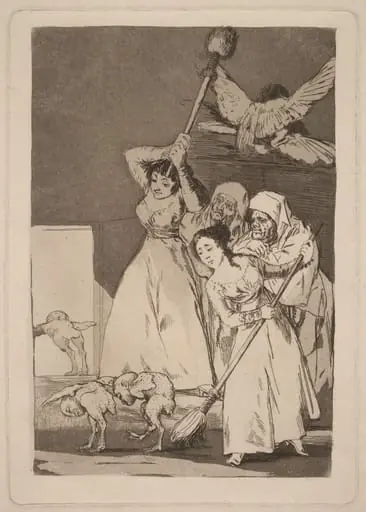 Ya van desplumados (There They Go Plucked)
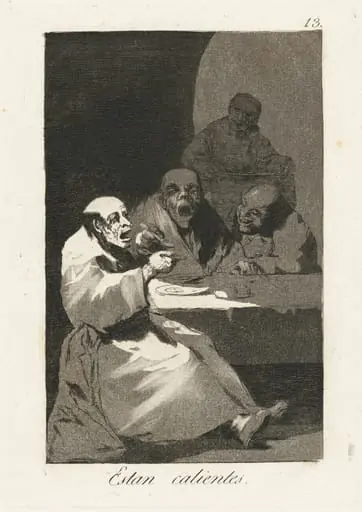 Estan Calientes (They Are Hot)
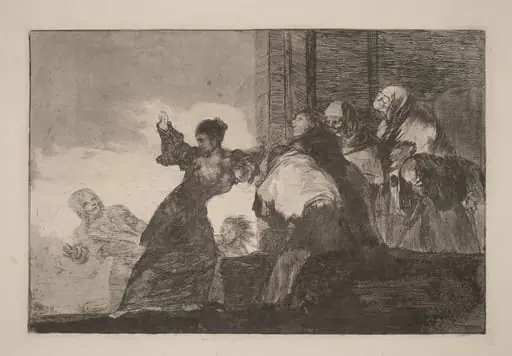 Disparate pobre (Poor Folly)
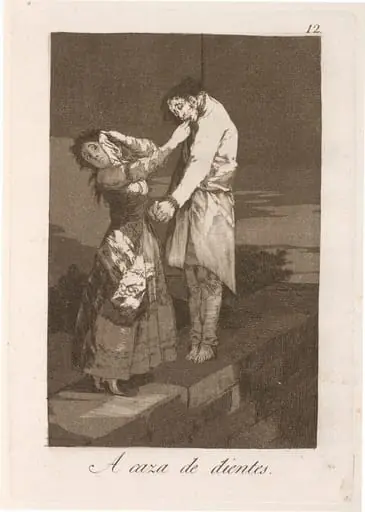 A caza de dientes (Out Hunting for Teeth)
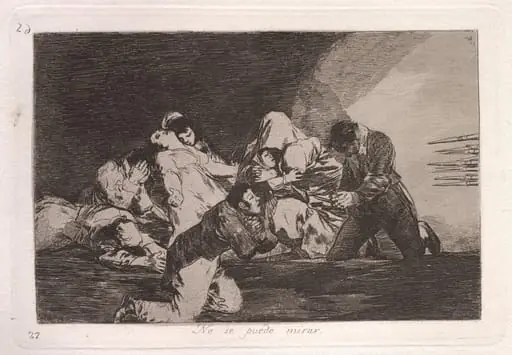 No se puede mirar (One Can't Look)