Artwork
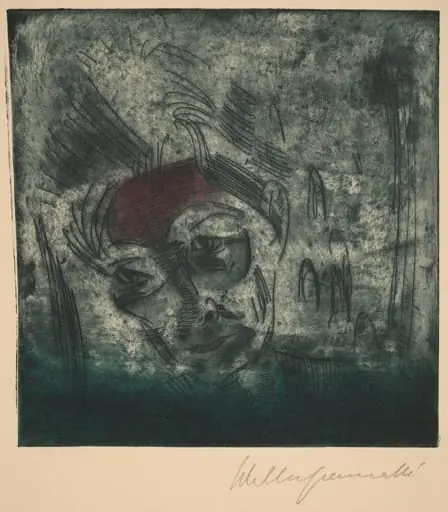
Tired Man (Self-Portrait)
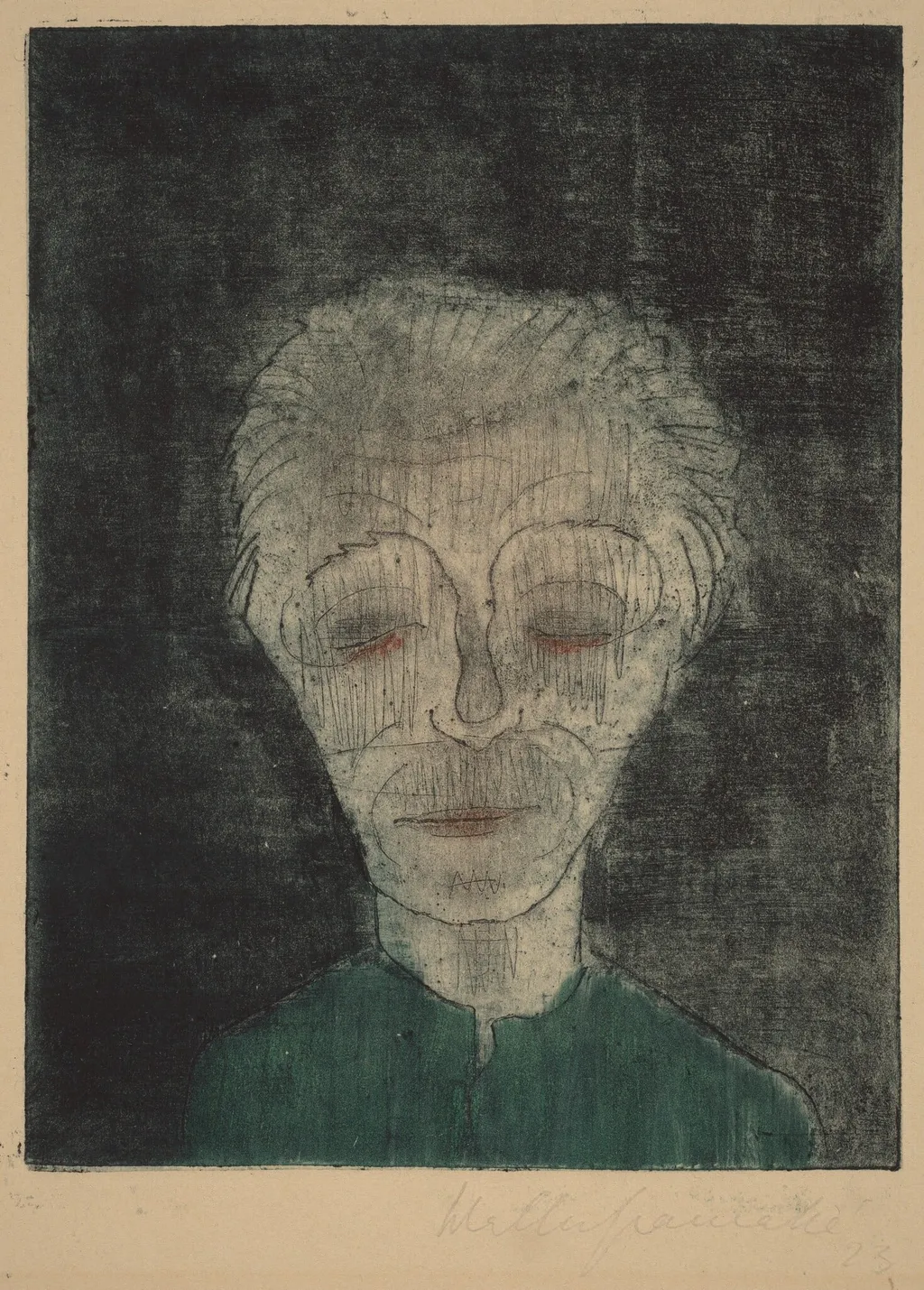
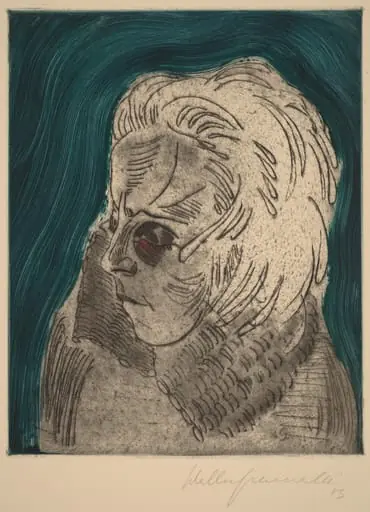
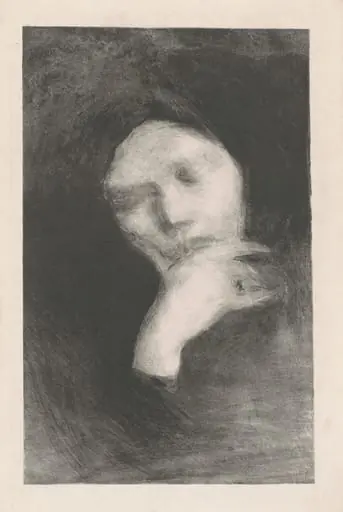
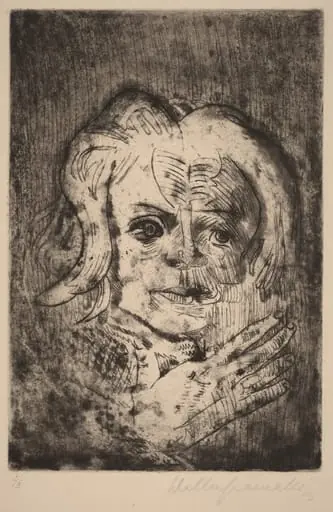
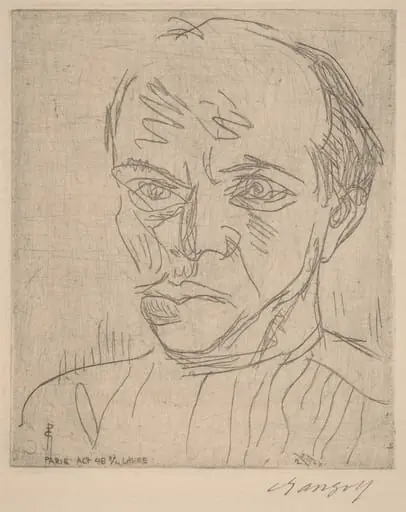
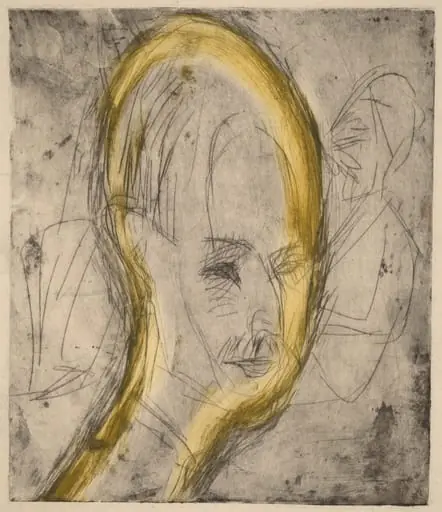
Tired Man (Self-Portrait) is an ink print by Walter Gramatté. It dates from 1923 and is held in the collection of the National Gallery of Art.
About this work
Overview
Walter Gramatté produced this self-portrait in 1923 as a color etching and aquatint on buff-colored wove paper. The work belongs to a series of introspective prints made during a period of physical and emotional strain. Its intimate scale and muted palette reflect a quiet, inward focus, distinguishing it from the more dramatic gestures of contemporaneous Expressionist works.
Subject & Meaning
The portrait depicts the artist’s own face, rendered with visible fatigue—deep creases around the eyes and mouth, taut skin, and a hollowed gaze. The absence of context or gesture emphasizes internal weariness, possibly tied to his experiences in World War I and chronic illness. It is not a record of appearance but an emotional testament, conveying resilience through vulnerability.
Technique & Style
Gramatté employed color etching and aquatint to build layered tones, using fine lines and textured shading to mimic the roughness of weathered skin. The dark green collar and shadowed background isolate the face, enhancing its sculptural quality. The technique avoids idealization; instead, it approximates the tactile sense of carved stone, softened by subtle gradations of ink.
History & Provenance
The work remains in private and institutional collections, valued for its psychological depth rather than commercial appeal.
Created during Gramatté’s time in Berlin, the print emerged from a phase of intense personal reflection following his wartime service and subsequent health decline. It was likely produced for private circulation or small exhibitions, aligning with his limited public presence. The work remains in private and institutional collections, valued for its psychological depth rather than commercial appeal.
Context
In early 1920s Germany, Expressionism was shifting from outward agitation to inward contemplation. Gramatté’s work resonated with this trend, blending mystical elements with psychological realism. Unlike peers who emphasized social critique, he turned to the self, using printmaking to explore the body as a site of memory and suffering.
Legacy
Though less widely known than other Expressionists, Gramatté’s self-portraits influenced later artists interested in the emotional potential of print media. His use of aquatint to convey psychological states contributed to the medium’s evolution beyond illustration. This work endures as a quiet example of how personal hardship can be transformed into formal precision.
Artist & collection

Artist
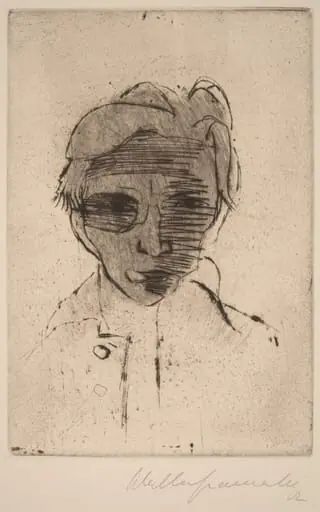
Walter Gramatté (8 January 1897 in Berlin – 9 February 1929 in Hamburg) was a German expressionist painter who specialized in magic realism.

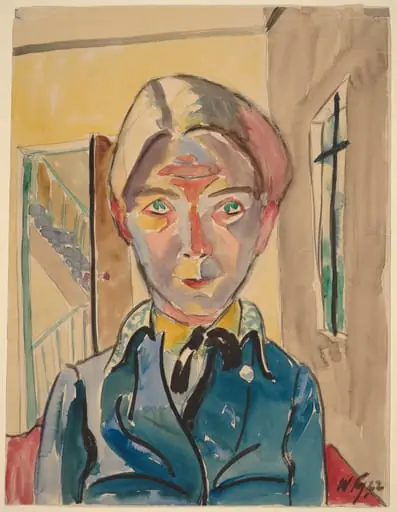 Self-Portrait in Front of Stairs (Selbst vor Treppe)
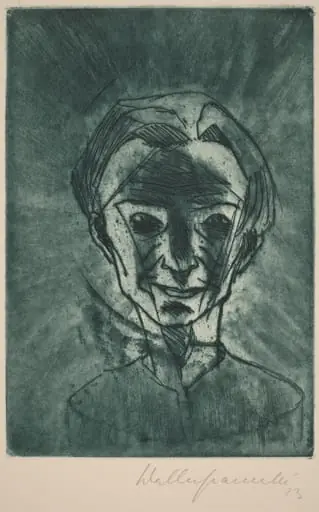 Smiling Head, Self-portrait (Lächelnder Kopf, Selbstporträt)
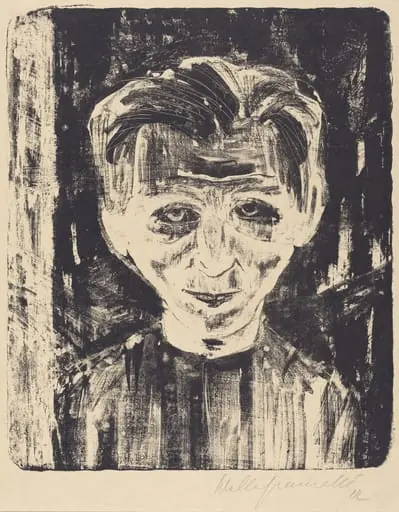 Self-Portrait
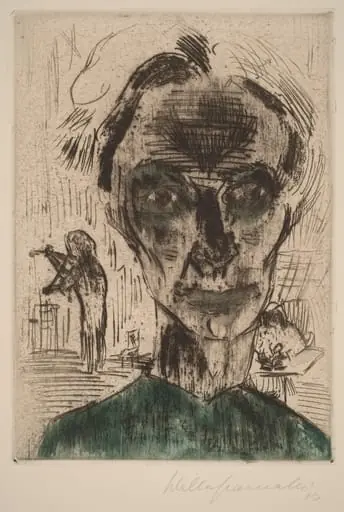 Man in a Room, Self-portrait
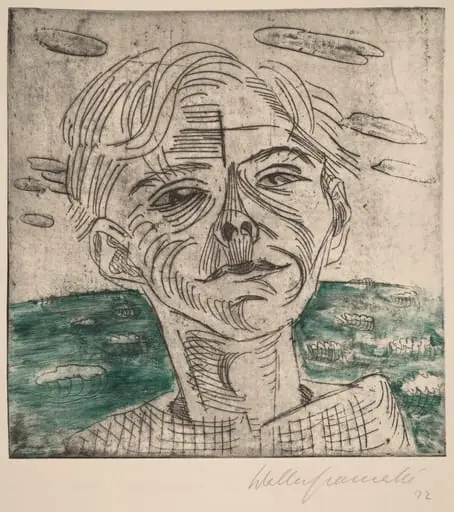 Man at the Sea, Self-portrait (Mann am Meer, Selbstporträt)
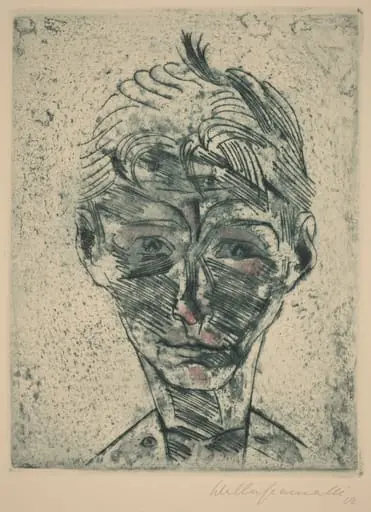 Bust of a Young Man, Self-portrait (Knabenkopf, Selbstporträt)
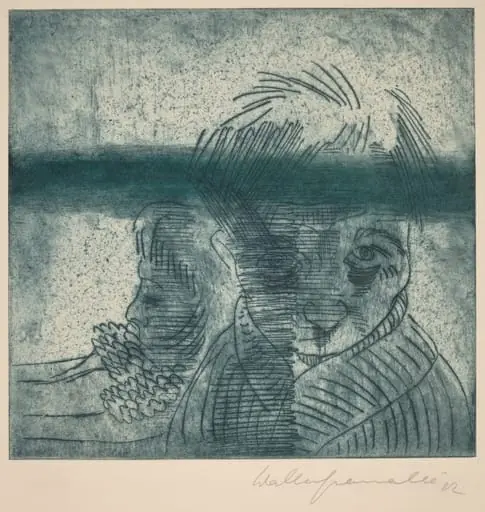 The Couple, Self-Portrait with Wife (Das Paar, Selbstporträt mit Frau)
 Bust of a Weary Man, Self-portrait (Ermüdender Kopf, Selbstporträt)