Artwork
Self-Portrait in Front of Stairs (Selbst vor Treppe)
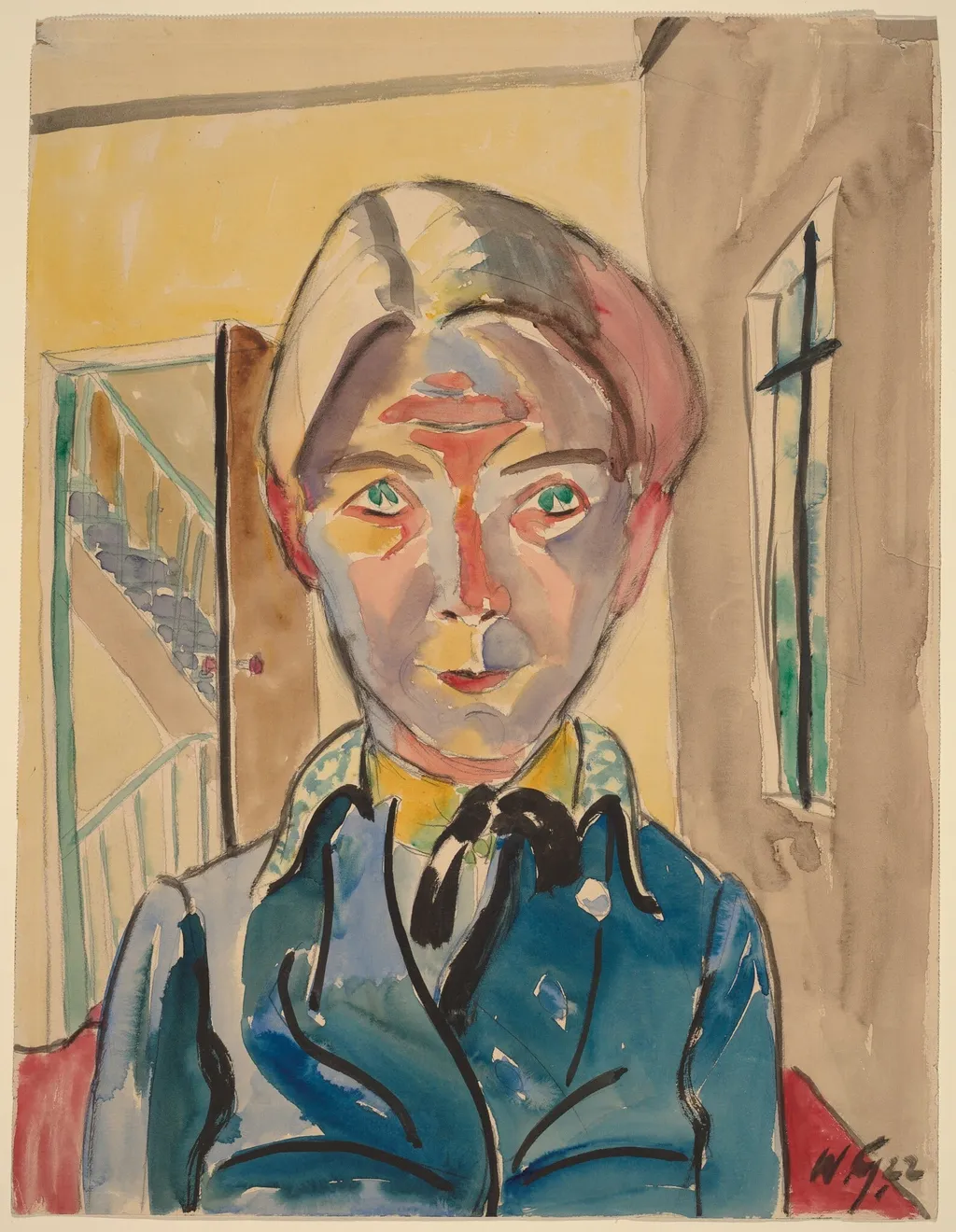
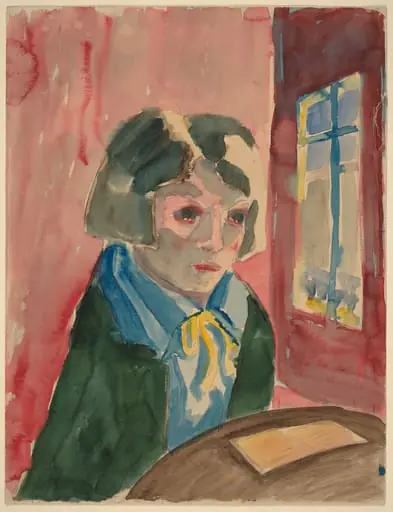
Self-Portrait in Front of Stairs (Selbst vor Treppe) is a graphite drawing by Walter Gramatté. It dates from 1922 and is held in the collection of the National Gallery of Art.
About this work
Overview
Created in 1922, this watercolor and graphite drawing by Walter Gramatté presents a restrained yet emotionally charged self-portrait.
Created in 1922, this watercolor and graphite drawing by Walter Gramatté presents a restrained yet emotionally charged self-portrait. Executed during a period of personal hardship, the work belongs to a body of drawings where the artist explored inner states through simplified forms and muted palettes. The medium’s fluidity complements the introspective tone, allowing subtle shifts in tone and texture to convey psychological weight.
Subject & Meaning
The figure sits alone before a faintly rendered staircase, its sparse lines suggesting ascent or descent without clear direction. The face, marked by vivid red cheeks and a yellow collar, contrasts with the somber blue coat, hinting at internal tension. The stairs, barely defined, may symbolize uncertainty or transition—echoing Gramatté’s postwar displacement and physical suffering, themes recurrent in his oeuvre.
Technique & Style
Gramatté applied thin watercolor washes over a graphite underdrawing, permitting subtle bleeding and soft edges that dissolve boundaries between figure and space. The background is composed of loose, rapid strokes in green and beige, avoiding detail to emphasize the figure’s isolation. This method reflects an expressive approach to drawing, where material imperfections enhance emotional resonance over realism.
History & Provenance
Gramatté produced this work during his time in northern German cities, following his service in World War I and subsequent illness. Little documentation exists regarding its early ownership, but it aligns with a series of intimate self-studies he made between 1920 and 1924, many of which remained in private hands until later institutional acquisition.
Context
Emerging from the German Expressionist milieu, Gramatté’s work diverged from overt political or social commentary, instead focusing on psychological and spiritual unease. His use of watercolor—less common among his peers—reflects a preference for immediacy and vulnerability. The quietness of this portrait contrasts with the turbulence of postwar Germany, offering a personal counterpoint to the era’s louder artistic voices.
Legacy
Though less widely known than contemporaries like Dix or Beckmann, Gramatté’s drawings are recognized for their quiet intensity and technical restraint. *Self-Portrait in Front of Stairs* exemplifies his unique synthesis of realism and symbolic ambiguity, influencing later generations interested in the emotional potential of watercolor and the introspective portrait.
Artist & collection

Artist
Walter Gramatté (8 January 1897 in Berlin – 9 February 1929 in Hamburg) was a German expressionist painter who specialized in magic realism.

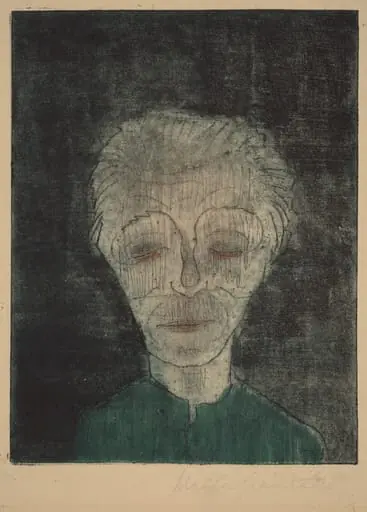 Tired Man (Self-Portrait)
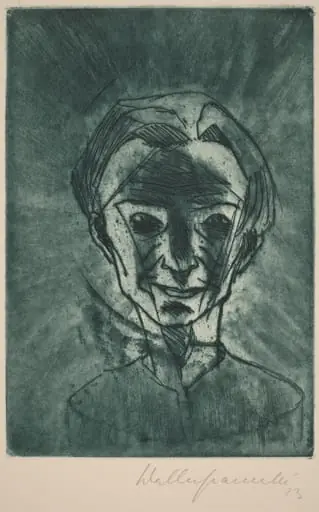 Smiling Head, Self-portrait (Lächelnder Kopf, Selbstporträt)
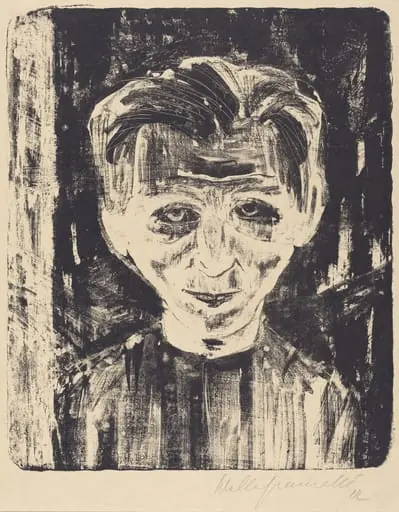 Self-Portrait
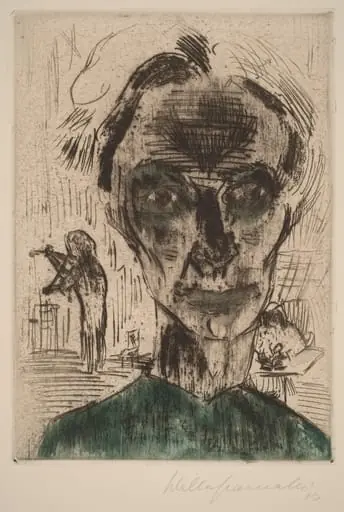 Man in a Room, Self-portrait
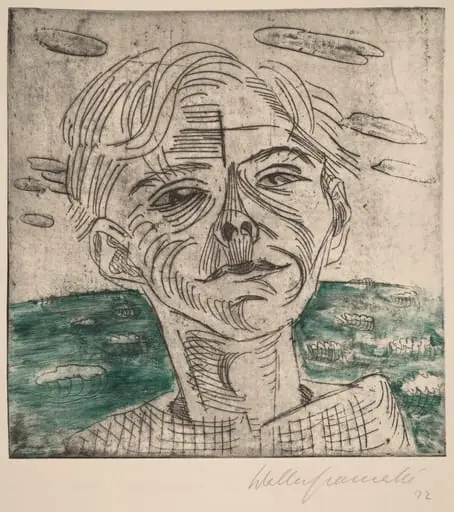 Man at the Sea, Self-portrait (Mann am Meer, Selbstporträt)
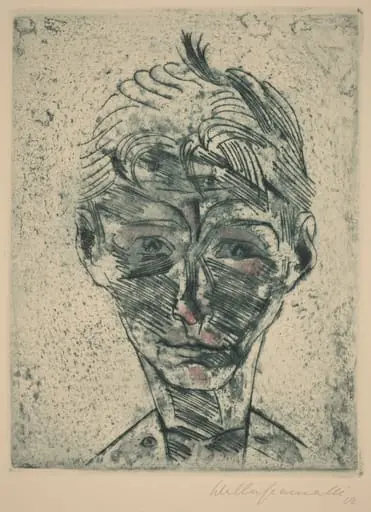 Bust of a Young Man, Self-portrait (Knabenkopf, Selbstporträt)
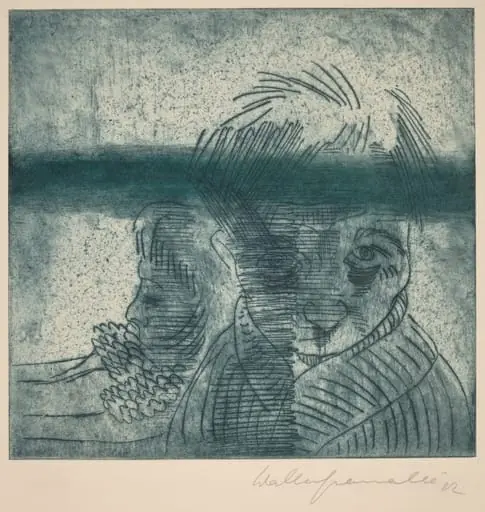 The Couple, Self-Portrait with Wife (Das Paar, Selbstporträt mit Frau)
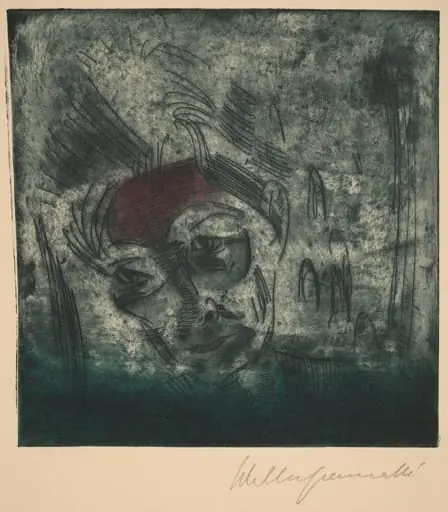 Bust of a Weary Man, Self-portrait (Ermüdender Kopf, Selbstporträt)