Artwork
Jane (Fleming), Countess of Harrington
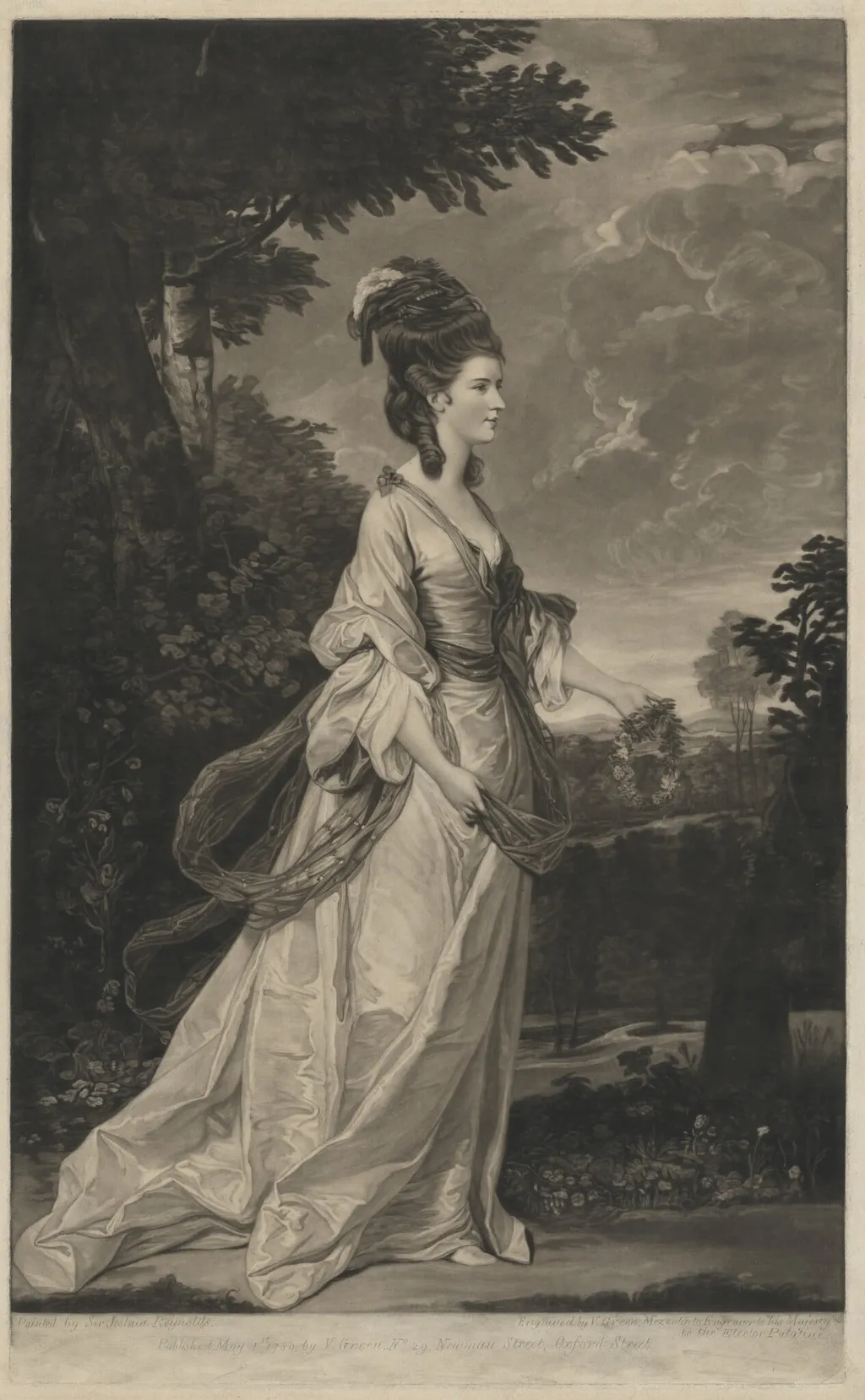
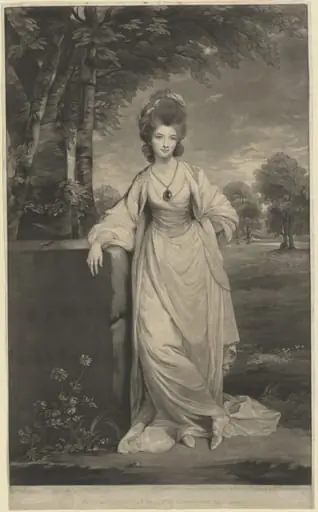
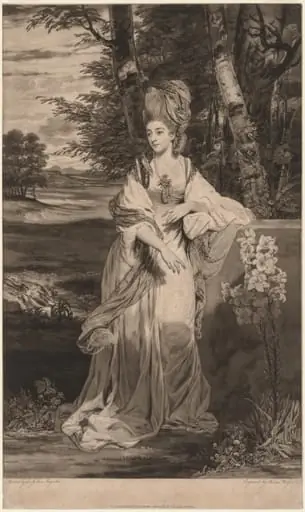
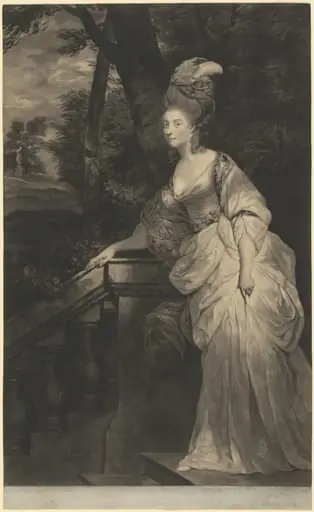
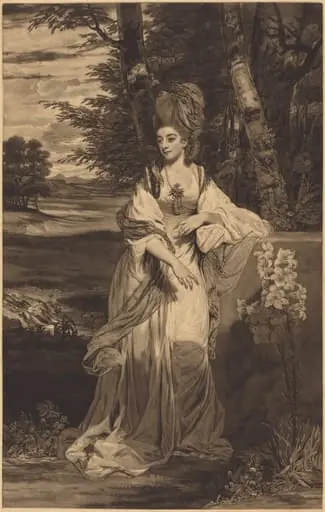
Jane (Fleming), Countess of Harrington is an ink print by the Romanticist artist Valentine Green. It dates from 1780 and is held in the collection of the National Gallery of Art.
About this work
Overview
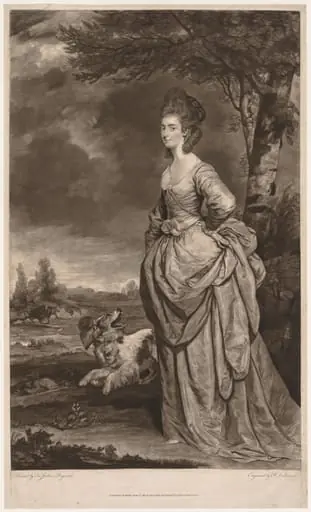
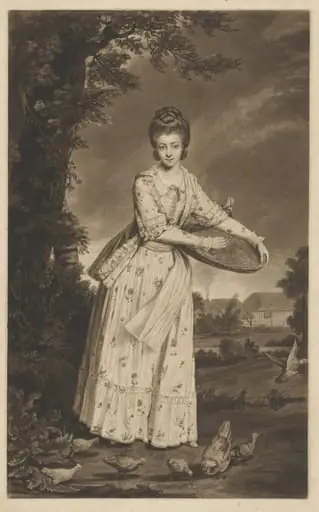
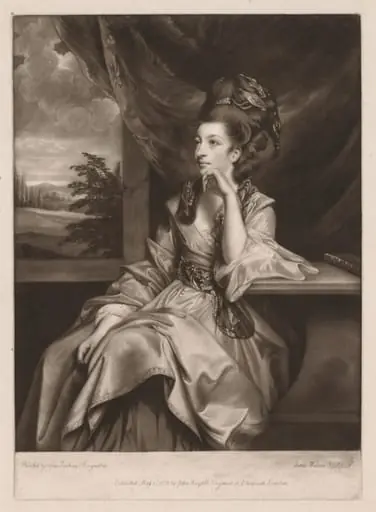
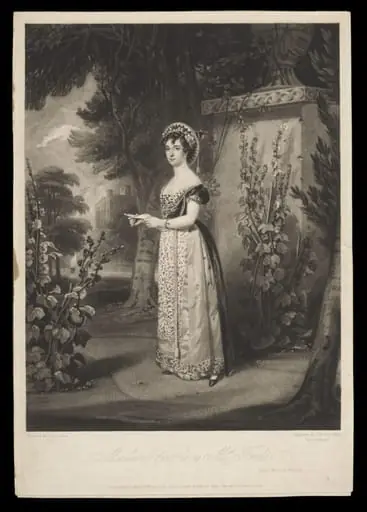
Valentine Green’s 1780 mezzotint portrays Jane Fleming, Countess of Harrington, in a tranquil garden setting. The print captures the countess in a white gown with a dark waist sash, holding a wreath in her right hand while her left hand steadies the hem of her dress. A soft, cloud‑dotted sky and modest foliage frame the figure, conveying a calm, composed atmosphere.
Subject & Meaning
The serene garden backdrop reinforces notions of cultivated leisure and the harmonious relationship between the noble individual and nature.
The composition emphasizes the countess’s genteel status and refined poise. Her up‑do hairstyle, feathered hat, and elegant attire reflect contemporary ideals of aristocratic femininity, while the wreath she holds may allude to virtues such as fidelity or triumph. The serene garden backdrop reinforces notions of cultivated leisure and the harmonious relationship between the noble individual and nature.
Technique & Style
Executed in mezzotint, the work exploits the medium’s capacity for rich tonal gradations, rendering the silvery sheen of the dress and the delicate cloudscape with subtle depth. Green’s handling of light and shadow creates a three‑dimensional presence, while the fine line work delineates the intricate details of the hat, sash, and surrounding foliage.
History & Provenance
Printed in 1780, the portrait was likely commissioned to commemorate the countess’s social standing within the British aristocracy. Valentine Green, a leading English mezzotinter of the period, produced the image for the burgeoning market of collectible prints, which circulated among collectors and patrons of the late eighteenth‑century art world.
Context
The image belongs to the late Georgian era, a time when portraiture in print form expanded beyond oil paintings to reach a wider audience. Mezzotint, prized for its ability to emulate the tonal richness of painting, was a favored medium for depicting the elite, aligning with contemporary tastes for refined, genteel representation.
Artist & collection