Artwork
Lady Bampfylde
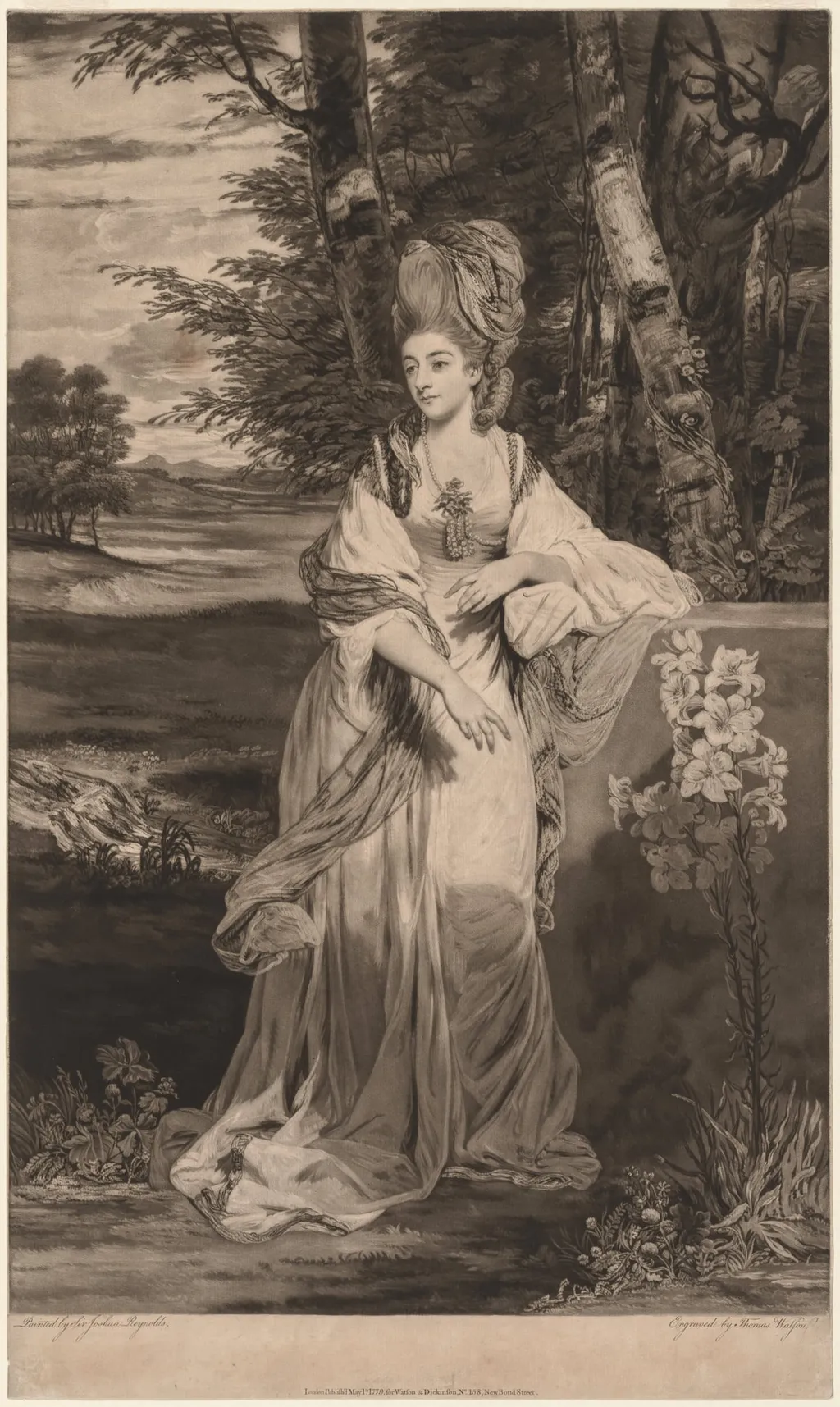
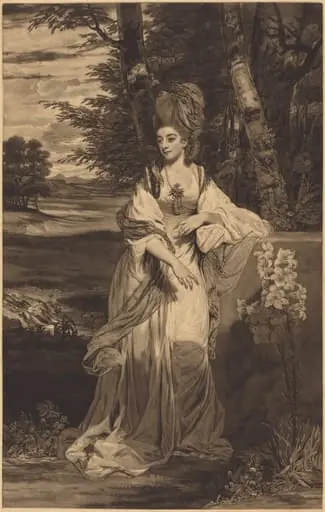
Lady Bampfylde is a print by the Romanticist artist 1743 (?)-1781) Thomas Watson (British. It dates from 1779 and is held in the collection of the Cleveland Museum of Art.
About this work
Overview
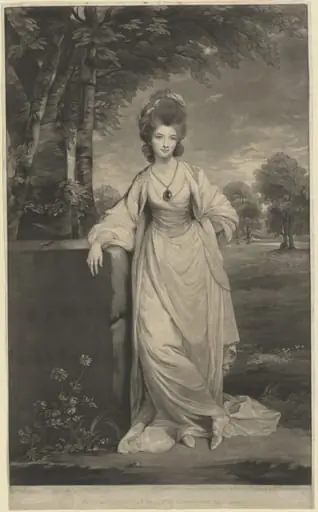
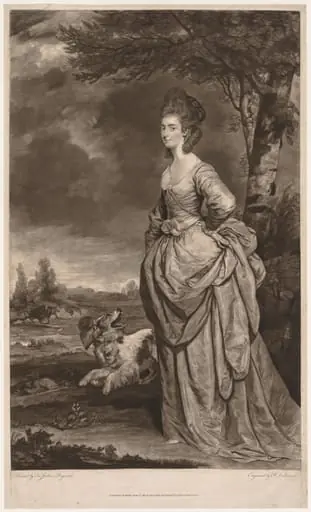
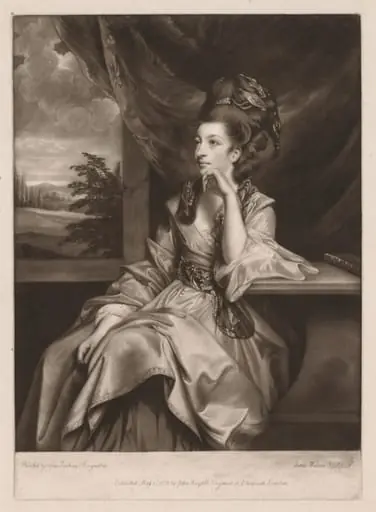
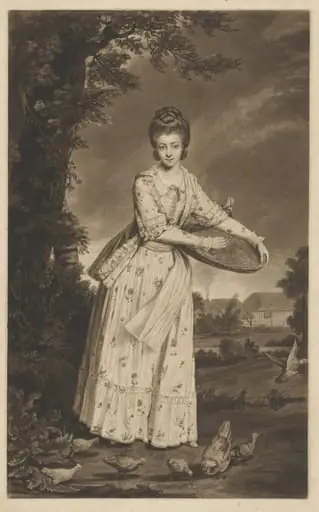
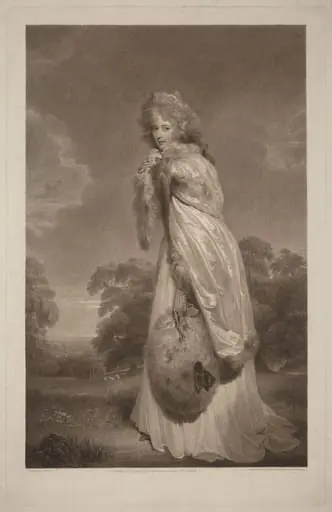
This print, produced in 1779 by Thomas Watson, portrays Lady Bampfylde as a figure of quiet composure within a pastoral setting. Executed during the late 18th century, it reflects the era’s interest in blending portraiture with idealized nature. The work resides in the collection of the Cleveland Museum of Art, where it is preserved as an example of genteel visual culture of the period.
Subject & Meaning
Her white gown and floral adornment evoke classical ideals of purity, while the natural surroundings imply a harmony between the individual and the landscape.
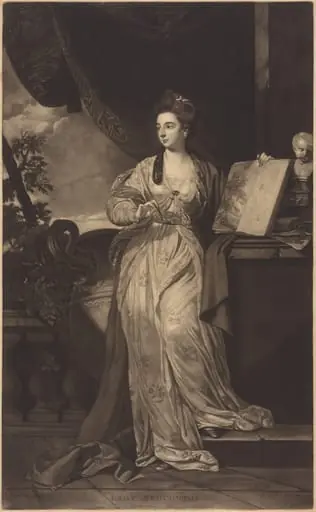
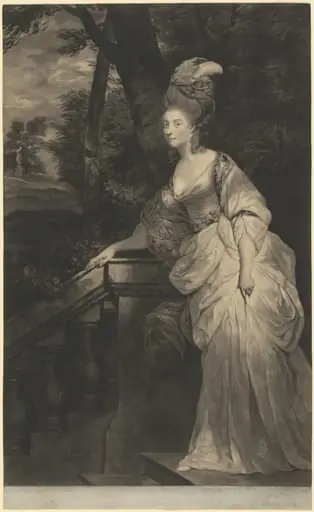
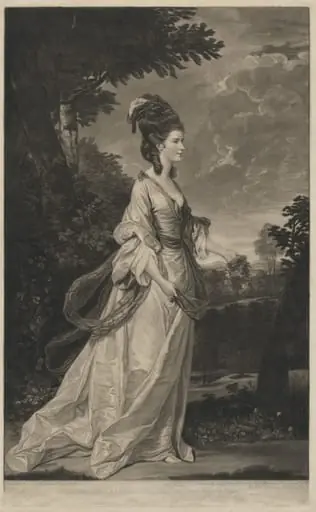
The subject, Lady Bampfylde, is depicted standing with composed grace, her posture suggesting both aristocratic poise and personal serenity. Her white gown and floral adornment evoke classical ideals of purity, while the natural surroundings imply a harmony between the individual and the landscape. The gesture of her hand resting on her hip conveys quiet confidence rather than ostentation, aligning with contemporary values of refined modesty.
Technique & Style
Watson employed fine linear engraving to render texture and form, emphasizing the softness of fabric and the delicate structure of foliage. Light is carefully modulated to model the figure’s form and create spatial depth, with shadows subtly defining the contours of her gown and the surrounding trees. The composition directs attention to the figure through balanced negative space and a restrained palette, enhancing the tranquil mood.
History & Provenance
The print was made shortly after Lady Bampfylde’s marriage into the prominent Bampfylde family, likely commissioned to commemorate her social status. It circulated among elite circles as a keepsake or decorative item. The Cleveland Museum of Art acquired it in the 20th century, preserving it as part of its collection of British graphic arts from the Georgian era.
Context
Created during a time when portraiture increasingly merged with landscape, this work reflects broader cultural trends favoring naturalism and emotional restraint. Similar images were produced for aristocratic women, reinforcing ideals of virtue and domestic harmony. The print’s production aligns with the rise of reproductive engraving, allowing wider dissemination of elite imagery beyond original paintings.
Legacy
Though not widely known today, the print exemplifies how portraiture in late 18th-century Britain encoded social identity through subtle visual cues. Its preservation in a major public collection ensures continued access to the aesthetic and social values of its time, offering insight into the quiet representation of aristocratic femininity in print form.
Artist & collection
Artist
1743 (?)-1781) Thomas Watson (British
Thomas Watson kept a pet jackdaw named Caesar that perched on his shoulder while he painted.