Artwork
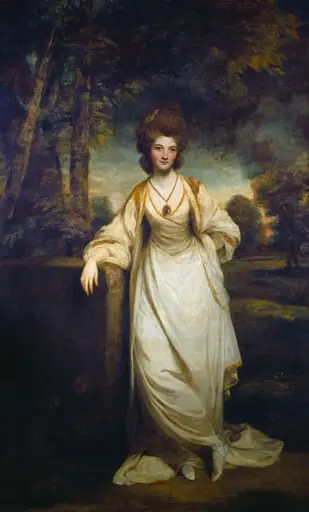
Lady Elizabeth Compton
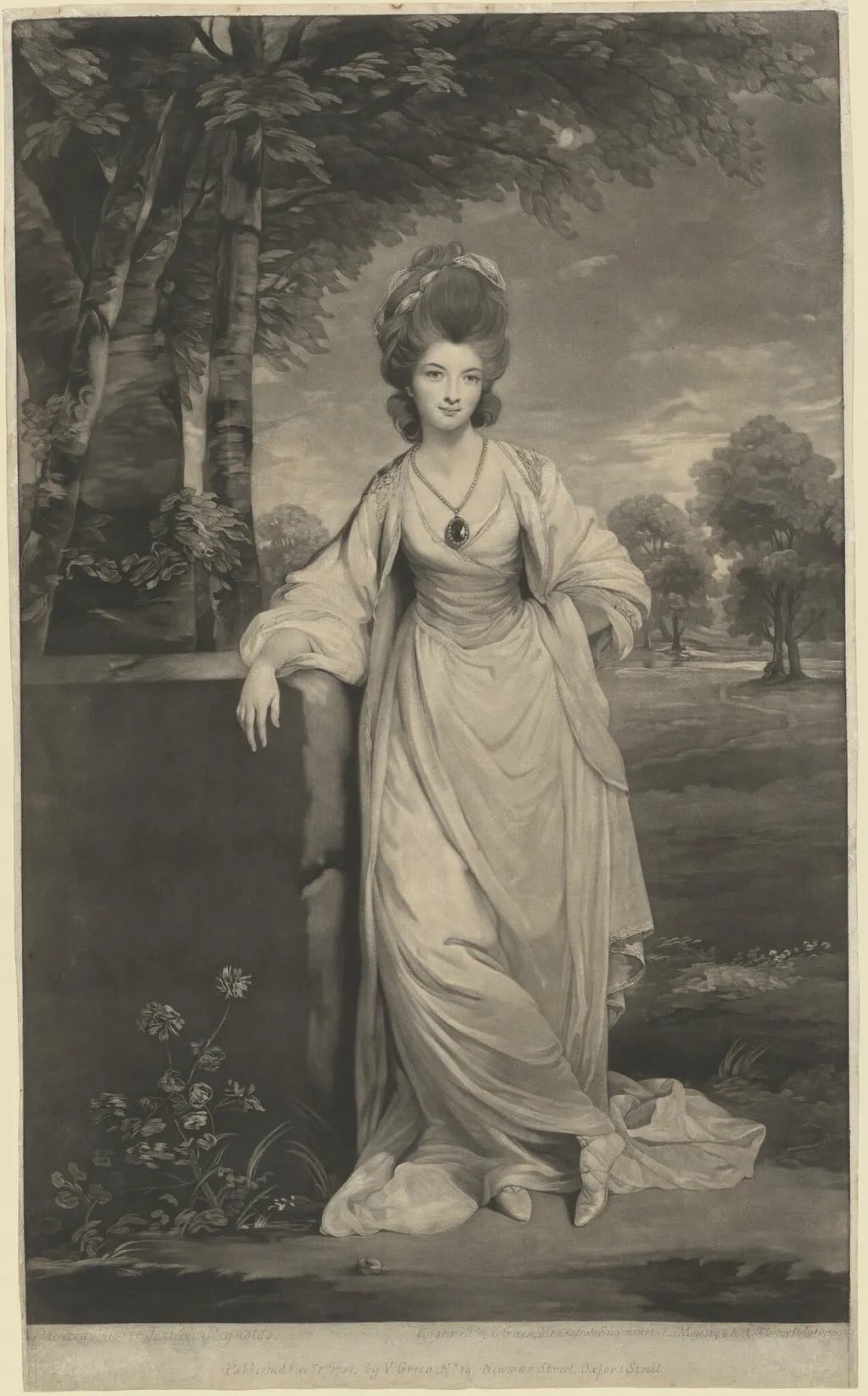
Lady Elizabeth Compton is an ink print by the Romanticist artist Valentine Green. It dates from 1781 and is held in the collection of the National Gallery of Art.
About this work
Overview
This 1781 mezzotint by Valentine Green depicts Lady Elizabeth Compton, a British noblewoman, in a full-length portrait. The print captures her in a moment of quiet poise, rendered through the tonal richness characteristic of the mezzotint technique. Its soft gradations of light and shadow give the image a sculptural quality, distinguishing it from line-based engravings of the period.
Subject & Meaning
Her posture, leaning on a stone ledge, conveys composure rather than formality.
Lady Elizabeth Compton is portrayed in elegant, informal attire—a white gown with loose drapery and an elaborate coiffure—suggesting both aristocratic status and a cultivated naturalness. Her posture, leaning on a stone ledge, conveys composure rather than formality. The setting, with its dim forest and distant path, evokes contemplation, aligning the sitter with ideals of refined sensibility common in late 18th-century portraiture.
Technique & Style
Valentine Green employed mezzotint, a printmaking method that begins with a roughened plate to produce deep blacks, then smooths areas to create lighter tones. This allowed subtle transitions from shadow to light, particularly evident in the modeling of her face and the atmospheric depth of the background. The technique’s capacity for tonal nuance made it ideal for reproducing the softness of silk and the ambiguity of natural light.
History & Provenance
Created in 1781, the print was likely commissioned to commemorate Lady Elizabeth’s social standing or as part of a series of aristocratic portraits. Valentine Green, a prominent English engraver, was known for his portraits of the gentry. The work circulated among elite circles, serving both as a personal keepsake and a public assertion of status through the reproducible medium of print.
Context
In late 18th-century Britain, mezzotint portraits of nobility were popular among the upper classes seeking to emulate the prestige of painted likenesses. Green’s work reflects a broader trend of translating oil portraits into accessible prints, bridging fine art and domestic decoration. The pastoral backdrop echoes contemporary tastes for romanticized nature, influenced by landscape painting and literary ideals of the time.
Legacy
Green’s mezzotint of Lady Elizabeth Compton exemplifies the technical sophistication achievable in reproductive printmaking during the Enlightenment. While not widely known today, it remains a representative example of how portraiture was democratized through print, preserving the visual language of aristocracy for broader audiences and influencing later generations of engravers.
Artist & collection

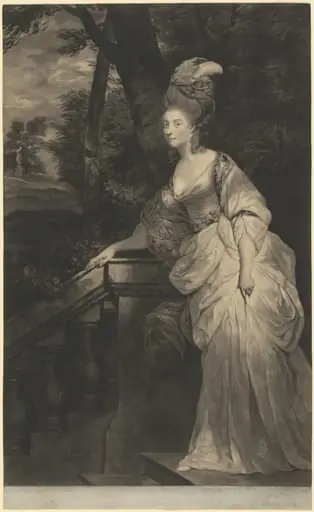 Georgiana (Spencer), Duchess of Devonshire
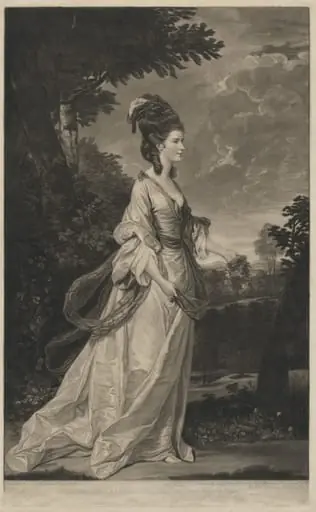 Jane (Fleming), Countess of Harrington
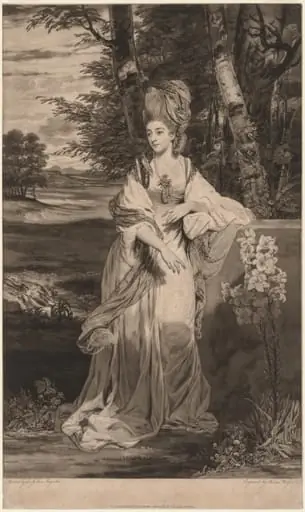 Lady Bampfylde
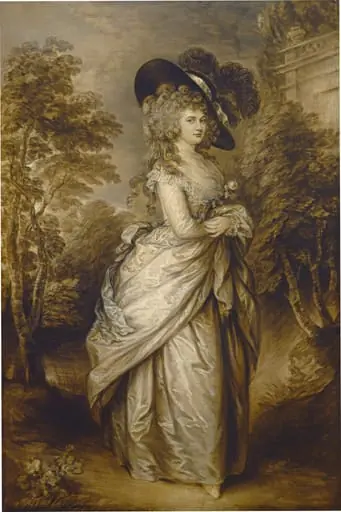 Georgiana, Duchess of Devonshire
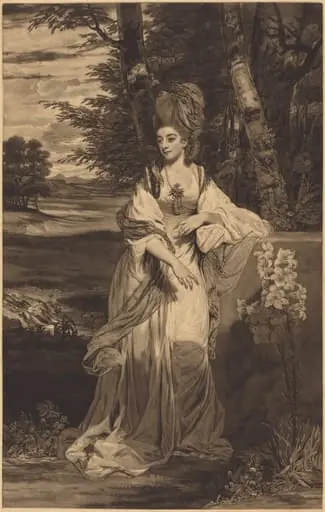 Catherine, Lady Bampfylde
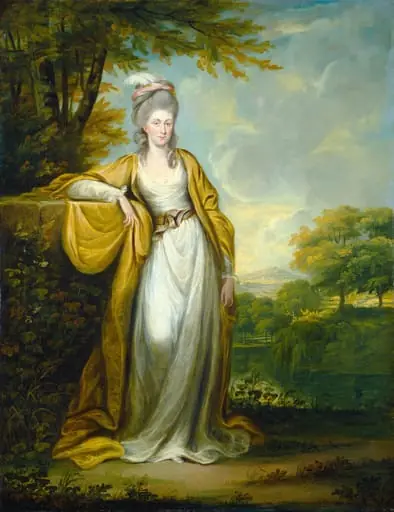 Lady Algernon Percy
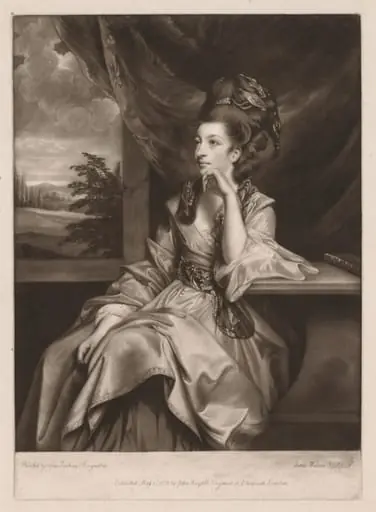 Catherine Bunbury
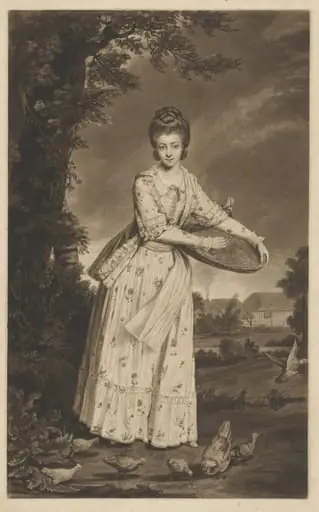 Mrs. Pelham
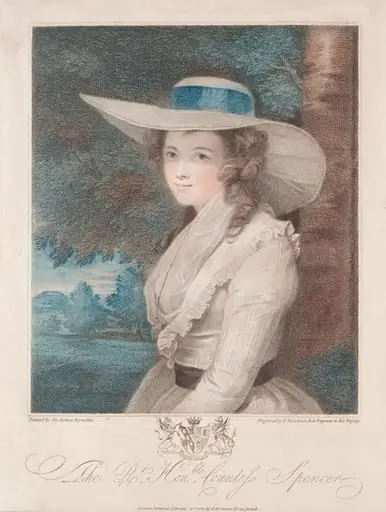 Countess Spencer
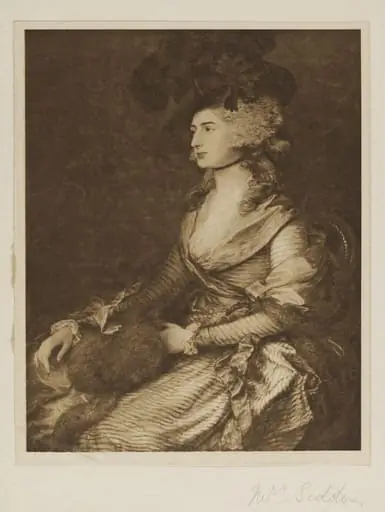 H Beard Print Collection
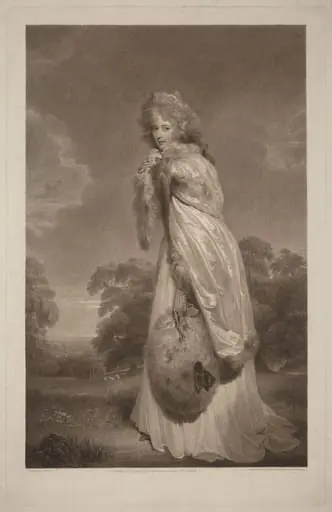 Miss Elizabeth Farren, Countess of Derby
 Lady Elizabeth Compton