Artwork
Laocoon
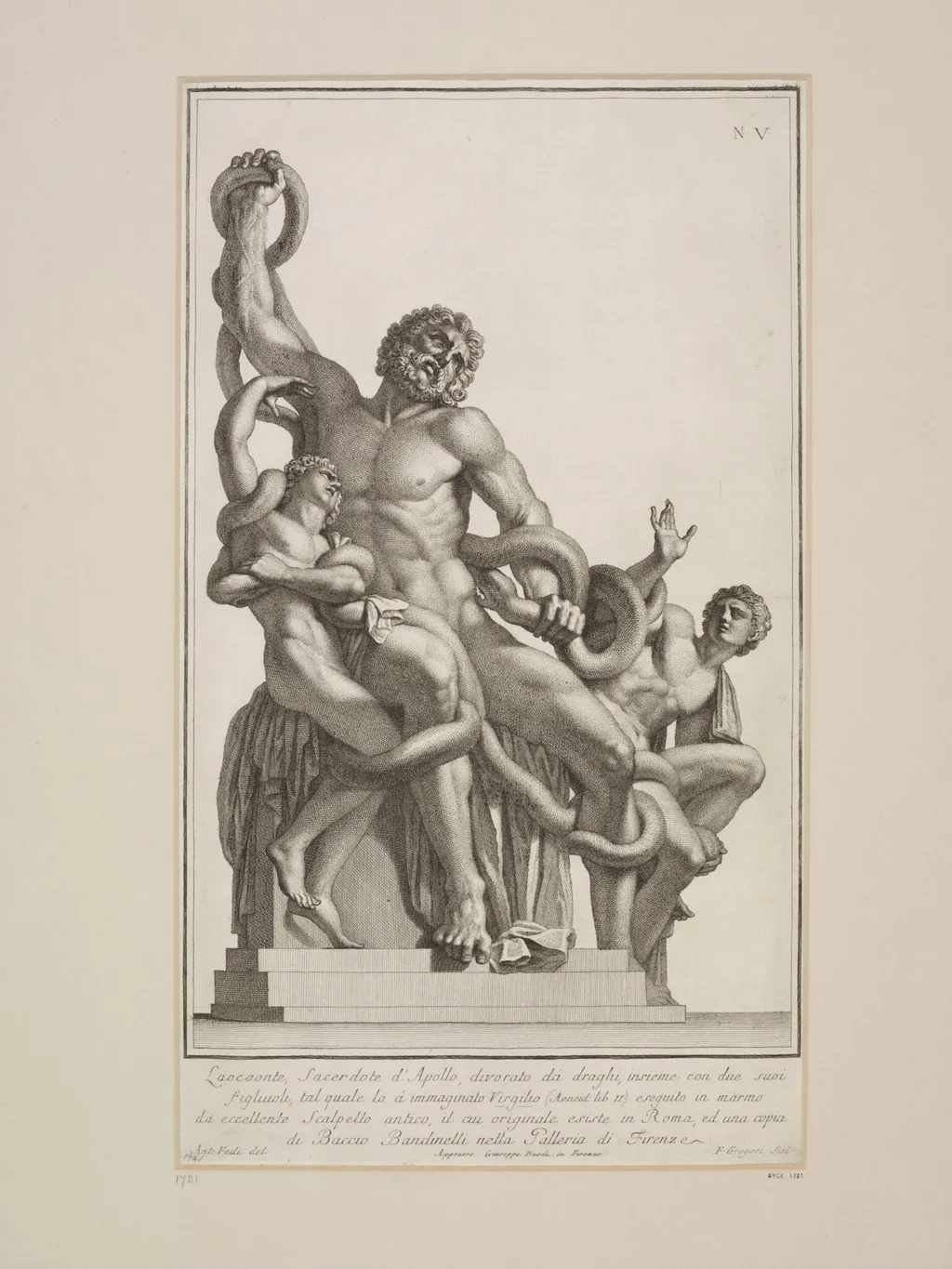
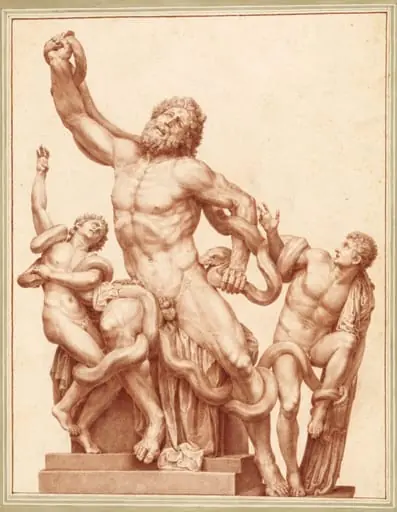
Laocoon is a print by Ferdinando Gregori. It dates from 1850 and is held in the collection of the Victoria and Albert Museum.
About this work
Overview
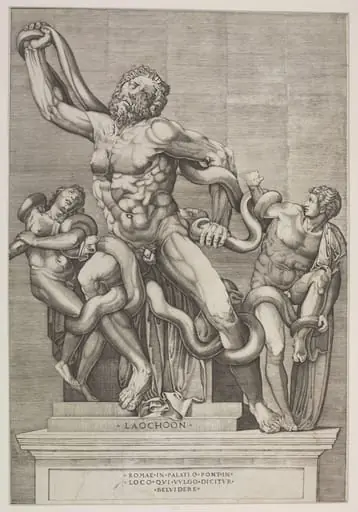
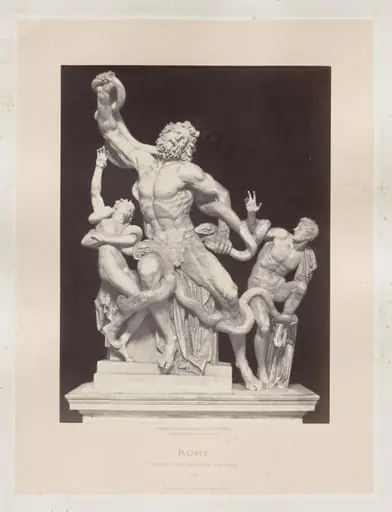
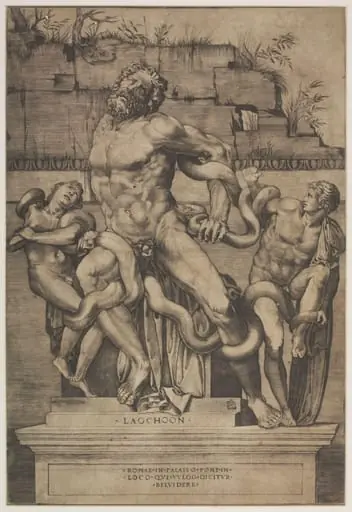
Ferdinando Gregori created this 1850 print as a faithful reproductive study of the ancient Laocoön group, a Hellenistic sculpture rediscovered in Rome in 1506.
Ferdinando Gregori created this 1850 print as a faithful reproductive study of the ancient Laocoön group, a Hellenistic sculpture rediscovered in Rome in 1506. The work captures the sculptural composition in monochrome, emphasizing its emotional intensity through precise line and tonal gradation. Printed on paper, it served as a scholarly reference for 19th-century audiences interested in classical art.
Subject & Meaning
The scene illustrates the myth of Laocoön, a Trojan priest who warned against accepting the wooden horse, prompting divine punishment. As serpents sent by the gods coil around him and his two sons, their desperate struggle conveys the inevitability of fate. The print preserves the original sculpture’s narrative gravity, focusing on physical anguish and the futility of resistance against supernatural force.
Technique & Style
Gregori employed detailed engraving and cross-hatching to replicate the sculptural forms with precision. Chiaroscuro is used to model the musculature and spatial depth, with sharp contrasts between light and shadow enhancing the drama. The texture of skin, scales, and drapery is rendered with careful attention, reflecting a commitment to anatomical accuracy and classical realism.
History & Provenance
The print emerged during a period of renewed scholarly interest in classical antiquities, following the widespread dissemination of casts and engravings of the Laocoön group. Gregori, an Italian artist active in the mid-19th century, produced this work likely for academic or collector use, aligning with contemporary efforts to document and preserve classical masterpieces in print form.
Context
In the 1850s, European art circles valued reproductive prints as tools for education and cultural preservation. The Laocoön group, long celebrated for its emotional power and technical mastery, was frequently reproduced. Gregori’s print fits within this tradition, offering a mediated encounter with antiquity for those unable to view the original in the Vatican.
Legacy
While not an original composition, Gregori’s print contributed to the ongoing circulation of the Laocoön image in 19th-century visual culture. It reflects the era’s reverence for classical ideals and the role of printmaking in sustaining artistic memory. The work remains a document of how antiquity was interpreted and transmitted through mechanical reproduction.
Artist & collection
Artist
Ferdinando Gregori carved his name into Rome’s art scene by moonlight. Tourists still swear they’ve seen him hunched over prints at the corner of Via del Corso, inking shadows so sharp they look like cuts. The trick? He…