Artwork
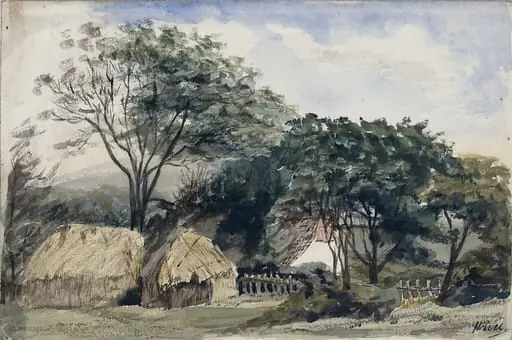
Watercolour drawing by the Grieve family, probably by Thomas Grieve, showing a hut at Margate
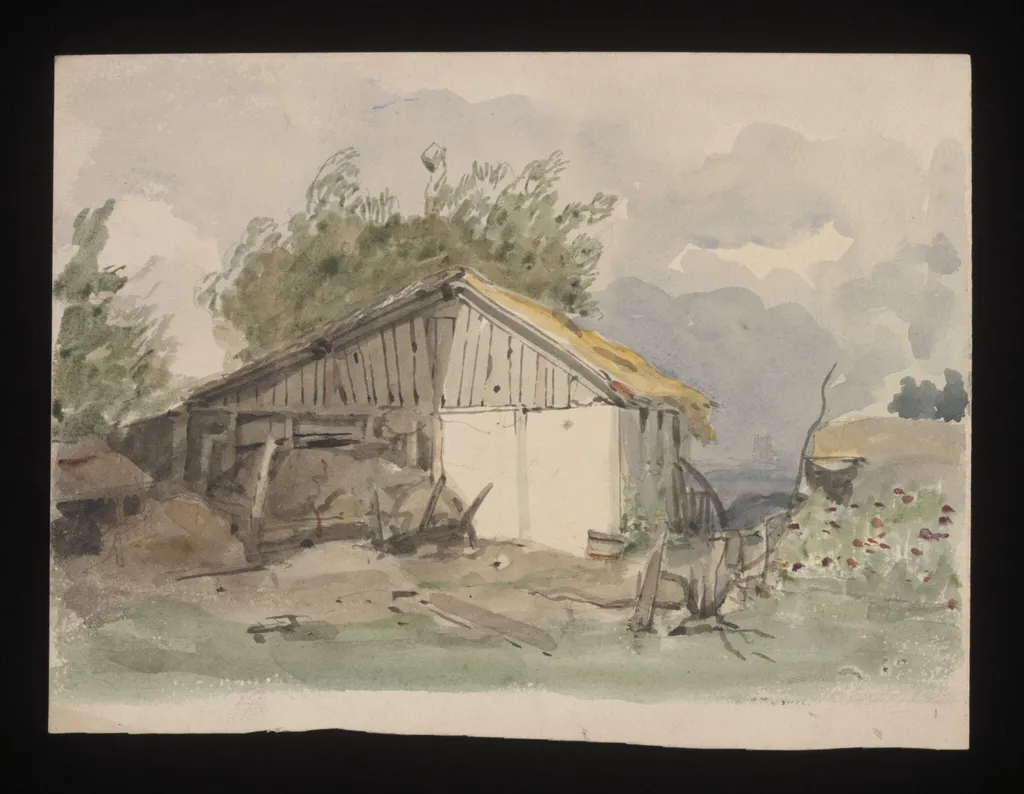
Watercolour drawing by the Grieve family, probably by Thomas Grieve, showing a hut at Margate is a drawing by Thomas Grieve. It dates from 1850 and is held in the collection of the Victoria and Albert Museum.
About this work
Overview
This watercolour drawing depicts a humble hut in Margate, created in the early 19th century by a member of the Grieve family, likely Thomas Grieve. It is one of several works by the family showcasing locations in Kent and southern England, executed from direct observation.
Subject & Meaning
The subject, a simple Margate hut, reflects the family's practice of capturing everyday scenes from life, potentially informing their theatrical set designs with realism. The piece may also represent a personal interest in documenting regional architecture.
Technique & Style
While specific techniques used in this piece are not detailed, the Grieve family's evolution from romantic to realistic scene painting suggests this work may exhibit early tendencies towards realism, characteristic of their later development.
History & Provenance
Part of a collection by various Grieve family members, this drawing was donated to the V&A by Thomas Walford Grieve's son. The family's connection to London theaters, particularly Covent Garden, contextualizes their artistic output.
Context
Created amidst the Grieve family's transition from romantic to realistic scene painting, this work sits within the broader context of early 19th-century theatrical innovations in London, where realistic backdrops were increasingly valued.
Legacy
This drawing contributes to the Grieve family's legacy in the evolution of scene painting. Now housed at the V&A, it is part of a collection (the Grieve, Thomas collection) that offers insight into the family's artistic development and contributions to British theatrical history.
Own this work as a print
Artist & collection
Artist
These delicate watercolours show the English seaside town of Margate in the early 1800s.

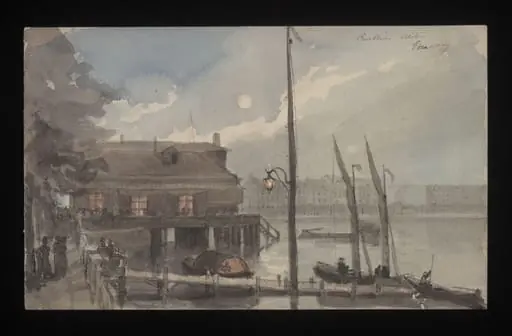 Watercolour drawing by the Grieve family, probably by Thomas Grieve, showing a pavillion beside a river
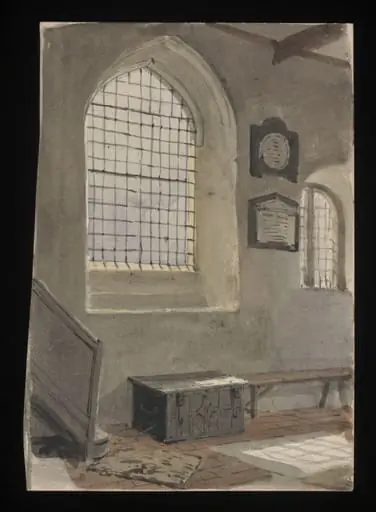 Watercolour drawing by the Grieve family, probably by Thomas Grieve, showing St John's Church, Margate
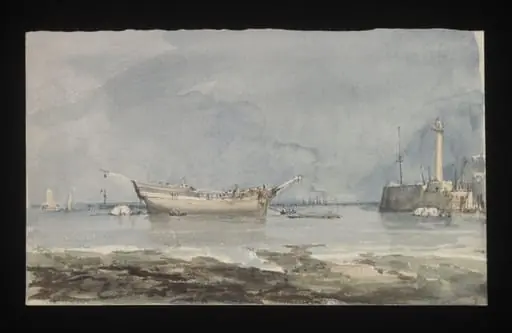 Watercolour drawing by the Grieve family, probably by Thomas Grieve, showing a view from the beach at Margate
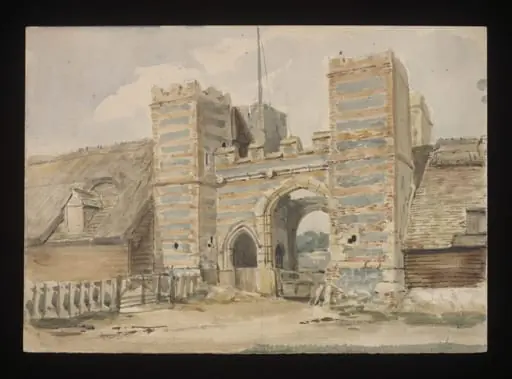 Watercolour drawing by the Grieve family, probably by Thomas Grieve, showing the gatehouse of Garlinge Castle, Kent
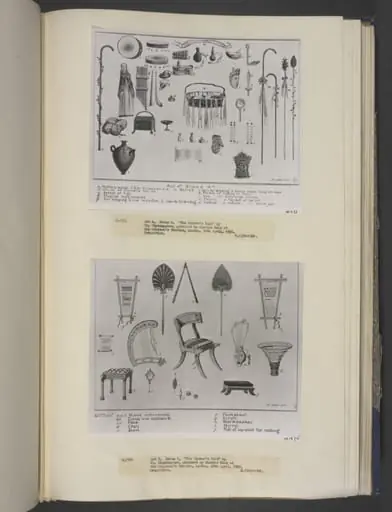 Untitled
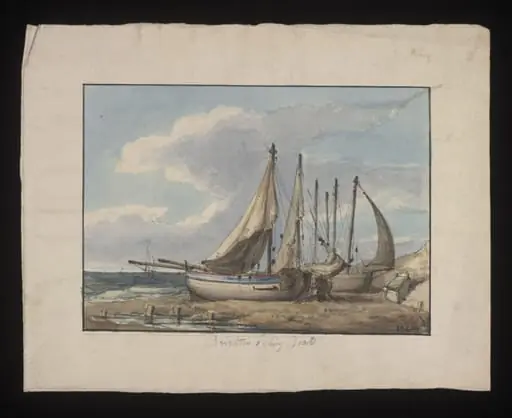 Watercolour drawing by the Grieve family, probably by Thomas Grieve, showing fishing boats at Brighton
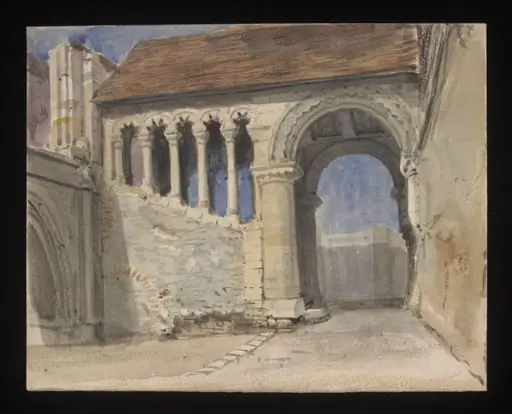 Watercolour drawing by the Grieve family, probably by Thomas Grieve, showing a Norman building at Canterbury
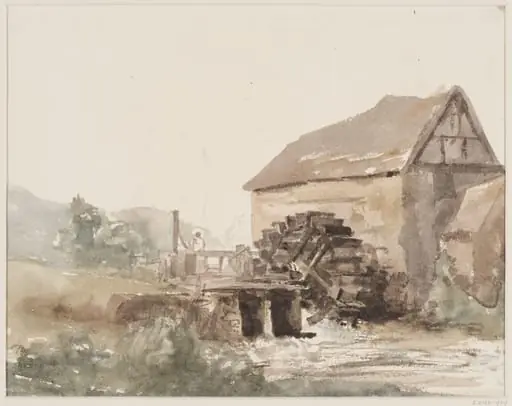 View of a water-mill near Ridware
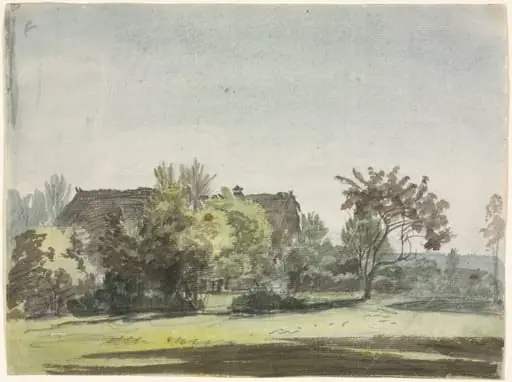 Farmhouse behind Trees
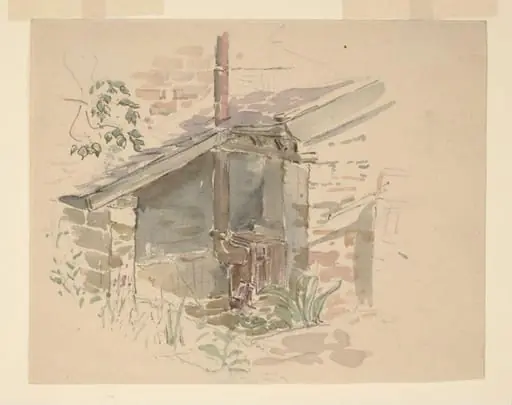 A garden shed with iron stove and chimney in the garden at Gwaynynog
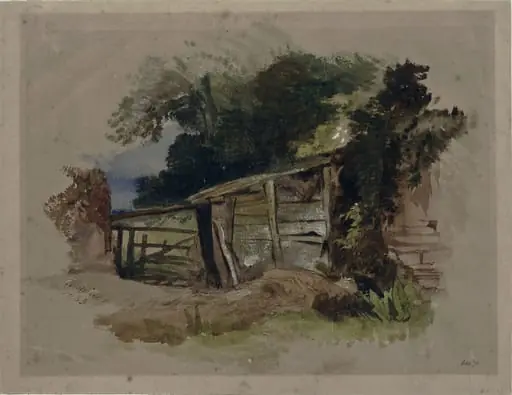 Rustic Shed and Gate
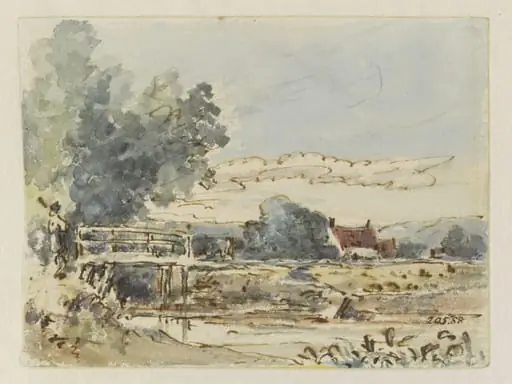 A bridge over a stream, with a cottage behind
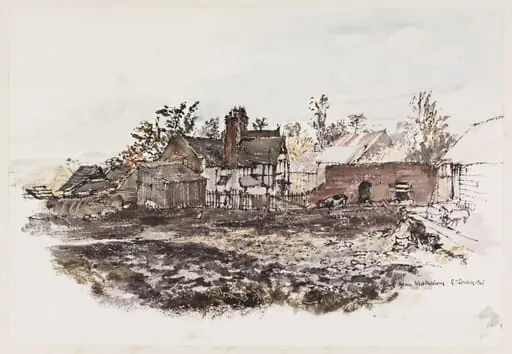 Park Farm, West Malvern
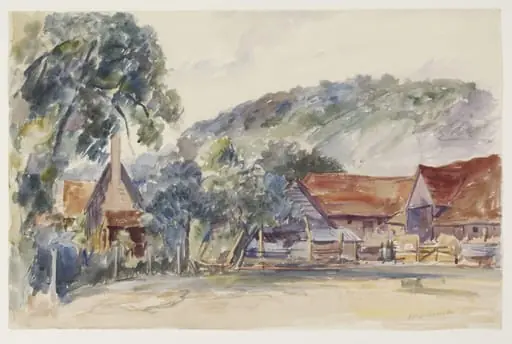 Turville from the Churchyard
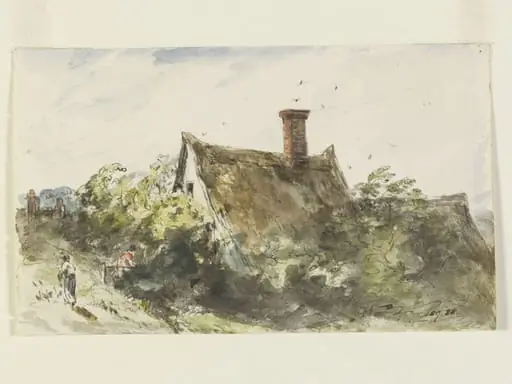 A thatched cottage and two figures
 Hayrick and cottage under trees