Artwork
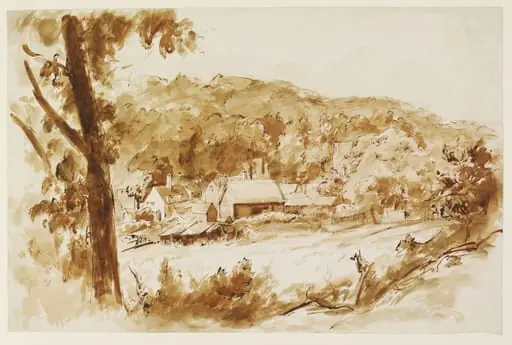
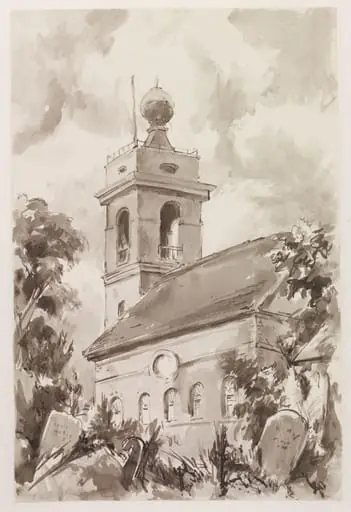
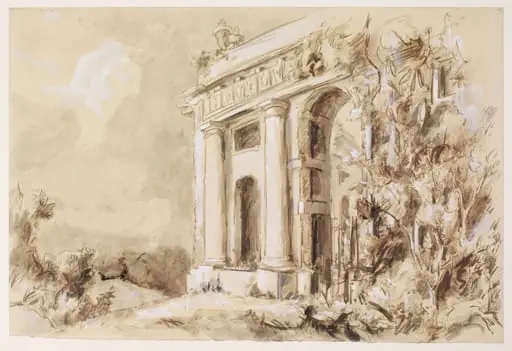
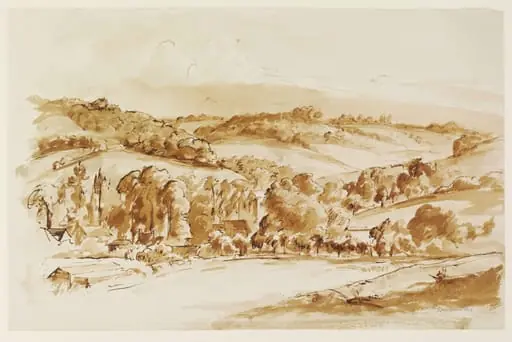
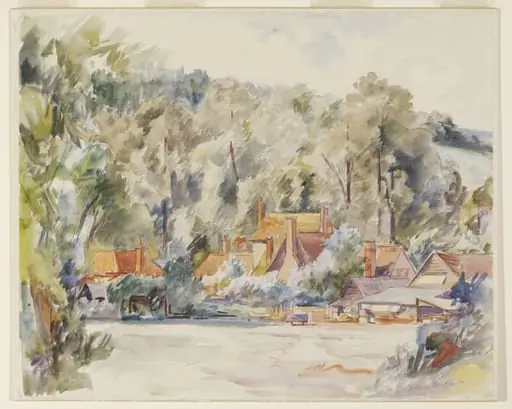
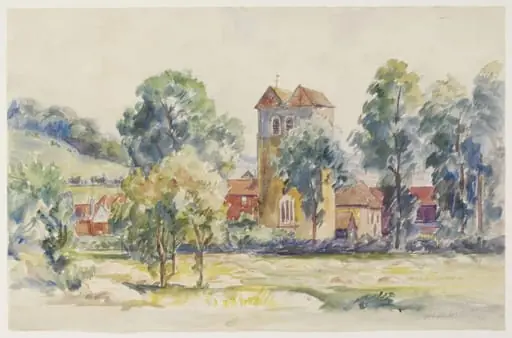
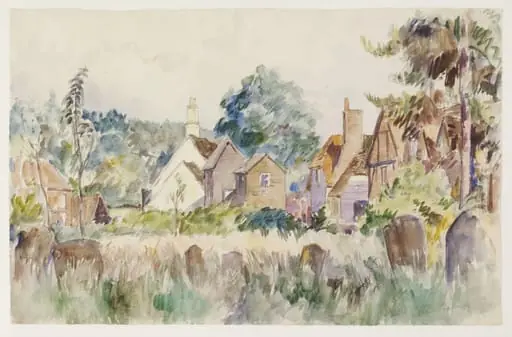
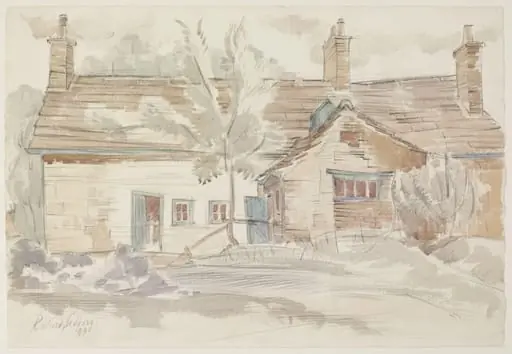
Turville from the Churchyard
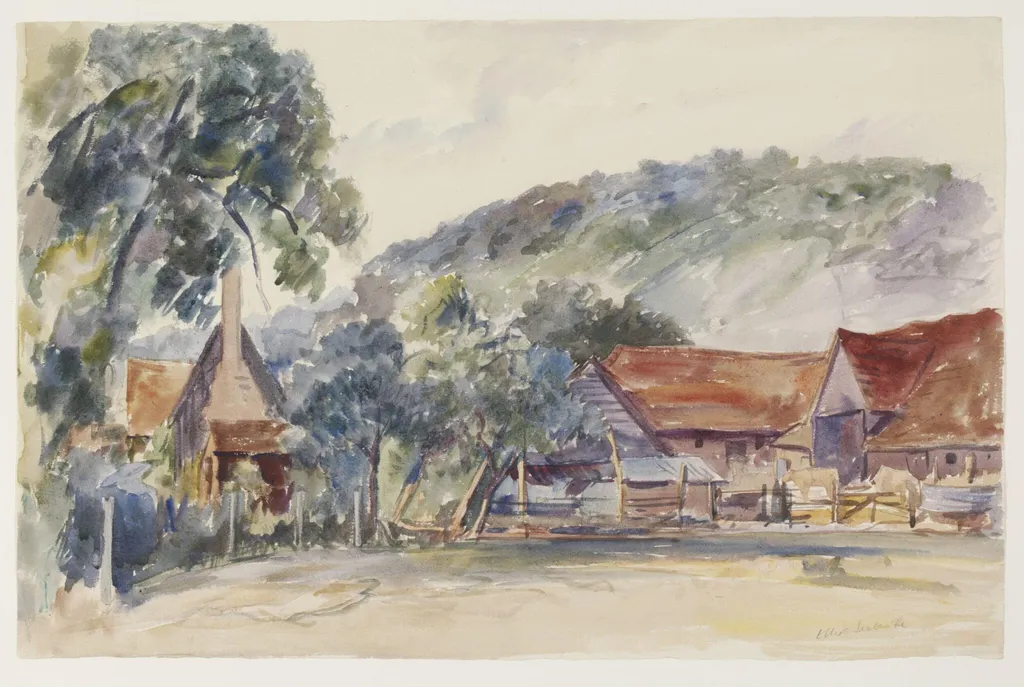
Turville from the Churchyard is a watercolor work on paper by Seabrooke. It dates from 1940 and is held in the collection of the Victoria and Albert Museum.
About this work
Overview
Turville from the Churchyard is a 1940 watercolour by Seabrooke, depicting a serene village scene as part of the Recording Britain project, which aimed to document Britain's changing landscape during wartime.
Subject & Meaning
The painting focuses on a tranquil village setting, with a prominent tree in the foreground, followed by brown-hued buildings surrounded by greenery, under a light, airy sky. The composition conveys a sense of peace and inactivity.
Technique & Style
Characterized by gentle brushstrokes and muted colours, the watercolour exhibits a soft, dreamy quality, reflecting Seabrooke's subtle approach to capturing the scene's tranquility.
History & Provenance
Created in 1940 for the Recording Britain project, a wartime initiative to record threatened aspects of the British landscape, the work is signed by the artist Seabrooke.
Context
As part of Recording Britain, this piece contributes to a broader effort to preserve visual records of Britain's landscape and architecture under the threat of wartime destruction and change.
Artist & collection
Artist
This watercolor artist recorded the rolling hills and stone cottages of the Chilterns in the 1940s.