Artwork
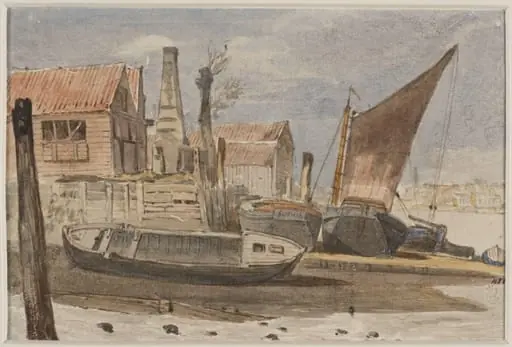
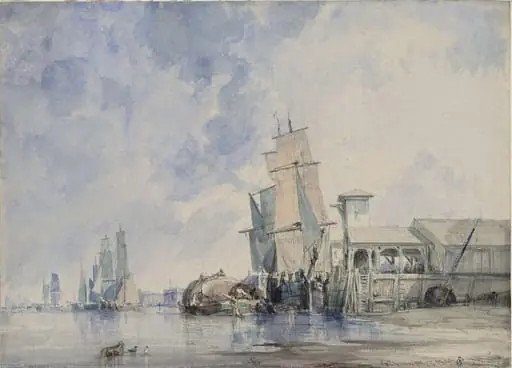
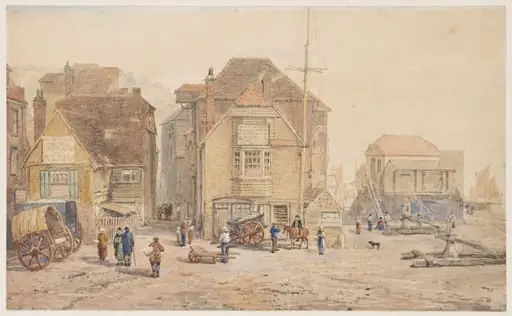
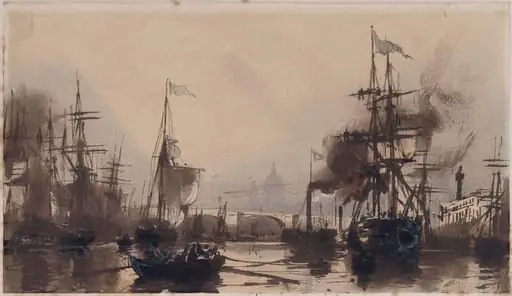
Watercolour drawing by the Grieve family, probably by Thomas Grieve, showing a pavillion beside a river
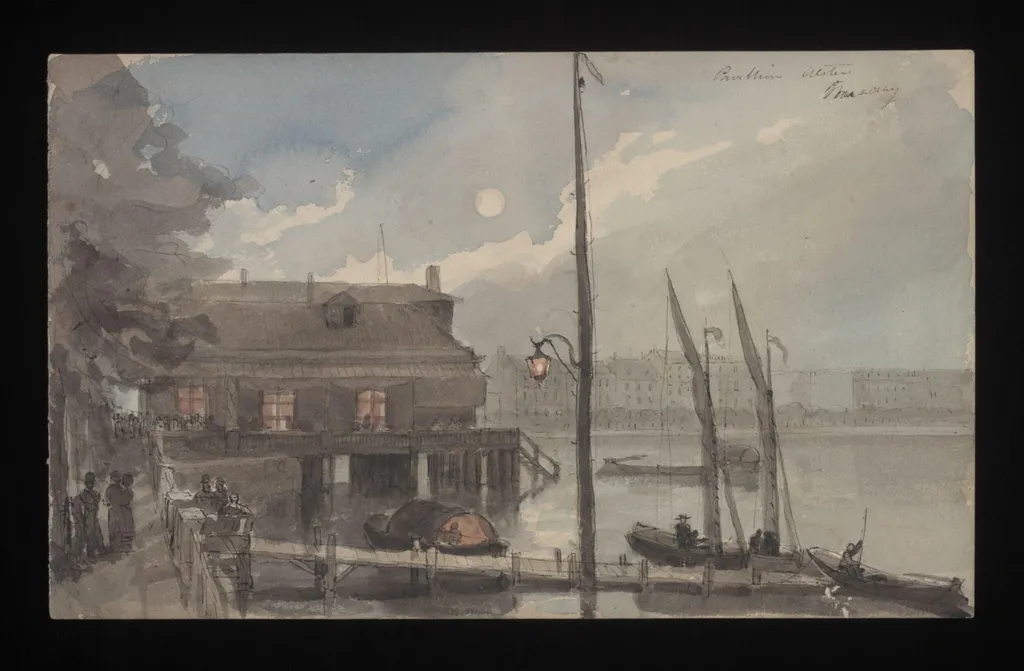
Watercolour drawing by the Grieve family, probably by Thomas Grieve, showing a pavillion beside a river is a drawing by Thomas Grieve. It dates from 1850 and is held in the collection of the Victoria and Albert Museum. This 19th-century watercolour drawing depicts a serene riverside scene featuring a pavilion.
About this work
Overview
This 19th-century watercolour drawing depicts a serene riverside scene featuring a pavilion. Attributed to Thomas Grieve, it reflects the artistic prowess of the Grieve family, renowned for their theatrical stage designs in London.
Subject & Meaning
The drawing focuses on a pavilion situated beside a river, capturing a tranquil moment. While its specific inspiration is unclear, it exemplifies the family's capability to render idyllic, natural settings beyond their theatrical work.
Technique & Style
Executed in watercolour, the piece showcases the Grieves' adaptability in mediums and styles, contrasting their often dramatic stage backdrops with a softer, more realistic approach suited to topographical subjects.
History & Provenance
Part of a broader collection of Grieve family designs donated to the Victoria and Albert Museum by Thomas Walford Grieve's son, this drawing is one of several topographical sketches, many based on locations in Kent and Southern England, apparently drawn from life.
Context
Created amidst the Grieve family's transition from romantic to realistic stage painting styles, this watercolour reflects their broader artistic explorations during a period of theatrical and artistic evolution in 19th-century London.
Artist & collection
Artist
These delicate watercolours show the English seaside town of Margate in the early 1800s.

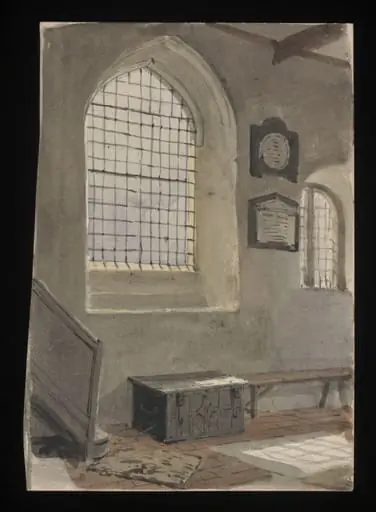 Watercolour drawing by the Grieve family, probably by Thomas Grieve, showing St John's Church, Margate
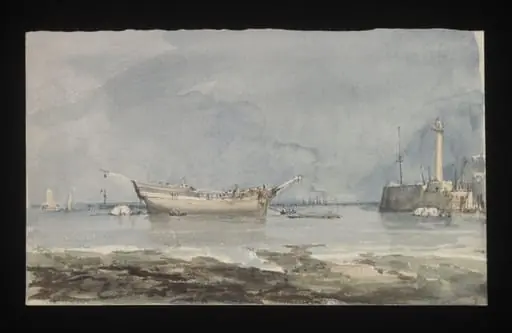 Watercolour drawing by the Grieve family, probably by Thomas Grieve, showing a view from the beach at Margate
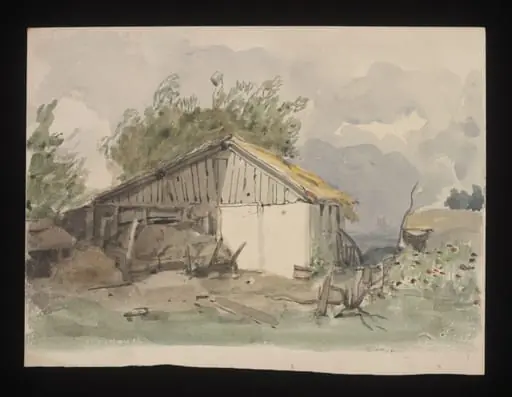 Watercolour drawing by the Grieve family, probably by Thomas Grieve, showing a hut at Margate
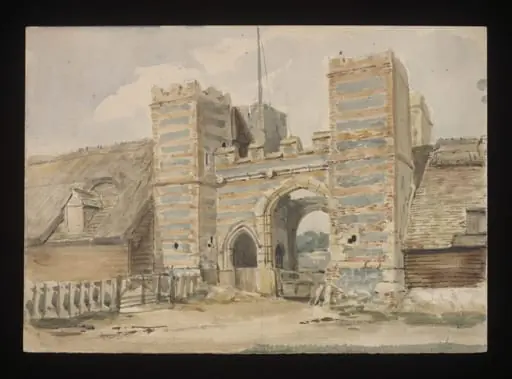 Watercolour drawing by the Grieve family, probably by Thomas Grieve, showing the gatehouse of Garlinge Castle, Kent
 Untitled
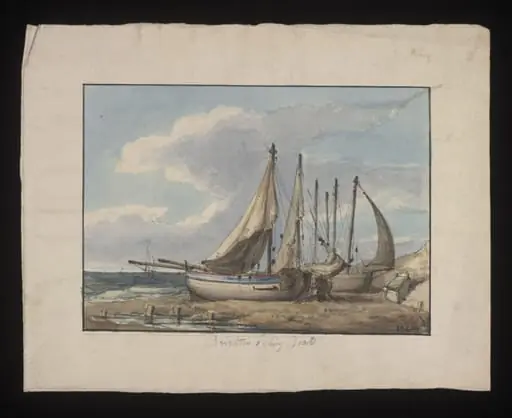 Watercolour drawing by the Grieve family, probably by Thomas Grieve, showing fishing boats at Brighton
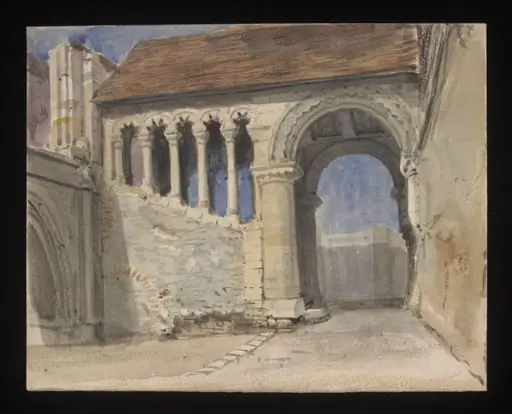 Watercolour drawing by the Grieve family, probably by Thomas Grieve, showing a Norman building at Canterbury