Artwork
St. Ippolyts, No. 2
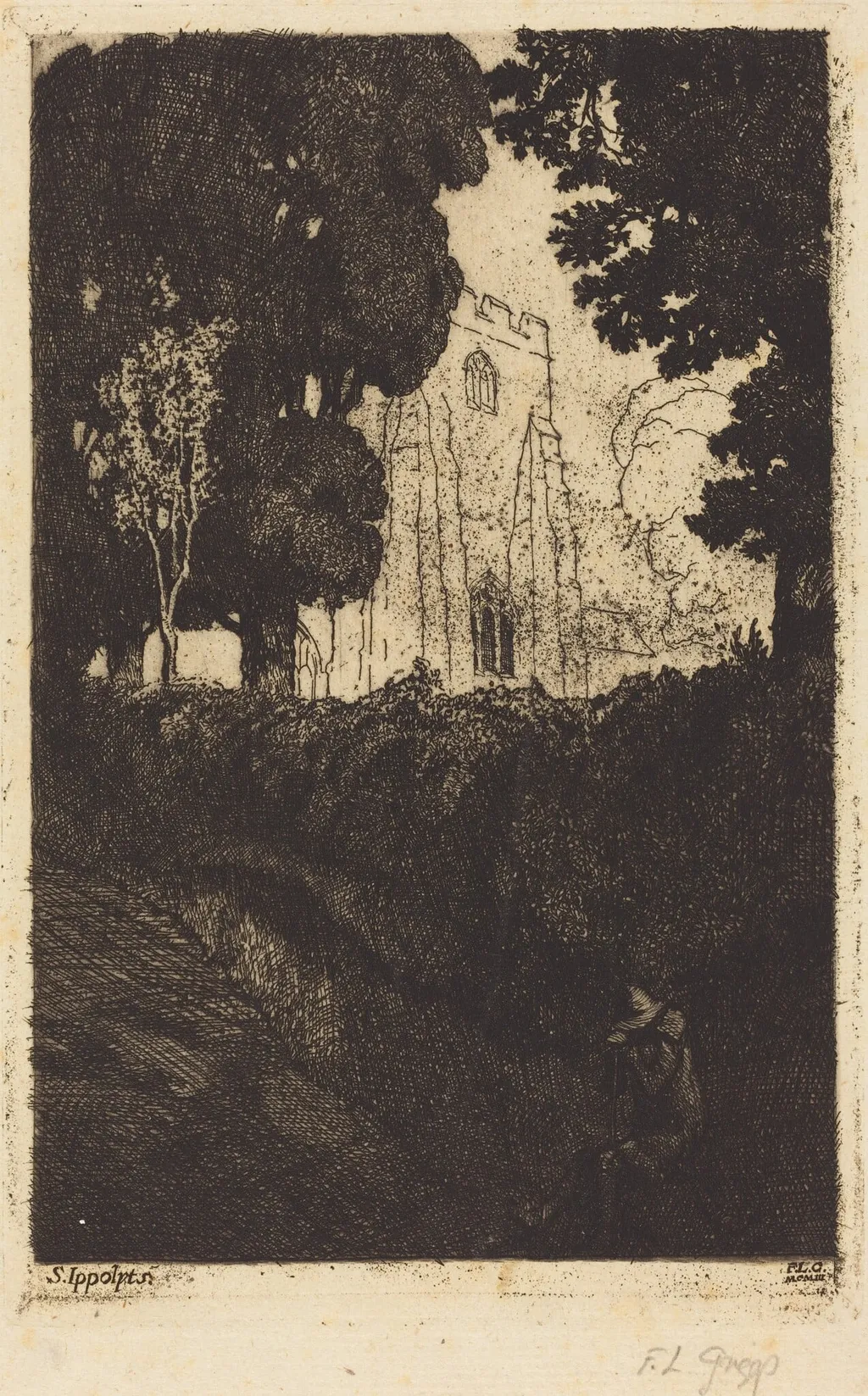
St. Ippolyts, No. 2 is an ink print by F. L. Griggs. It dates from 1903 and is held in the collection of the National Gallery of Art. St.
About this work
Overview
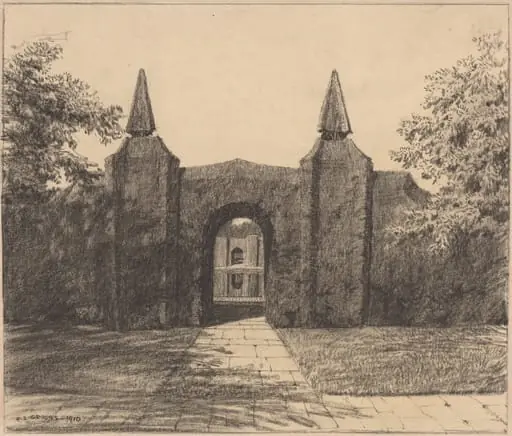
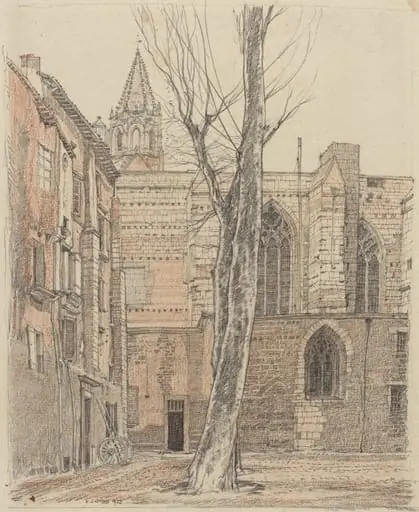
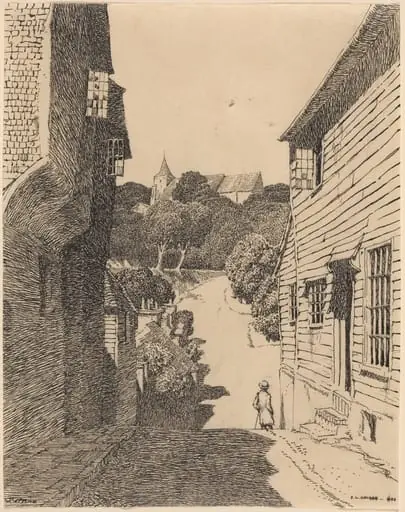
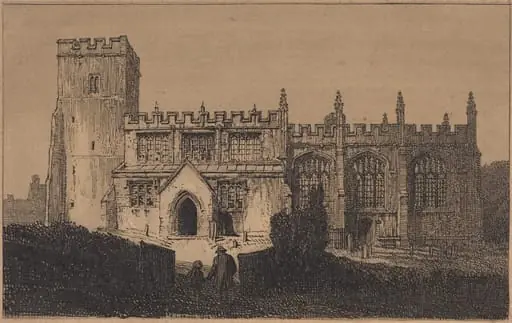
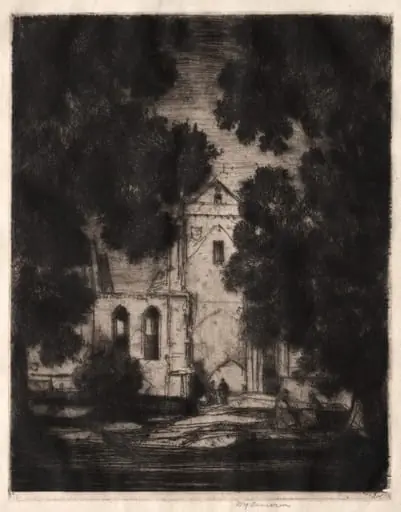
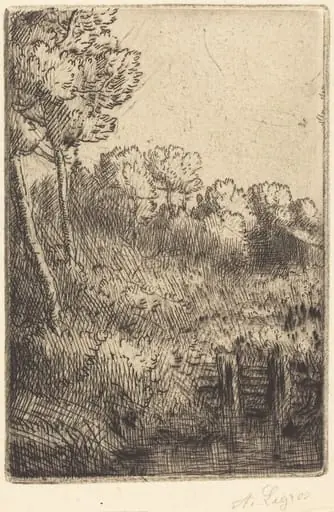
St. Ippolyts, No. 2 is a black‑and‑white etching executed in 1903 by the English printmaker F. L. Griggs. The work presents a tranquil rural landscape dominated by a solitary church with a soaring steeple, framed by a dense canopy of trees and a modest grassy foreground that leads the eye toward the building.
Subject & Meaning
The composition captures a quiet moment in the English countryside, emphasizing the relationship between architecture and nature. The solitary church, set against a darkening sky, suggests a contemplative atmosphere, while the surrounding trees, rendered as deep silhouettes, convey a sense of enclosure and timelessness.
Technique & Style
Griggs employed traditional intaglio methods, incising lines into a metal plate before inking and pressing the image onto paper. The print relies on stark contrasts of line and wash, using broad tonal areas to model form rather than intricate detail, thereby creating depth through the interplay of light and shadow.
History & Provenance
Created in the early twentieth century, the etching forms part of Griggs’s broader exploration of rural English scenes. While specific ownership records are limited, the work has been documented in catalogues of Griggs’s prints and appears in several public and private collections that focus on British printmaking of the period.
Artist & collection


 Pluscarden
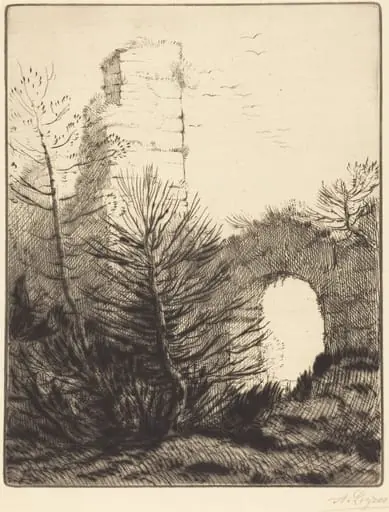 Ruins of a Monastery (Les ruines du monastere)
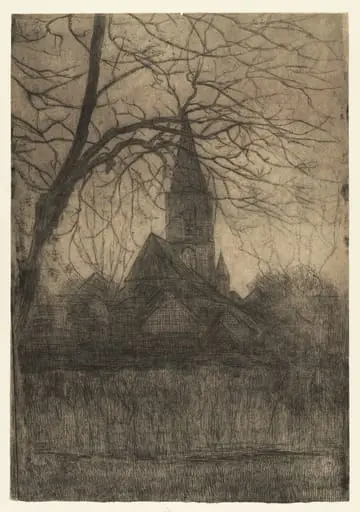 Untitled
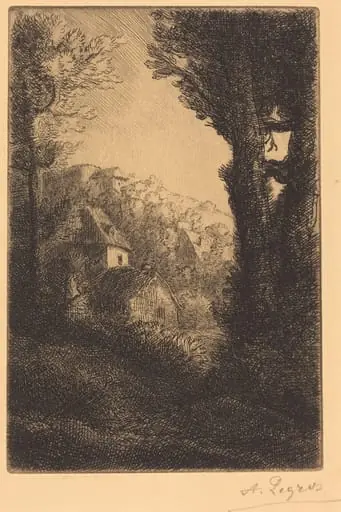 Farm on a Hillside in Sunlight (La ferme du coteau; Effet de soleil sur le coteau)
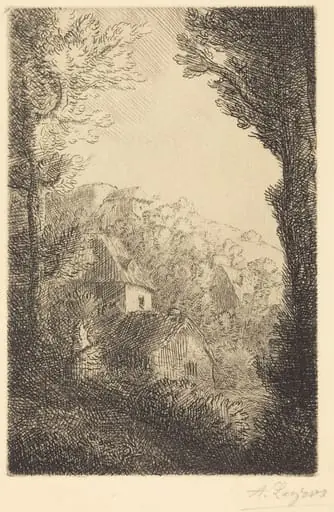 Old Chateau (Un vieux chateau)
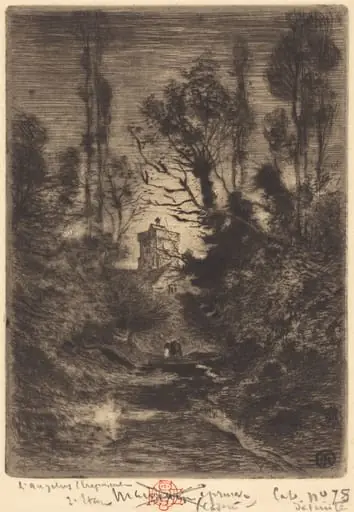 La Ronde de nuit (Night Patrol)
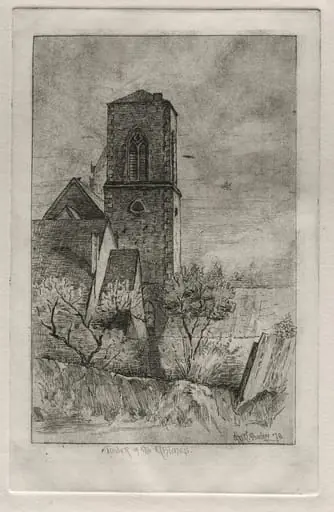 Tower of the Chimes
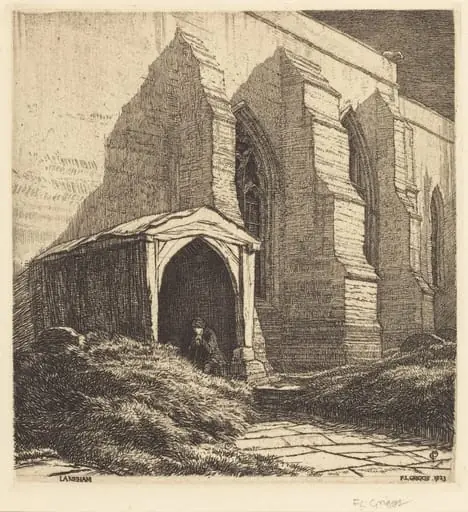 Laneham
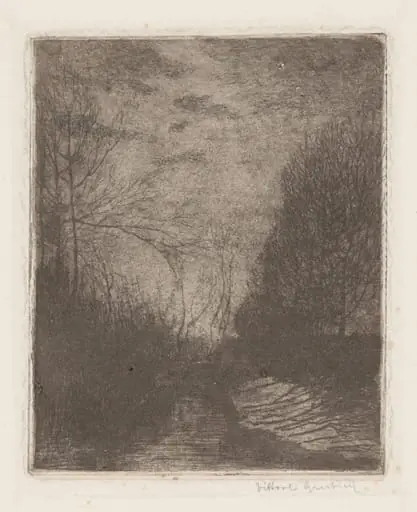 Countryside
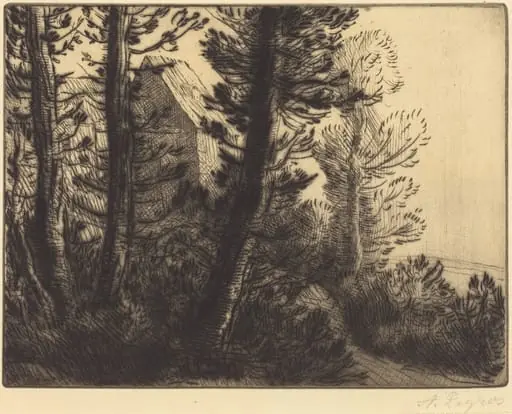 Guardhouse (La maison du garde)
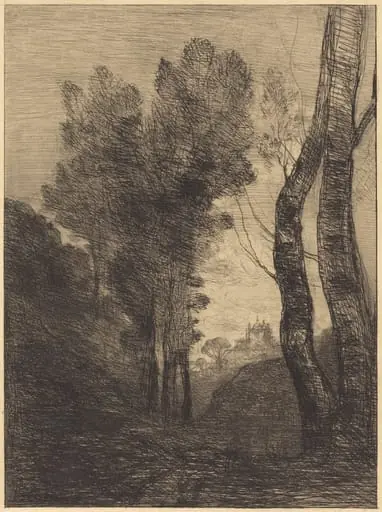 Environs of Rome (Environs de Rome)
 Along the Marne (Sur la Marne)