Artwork
Ruins of a Monastery (Les ruines du monastere)
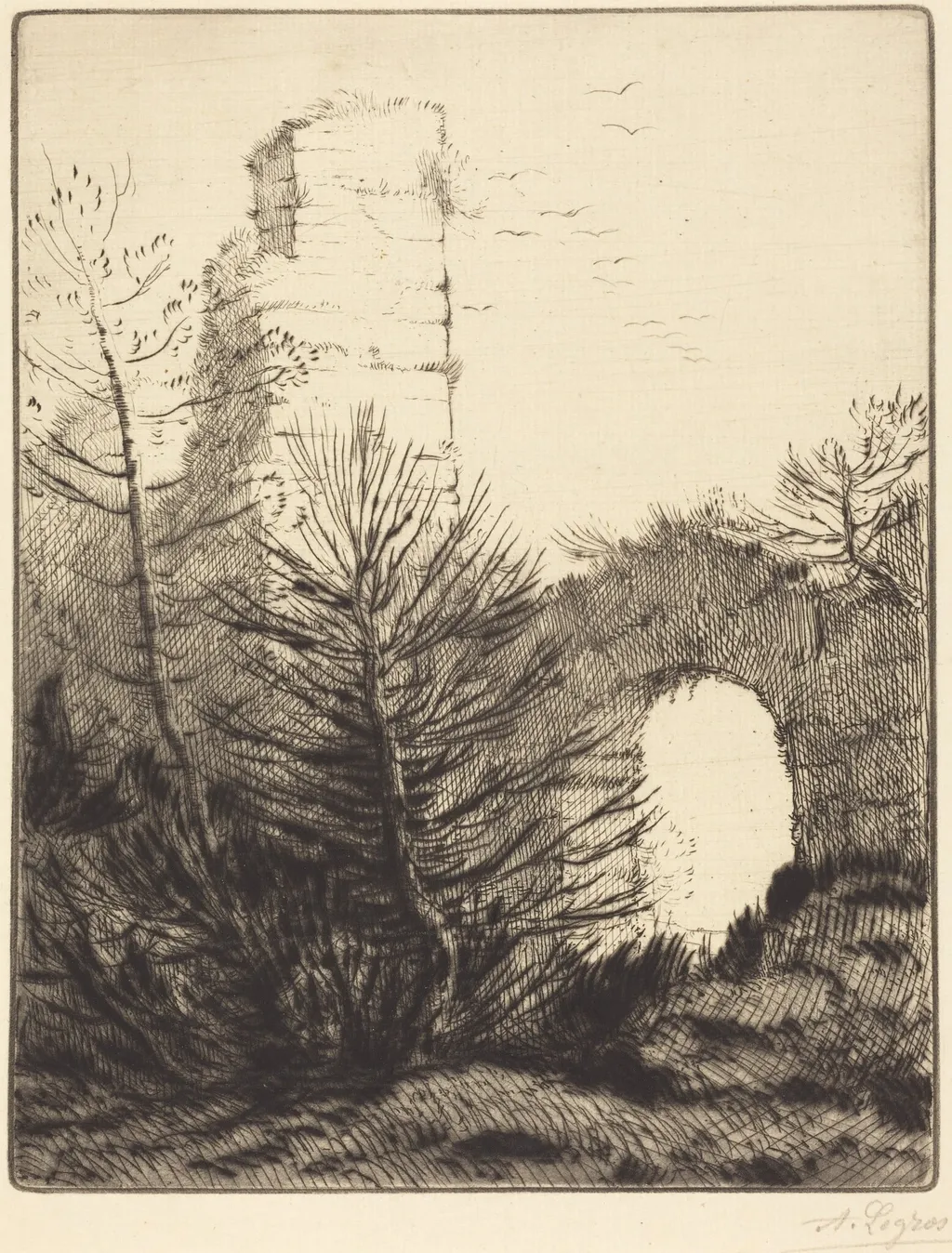
Ruins of a Monastery (Les ruines du monastere) is an ink print by the Romanticist artist Alphonse Legros. It dates from 1874 and is held in the collection of the National Gallery of Art.
About this work
Overview
Created in 1874, *Ruins of a Monastery* is an intaglio print by Alphonse Legros, combining drypoint and etching techniques.
Created in 1874, *Ruins of a Monastery* is an intaglio print by Alphonse Legros, combining drypoint and etching techniques. Though French by birth, Legros had settled in London by 1863 and became a central figure in the British etching revival. This work exemplifies his mastery of tonal depth and linear precision, reflecting his broader engagement with printmaking as a serious artistic medium rather than a reproductive tool.
Subject & Meaning
The image portrays the decaying architecture of a monastic complex, its fractured walls and gaping openings suggesting abandonment and the passage of time. Sparse vegetation clings to the ruins, while birds trace faint arcs across a pale sky. The scene evokes quiet contemplation rather than overt drama, inviting reflection on impermanence and the quiet erosion of spiritual institutions by history.
Technique & Style
Legros employed drypoint’s rich, velvety lines and etching’s controlled acidity to build dense shadows and delicate gradations. The heavy cross-hatching in the stonework contrasts with the airy, minimal rendering of the sky, enhancing the monumentality of the ruins. His attention to texture—crumbling masonry, gnarled branches—conveys tactile realism, rooted in close observation rather than idealized romanticism.
History & Provenance
The print emerged during Legros’s tenure at the Slade School of Fine Art in London, where he influenced a generation of British artists. Though not widely exhibited at the time, it was included in private collections of print enthusiasts and later entered institutional holdings. Its production coincided with renewed interest in medieval architecture and the aesthetic of decay in Victorian Britain.
Context
In the 1870s, British artists and intellectuals were revisiting Gothic ruins as symbols of cultural memory and moral reflection. Legros’s work aligns with this trend, though his approach avoids sentimentality. His focus on material decay and atmospheric silence reflects broader European currents in realism and early modernism, distancing his vision from overt Romantic theatricality.
Legacy
Legros’s *Ruins of a Monastery* contributed to the legitimization of etching as a fine art form in Britain. Its restrained emotional tone and technical rigor influenced later printmakers who sought to move beyond illustration toward personal expression. The work remains a reference point in studies of 19th-century print revival, valued for its quiet intensity and formal discipline.
Artist & collection

Artist
Alphonse Legros (French pronunciation: ; 8 May 1837 – 8 December 1911) was a French, later British, painter, etcher, sculptor, and medallist.

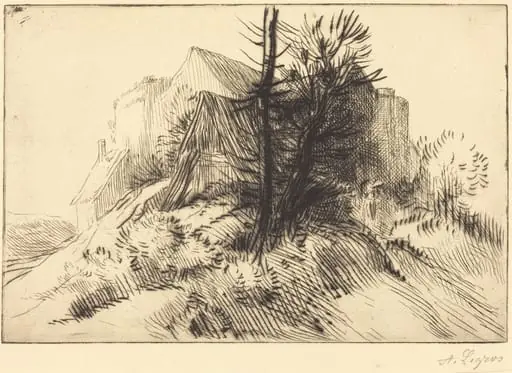 Farm in Winter (Une ferme en hiver)
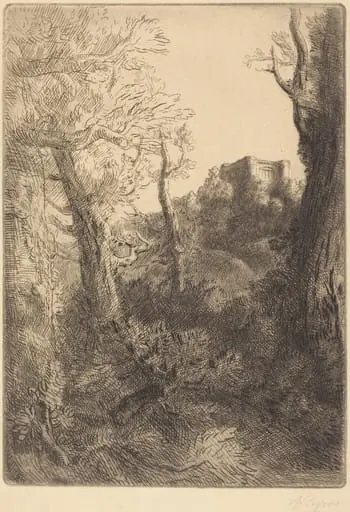 Landscape (Paysage)
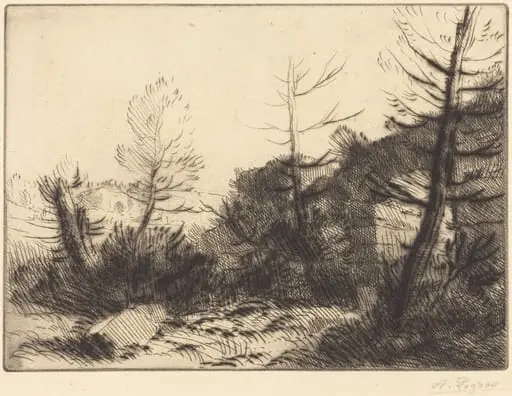 Roman Ruin (Ruine romaine)
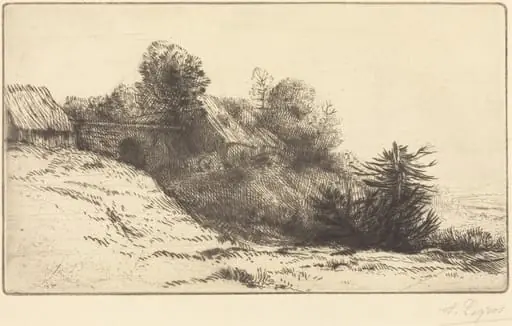 View of a Farm, 2nd plate (La ferme du Bienheureux)
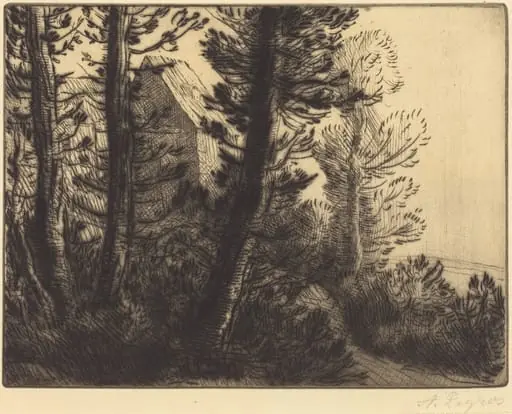 Guardhouse (La maison du garde)
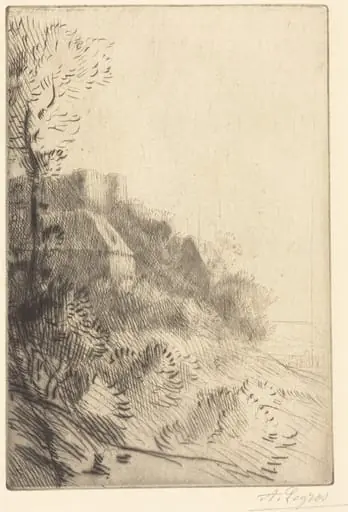 Farm on a Hillside in Sunlight (La ferme du coteau; Effet de soleil sur le coteau)
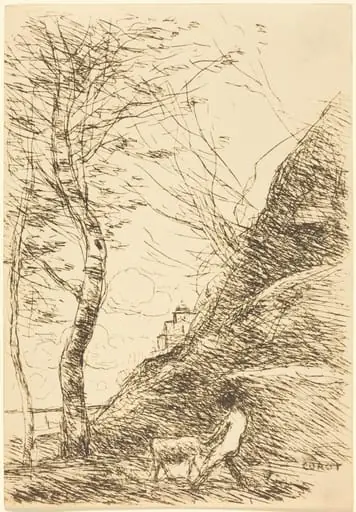 Shepherd Struggling with a Goat (Berger luttant avec sa chevre)
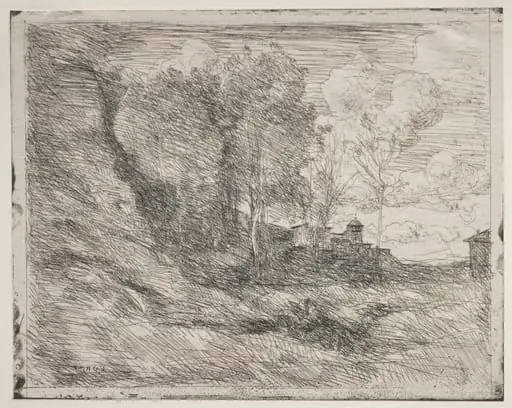 A Souvenir of Ostia
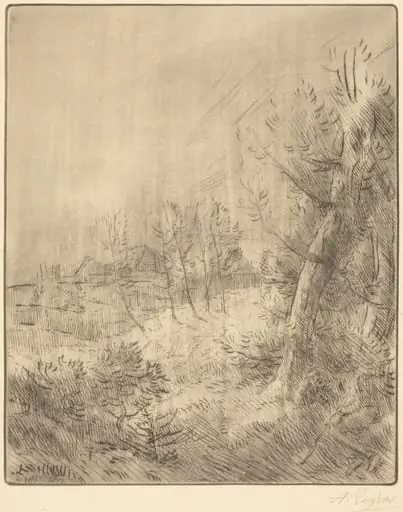 Old Village (Ville vieille)
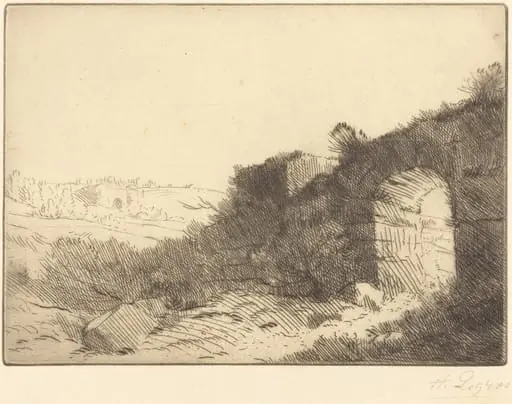 Roman Ruin (Ruine romaine)