Artwork
Stevenage
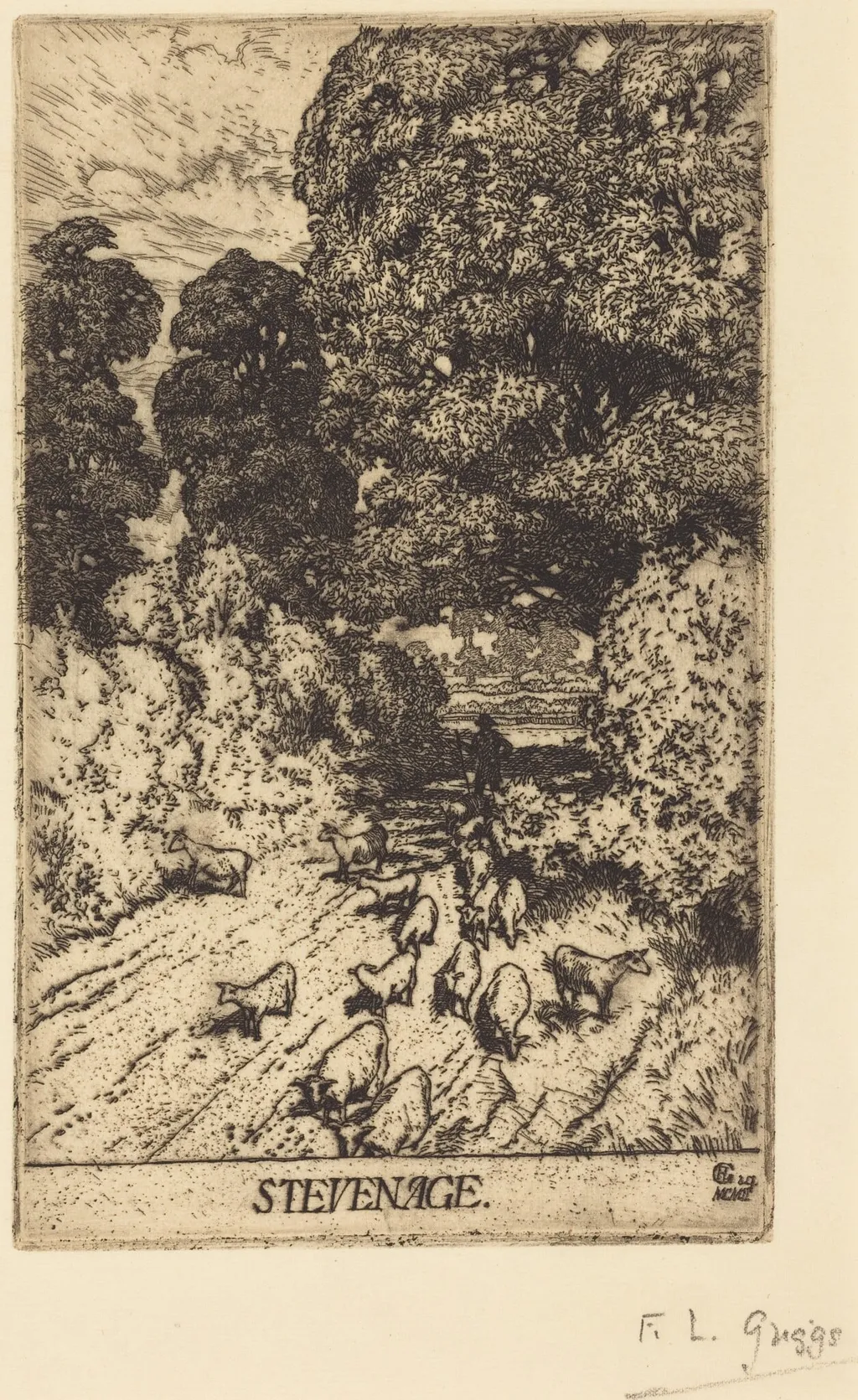
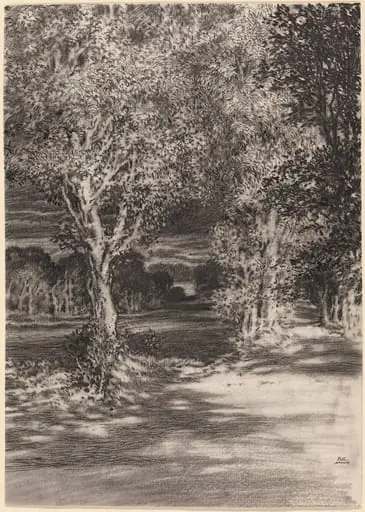
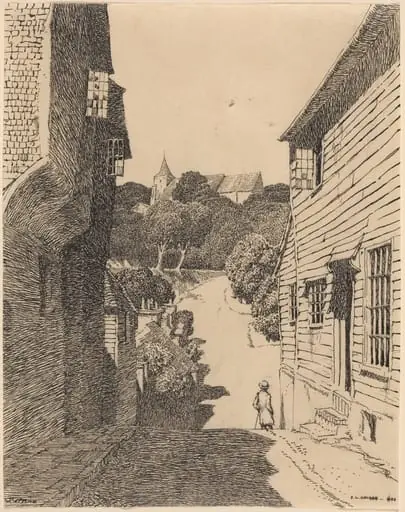
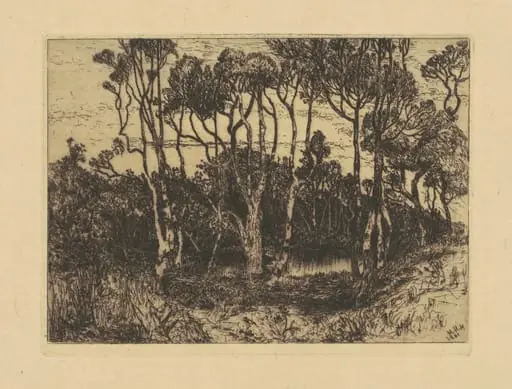
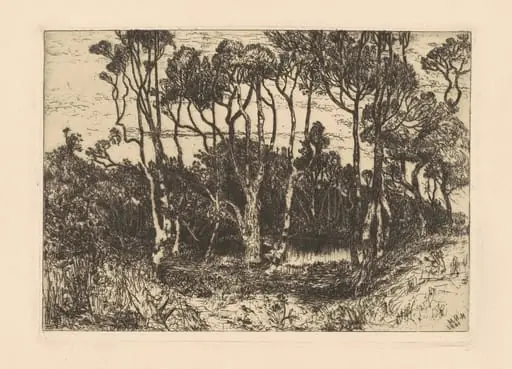
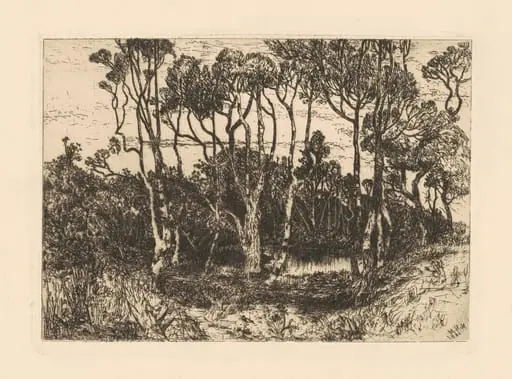
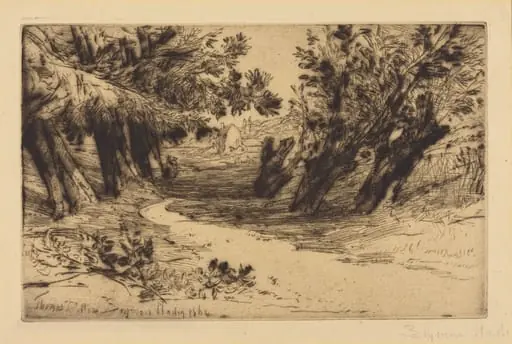
Stevenage is an ink print by F. L. Griggs. It dates from 1902 and is held in the collection of the National Gallery of Art.
About this work
Overview
The work presents a tranquil rural vista, rendered in monochrome, and measures within the modest scale typical of early twentieth‑century prints.
Stevenage, executed in 1902, is a black-and-white etching by the English printmaker F. L. Griggs. The work presents a tranquil rural vista, rendered in monochrome, and measures within the modest scale typical of early twentieth‑century prints. Its composition centers on a sinuous lane that threads through gently undulating, tree‑laden hills, inviting the viewer’s eye to follow the landscape’s quiet rhythm.
Subject & Meaning
The scene depicts a pastoral lane winding across a hilly terrain dotted with foliage and a few grazing sheep. A modest structure appears on the horizon, suggesting human presence without dominating the natural setting. The subdued sky and softened horizon convey a sense of calm and timelessness, reflecting an idealized view of the English countryside.
Technique & Style
Griggs employed traditional intaglio etching, incising lines into a copper plate with a needle before acid bath. The resulting marks are deliberately rough and layered, producing a textured surface that mimics the irregularity of hills, vegetation, and stone. The artist’s handling of line and tone creates depth through delicate gradations of black, characteristic of his meticulous, atmospheric approach.
History & Provenance
Created at the beginning of Griggs’s career, the print was likely produced for limited circulation among collectors of British landscape prints. While specific ownership records are scarce, the work has appeared in several exhibitions of early twentieth‑century British etchings, confirming its continued relevance within the artist’s oeuvre and the period’s print market.
Artist & collection