Artwork
Pigs in Orchard
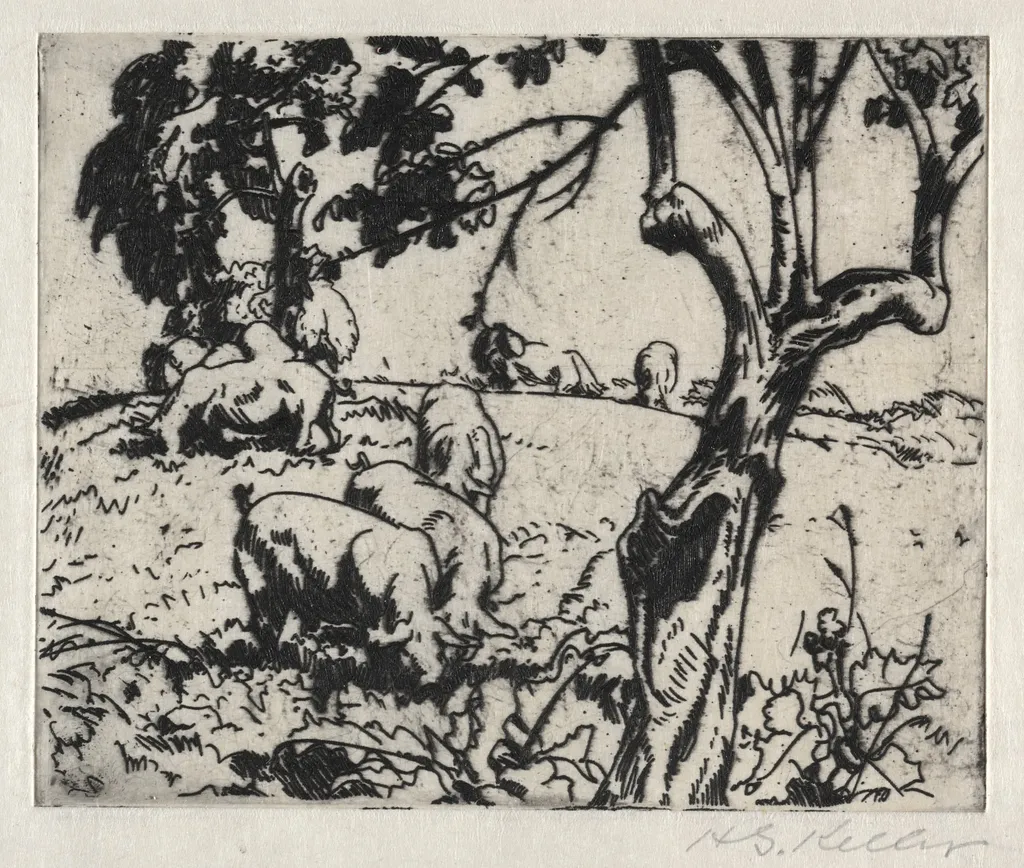
Pigs in Orchard is a print by Henry Keller. It dates from 1916 and is held in the collection of the Cleveland Museum of Art.
About this work
Overview
Created around 1916 by Henry Keller, an American artist of German origin, *Pigs in Orchard* is a black ink print reflecting his role in the Cleveland School.
Created around 1916 by Henry Keller, an American artist of German origin, *Pigs in Orchard* is a black ink print reflecting his role in the Cleveland School. Keller, who taught at the Cleveland School of Art and led summer programs in Berlin Heights, Ohio, influenced a generation of regional artists. This work exemplifies his interest in everyday rural life rendered with expressive simplicity and a focus on natural forms.
Subject & Meaning
The scene portrays a group of pigs foraging in an orchard under bare, twisted branches. There is no idealization of the animals or landscape; instead, the focus is on their instinctual activity and the raw texture of the environment. The absence of leaves shifts attention to the pigs’ movement and the gnarled structure of the trees, suggesting a quiet, unembellished observation of rural labor and nature’s cycles.
Technique & Style
Keller used only black ink on a light ground, employing thick, uneven lines and deliberate blank spaces to suggest form. The pigs are rendered with rough, gestural strokes, while the ground is textured with scratches and smudges to imply uneven earth. The stark contrast and lack of shading create a sketchlike immediacy, emphasizing tactile presence over realism and aligning with early 20th-century American printmaking’s move toward expressive abstraction.
History & Provenance
The print emerged during Keller’s most active teaching years, when he was shaping the Cleveland School’s aesthetic through direct instruction and outdoor sketching excursions. Though specific ownership history is not documented, the work aligns with the output of his summer school in Berlin Heights, where students like Charles E. Burchfield developed their styles under his guidance. It reflects the regional emphasis on observational drawing and printmaking as a pedagogical tool.
Context
In early 20th-century America, artists increasingly turned to local subjects and simplified forms, rejecting academic polish in favor of authenticity. Keller’s work fits within this trend, paralleling the rise of regionalist and Ashcan School sensibilities. His focus on farm life and the use of ink as a direct, unmediated medium reflect broader shifts in American art toward personal expression and everyday observation.
Legacy
Keller’s influence extended through his students, many of whom became significant figures in American art. *Pigs in Orchard* stands as a representative example of his teaching philosophy—valuing direct observation, expressive line, and the dignity of ordinary subjects. While not widely exhibited outside Ohio, the print remains a touchstone for understanding the development of regional printmaking and the transmission of artistic values in early modern America.
Artist & collection
Artist
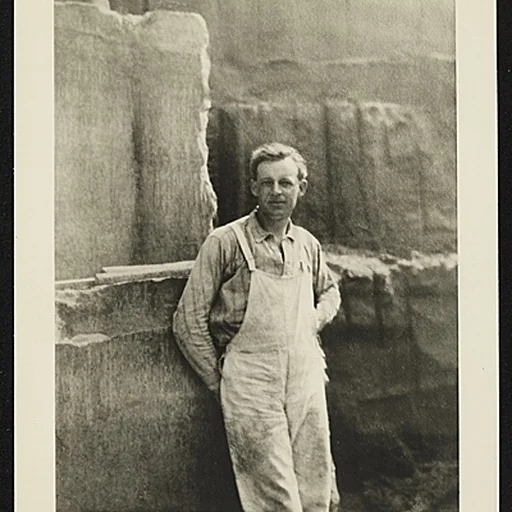
Henry George Keller (April 3, 1869 – August 3, 1949) was an American artist who led a generation of Ohio watercolor painters of the Cleveland School.

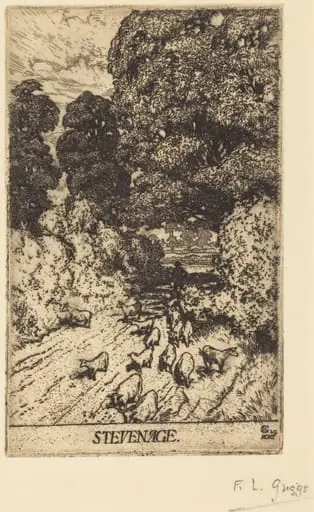 Stevenage
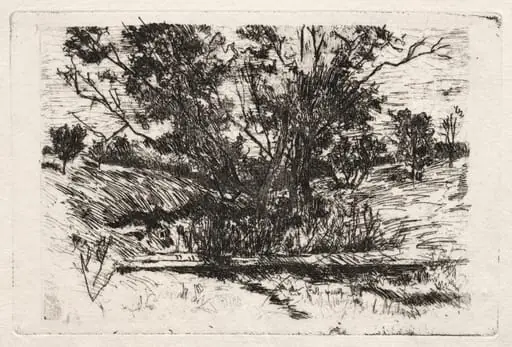 Landscape near Cincinnati
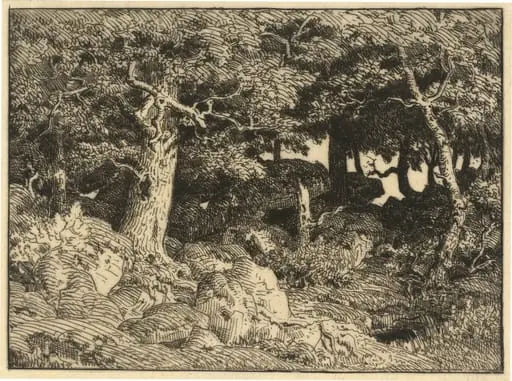 Chenes de Roche (Rock Oaks)
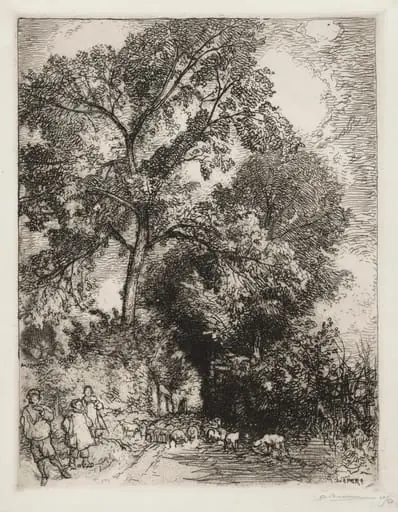 Le Retour du Troupeau, Crèvecoeur
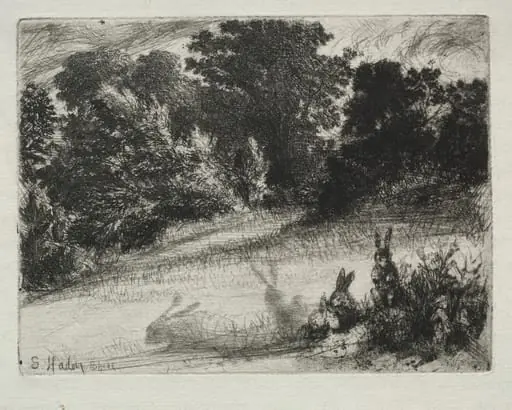 Combe Bottom
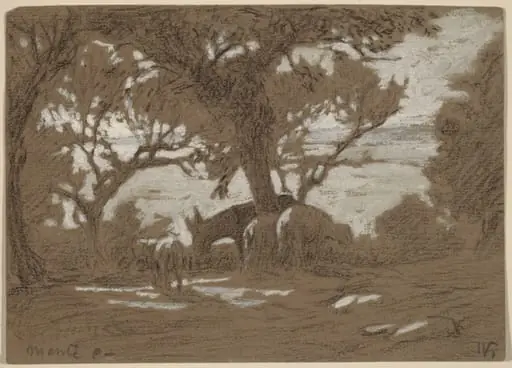 Mt. Colognola - Sheep Grazing on Lake Trasimeno
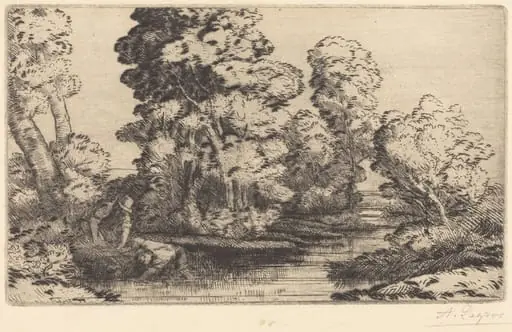 Valley in Bourgogne (Une vallee en Bourgogne)
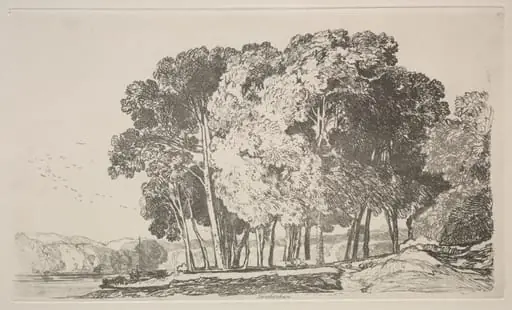 Liber Studiorum: Twickenham
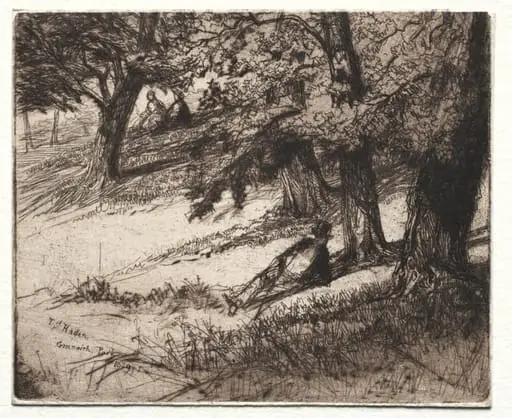 Sub Tegmine
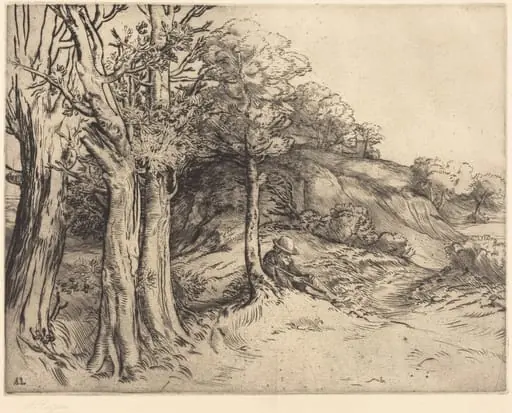 Solitude (Solitude (Paysage))
 Drowsing Cattle (Le Dormoir des vaches)
 Two Pigs