Artwork
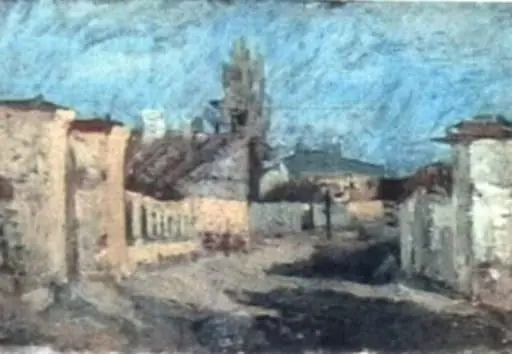
Clopotnița Bisericii Manea Brutarul
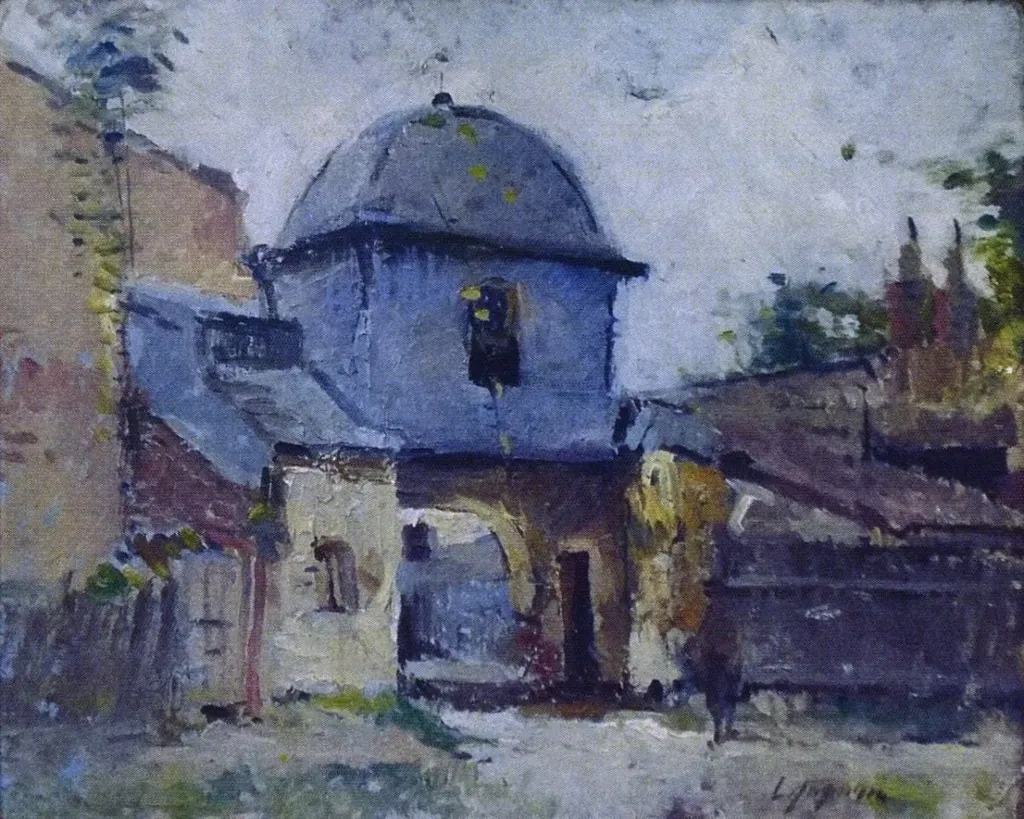
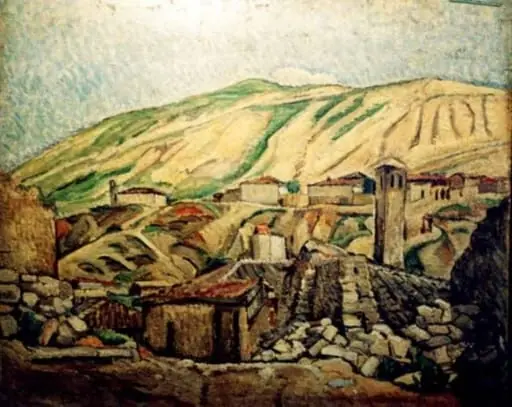
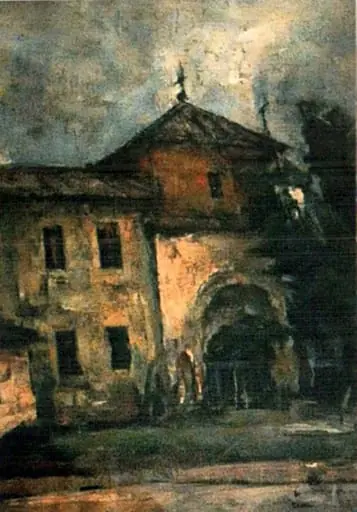
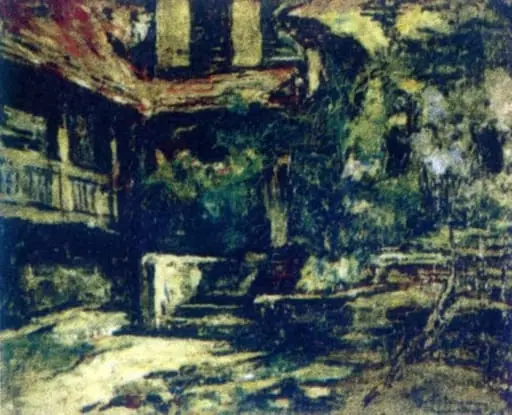
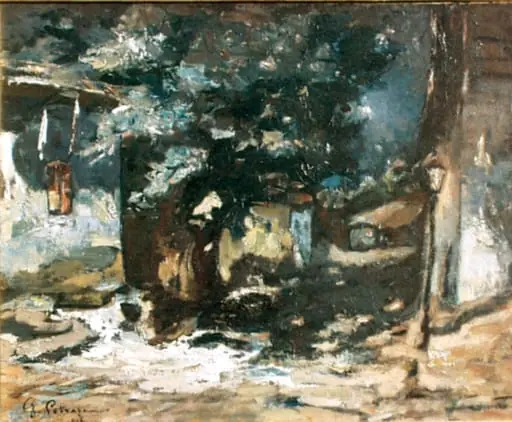
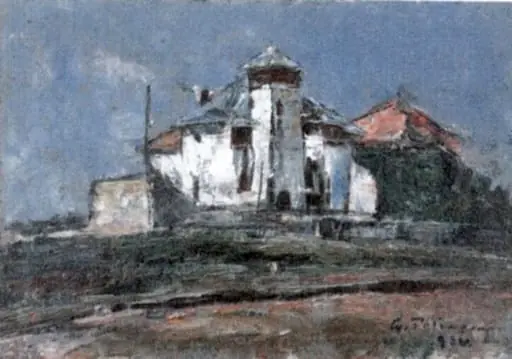
Clopotnița Bisericii Manea Brutarul is a print by Lucian Grigorescu. It dates from 1939 and is held in the collection of the Bucharest Municipality Museum.
About this work
Overview
The piece resides in the Museum of Ethnography, reflecting its cultural rather than purely aesthetic significance within Romanian artistic heritage.
Painted around 1939 by Romanian artist Lucian Grigorescu, this work depicts the bell tower of a modest church in a rural setting. Executed in a post-impressionist style, the painting emphasizes texture and atmosphere over precise detail. Its muted palette and loose brushwork convey a sense of quiet endurance. The piece resides in the Museum of Ethnography, reflecting its cultural rather than purely aesthetic significance within Romanian artistic heritage.
Subject & Meaning
The subject is a weathered church bell tower, likely drawn from Grigorescu’s observations of village architecture in Romania. The structure, with its rounded dome and dark entrance, suggests a place of communal and spiritual life. The faint figure on the right may imply human presence or ritual activity, grounding the scene in everyday rural existence. The painting avoids idealization, instead honoring the quiet dignity of vernacular religious architecture.
Technique & Style
Grigorescu employed loose, expressive brushwork to suggest form rather than define it. Colors are subdued—grays, browns, and muted greens—enhancing the sense of age and weathering. The dome and walls are rendered with textured strokes that evoke stone and time. A faint red accent draws attention without disrupting the somber tone. The overall effect is deliberately unpolished, aligning with post-impressionist tendencies to prioritize emotional resonance over realism.
History & Provenance
Created in 1939, the painting entered the collection of the Museum of Ethnography in Romania, where it remains today. Grigorescu, who became a corresponding member of the Romanian Academy in 1948, was recognized for his focus on national themes during a period of cultural consolidation. The work’s preservation in an ethnographic institution underscores its role as a document of rural Romanian life rather than a purely decorative object.
Context
In late 1930s Romania, artists increasingly turned to local subjects as part of a broader movement to define a national identity. Grigorescu’s focus on modest ecclesiastical architecture reflected this trend, contrasting with urban modernism. The painting’s unadorned realism resonated with a cultural climate that valued authenticity and continuity with folk traditions, especially amid political upheaval and shifting national priorities.
Legacy
Though not widely exhibited beyond Romania, the painting contributes to an understanding of Grigorescu’s role in documenting rural life through art. Its placement in the Museum of Ethnography signals its value as cultural record. The work exemplifies how post-impressionist techniques were adapted to capture the quiet permanence of traditional structures, influencing later generations interested in regional identity and material heritage.
Artist & collection
Artist
Lucian Grigorescu (Romanian pronunciation: ; 1 February 1894, Medgidia – 28 October 1965, Bucharest) was a Romanian post-impressionist painter.