Artwork
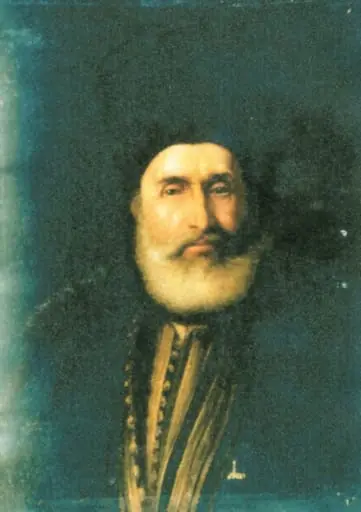
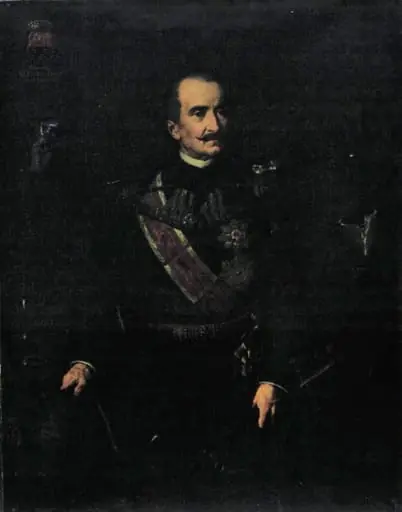
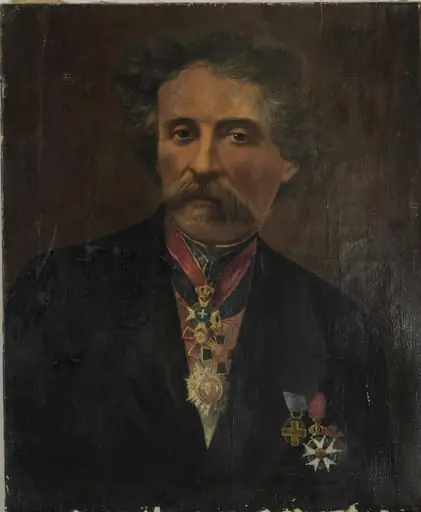
Portretul Generalului Magheru
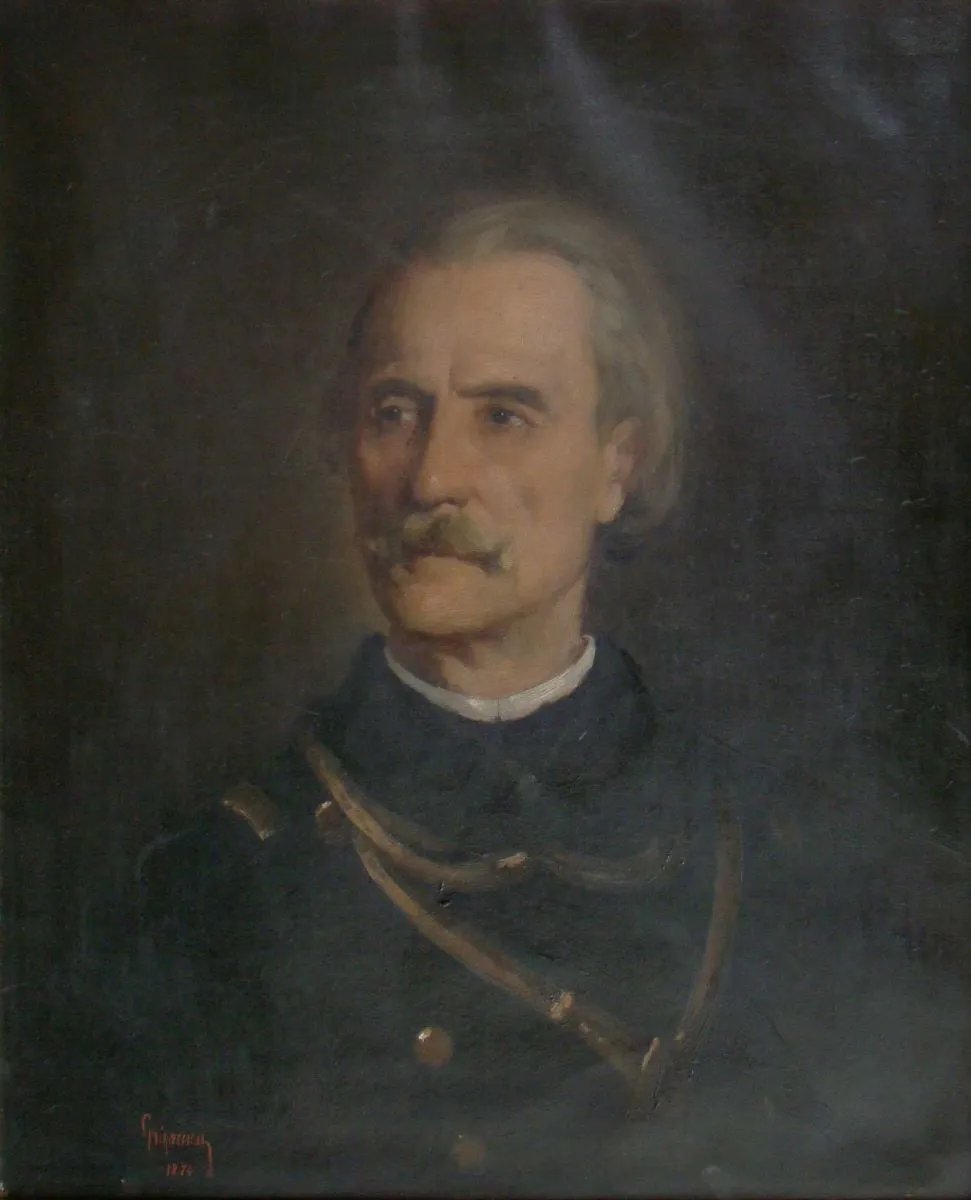
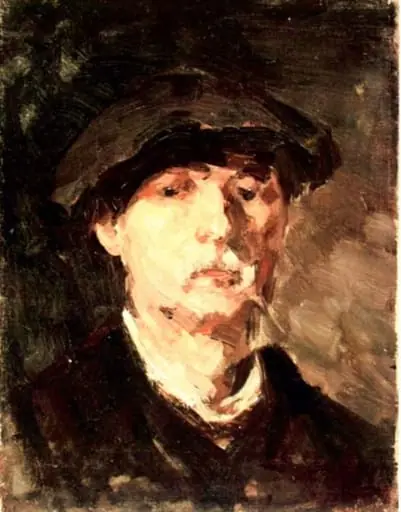
Portretul Generalului Magheru is a print by the Academic Art artist Nicolae Grigorescu. It dates from 1870 and is held in the collection of the Iulian Antonescu Bacău Museum Complex.
About this work
Overview
Rendered in oil on canvas, it reflects Grigorescu’s early engagement with realistic portraiture before his later association with Impressionist techniques.
Painted in 1870 by Nicolae Grigorescu, this portrait depicts General Magheru, a Romanian military figure. The work is part of the collection at the Museum of Ethnography in Bucharest. Rendered in oil on canvas, it reflects Grigorescu’s early engagement with realistic portraiture before his later association with Impressionist techniques. The composition emphasizes the subject’s presence through controlled lighting and restrained color.
Subject & Meaning
The subject, General Magheru, is portrayed in formal military attire, suggesting his rank and public role. His stern gaze and composed posture convey authority and solemnity, typical of 19th-century military portraiture. The absence of symbolic elements or elaborate settings directs focus to the individual’s character, reflecting a shift toward psychological realism in Romanian art of the period.
Technique & Style
Grigorescu employs a muted palette dominated by dark tones, with subtle highlights on the gold trim and white collar to define form. Brushwork is precise yet fluid, capturing texture in fabric and hair without overt detail. The dark background isolates the figure, enhancing spatial depth. While not impressionistic, the painting shows an emerging sensitivity to light and surface that would later define his mature style.
History & Provenance
The painting was completed in 1870, during Grigorescu’s formative years as a portraitist. It entered the Museum of Ethnography’s collection in the early 20th century, likely through state acquisition or donation. Its preservation in an ethnographic institution, rather than a fine arts museum, reflects its historical significance as a document of national military identity rather than purely aesthetic value.
Context
Created shortly after Romania’s independence from Ottoman influence, the portrait aligns with a broader cultural project of constructing national heroes. Military figures like Magheru were visual symbols of sovereignty and discipline. Grigorescu, though later linked to Impressionism, here adheres to academic conventions, bridging traditional portraiture and emerging modern sensibilities in Romanian art.
Legacy
Though not among Grigorescu’s most widely exhibited works, the portrait remains a key example of his early realism. It illustrates the transition in Romanian painting from formal academic representation toward more personal, light-sensitive approaches. Its presence in an ethnographic context underscores its role as a historical artifact, preserving the image of a figure tied to Romania’s nation-building era.
Artist & collection

Artist
Nicolae Grigorescu was one of the founders of modern Romanian painting. He is considered by Romanians the greatest Romanian painter, and one of the founders of modern Romanian art. He is most known for paintings…
Museum
Iulian Antonescu Bacău Museum Complex
Continue through works from the same source collection.