Artwork
Die Boxer (The Boxers) from Deutsche Graphiker der Gegenwart (German Printmakers of Our Time)
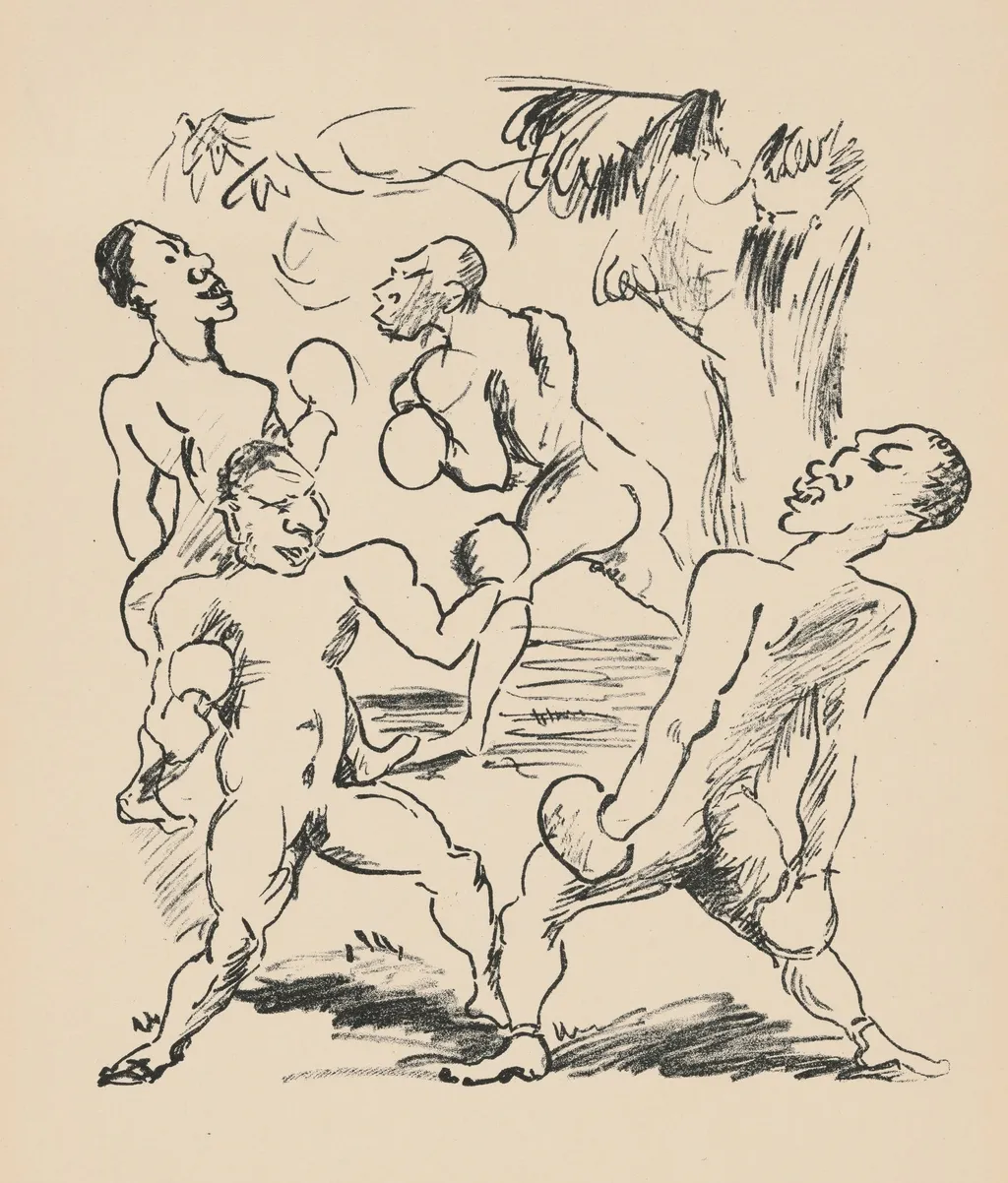
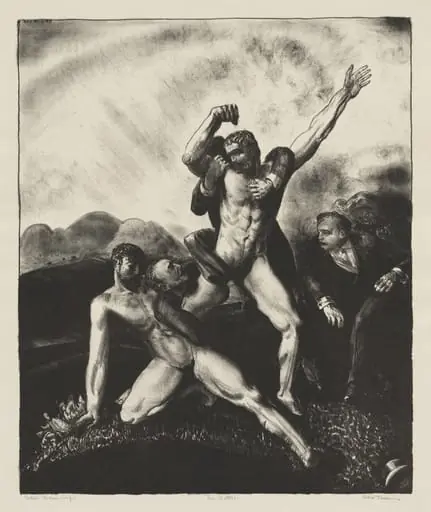
Die Boxer (The Boxers) from Deutsche Graphiker der Gegenwart (German Printmakers of Our Time) is an ink print by Rudolf Grossman. It dates from 1920 and is held in the collection of the National Gallery of Art.
About this work
Overview
Rudolf Grossman’s lithograph titled Die Boxer, produced in 1920, appears in the collective volume Deutsche Graphiker der Gegenwart, a survey of contemporary German printmaking. The work is a single sheet among fifteen lithographs, eight woodcuts, eight photomechanical reproductions, and a drypoint that together illustrate the range of techniques employed by German artists of the period.
Subject & Meaning
One figure leans forward, another crouches with arms raised as if defending, while the remaining two engage in a push‑and‑pull gesture reminiscent of wrestling.
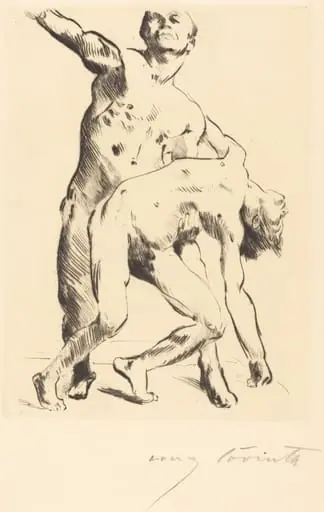
The image presents four unclothed male figures tangled in a compact, chaotic formation. One figure leans forward, another crouches with arms raised as if defending, while the remaining two engage in a push‑and‑pull gesture reminiscent of wrestling. The stark nudity and physicality foreground the raw, bodily struggle without narrative detail, inviting contemplation of human exertion and confrontation.
Technique & Style
Executed as a lithograph, the work relies on a greasy medium applied to a limestone surface, then transferred to paper under pressure. Grossman’s handling is rapid and expressive: uneven, scratchy lines capture the immediacy of movement, and the forms are rendered with minimal detailing, emphasizing gesture over anatomical precision. The print’s edges suggest the figures nearly escape the paper’s limits.
History & Provenance
Die Boxer was first circulated as part of the 1920 publication Deutsche Graphiker der Gegenwart, which documented the output of leading German printmakers. The volume was issued as a bound collection, serving both as a reference for contemporary practice and as a showcase for Grossman’s contribution to the medium. Its provenance remains tied to the original edition of the book.
Context
The early 1920s in Germany saw a surge of interest in expressive figuration and the exploration of the human body as a site of artistic investigation. Grossman’s lithograph aligns with this trend, reflecting the broader modernist fascination with movement, physicality, and the abstraction of form that characterized the Weimar Republic’s visual culture.
Legacy
While not widely reproduced beyond its initial publication, Die Boxer stands as a representative example of the experimental lithographic approaches of its era. It illustrates how German printmakers employed the medium to convey immediacy and dynamism, influencing subsequent generations of artists interested in gestural drawing and the depiction of the human form.
Artist & collection