Artwork
The Marco Brothers
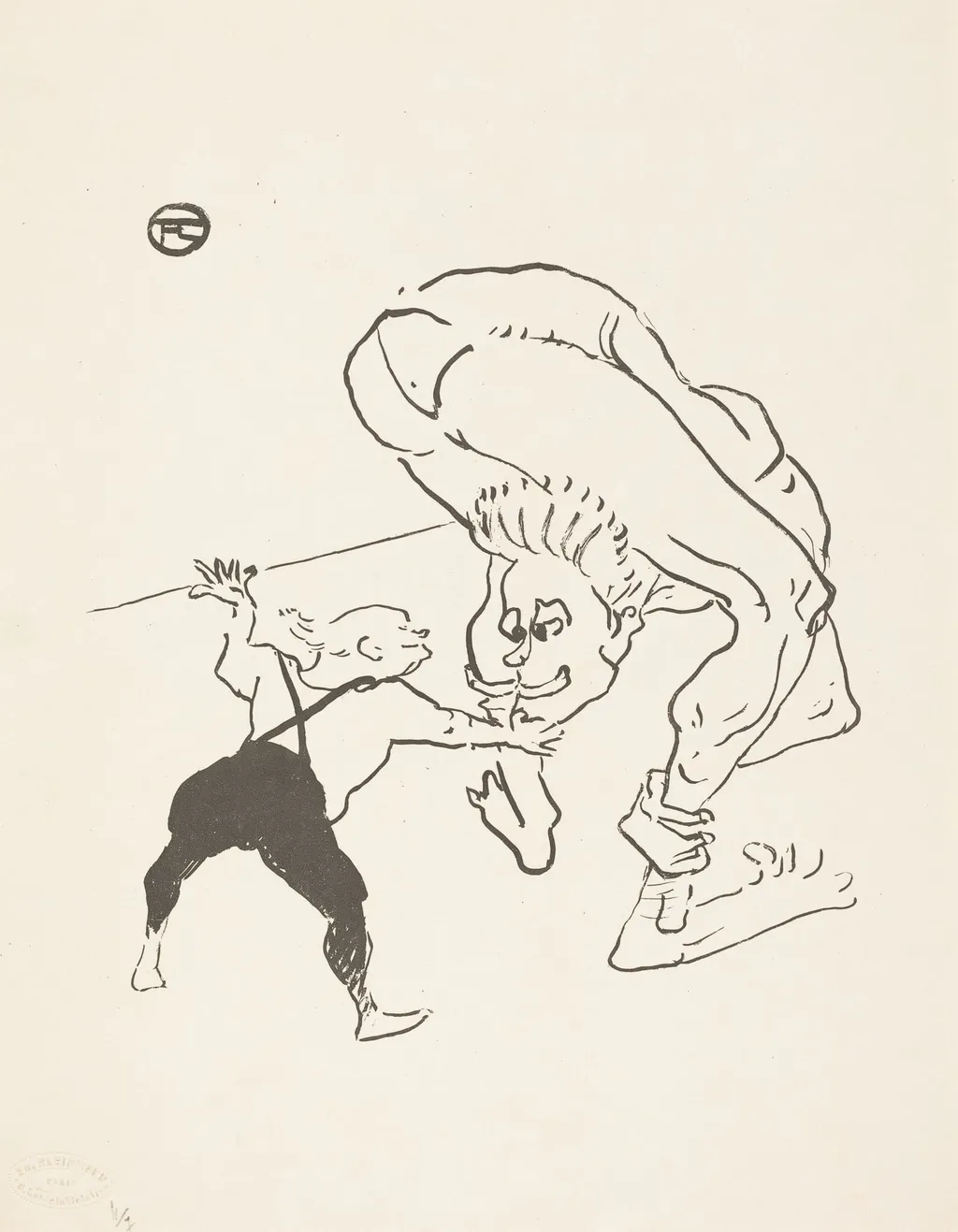
The Marco Brothers is a print by the Impressionist artist Henri de Toulouse-Lautrec. It dates from 1895 and is held in the collection of the National Gallery of Art.
About this work
Overview
His use of photomechanical reproduction allowed for wider distribution of his imagery, aligning with the era’s growing print culture.
Created in 1895, *The Marco Brothers* is a photomechanical print by Henri de Toulouse-Lautrec. It captures a moment from a circus performance, depicting two acrobats in a balancing act. The work reflects Lautrec’s interest in urban entertainment and his technical experimentation beyond traditional painting. His use of photomechanical reproduction allowed for wider distribution of his imagery, aligning with the era’s growing print culture.
Subject & Meaning
The print portrays the Marco Brothers, a real circus act, mid-performance: one acrobat balances inverted atop the other, who supports him by gripping his legs. Their focused expressions convey the discipline required in their act, devoid of theatrical flourish. Lautrec presents them not as spectacle but as laborers of physical skill, emphasizing the quiet intensity behind their performance rather than its entertainment value.
Technique & Style
Lautrec employed a photomechanical process to translate his drawing into a printed format, enabling mass reproduction. The image relies on stark black-and-white contrasts, simplified contours, and flattened forms. Bold, unmodulated lines define the figures’ strained postures, stripping away detail to highlight movement and tension. This approach echoes his broader stylistic preference for graphic clarity over naturalistic rendering.
History & Provenance
The print emerged during a period when Lautrec was deeply engaged with Parisian popular entertainment, producing numerous works on circus, cabaret, and theater subjects. While specific early ownership records are limited, *The Marco Brothers* was likely part of a series of prints distributed through commercial channels. Its production coincided with his increasing focus on printmaking as a medium for public engagement.
Context
In 1890s Paris, circuses and music halls were accessible forms of entertainment for diverse social classes. Lautrec, who moved among these spaces despite his aristocratic background, documented performers with empathy and precision. His interest in physicality and movement aligned with broader cultural fascinations with the human body, athleticism, and the boundaries of performance during the fin de siècle.
Legacy
Lautrec’s prints, including *The Marco Brothers*, helped redefine the artistic potential of commercial reproduction. By elevating everyday performers to the subject of fine art prints, he blurred distinctions between high and popular culture. His graphic style influenced later illustrators and modernist printmakers, establishing a precedent for depicting modern life with immediacy and structural clarity.
Artist & collection
Artist
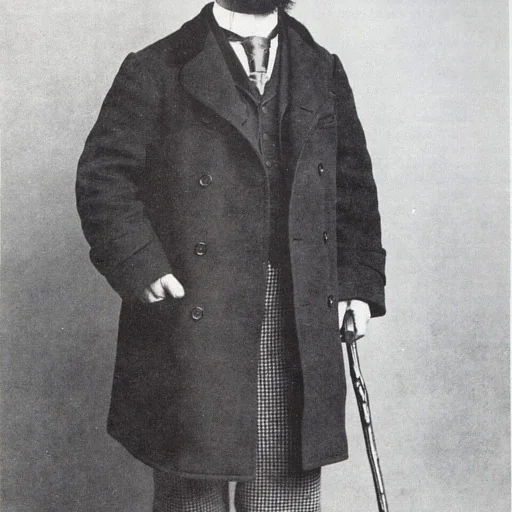
Comte Henri Marie Raymond de Toulouse-Lautrec-Montfa (24 November 1864 – 9 September 1901), known as Toulouse-Lautrec (French: ), was a French painter, printmaker, draughtsman, caricaturist, and illustrator.

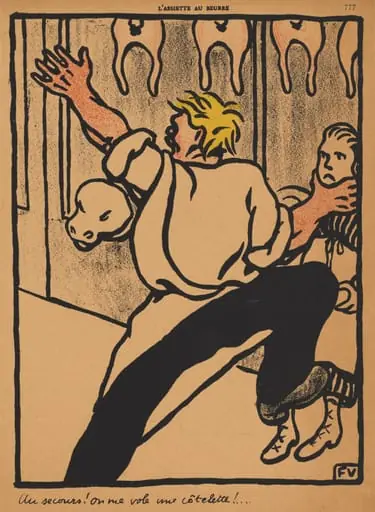 Help! My cutlet's being stolen!
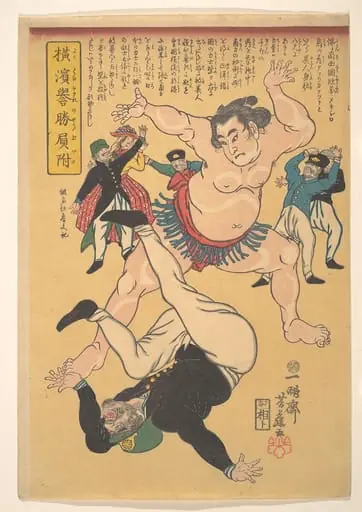 Untitled
 Untitled
 For You (Pour toi!...)
 For You (Pour toi!...)
 Die Boxer (The Boxers) from Deutsche Graphiker der Gegenwart (German Printmakers of Our Time)
 Sumo no homane|Sumo Wrestler Tossing a Foreigner
 高根山与一右ェ門 千田川吉五郎|The Sumo Wrestlers Takaneyama Yoichiemon and Sendagawa Kichigorō
 Untitled
![Footit and Chocolat (Footit et Chocolat) [left recto], by Henri de Toulouse-Lautrec](https://artifactworldgallery.com/img/henri-de-toulouse-lautrec--footit-and-chocolat-footit-et-chocolat-left-recto--e53f6cbbcfb0ed69-w320.webp) Footit and Chocolat (Footit et Chocolat) [left recto]
Footit and Chocolat (Footit et Chocolat) [left recto]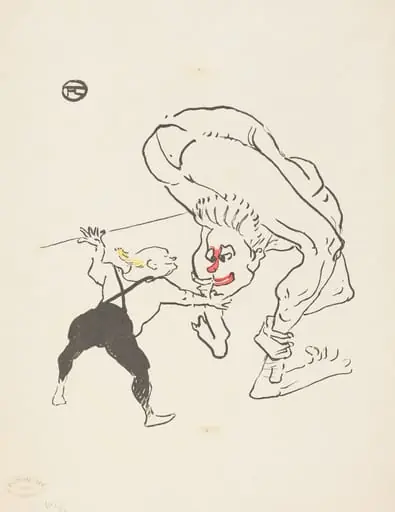 The Marco Brothers
 Man and Woman