Artwork
The Dance of the Muses
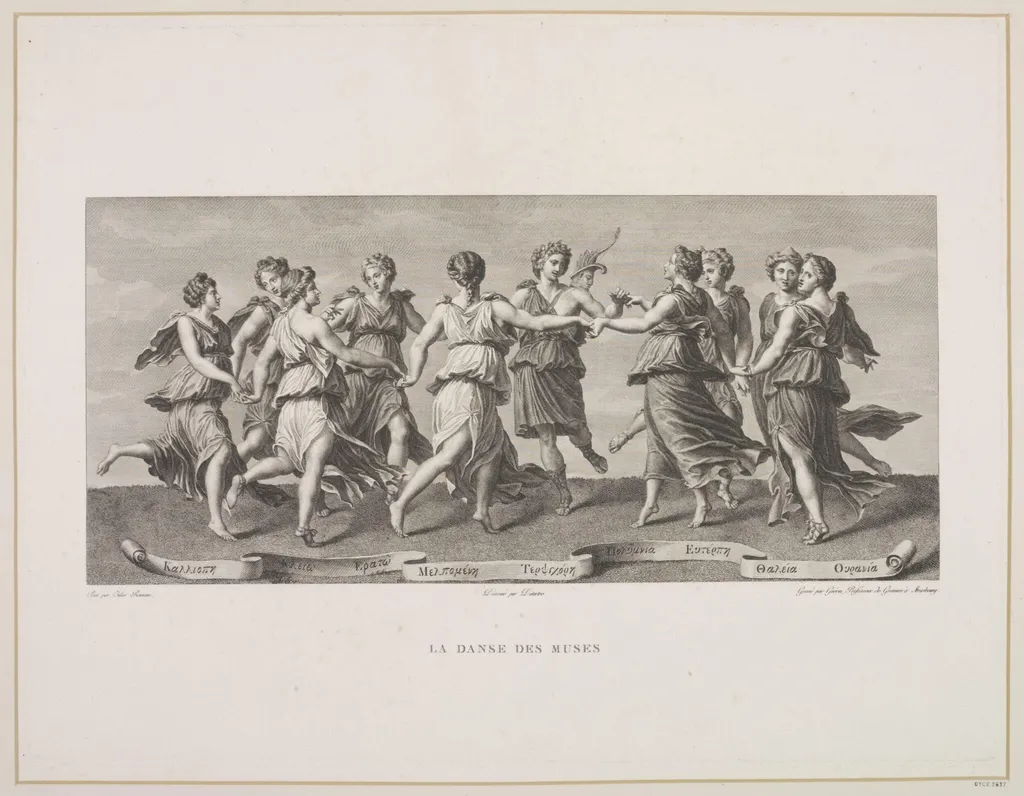
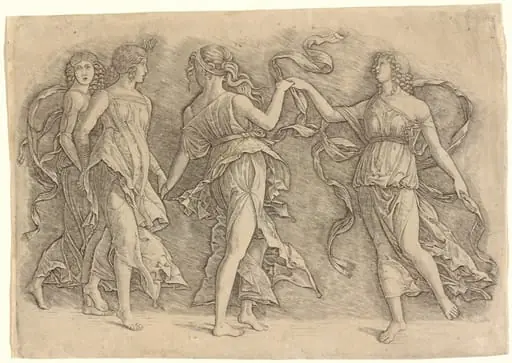
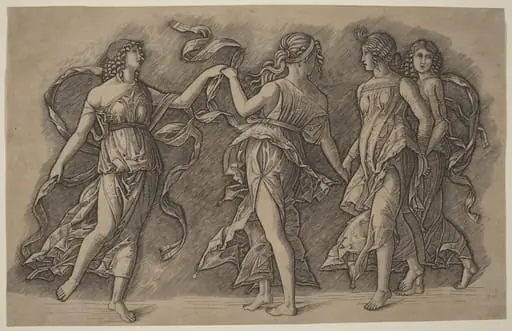
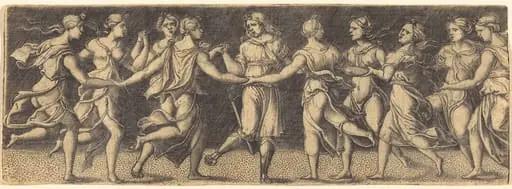
The Dance of the Muses is a print by Christophe Guerin. It is held in the collection of the Victoria and Albert Museum. Christophe Guérin created this print as a reproductive work after a design by Giulio Romano.
About this work
Overview
Executed on paper, it depicts a circular procession of nine figures, each representing one of the Greek Muses.
Christophe Guérin created this print as a reproductive work after a design by Giulio Romano. Executed on paper, it depicts a circular procession of nine figures, each representing one of the Greek Muses. The composition is framed by a minimalist sky and open ground, emphasizing the figures’ movement and unity. Inscriptions at the base identify each Muse by name and confirm the title in French: *La Danse des Muses*.
Subject & Meaning
The nine figures are personifications of the Muses from Greek mythology, goddesses who preside over the arts and sciences. Each is distinguished by subtle attributes—wreaths, wings, or gestures—reflecting their individual domains. Their synchronized dance symbolizes harmony among creative disciplines. The central figure holding a staff may signify inspiration or authority, anchoring the group’s collective purpose in a timeless, ritualistic gesture.
Technique & Style
Guérin employed line-based engraving to render the figures with fluid, rhythmic contours. The robes flow in soft, undulating folds, suggesting motion without heavy shading. Backgrounds are deliberately sparse, with no architectural or landscape elements to distract from the dancers. The absence of color and the focus on linear grace reflect the conventions of 18th-century reproductive printmaking, prioritizing clarity and classical elegance.
History & Provenance
The print derives from a lost composition by Giulio Romano, a Renaissance artist known for his Mannerist style. Guérin, active in the late 1700s, translated Romano’s design into an engraved plate for wider dissemination. Such prints were often circulated among collectors and artists as models of classical composition. The work’s survival in museum collections, including the Victoria and Albert Museum, attests to its role in preserving Renaissance imagery through print culture.
Context
In the 18th century, interest in classical antiquity fueled the reproduction of ancient themes in decorative arts and prints. Guérin’s work aligns with a broader European trend of reviving mythological subjects to elevate artistic taste. The choice of the Muses reflects Enlightenment ideals linking culture, knowledge, and aesthetic order. This print served both as an artistic reference and a cultural artifact, bridging Renaissance invention and Neoclassical sensibility.
Legacy
Though not widely known today, the print remains a documented example of how Renaissance compositions were reinterpreted in print form during the Enlightenment. It contributes to the study of artistic transmission across centuries and mediums. Its preservation in institutional collections ensures continued access for scholars examining the evolution of mythological representation in European visual culture.
Artist & collection
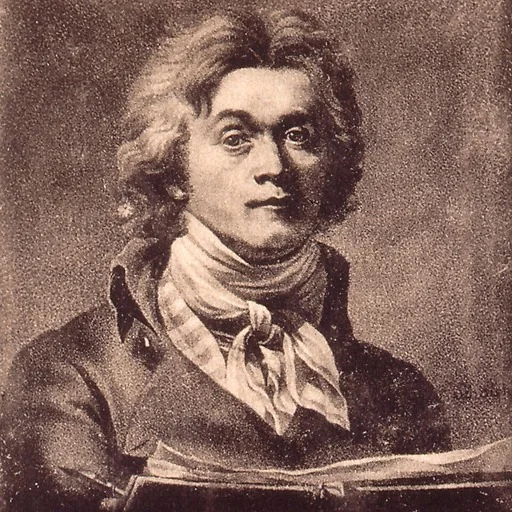
Artist
Christophe Guérin (French pronunciation: ; 1758–1831) was a French engraver and painter. He is notable for his engravings and his reproductions of paintings by Raphael and Correggio.