Artwork
Apollo Dancing with the Nine Muses
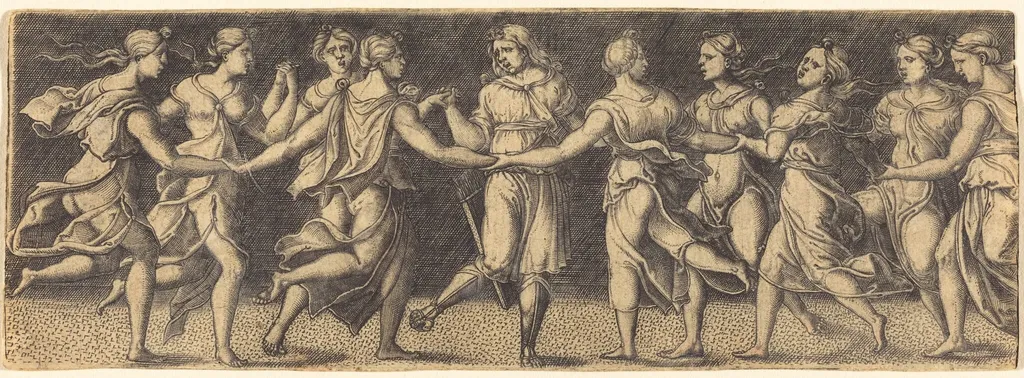
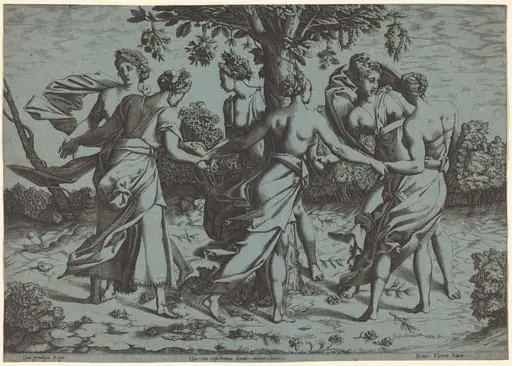
Apollo Dancing with the Nine Muses is an ink print by the Renaissance artist German 16th Century. It dates from 1550 and is held in the collection of the National Gallery of Art. This engraving depicts Apollo accompanied by the Nine Muses in a dynamic dance.
About this work
Overview
Executed in black ink on paper, the composition centers on a male figure holding a staff, surrounded by nine female figures in motion.
This engraving depicts Apollo accompanied by the Nine Muses in a dynamic dance. Executed in black ink on paper, the composition centers on a male figure holding a staff, surrounded by nine female figures in motion. The artist uses fine, intersecting lines to suggest movement and spatial depth, avoiding washes or color. The figures appear weightless, suspended in a rhythmic swirl, emphasizing the harmony between music, poetry, and divine inspiration.
Subject & Meaning
The scene represents Apollo, god of music and poetry, leading the Muses—goddesses of the arts—in a celestial dance. Each Muse embodies a different artistic discipline, and their collective motion symbolizes the unity of creative expression under divine guidance. The composition reflects classical ideals of order and harmony, where art is not merely performed but lived as a sacred, flowing ritual.
Technique & Style
The artist employed engraving, incising fine lines into a metal plate to transfer ink onto paper. By layering dense, cross-hatched strokes, he modeled form and shadow without relying on tone or color. The figures are rendered with fluid, rhythmic contours that mimic dance, while the background’s intricate web of lines creates a sense of atmospheric depth and motion, enhancing the illusion of floating bodies in space.
History & Provenance
The engraving likely dates to the late Renaissance or early Baroque period, when classical themes were frequently revisited in printmaking. Though the artist’s identity is not recorded here, similar works circulated among collectors and scholars who valued mythological subjects for their intellectual and aesthetic resonance. Its survival suggests it was part of a broader tradition of illustrated mythological series.
Context
During the 16th and 17th centuries, engravings of mythological scenes served as both artistic study tools and symbols of humanist learning. Apollo and the Muses were popular subjects in academic circles, representing the ideal fusion of reason and creativity. This print would have been appreciated not only for its visual elegance but also for its alignment with Renaissance ideals of cultural revival.
Legacy
This engraving exemplifies how printmaking extended classical imagery beyond painting and sculpture, making mythological narratives accessible to a wider audience. Its emphasis on line and movement influenced later illustrators and printmakers who sought to capture dynamism in static media. The work remains a quiet testament to the enduring power of myth as a framework for artistic expression.
Artist & collection

Artist
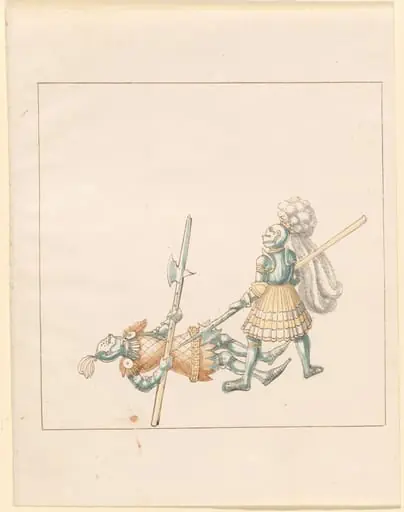
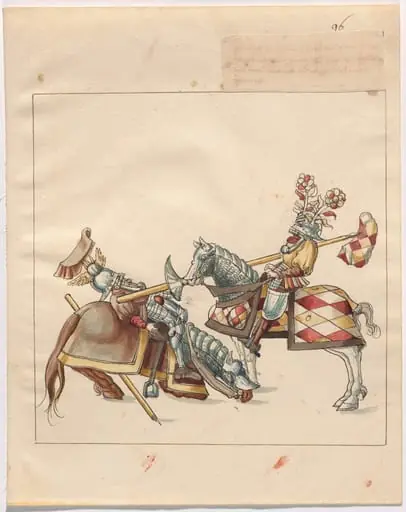
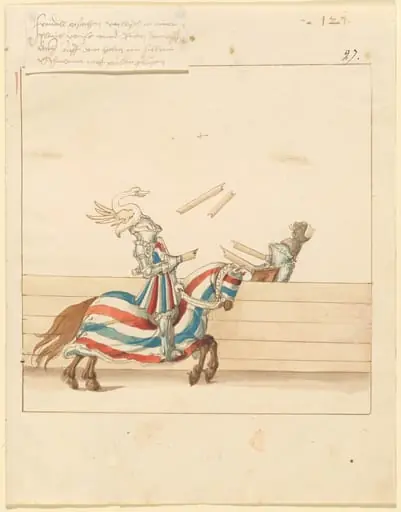
A German artist from the late 1500s drew lively scenes of knights clashing in parades and mock battles.

![Abraham Entertaining the Angels [verso], by German 16th Century](https://artifactworldgallery.com/img/german-16th-century--abraham-entertaining-the-angels-verso--69d1b25f4eba0a53-w320.webp)