Artwork
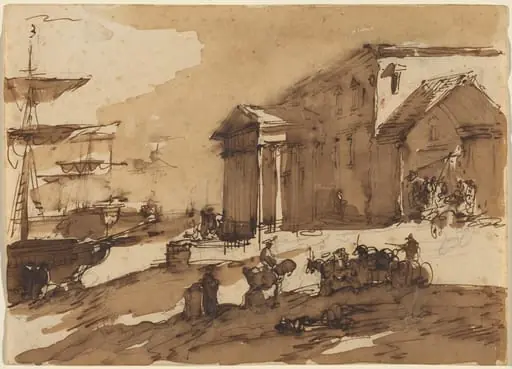
Venetian Capriccio with Boats Unloading (recto); Figures among Ruins (verso)
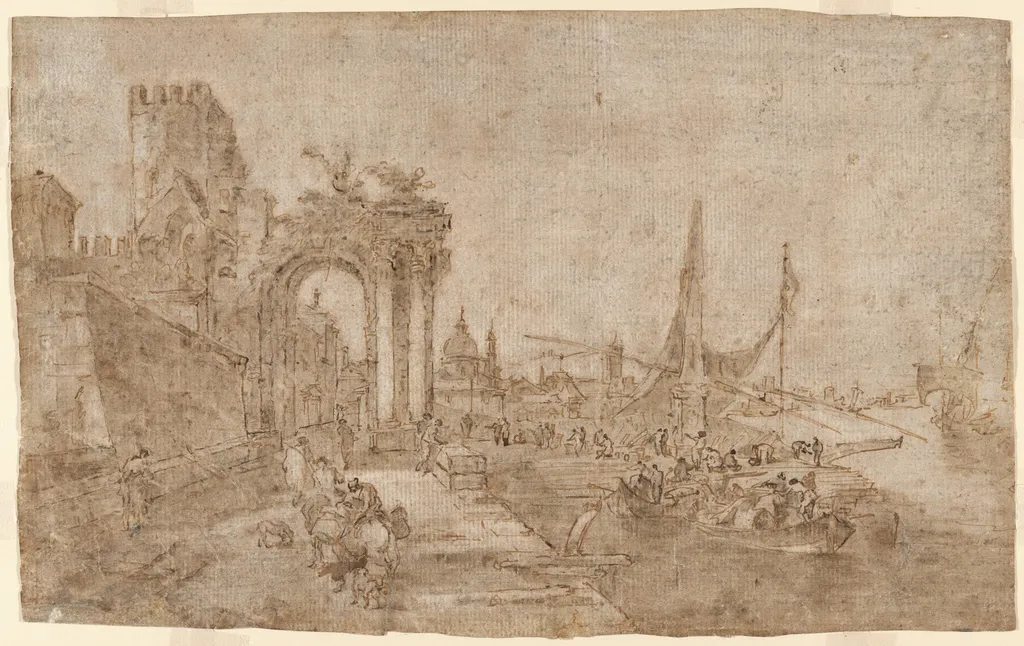
Venetian Capriccio with Boats Unloading (recto); Figures among Ruins (verso) is a chalk drawing by the Romanticist artist Francesco Guardi. It dates from 1770 and is held in the collection of the National Gallery of Art.
About this work
Overview
Executed in pen, ink, and wash over chalk, the work reflects Guardi’s shift from religious subjects to urban landscapes after his brother’s death.
Created around 1770, this double-sided drawing by Francesco Guardi captures two distinct yet related scenes: a lively Venetian harbor on the recto and a study of figures amid ruins on the verso. Executed in pen, ink, and wash over chalk, the work reflects Guardi’s shift from religious subjects to urban landscapes after his brother’s death. The loose, energetic handling suggests spontaneous observation, characteristic of his mature style.
Subject & Meaning
The recto portrays an imagined port where vessels unload cargo beneath a mix of real and invented architecture—domes, arches, and crumbling walls coexist without strict topographical accuracy. The scene evokes Venice’s commercial vitality but through a poetic lens, blending observed detail with imaginative liberty. The verso complements this with solitary figures wandering among ancient remains, suggesting contemplation of time and decay.
Technique & Style
Guardi employed black chalk for foundational forms, layered with pen and brown ink to define structure and shadow. Gray-brown washes unify the composition with a muted, atmospheric tone. Cross-hatching and fluid strokes convey movement in figures and water, while uneven ink application and smudged edges enhance the sense of immediacy and transience, distinguishing his approach from the precision of earlier vedutisti.
History & Provenance
The drawing emerged during Guardi’s most productive period as a veduta artist, following the decline of his brother Gian Antonio’s influence after 1760. It likely served as a preparatory study or personal exercise, not a commissioned work. Its survival in good condition reflects its value to later collectors, though its early ownership remains undocumented beyond its association with Venetian artistic circles.
Context
In late 18th-century Venice, the tradition of vedute was evolving from topographical record to emotional interpretation. Guardi’s work responded to a growing interest in atmosphere and mood over accuracy, aligning with broader European tastes for picturesque and romanticized views. His sketches, like this one, offered intimate alternatives to grand painted views, capturing fleeting moments of daily life.
Legacy
This drawing exemplifies Guardi’s role in redefining Venetian landscape drawing through expressive looseness and emotional resonance. His technique influenced later generations of artists seeking to convey atmosphere over detail, bridging 18th-century observation with 19th-century Romantic sensibilities. Though less celebrated than Canaletto, Guardi’s sketches remain vital for their quiet, humanized vision of the city.
Artist & collection
Artist
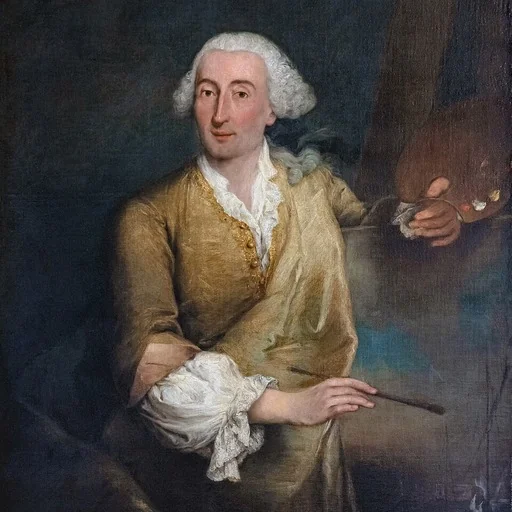
Francesco Lazzaro Guardi (Italian pronunciation: ; 5 October 1712 – 1 January 1793) was an Italian painter, nobleman, and a member of the Venetian School.

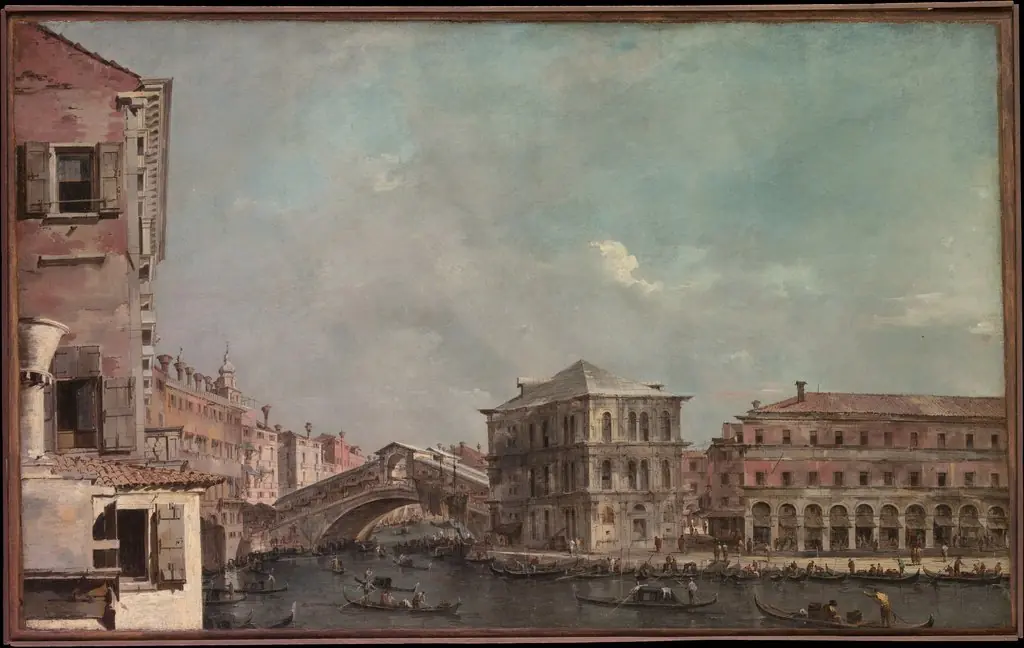
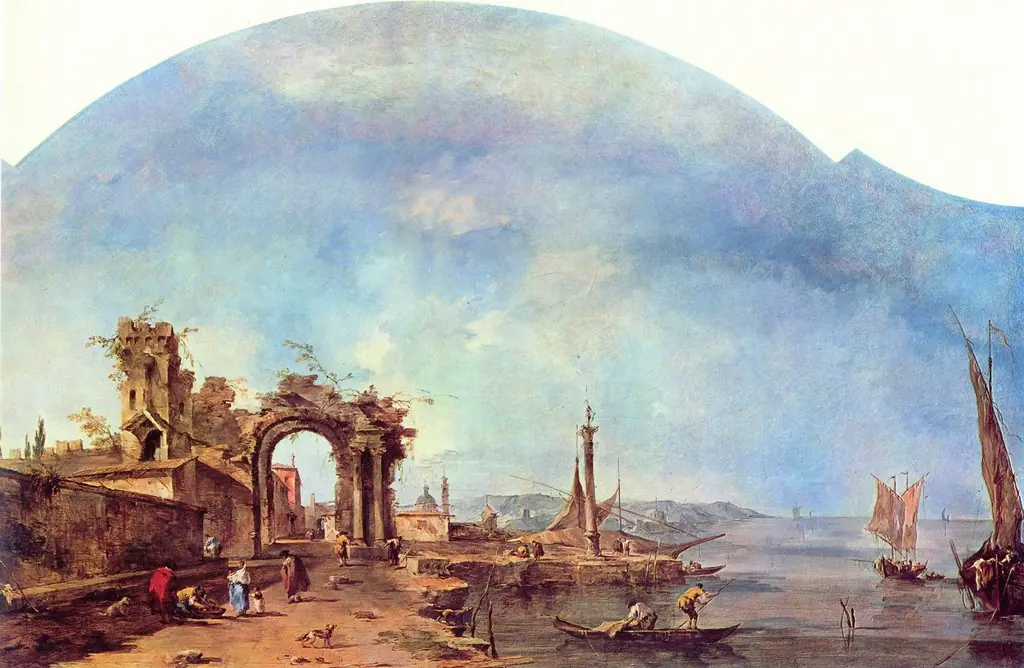
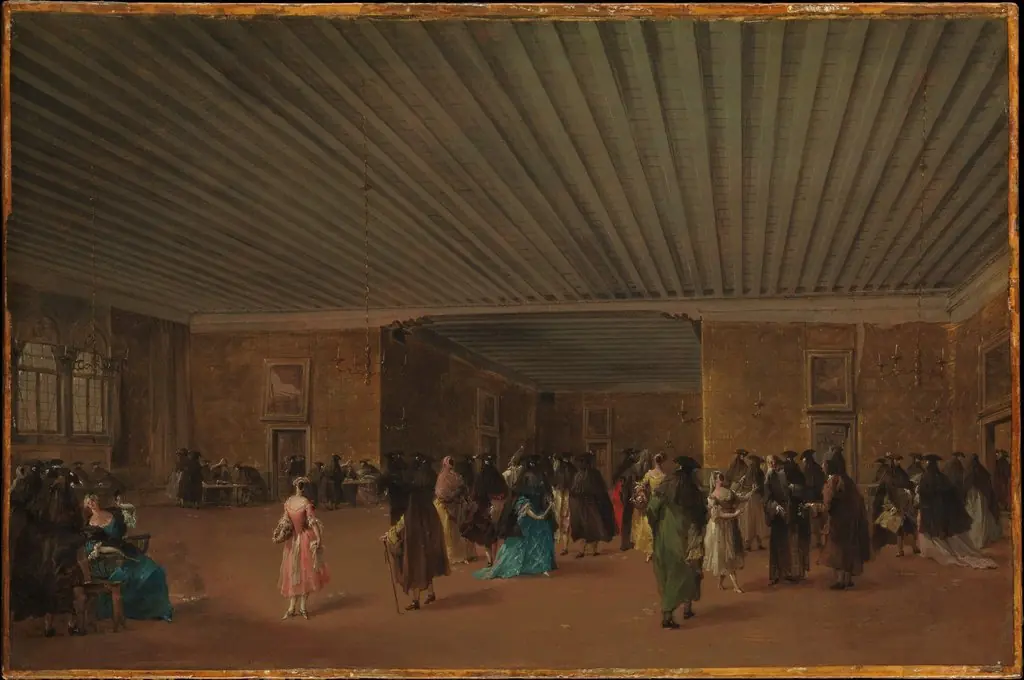
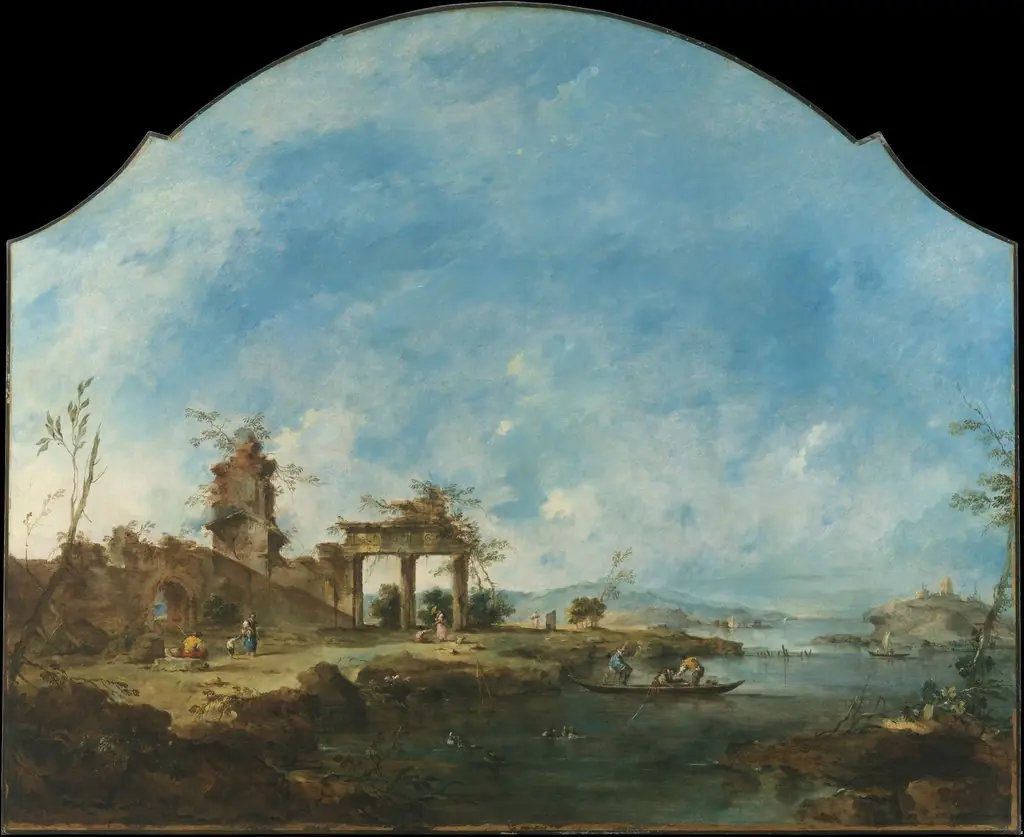
 Capriccio of a Port Scene
 Villa di Papa Giulio
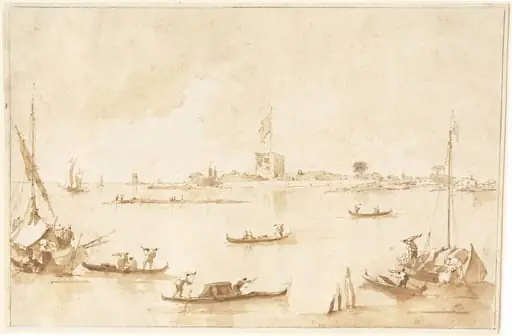 The Fortress of San Andrea from the Lagoon
![A Party in a Roman Villa [recto], by Pirro Ligorio](https://artifactworldgallery.com/img/pirro-ligorio--a-party-in-a-roman-villa-recto--46231d09a49584cb-w320.webp) A Party in a Roman Villa [recto]
A Party in a Roman Villa [recto]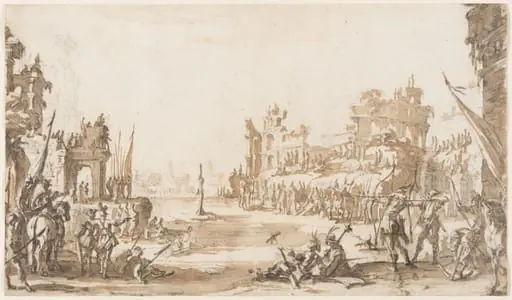 The Martyrdom of St. Sebastian
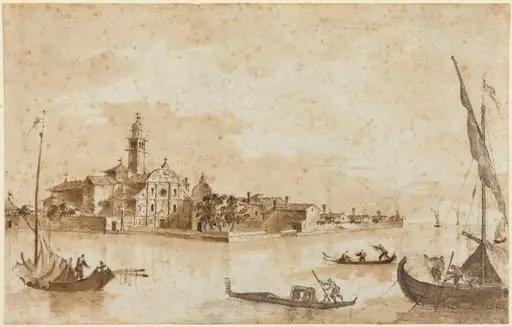 The Island of San Clemente
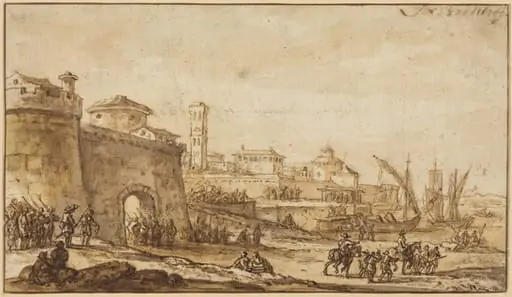 A Coastal Scene with a Fortified Town
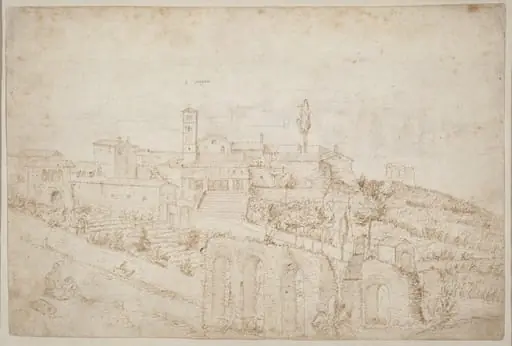 The Church of S. Gregorio Magno on the Celian Hill (verso)
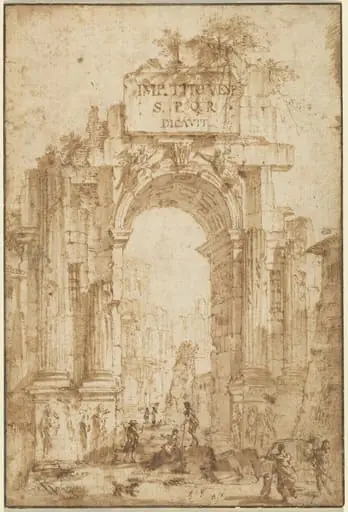 Arch of Titus
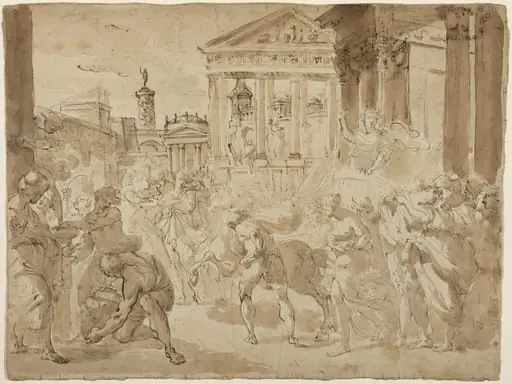 A Triumphal Procession in Ancient Rome