Artwork
The Church of S. Gregorio Magno on the Celian Hill (verso)
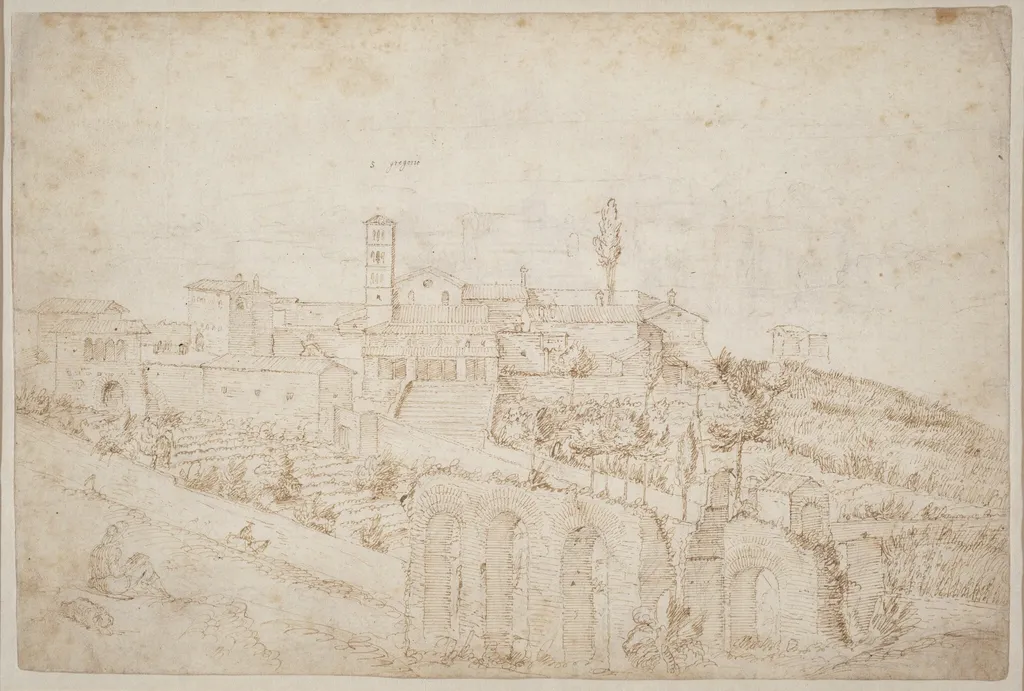
The Church of S. Gregorio Magno on the Celian Hill (verso) is a chalk drawing by the Renaissance artist Netherlandish 16th Century. It dates from 1553 and is held in the collection of the National Gallery of Art. This drawing depicts the Church of S.
About this work
Overview
This drawing depicts the Church of S. Gregorio Magno, situated on Rome’s Celian Hill. Rendered in pen and brown ink over black chalk, it captures the modest architecture of the church and its surroundings with precise, economical lines. The composition balances the built environment with the natural slope of the hill, emphasizing the quiet, unadorned character of the site.
Subject & Meaning
The work focuses on a specific Roman landmark, the Church of S. Gregorio Magno, presenting it as part of a broader landscape rather than an isolated structure. The winding path, low walls, and scattered vegetation suggest a lived-in space, where architecture and nature coexist. The drawing may reflect an interest in documenting lesser-known ecclesiastical sites within their topographical context.
Technique & Style
Executed in pen and ink over black chalk, the drawing employs fine, controlled lines to define forms and textures. Cross-hatching builds tonal variation, particularly in shadowed areas, while the underlying chalk provides a subtle structural foundation. The technique balances clarity with spontaneity, characteristic of studies intended for reference or preparatory purposes.
History & Provenance
The drawing’s origins remain tied to the study of Roman architecture, though its creator and early ownership are unrecorded.
The drawing’s origins remain tied to the study of Roman architecture, though its creator and early ownership are unrecorded. The yellowed paper and laid surface indicate age, placing it within a tradition of topographical sketches produced by artists or architects exploring the city’s historical sites. Its survival suggests it was preserved as a record of the church’s appearance at a particular moment.
Context
Such drawings were often created by artists or draftsmen traveling through Rome, documenting its religious and classical heritage. The Church of S. Gregorio Magno, with its early Christian roots, would have appealed to those interested in the city’s layered history. The sketch’s informality aligns with works intended for personal use rather than public display.
Legacy
While not a prominent work in art-historical narratives, this drawing contributes to the understanding of how artists engaged with Rome’s lesser-documented sites. It exemplifies the practice of on-site sketching, a method crucial for preserving visual records of buildings and landscapes before photography. Its value lies in its documentary precision and quiet observation.
Artist & collection

Artist
This artist carved scenes with fine lines, mostly religious and mythological ones.

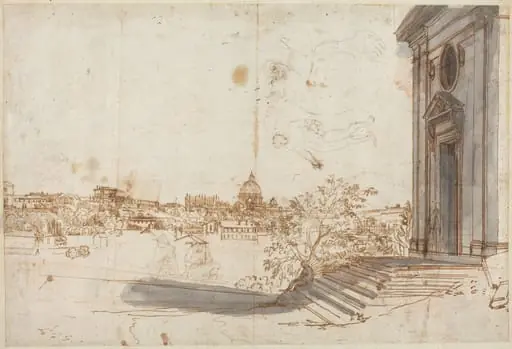 A View of Rome from Santa Maria del Priorato
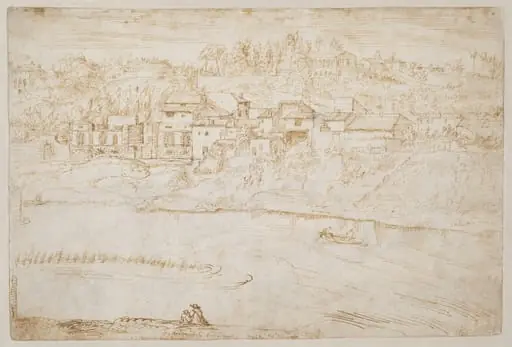 View of the Janiculum Hill Seen from the Tiber (recto)
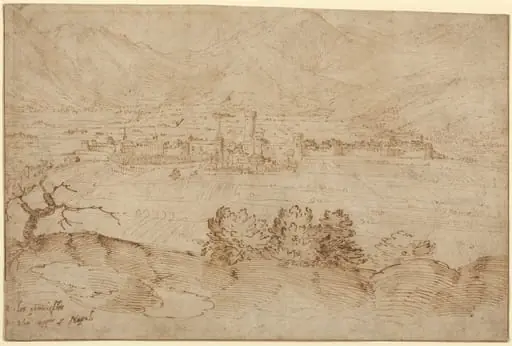 View of Fondi
![Village atop a River Cliff [recto], by Master of the Blue Landscapes](https://artifactworldgallery.com/img/master-of-the-blue-landscapes--village-atop-a-river-cliff-recto--7884484b10704852-w320.webp) Village atop a River Cliff [recto]
Village atop a River Cliff [recto]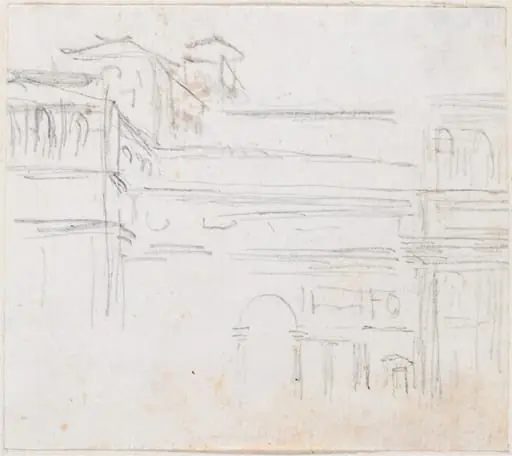 Villa Medici
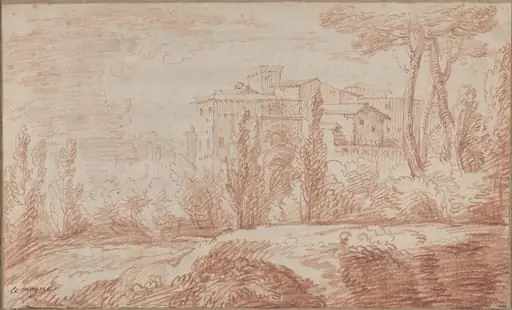 An Italian Walled Town Seen through Trees
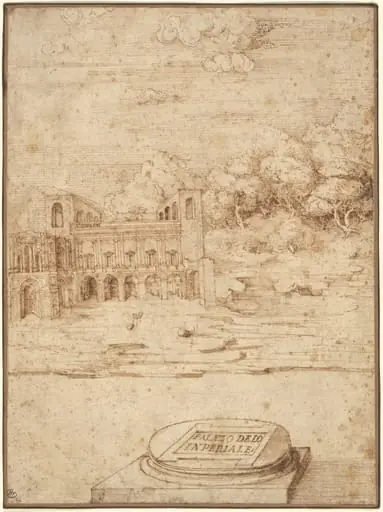 The Villa Imperiale
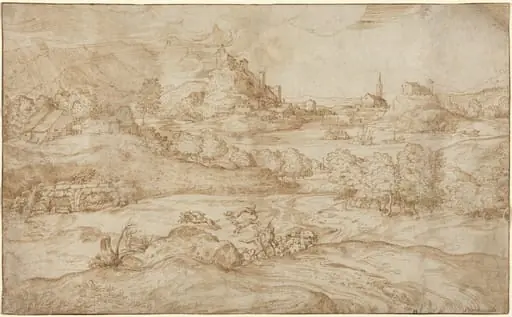 Landscape with Shepherds Driving Away a Wolf
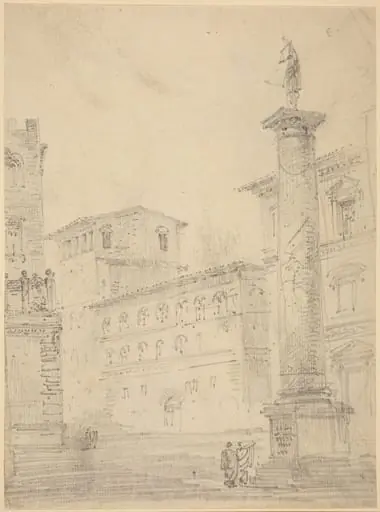 Figures on a Roman Piazza
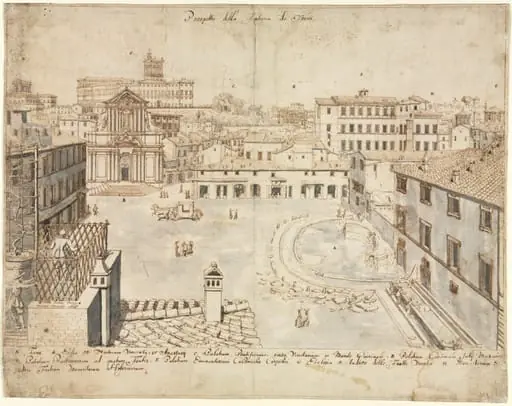 Eighteen Views of Rome: The Trevi Fountain