Artwork
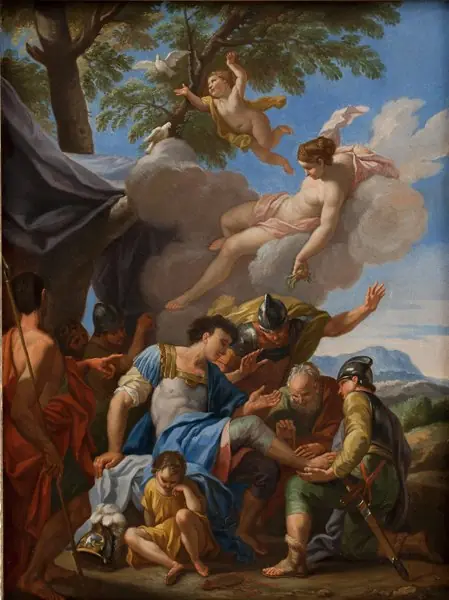
Erminia Finding the Wounded Tancred
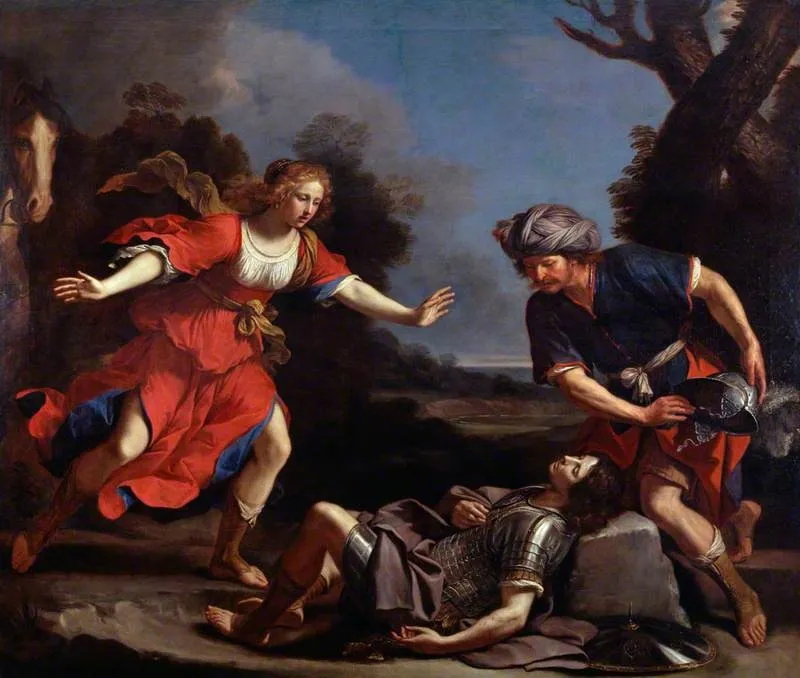
Erminia Finding the Wounded Tancred is an oil painting by the Early Baroque Italian artist Guercino. It dates from 1650 and is held in the collection of the National Galleries Scotland.
About this work
Overview
Created around 1650, this oil on canvas by the Italian painter Guercino portrays a dramatic encounter drawn from Torquato Tasso’s epic *Jerusalem Delivered*.
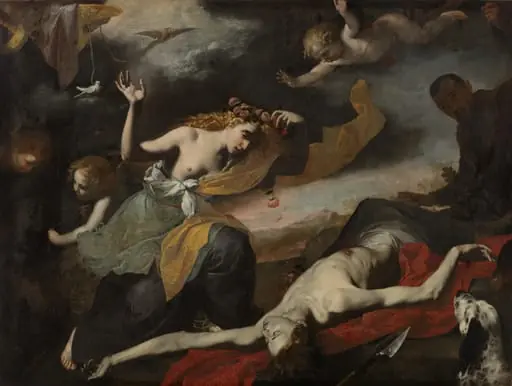
Created around 1650, this oil on canvas by the Italian painter Guercino portrays a dramatic encounter drawn from Torquato Tasso’s epic *Jerusalem Delivered*. The composition captures a moment of urgent movement: a woman in a flowing red garment rushes toward a fallen, armored knight, while another figure stands nearby holding a helmet. The scene is set against a landscape of trees beneath a sky mottled with clouds, rendered with careful attention to light and shade.
Subject & Meaning
The narrative illustrates the episode in which the Saracen princess Erminia discovers the wounded Christian warrior Tancred on the battlefield. Erminia’s swift approach, indicated by the billowing dress, conveys compassion and urgency, while the presence of the second man suggests the chaos of combat. The work reflects the literary theme of chivalric rescue and the tension between opposing cultures that Tasso explored in his poem.
Technique & Style
In this later period of his career, Guercino balances the vigorous naturalism of his early work with a more measured, classical compositional order. The painting employs chiaroscuro to model the figures, allowing the illuminated flesh and armor to emerge from a darker foreground. Fine brushwork delineates the textures of fabric, metal, and foliage, while the overall palette of reds, earth tones, and muted blues creates depth and a sense of controlled drama.
History & Provenance
The canvas entered the collection of the Scottish National Gallery, where it remains on public display. Guercino, active in Cento, Rome, and Bologna, produced several versions of the Erminia‑Tancred episode, indicating the subject’s popularity among his patrons. The painting’s provenance traces back to 17th‑century Italian collections before its acquisition by the museum in the early 20th century.
Context
The work belongs to the early Italian Baroque, a period marked by heightened emotional expression and dynamic movement. Guercino’s choice of a literary source aligns with contemporary trends of illustrating epic poetry, while his evolving style mirrors a broader shift toward classical restraint that many Baroque artists adopted in the mid‑17th century.
Artist & collection
Artist
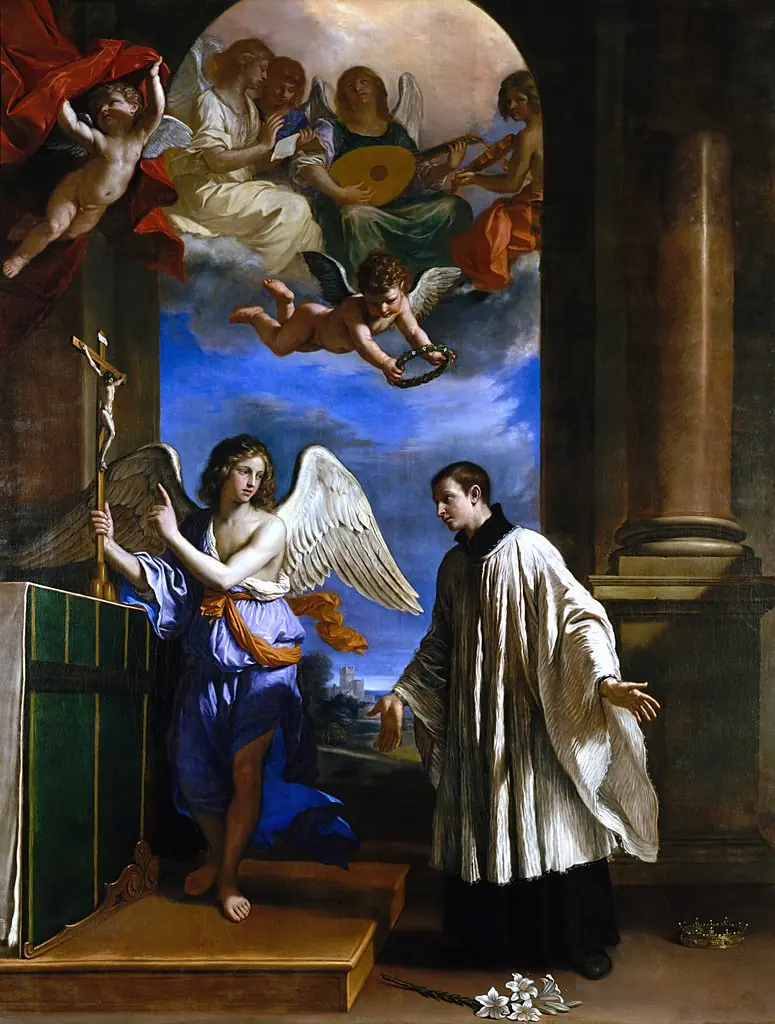
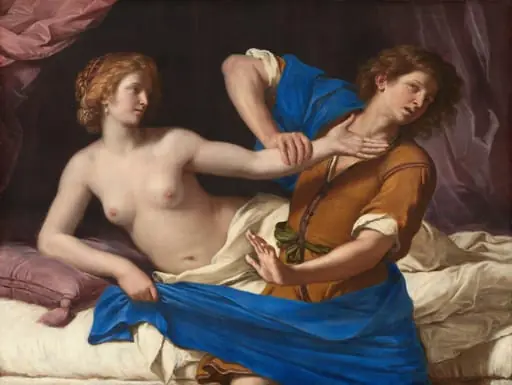
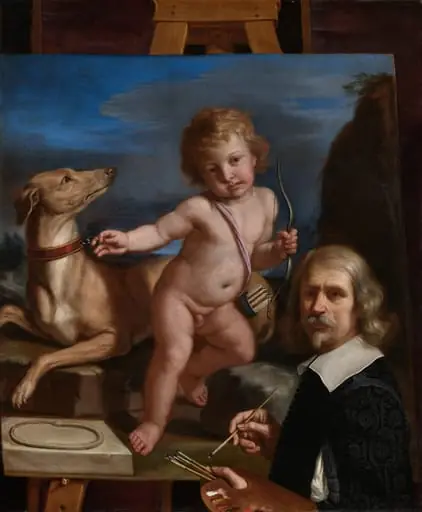
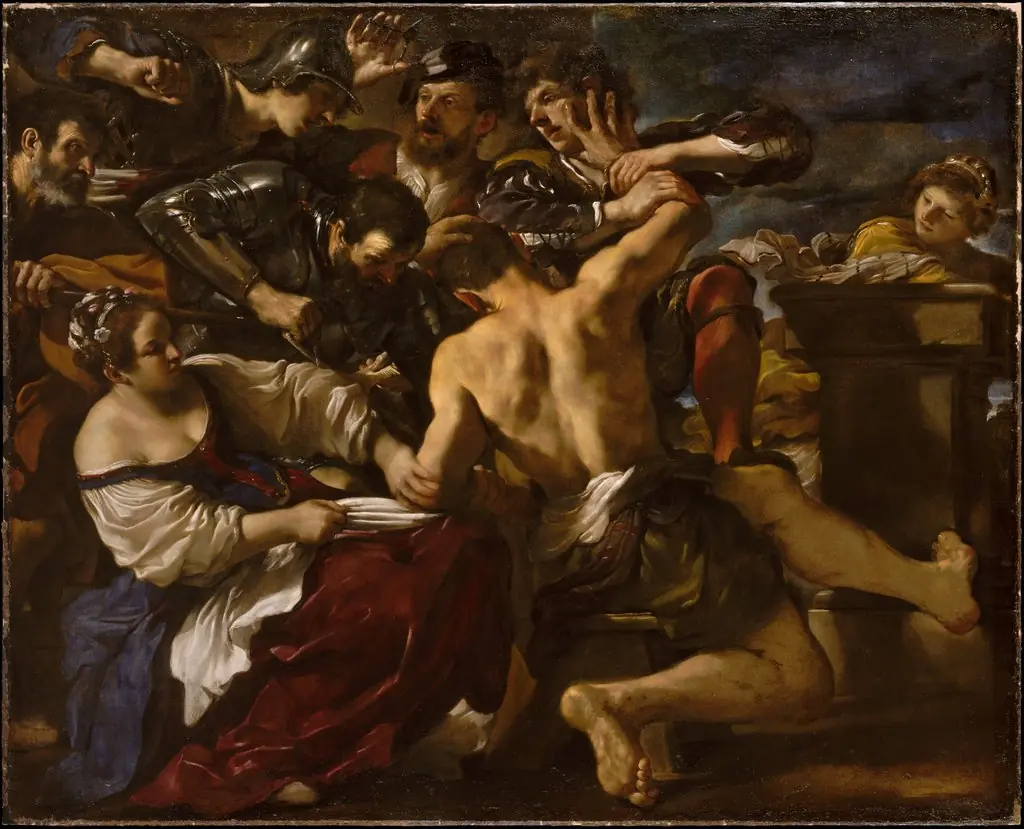
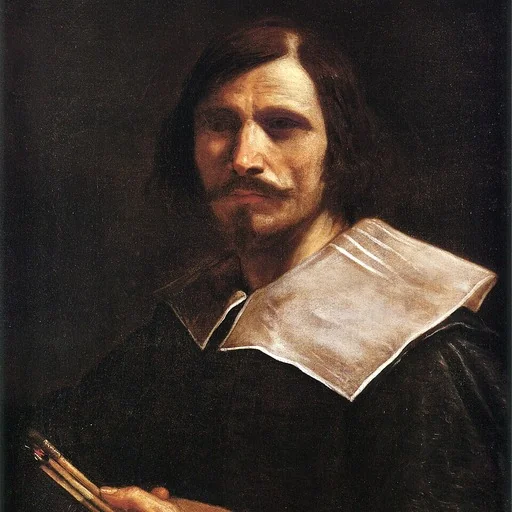
Giovanni Francesco Barbieri (8 February 1591 – 22 December 1666), better known as (il) Guercino (Italian pronunciation: ), was an Italian Baroque painter and draftsman from Cento in the Emilia region, who was active in Rome and Bologna.