Artwork
Cadmus and the Dragon
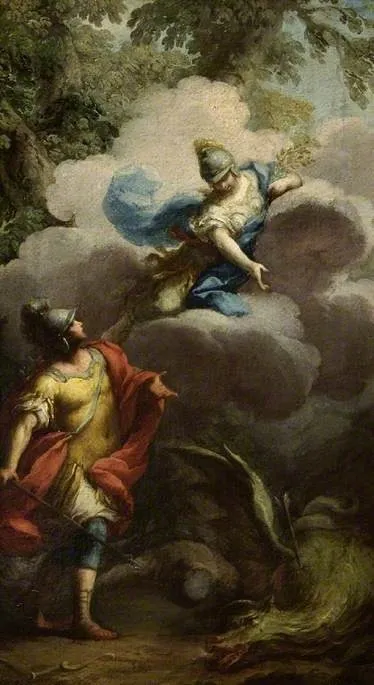
Cadmus and the Dragon is an oil painting by Luigi Agricola. It dates from 1795 and is held in the collection of the Fitzwilliam Museum.
About this work
Overview
Luigi Agricola, an Italian painter active in late‑18th‑century Rome, produced the oil work *Cadmus and the Dragon* circa 1795. The canvas, now part of the Fitzwilliam Museum collection, portrays the legendary founder of Thebes in a moment of confrontation with the serpentine beast that guards his future city.
Subject & Meaning
The composition centers on Cadmus, rendered in classical costume, and a female figure in a blue drape, suggesting the mythic episode in which the hero slays the dragon and sows its teeth to generate a new warrior race. The woman's outstretched hand and Cadmus’s upward gaze create a charged interaction that hints at divine assistance or prophetic revelation.
Technique & Style
Agricola employs a pronounced chiaroscuro, juxtaposing illuminated flesh and drapery against deep shadowed foliage and clouded sky. This contrast not only models the figures with three‑dimensional vigor but also heightens the dramatic tension of the scene. The brushwork remains tight in the foreground, while the background recedes with softer, atmospheric tones.
History & Provenance
Beyond his mythological output, Agricola was known for religious commissions and jewelry design, and he taught at Rome’s Academy of St Luke. His career included works such as a St Michael the Archangel and an altarpiece of St Elizabeth, Queen of Portugal. *Cadmus and the Dragon* entered the Fitzwilliam Museum’s holdings in the 20th century, where it remains on display.
Artist & collection
Artist
Luigi Agricola (c. 1750 – 1821 or after) was an Italian painter active in Rome which for most of his life was part of the Papal States. He also worked with jewelry. He painted a St. Michael the Archangel for the Academy…

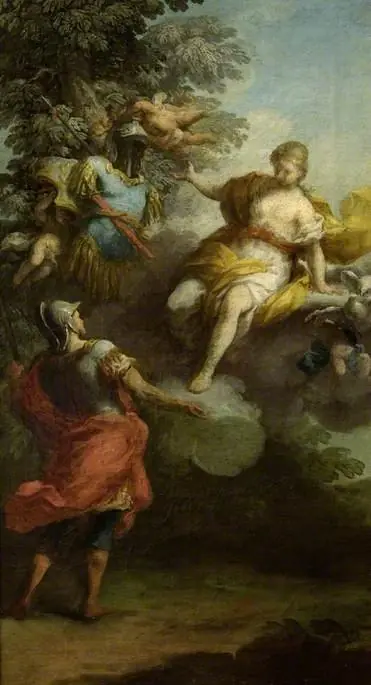 Venus giving arms to Aeneas
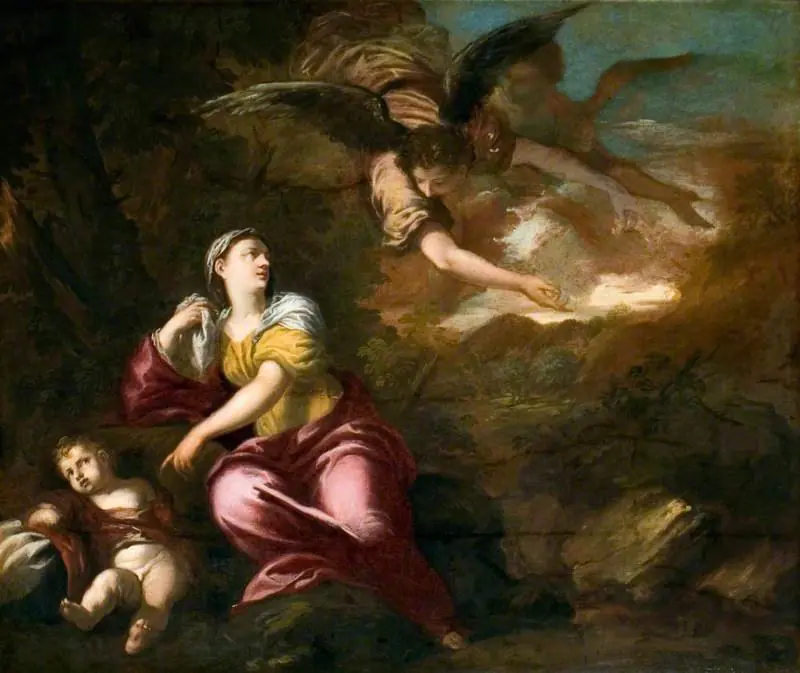 Hagar and Ishmael in the Wilderness (Genesis 21.17)
 The Apotheosis of Saint Charles Borromeo
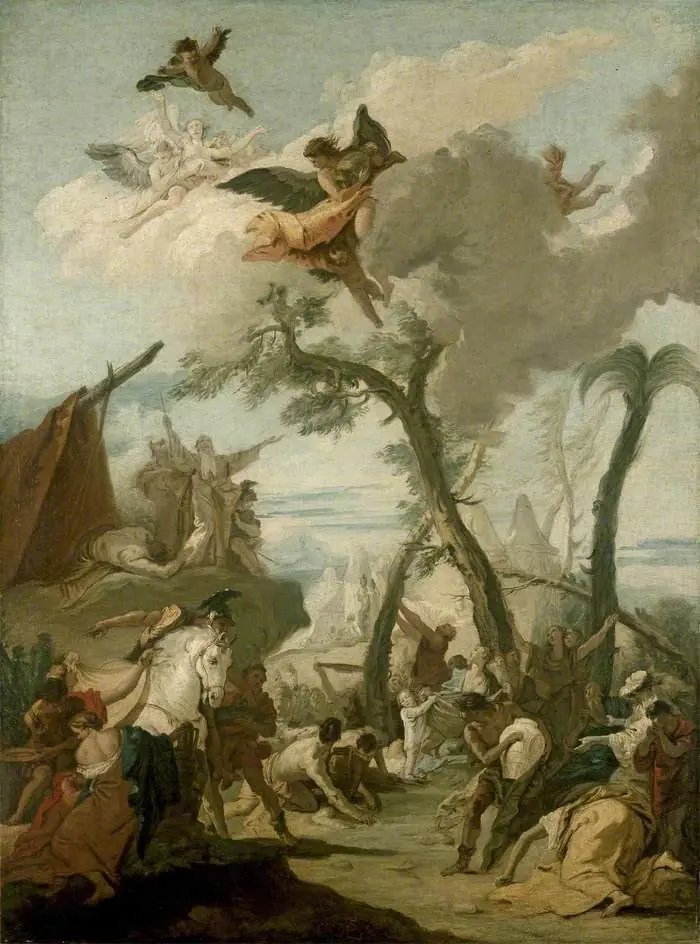 The Gathering of Manna
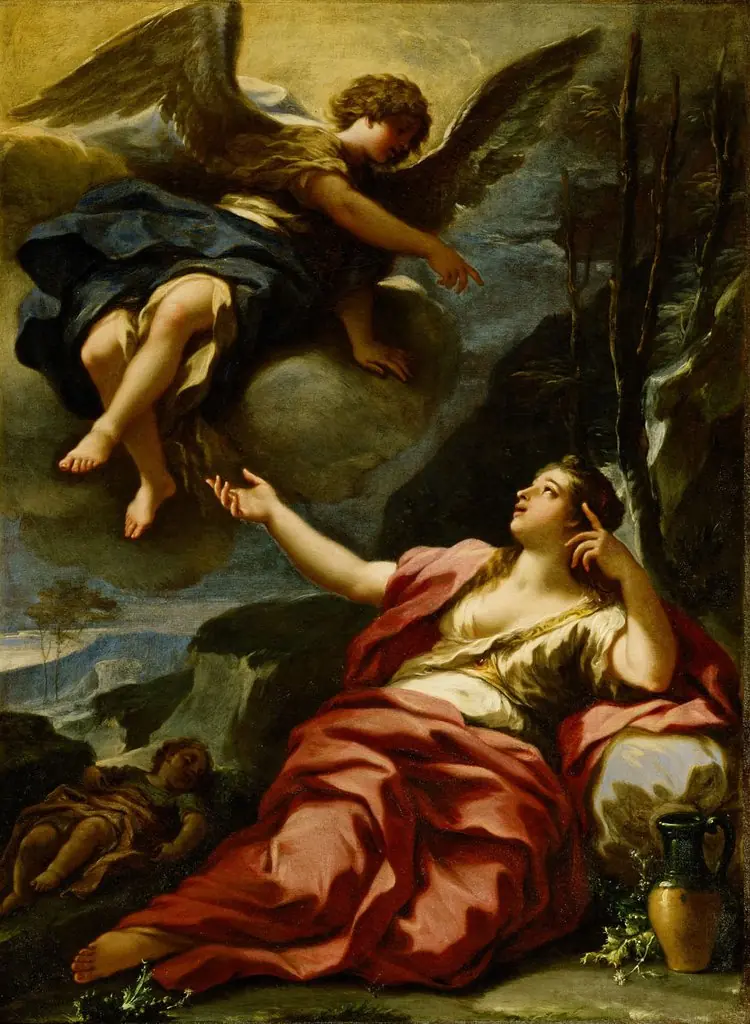 The angel appears to Hagar in the desert
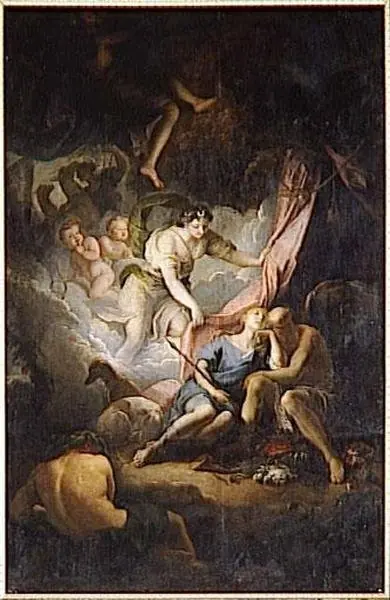 Diane et Endymion
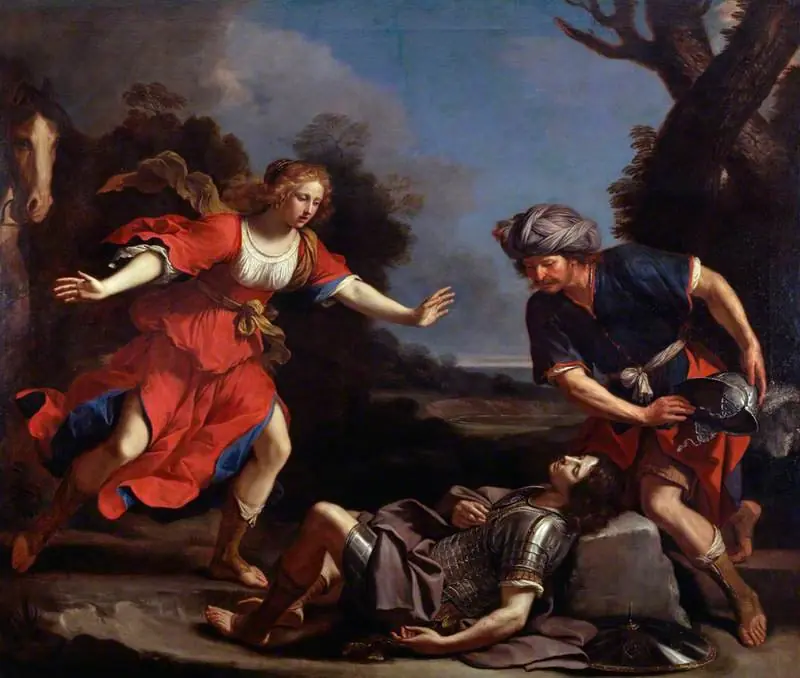 Erminia Finding the Wounded Tancred
 Neptun und Koronis
 A poet, presented to Jupiter by Hercules, is crowned by Glory, below Venus, Cupid and the poet
 The Triumph of Minerva