Artwork
Venus Discovering the Dead Adonis
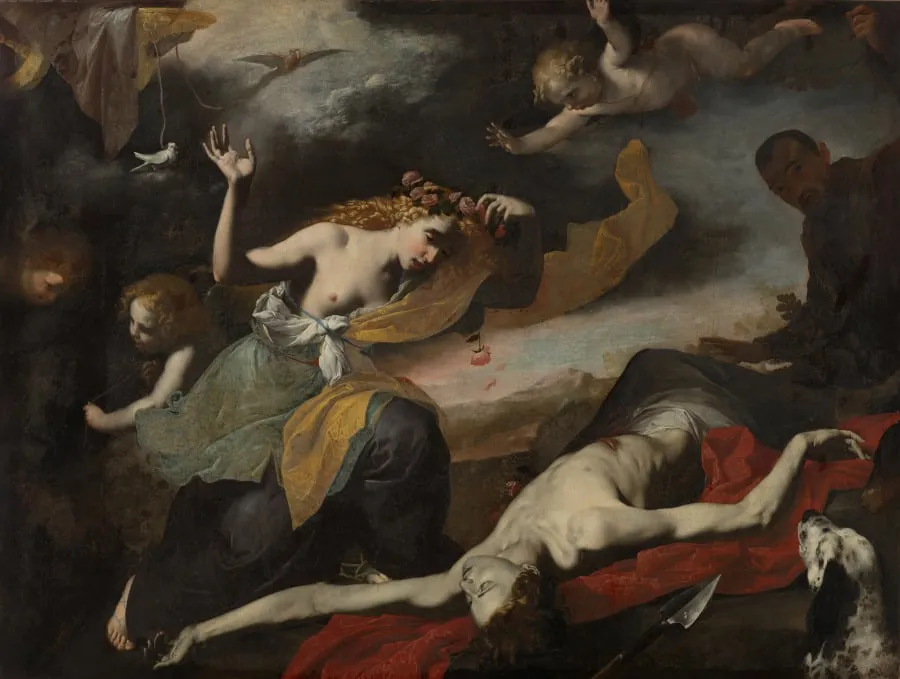
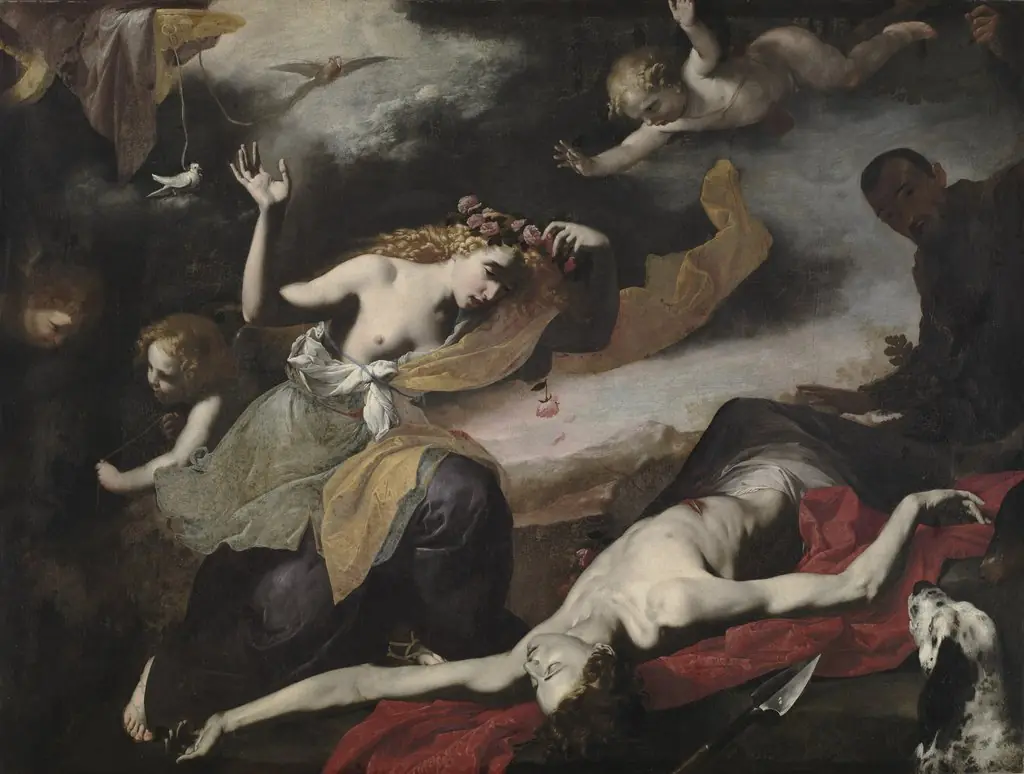
Venus Discovering the Dead Adonis is an unspecified painting by the Baroque artist Unknown. It dates from 1650 and is held in the collection of the Cleveland Museum of Art. The canvas captures the mythic moment when Venus, the Roman deity of love, finds her mortal beloved Adonis slain by a boar.
About this work
Artists in 1600s Italy often turned poems into pictures—this one comes from a 1623 poem by Giovanni Battista Marino.
A woman in a pink robe kneels beside a young man lying on the ground. His skin is pale, his body still. Around them, dark trees and a bright sky create a quiet scene.
This painting shows the moment Venus finds Adonis dead, frozen in time. Artists in 1600s Italy often turned poems into pictures—this one comes from a 1623 poem by Giovanni Battista Marino. The contrast between life and death feels deliberate, like a riddle.
To see how other artists painted this story, look up *Italy, Naples*.
Overview
The canvas captures the mythic moment when Venus, the Roman deity of love, finds her mortal beloved Adonis slain by a boar. He lies lifeless on the ground, his pallid skin contrasting with the surrounding darkness, while Venus, dressed in a soft pink mantle, kneels beside him. The composition freezes the tragedy, preserving the youthful form in an idealized state.
Subject & Meaning
Derived from Giovanni Battista Marino’s 1623 poem, the scene reflects a baroque fascination with paradox: the goddess of desire confronting death. The visual juxtaposition of vitality and mortality mirrors the poem’s wordplay, inviting viewers to contemplate the fleeting nature of beauty and the inevitability of loss, a common moral undercurrent in 17th‑century Italian literature.
Technique & Style
The work employs a dramatic chiaroscuro, with a luminous sky piercing the surrounding gloom, highlighting the figures’ forms. Vivid coloration—particularly the pink of Venus’s robe and the stark pallor of Adonis—creates a striking contrast that emphasizes the emotional tension. The handling of light and color aligns with artistic currents prevalent in mid‑1600s Naples, suggesting a sophisticated awareness of contemporary trends.
History & Provenance
The painter’s identity remains unknown, though the sophisticated literary reference and stylistic execution point to a learned artist active in Naples during the mid‑17th century. No documented ownership trail precedes its appearance in modern collections, indicating the work likely circulated privately before entering public view in recent decades.
Context
During the early baroque period, Italian artists frequently transformed poetic narratives into visual allegories, using myth to explore human concerns. The choice of Marino’s poem reflects the era’s taste for elaborate, intellectually charged subjects. The painting thus participates in a broader cultural movement that linked literature and visual art to probe themes of love, fate, and mortality.
Artist & collection

 Domestic Scene
 Giacomo and Cardinal Marco, investing Andrea, Abbot of San Zeno, with his Benefice
 The Nymph of Fontainebleau
 Portrait of a Woman
 Madonna and Child with Saints in the Enclosed Garden
 Venus and Minerva
 Family Group of Four on Sofa
 Wall painting from Room H of the Villa of P. Fannius Synistor at Boscoreale
 Hero mourns the dead Leander
 Boreas Abducting Oreithyia, Daughter of Erechteus
 Hagar in the Desert
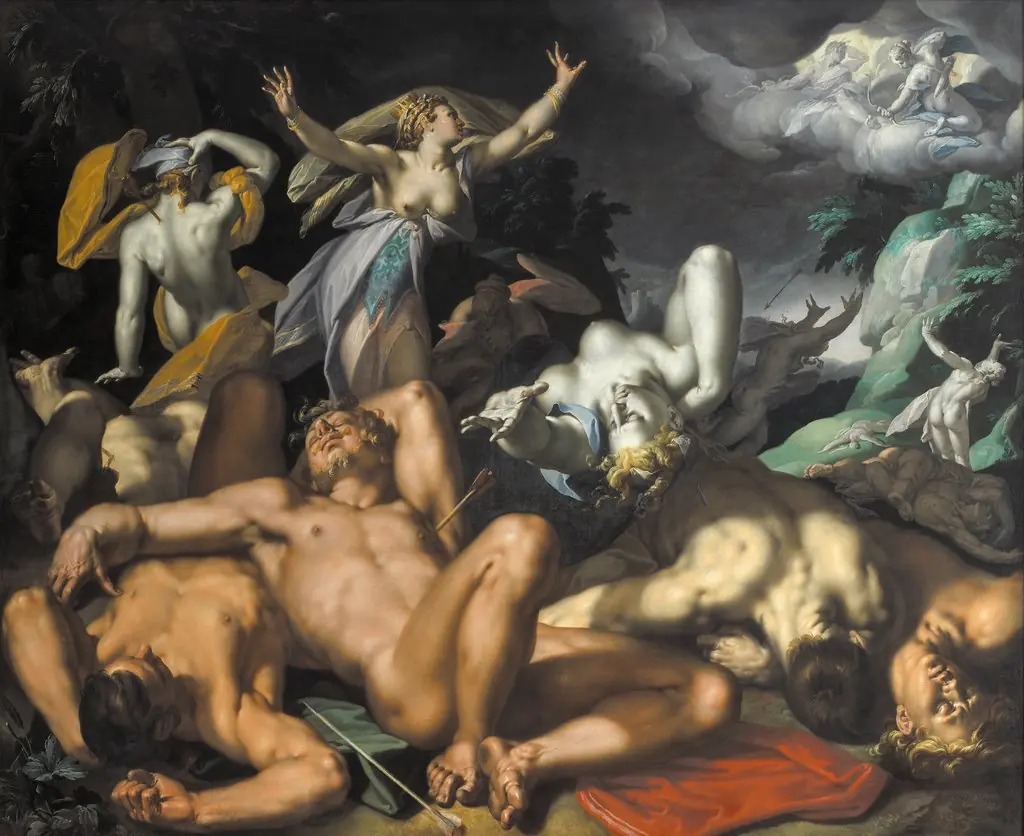 Apollo and Diana Punishing Niobe by Killing her Children
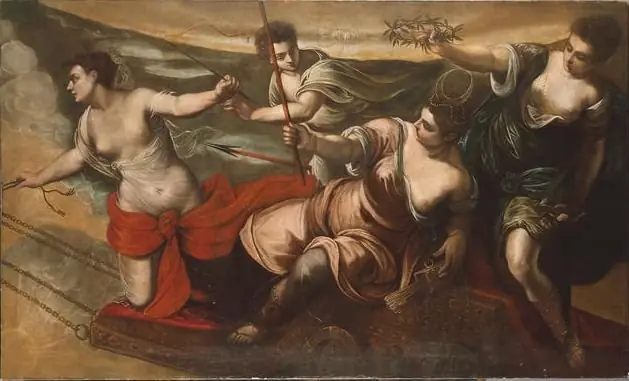 Luna mit den Horen
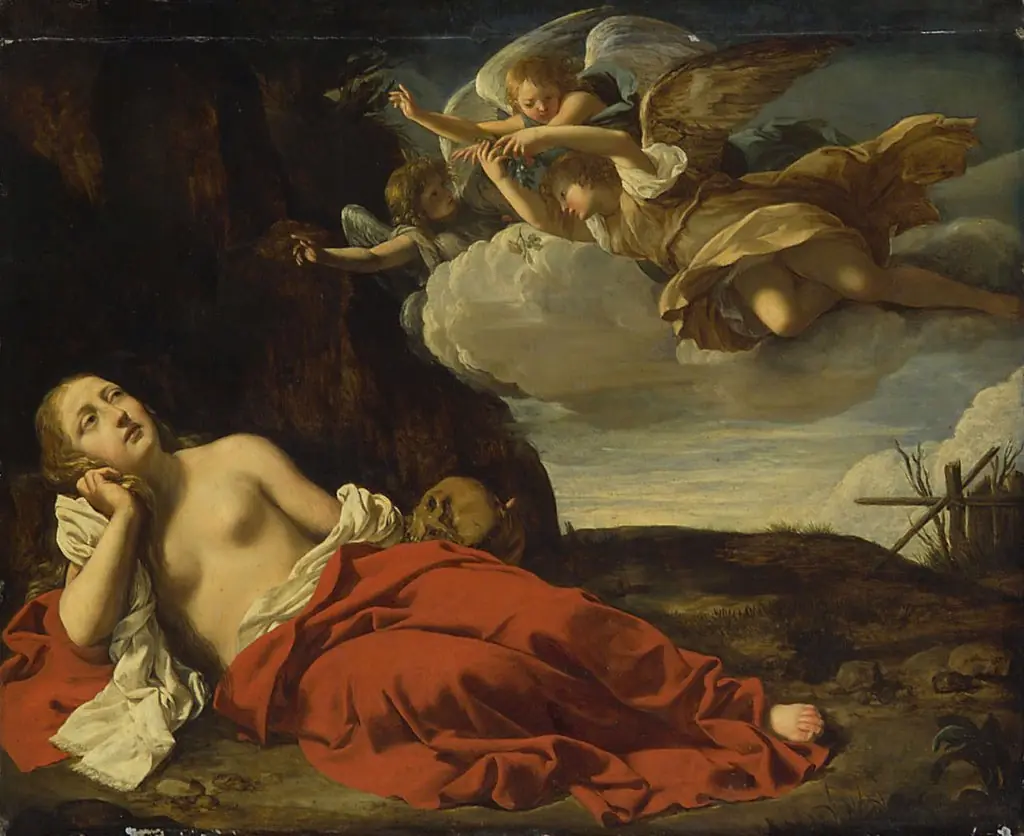 Penitent Magdalene
 Apollo and Diana Punishing Niobe by Killing her Children
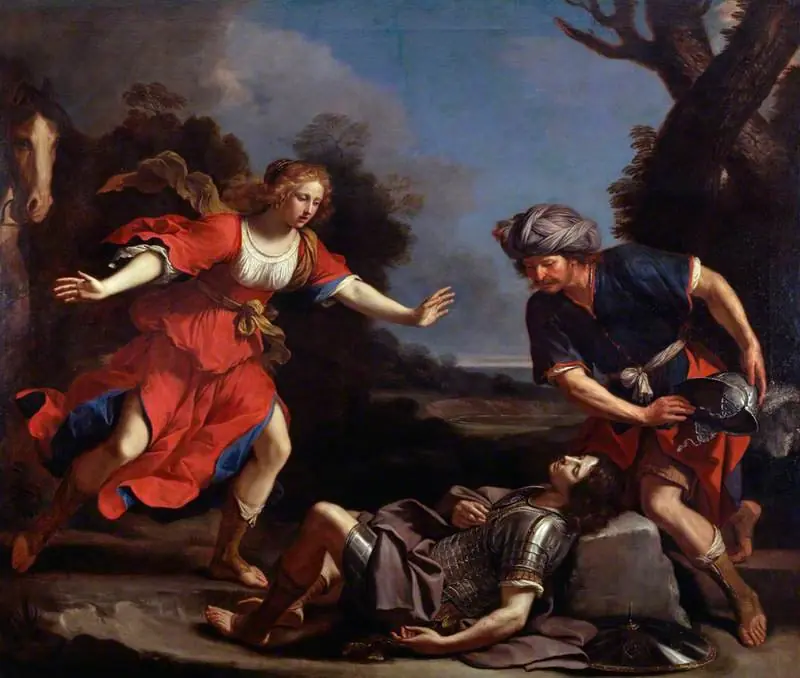 Erminia Finding the Wounded Tancred
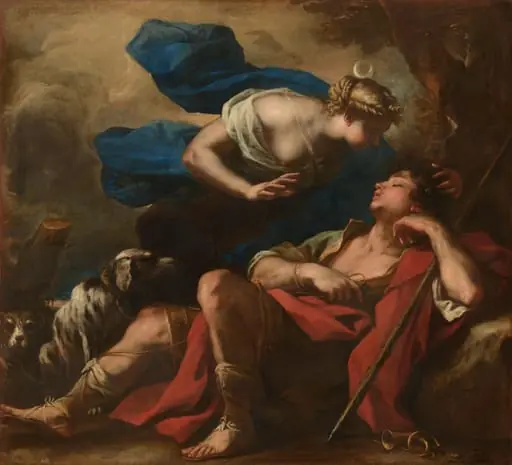 Diana and Endymion
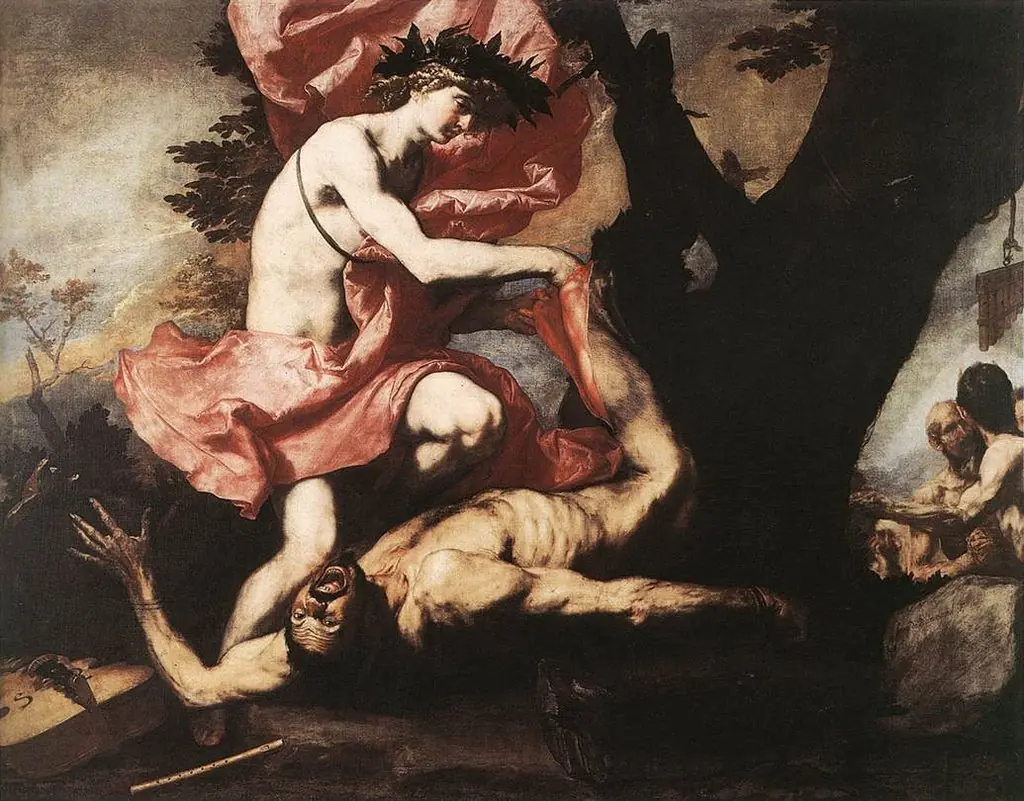 Apollo Flaying Marsyas
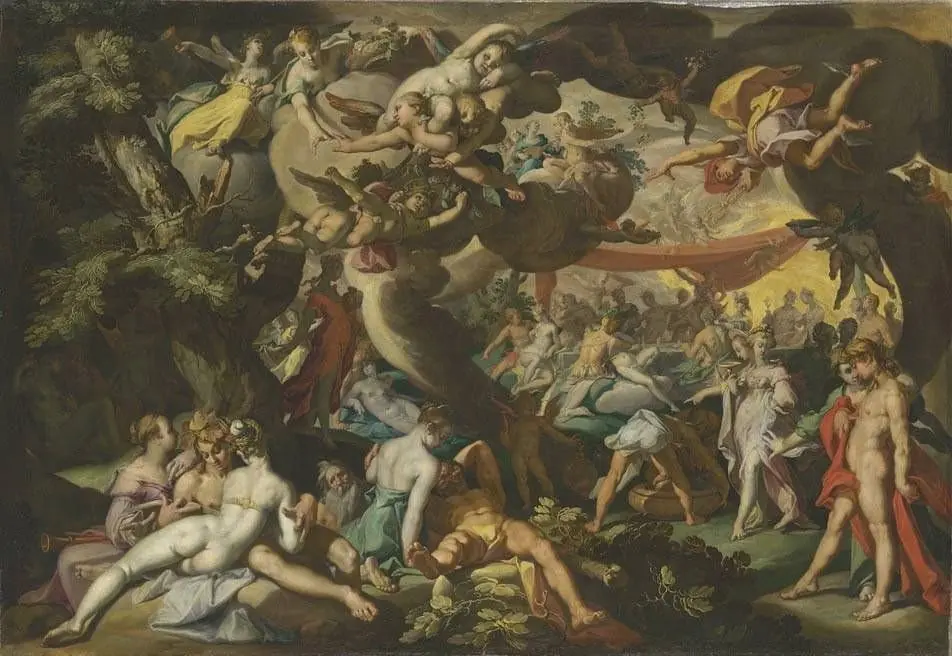 The Wedding of Peleus and Thetis
 Venus Discovering the Dead Adonis